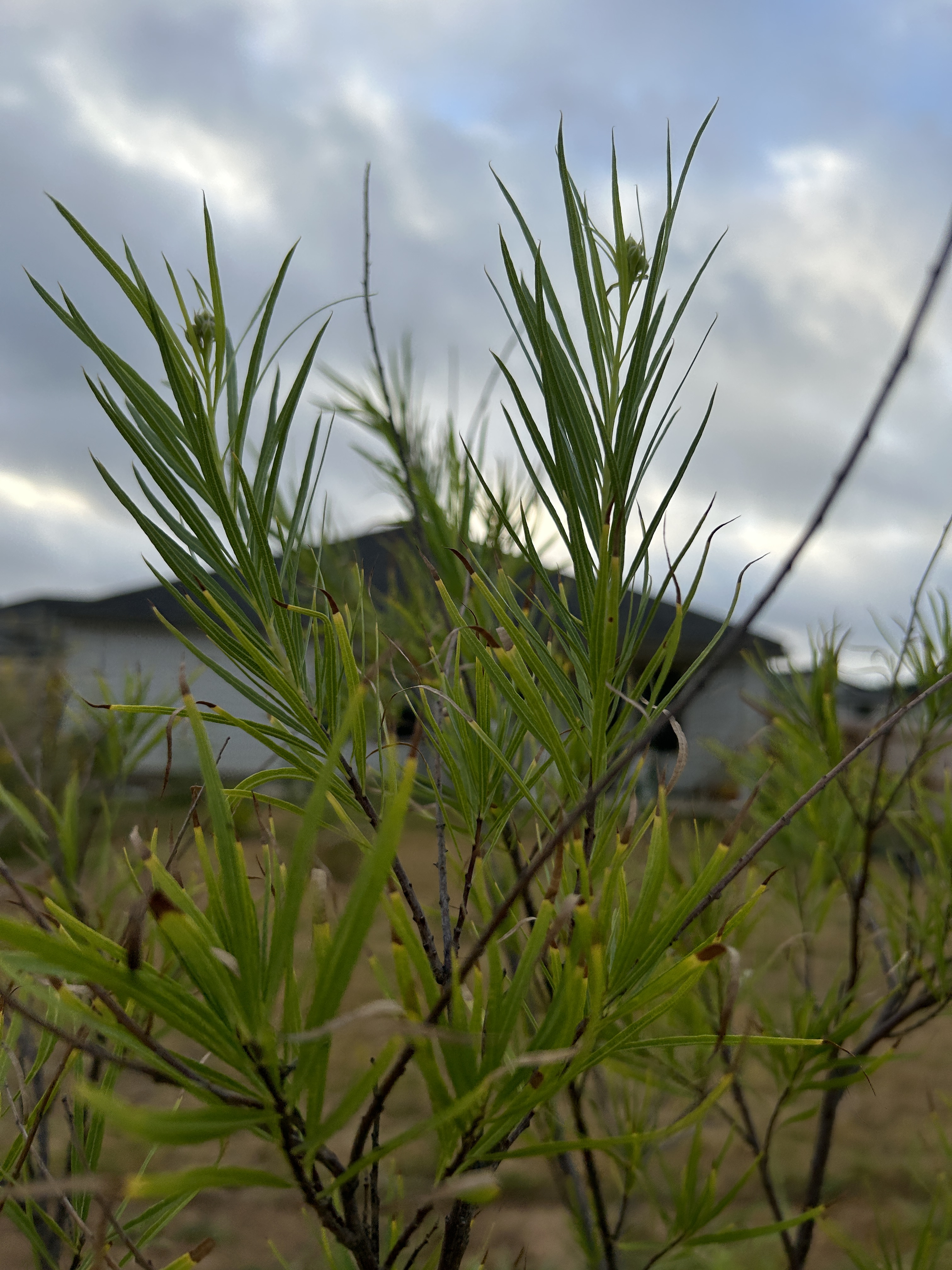

The rainfall in Seguin, Texas on average is about 20 inches less per year than Houston, Texas, where I lived before (30-34 inches vs. 50-54 inches). That fact, plus the knowledge that central Texas has been experiencing a prolonged drought and likely future droughts, meant that water management would be an important part of my activities here. In fact, water conservation is one of my primary goals, and the reason that I give priority to native plants that are drought-resistant.
For just over two years I have participated in the community science project CoCoRaHS (Community Collaborative Rain, Hail & Snow Network), by submitting daily precipitation readings to their database.
I thought it would be interesting for me (and maybe others) to take a look at how we did in 2025 for rainfall, and what is our current drought status.
When I look at my rainfall data for 2025, at first sight it appears normal.
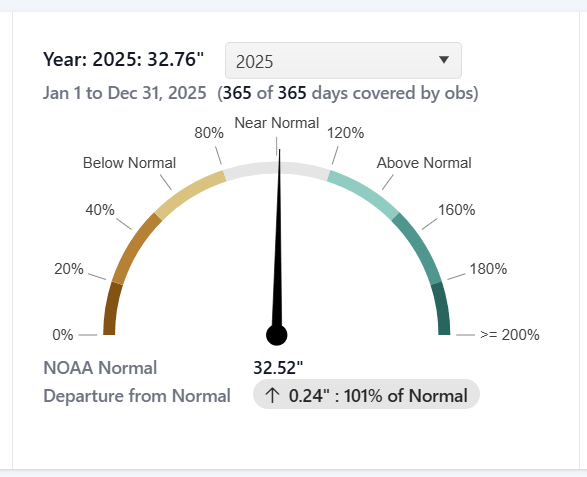
However, there was one particular day last year that was so unusual that its effect seems disproportionate.
On July 5, 2025, there was a major rain event that dropped more than eight inches of rain in just four hours. I am the 8.35 inch datapoint on the map below.
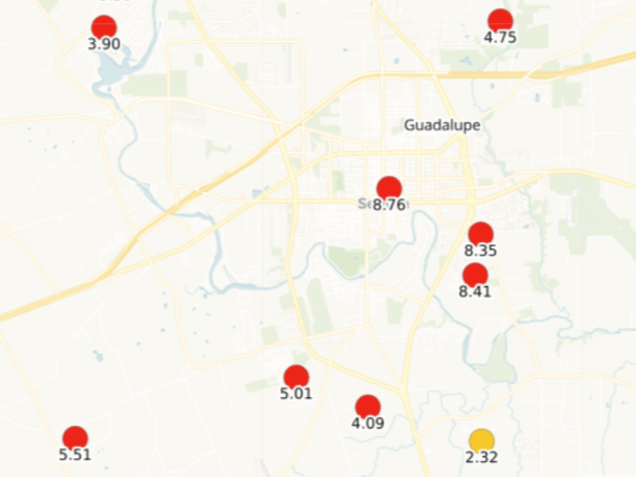
Eight inches of rain is a wonderful amount to receive in a time of drought. However, when it falls so hard and fast, then there is damage, erosion, and lost opportunities to capture water for future use. My rain barrels filled to overflowing within minutes, fish were flushed out of the pond, and the ground could only absorb a fraction of the water that crossed this lot.
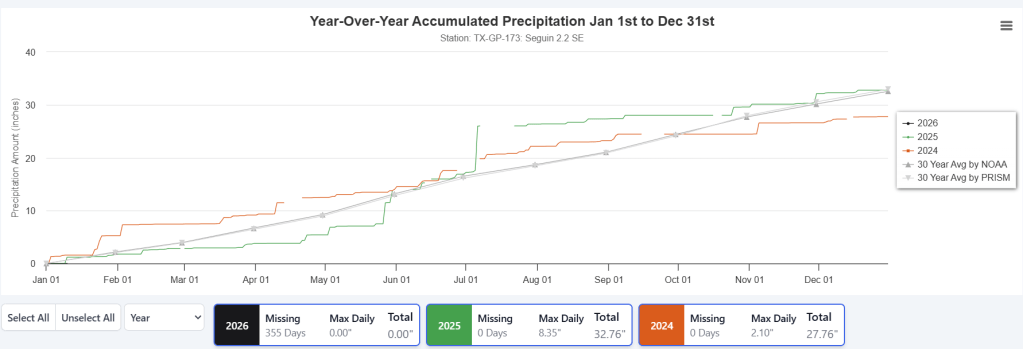
Here’s a plot showing the cumulative rainfall that I received in 2025 (green) compared to 2024 (orange). In the green 2025 line, you can see the abrupt increase when the flood happened in early July. Were it not for that event, the annual rainfall would have again been below average (like the orange 2024 line). I would argue that although we received eight inches of rain on July 5, we did not receive the benefit that eight inches of rain would have brought if it had fallen over a number of days instead of hours. The latter part of this year has been very dry, and the last rainfall here that exceeded 0.5 inches was in November, more than six weeks ago.
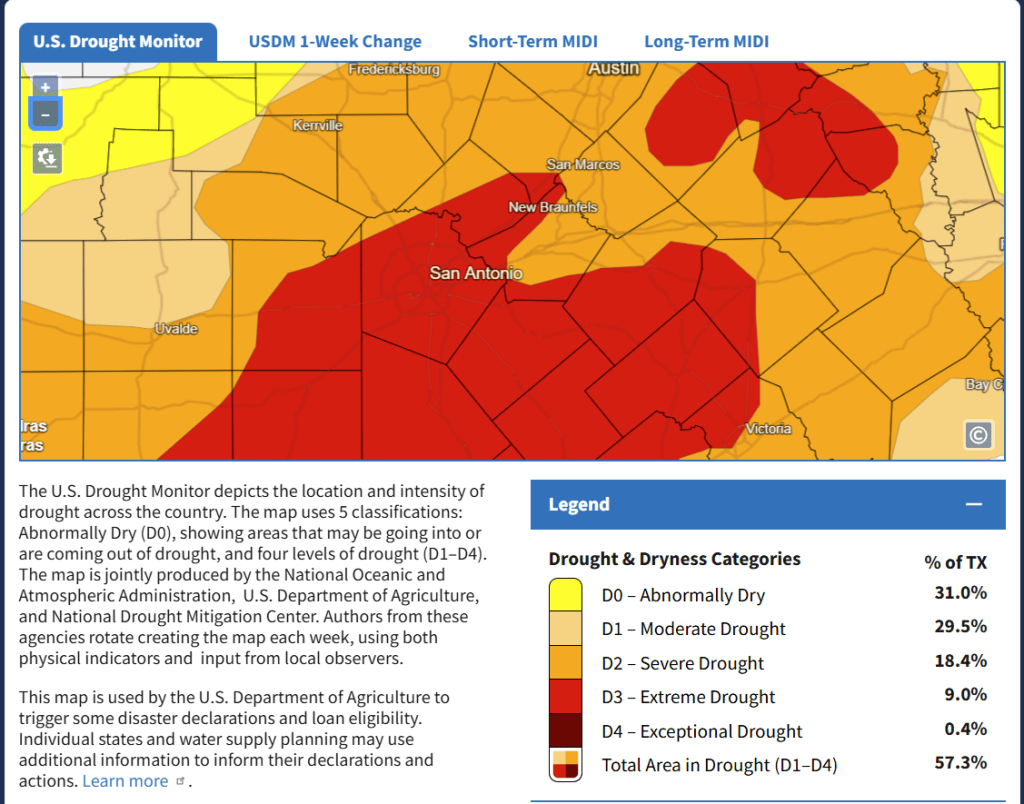
What is the current drought status of Central Texas? For that I consulted the National Integrated Drought Information System. Here’s a screenshot of our area of Texas (below). Seguin lies a little east of San Antonio in the area colored orange. That puts us in an area of “Severe Drought,” adjacent to areas that are in “Extreme Drought.” Which is to say that we are not in good shape. Underground aquifers and surface lakes and reservoirs are very depleted. Over half the state of Texas is experiencing some level of drought.
All of these data reinforce for me the important of making landscaping choices that do not waste water. In particular, I wish that it were more “normal” to reduce the area of (and/or to not water) lawns, and to increase the use of native plants that need very little supplemental water.

 Rewilding My Lot
Leave a comment