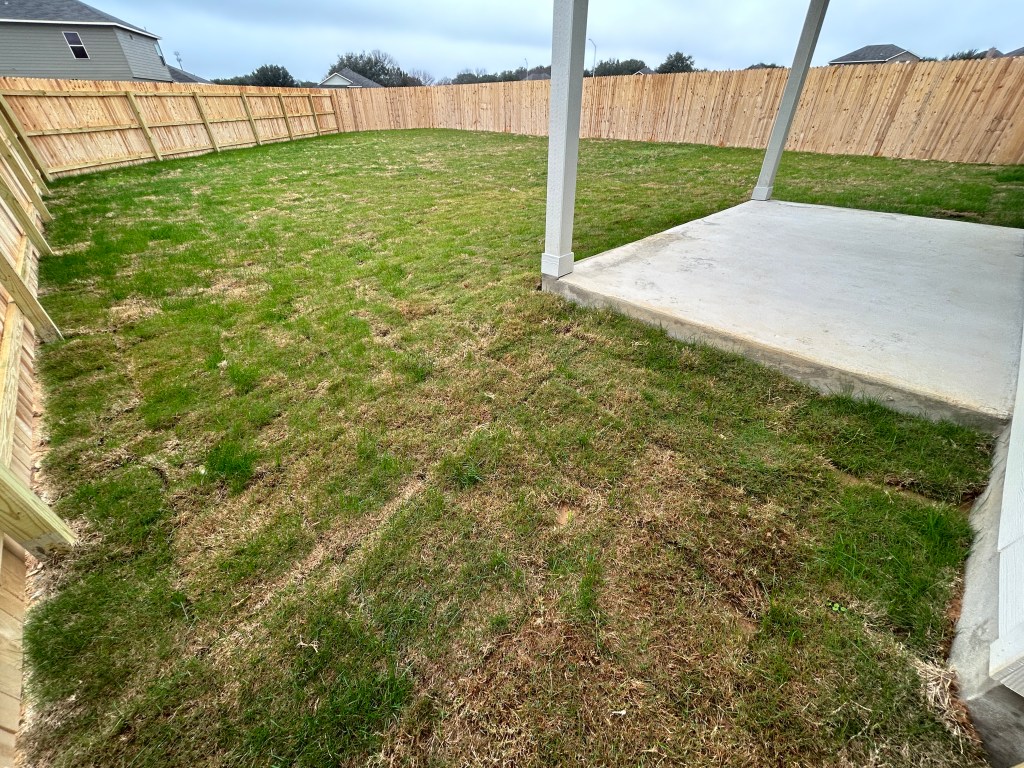
In February 2023 we moved to a new developer lot in Seguin, Texas, USA. The front yard had Bermudagrass sod, two Live Oak trees, and a bed in front of the house with fairly standard landscaper plants. The back yard was empty except for Bermudagrass sod.
My overall goals here are to develop a balanced nature ecosystem with plants and other features that encourage wild life visitors (e.g., birds and insects), to improve the health of the soil, and to conserve water.
I knew I wouldn’t have much time to install new plants before the heat of the summer, and I also knew that I wanted to spend time in the garden studying the land and considering my future plans. So I intentionally didn’t design the whole area to start with, and my initial priorities were getting started with trees and native grasses. I also wanted to replace some of the plants in front of the house with natives.
So what has happened in the past six months?
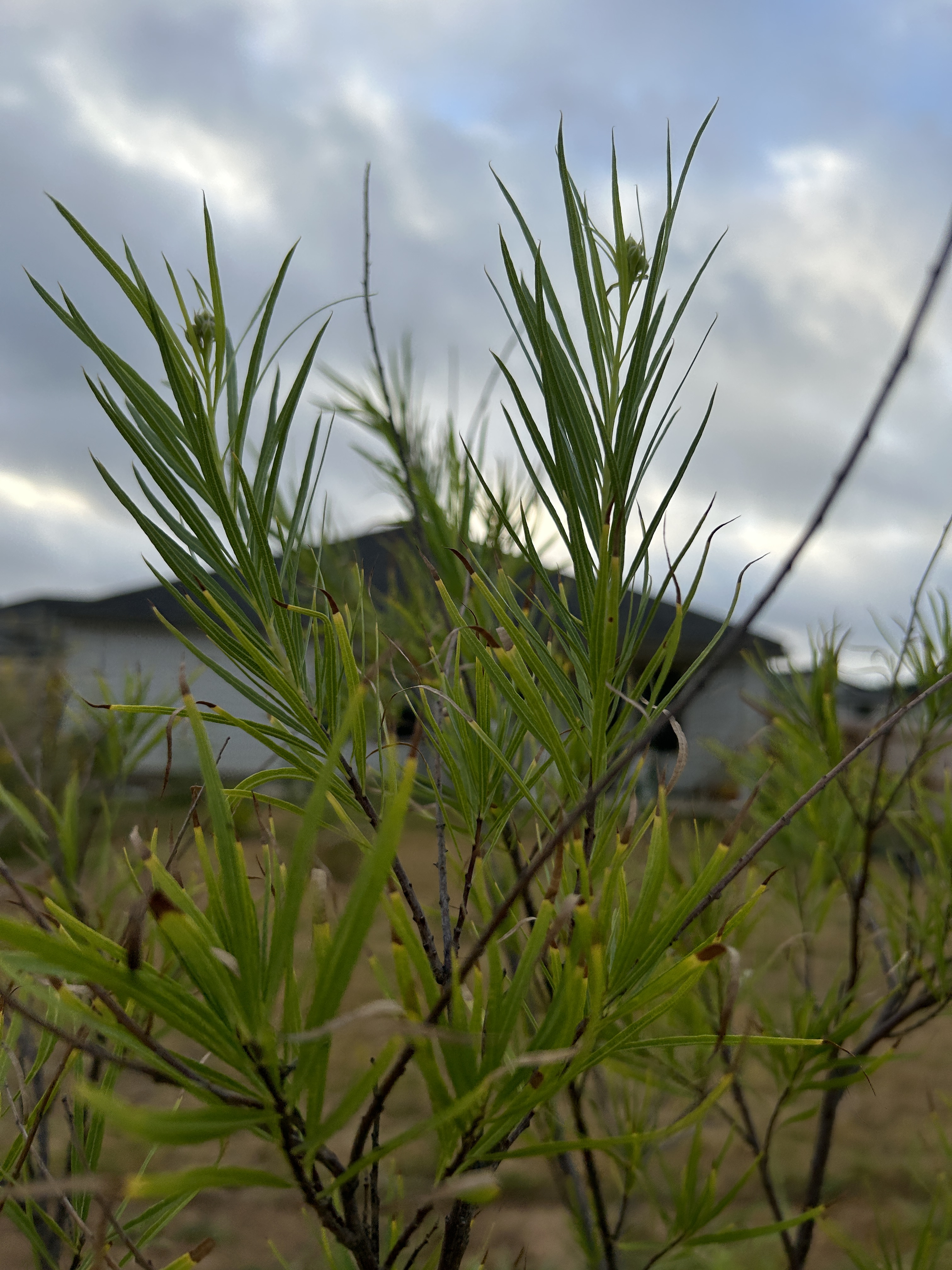
- My estimate for the back yard was that I had room for three trees, and I chose to plant Desert Willow, Huisache, and Texas Mountain Laurel. The links go to posts that I have written about each of these.
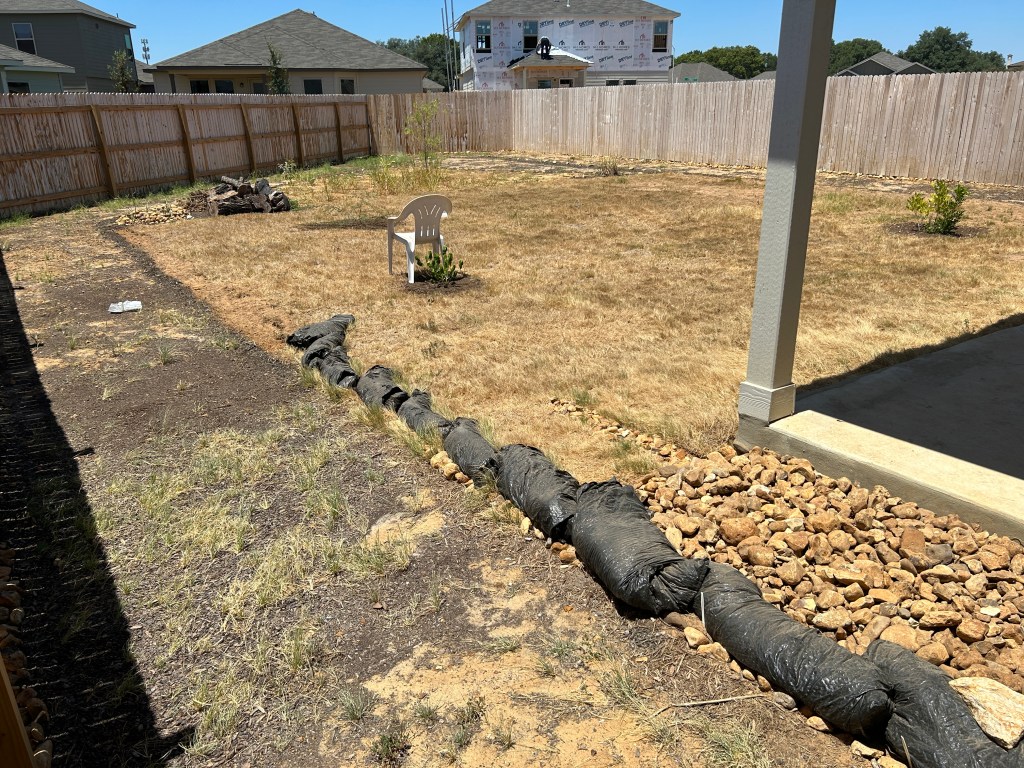
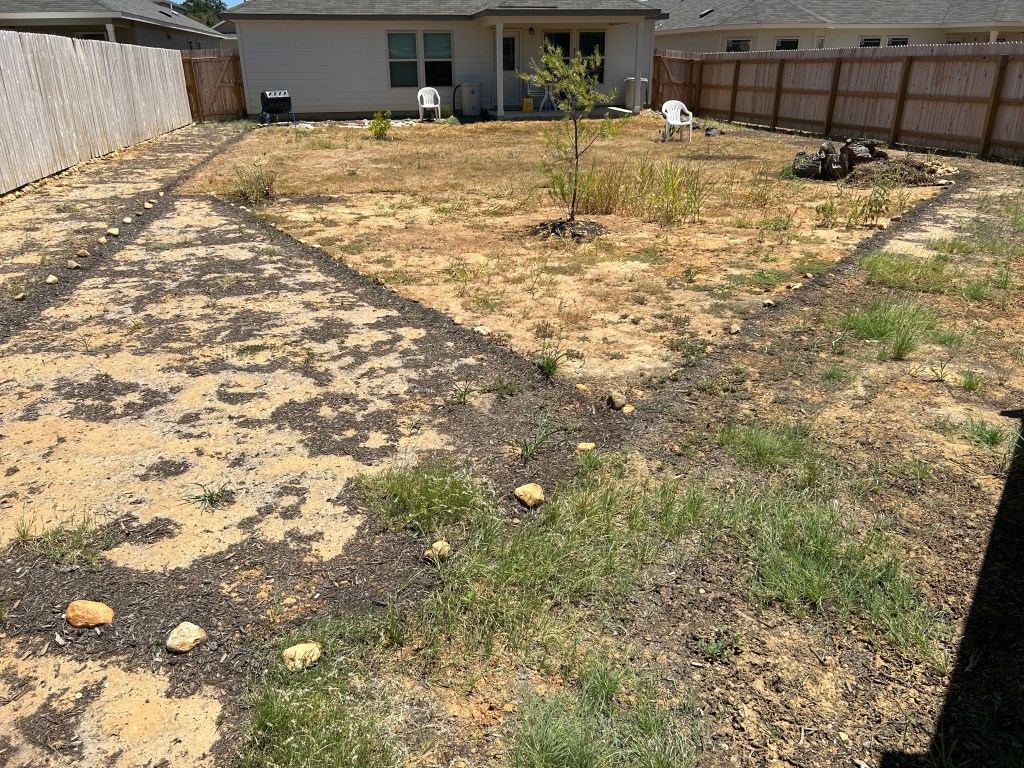
- A 6-foot strip of Bermudagrass turf was removed all around the edge of the back yard, an area of about 900 sq. ft. This was weeks of hard and humbling work, but also a chance to get to know the ground and ponder future plans.
- By then I understood the magnitude of the task of mass turf removal and my arthritic hands were protesting, so I hired professional help with a sod-cutting machine to remove about 700 sq. ft. more turf.
- This took me to May, when I was finally ready to sow seeds for native grasses. This I did (a story for another post to come), and just six days later there was a hard rainfall that washed away or interrupted the germination of most of the seeds.
- This seed erosion event was certainly disappointing, but it also revealed where water was flowing after heavy rainfall (a lot of it off the property) and gave me some ideas on how better to control and conserve water here.
- The native grass seeds that survived the deluge have grown well, but they don’t cover anything like enough area yet.
- A few of the original landscaper plants in the front bed have been replaced with native plants (more on the front bed in this post).
- For composting and conservation of organic matter, I am using a tumbling composter, a pile of decaying logs, and a pile of chopped up plant pieces that are too big or hard for the compost bin.
- Two rain barrels have been placed behind the house to capture roof run-off water. Overflow drains from the barrels should guide excess water into the garden, instead of letting it flow into the street.
- Completely unplanned by me, but a nice bonus, was the arrival of several volunteer sunflower plants, which served to make the garden more cheerful, and to provide food and shelter for a number of birds and insects. As of now, only the big sunflower plant in the front yard remains; the others have been removed to clear space for future projects.
And what’s next?
- I’d like to get rid of the remaining Bermudagrass sod in the back yard before fall. I had originally thought I’d spread that removal over two years, but this summer’s drought has so weakened it that it makes more sense to take it out now.
- Fall will be a major planting season, and I have ideas for more seeds, individual plants, and trees. This will include a reseeding of the native grass areas.
- I will leave the front lawn as Bermudagrass, but it badly needs leveling. When I do that project, I’ll sneak some extra native grass and wildflower seeds into the ground as well.
Here’s what the back yard looked like in February 2023 from the two corners closest to the house. For more detail about the starting point, see this post.

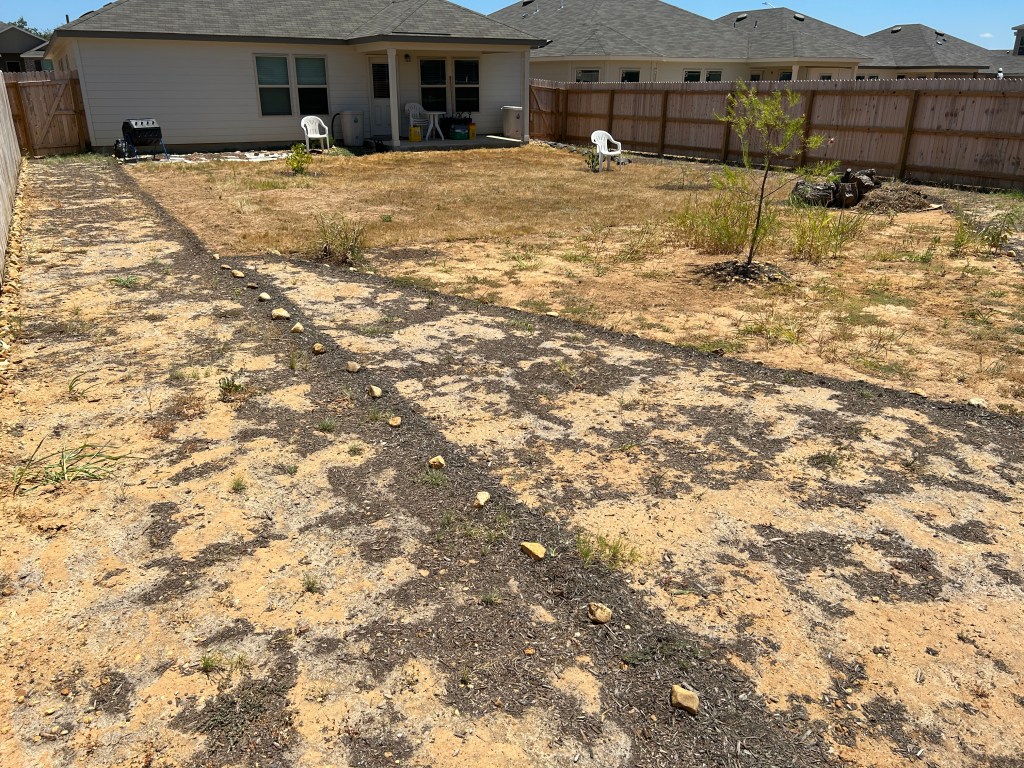
And here’s what’s going on in August 2023 from the five corners of our weirdly shaped lot. Almost everything here is a work in progress.



 Rewilding My Lot
Leave a comment