Blog
-
Two New Pollinator Shrubs
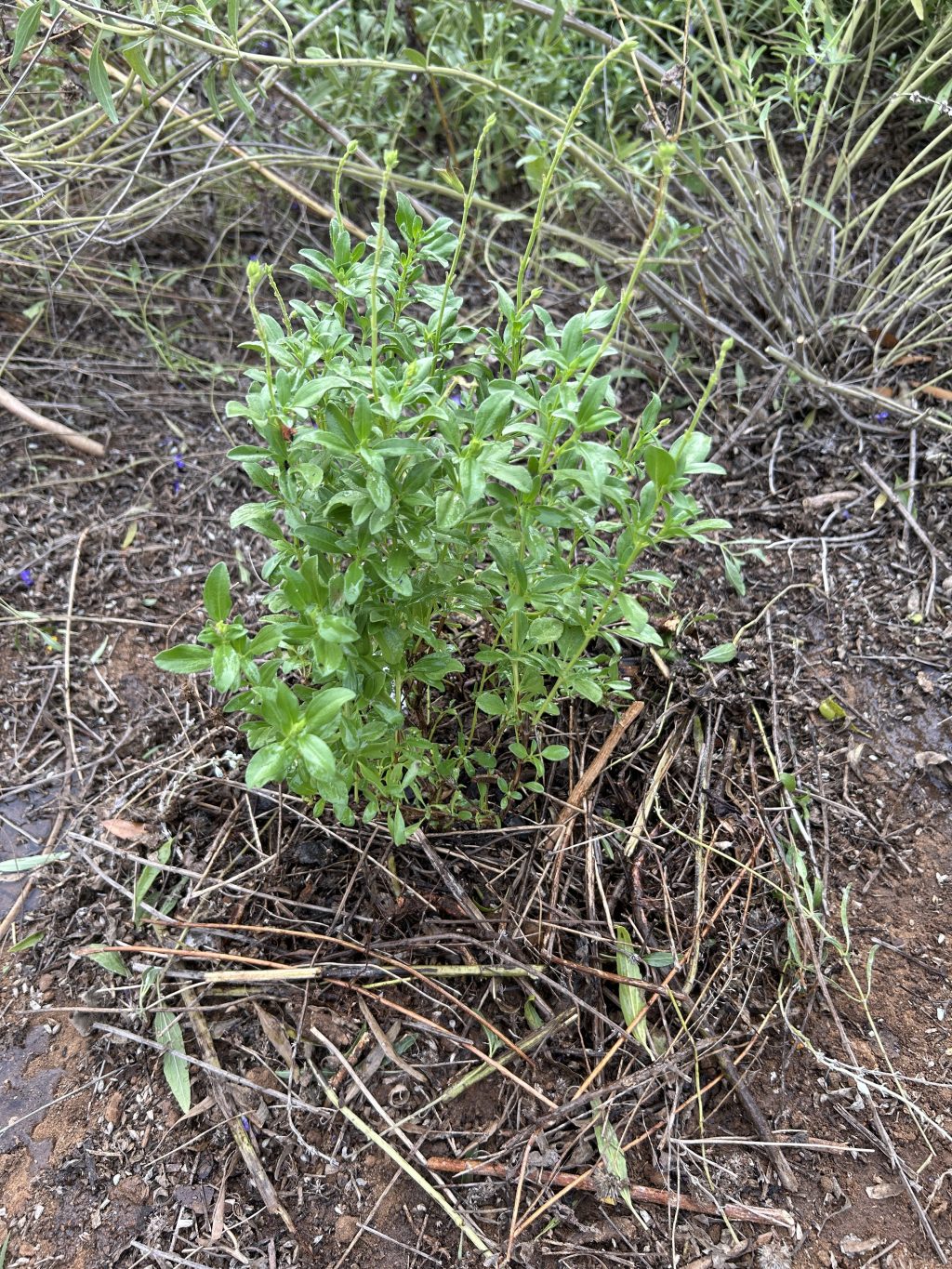
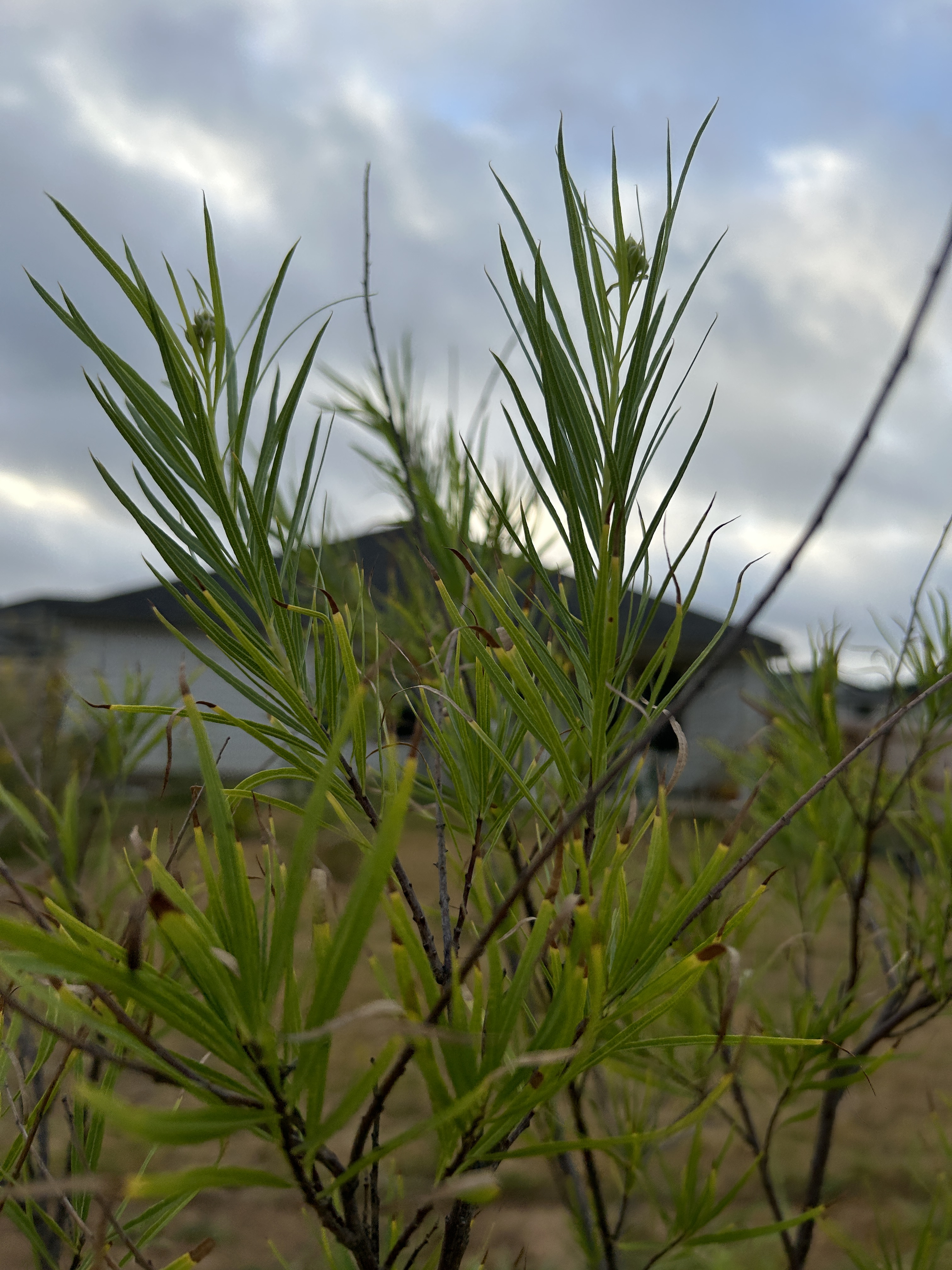
When I started building this garden, I filled all the blank spaces with wildflowers. The idea was that as other more long-term plants or features were added, I could clear away the wildflowers to make room. In the meantime, those temporary plants have been feeding wildlife, and protecting and nourishing the soil. The protection comes… Continue reading
-
Purple Bindweed Is Helpful But Needs Restraining
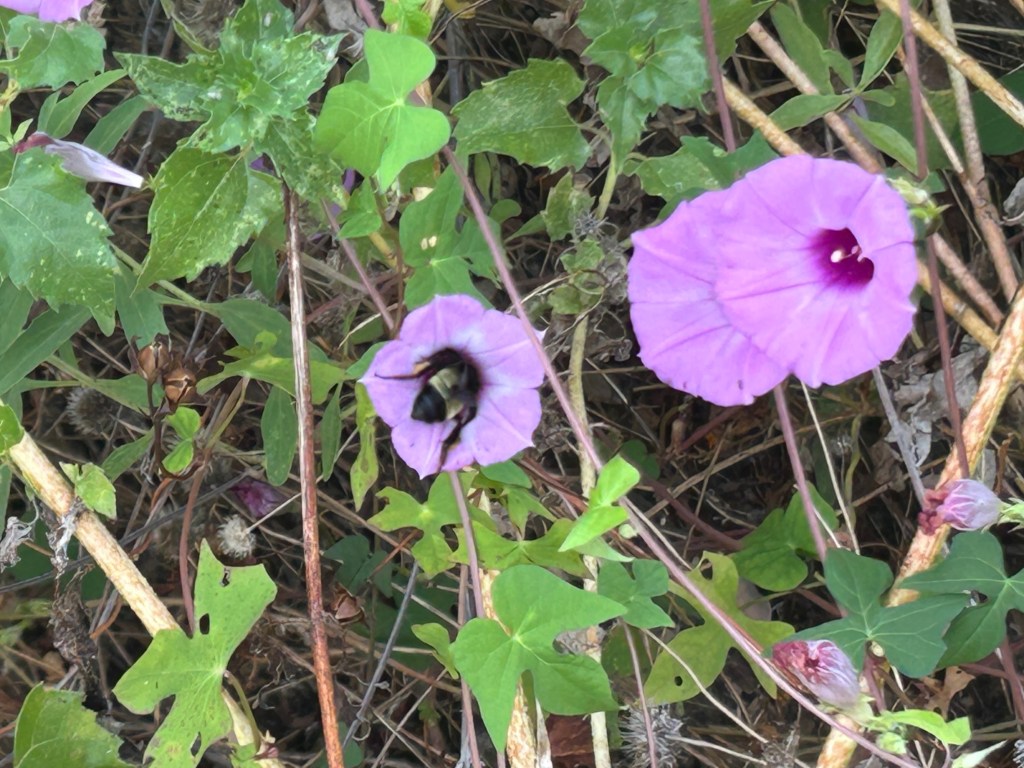
Purple Bindweed aka Wild Morning Glory aka Tievine (Ipomoea cordatotriloba) is a volunteer plant that grows very well here. It’s a drought-tolerant vine that would clamber its way through the whole garden if I let it. However, I limit its range to the wildflower meadow in front of the house and one section of the… Continue reading
-
Rookie Tree Staking Mistakes
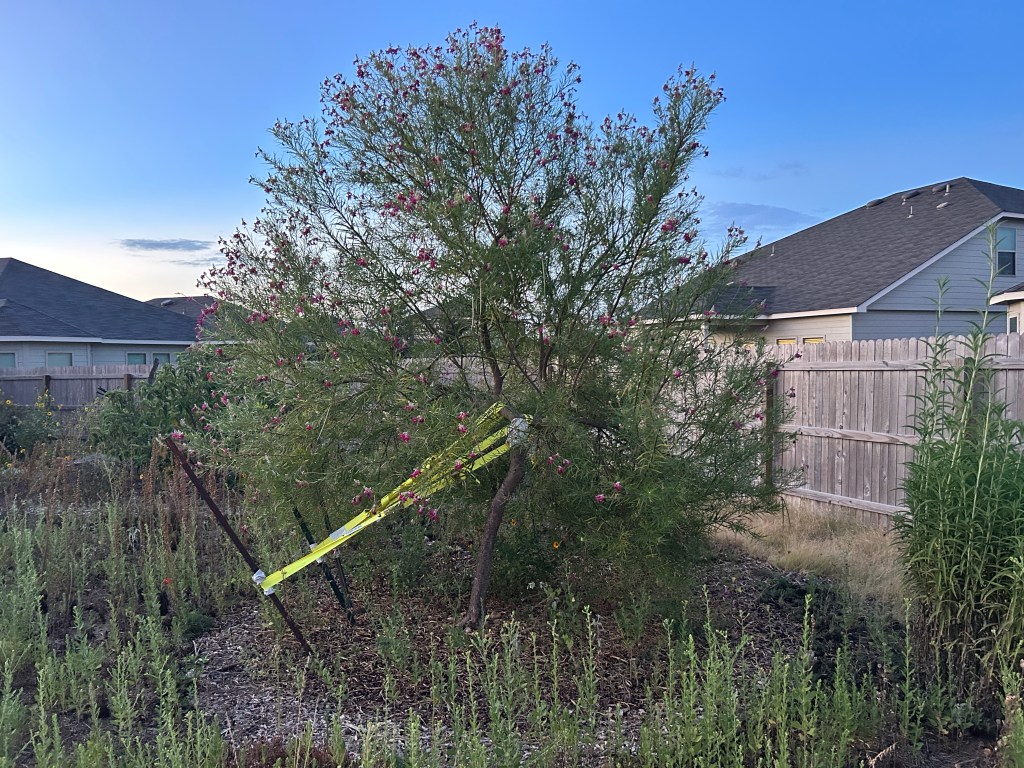
My Desert Willow (Chilopsis linearis) tree is a prominent feature in the garden. It has grown well and is already more than 12 feet tall. A challenge I have faced with this tree, however, is that sometimes wind events have caused branches to split, and even for the whole tree to tip over. When branches… Continue reading
-
Esperanza And Kidneywood
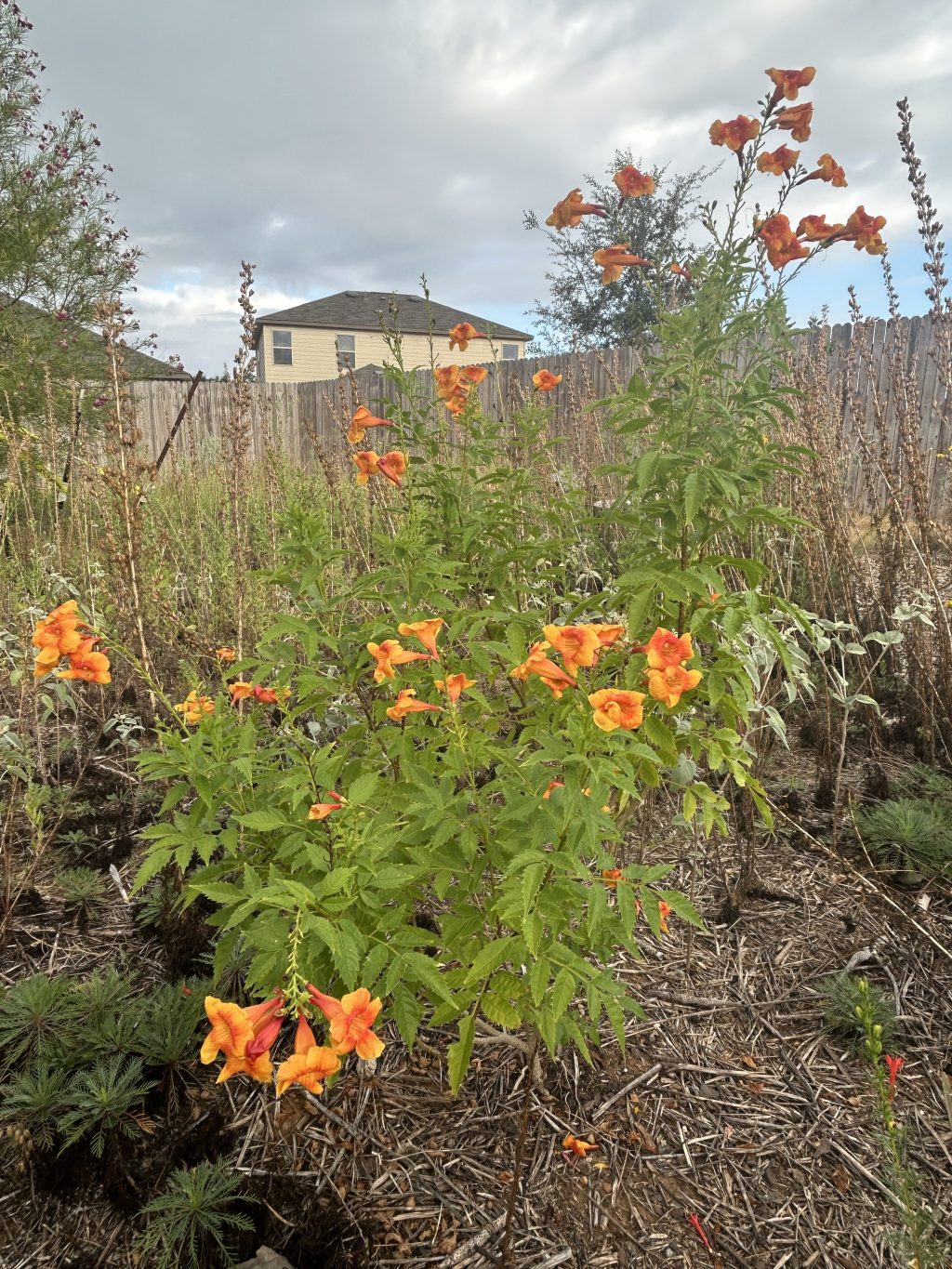
Over time, I plan to reduce the area occupied by annual plants as perennials grow larger or are added. Two new additions to the garden that are doing well are Esperanza (Tecoma stans) and Kidneywood (Eysenhardtia texana). These were both chosen to be drought-resistant and to attract pollinators. Esperanza ‘Compact Orange’ The more common versions… Continue reading
-
Texas Mountain Laurel Was Apparently Two Trees
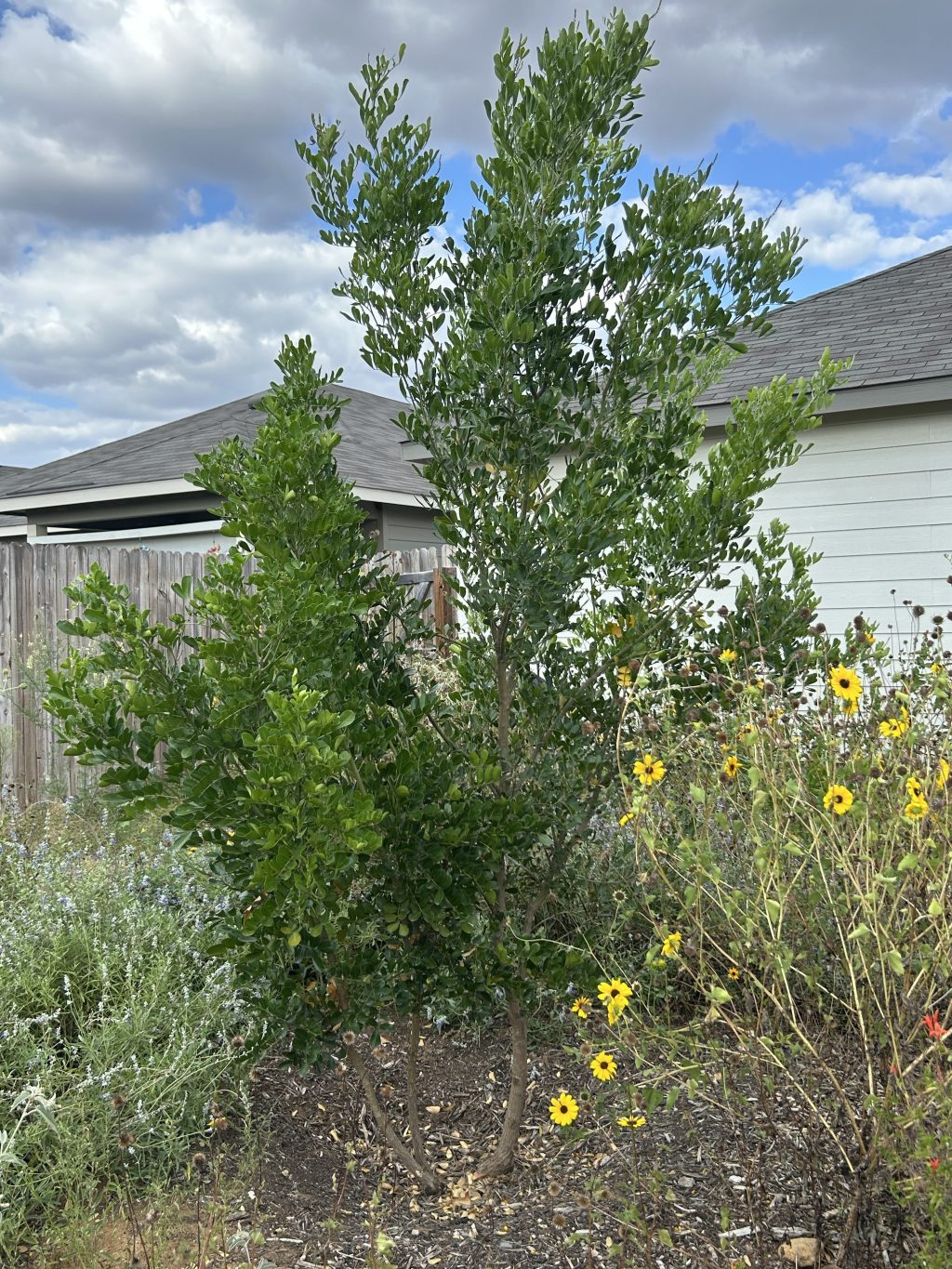
The Texas Mountain Laurel (Dermatophyllum secundiflorum) was the very first tree that I planted here. It had a bit of a bumpy start, with one half of the tree growing more slowly and showing signs of iron deficiency. Here’s a photograph from July 2023. Here’s the same tree three years later in January 2026. It’s… Continue reading
-
Keeping The Maximilian Sunflowers Tied Up
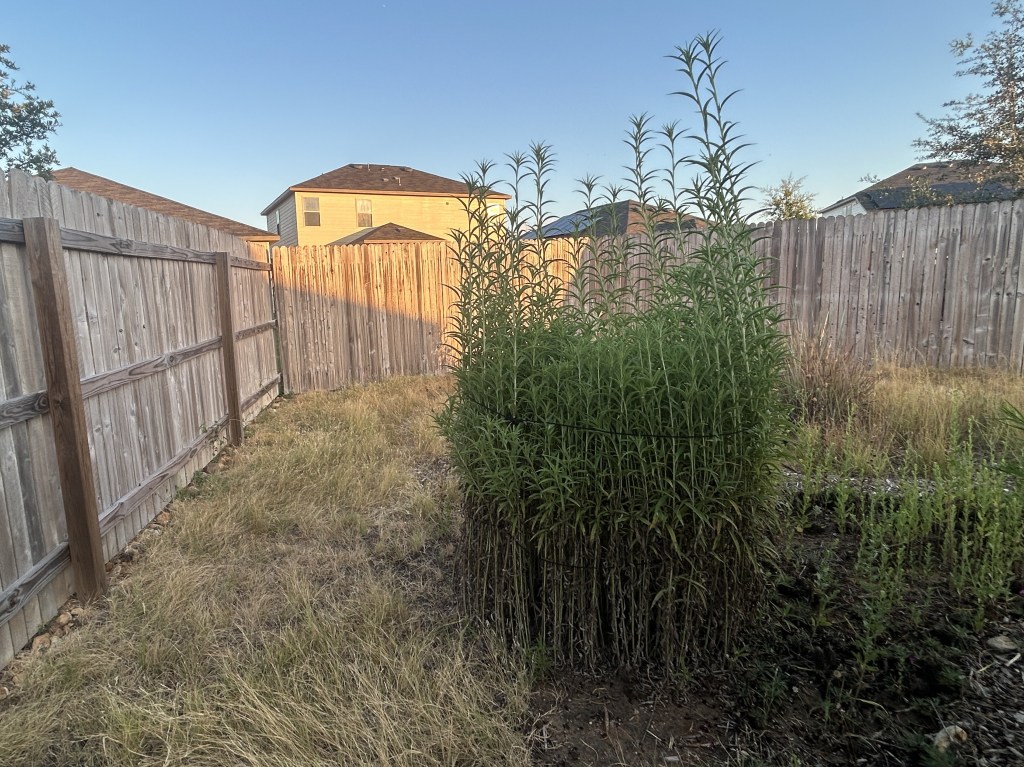
In two years, one Maximilan Sunflower (Helianthus maximiliani) plant has expanded into a significant clump. Last year these sunflowers grew very tall (12 feet) and splayed out in a rather inconvenient way. This year I decided to do a “Chelsea Chop” of the Maximilian Sunflowers to reduce their final height, and also to tie the… Continue reading
-
Barbados Cherry Looking Good!
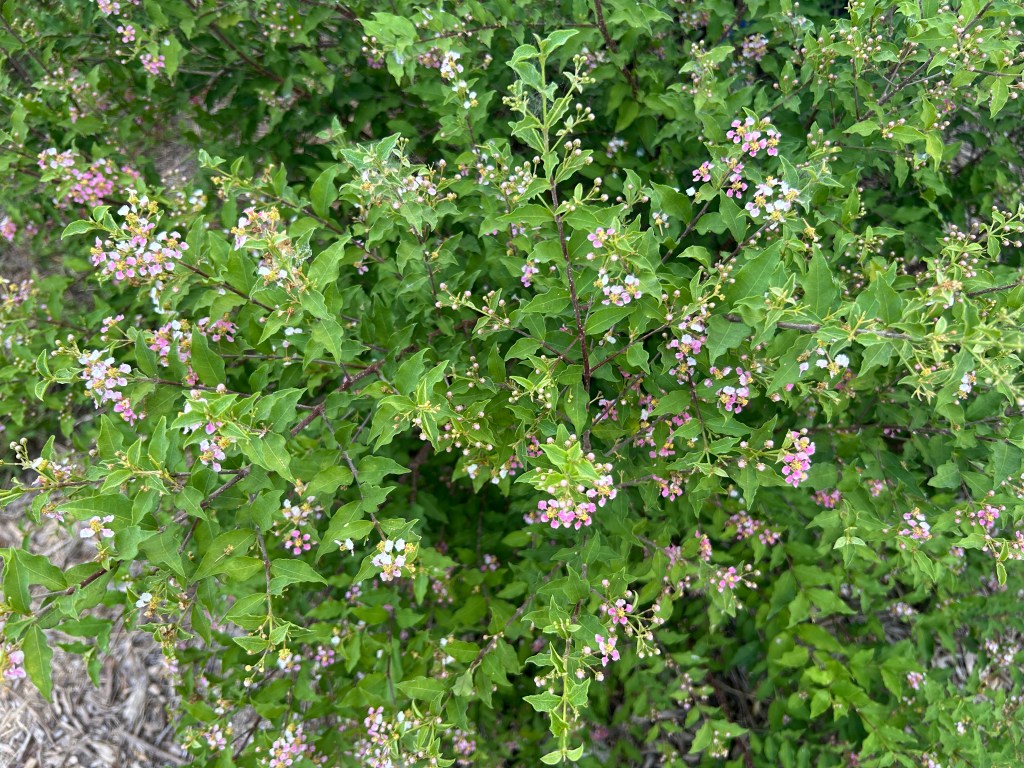
I planted a Barbados Cherry (Malpighia glabra) in 2023. I didn’t realize until I got it home that it was a dwarf variety, so it’s likely to grow in a shrubby form and only reach a height of 4 feet or so. Every winter this plant has frozen back to ground level, but each spring… Continue reading
-
Volunteer Milkweed Plants
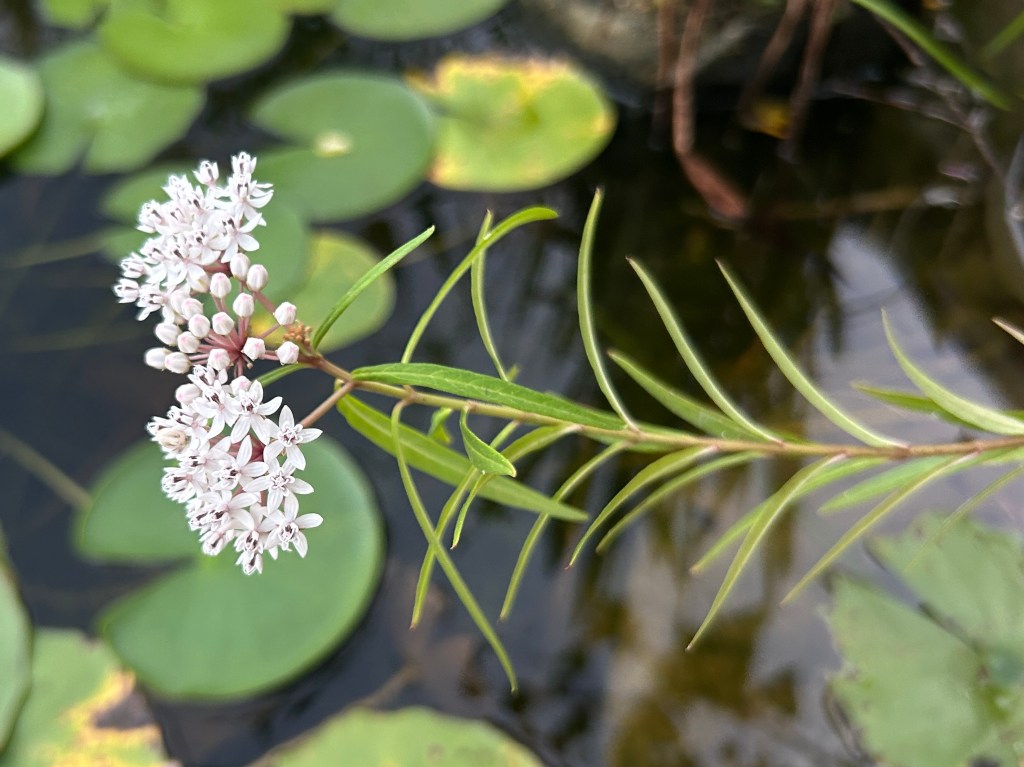
Milkweeds are the only plant that Monarch butterflies will use to lay their eggs and host their caterpillar larvae. However, Monarchs will feed from a lot of other nectar sources, as will other creatures, and so before planting milkweeds I focused more on building a garden with a variety of food sources at different times… Continue reading
-
A Rare Sighting For Me
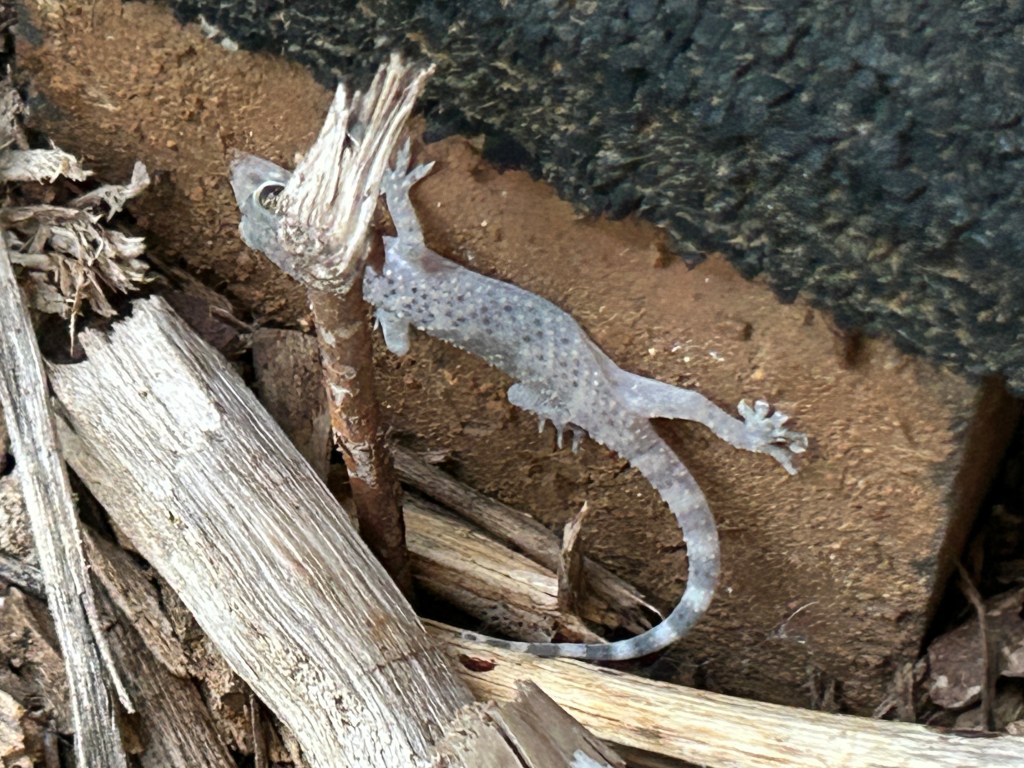
I am not a nocturnal creature, unlike some of the occupants of this garden. So one morning, just after dawn, I was treated to a rare sighting of a Mediterranean House Gecko (Hemidactylus turcicus), which is nocturnal. It’s also known as a Turkish Gecko, as represented in its Latin name, or a Moon Lizard, because… Continue reading
-
The First Sighting Of A Texas Spiny Lizard Here
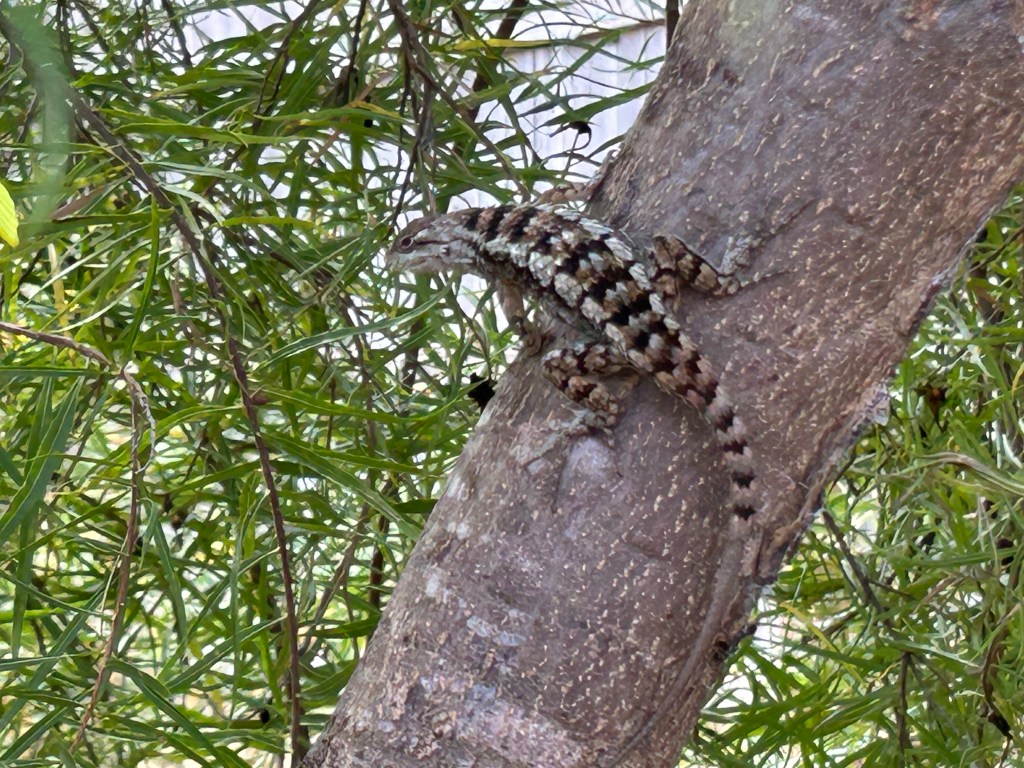
The most frequently seen lizard here by far is the Common Spotted Whiptail (Aspidoscelis gularis). I’ve also once seen a Green Anole (Anolis carolinensis). Recently I had my first sighting of a Texas Spiny Lizard (Sceloporus olivaceus) in the garden, a few feet up the trunk of the Desert Willow tree. I’m always excited to… Continue reading
About Me
Nature Lover.
Inquisitive Observer.
Student Gardener.
I invite you to join me on my journey to convert my sterile (from a nature point of view) new house lot to a healthy and diverse ecosystem, as I make discoveries, mistakes, and hopefully progress. I am not an expert or professional. The project started in February 2023 and the location is Seguin, Texas, USA.

