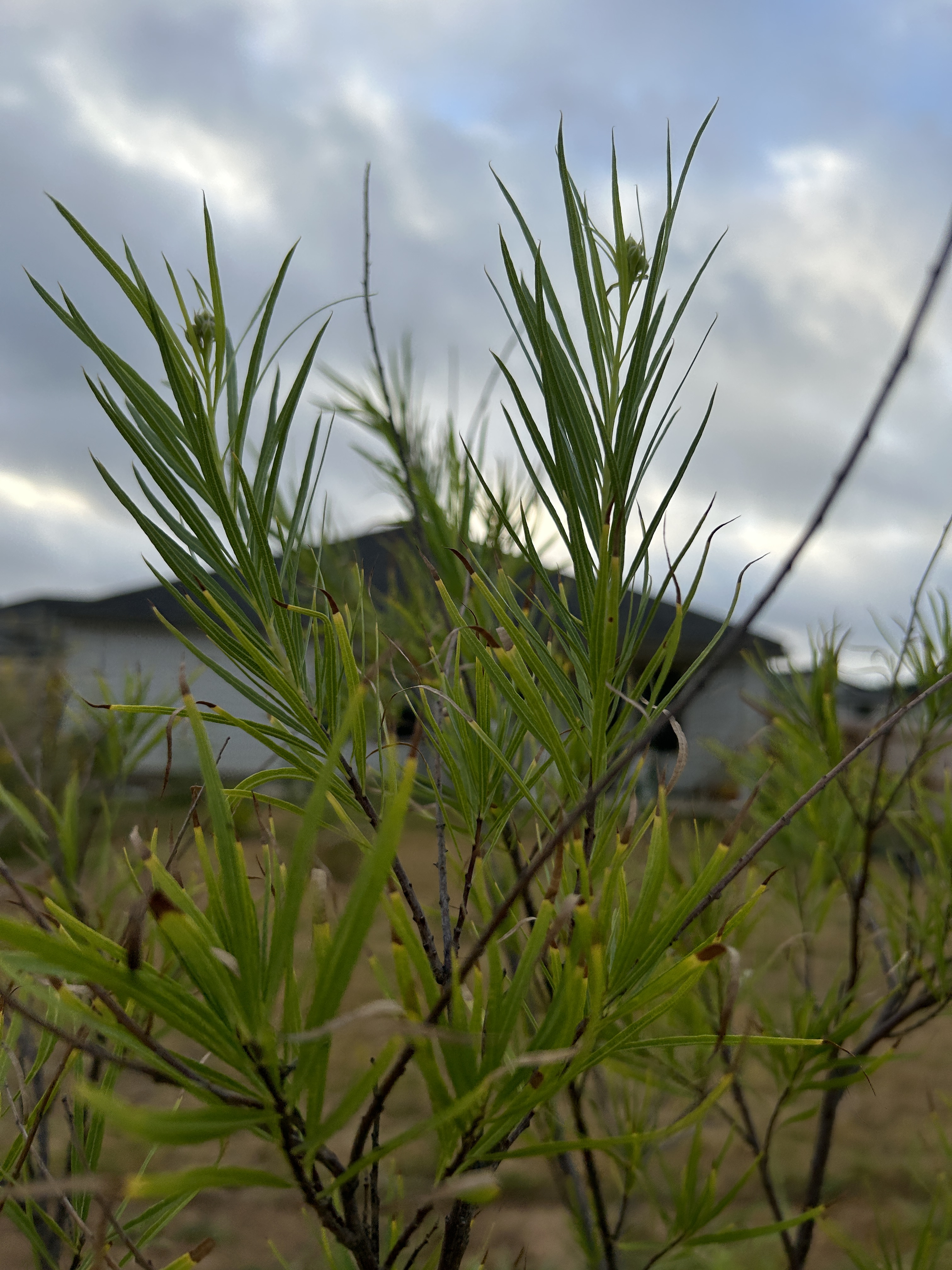
In general, I use the estimation that the critical part of a tree’s root system corresponds to the area defined by its drip line (the outer circumference of its branches). If I can, when a tree is situated within a lawn, I like to define a mulched non-turf circle that extends at least to the drip line.
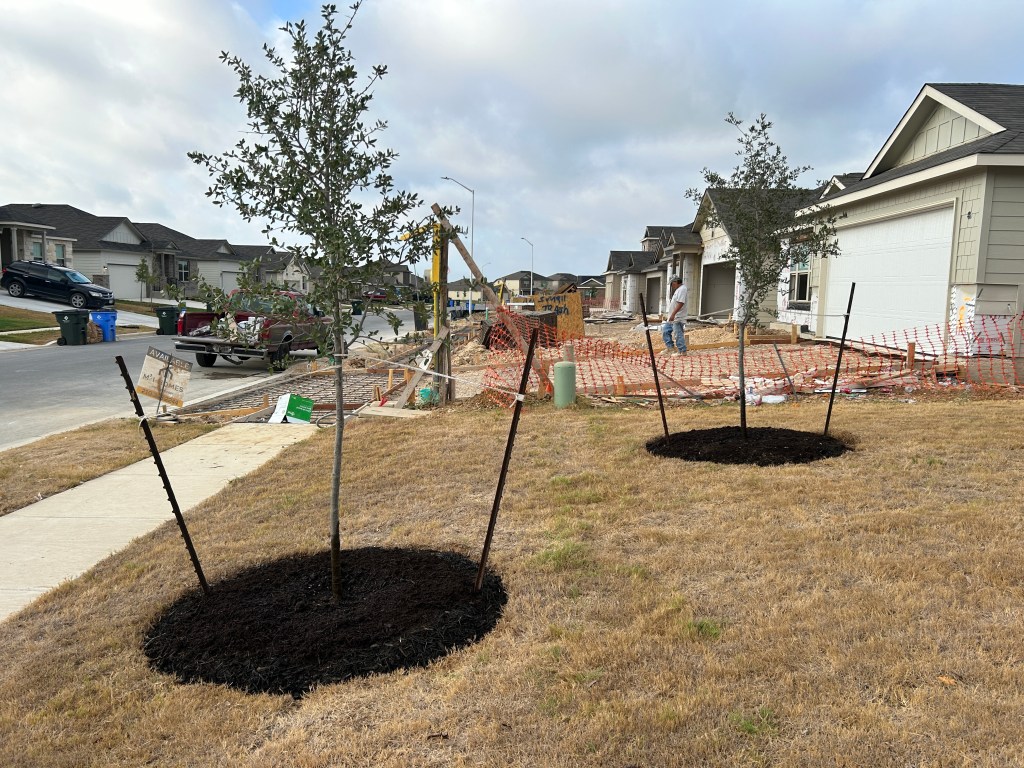
While I am waiting for this summer’s drought to end (will it ever?), I am tackling some “infrastructure” projects, and one of those was to increase the size of the circles in which our two Live Oaks are situated in front of the house.
When the Live Oaks were planted here by the builder, they were placed in circles that extended about 19 inches from the trunk.
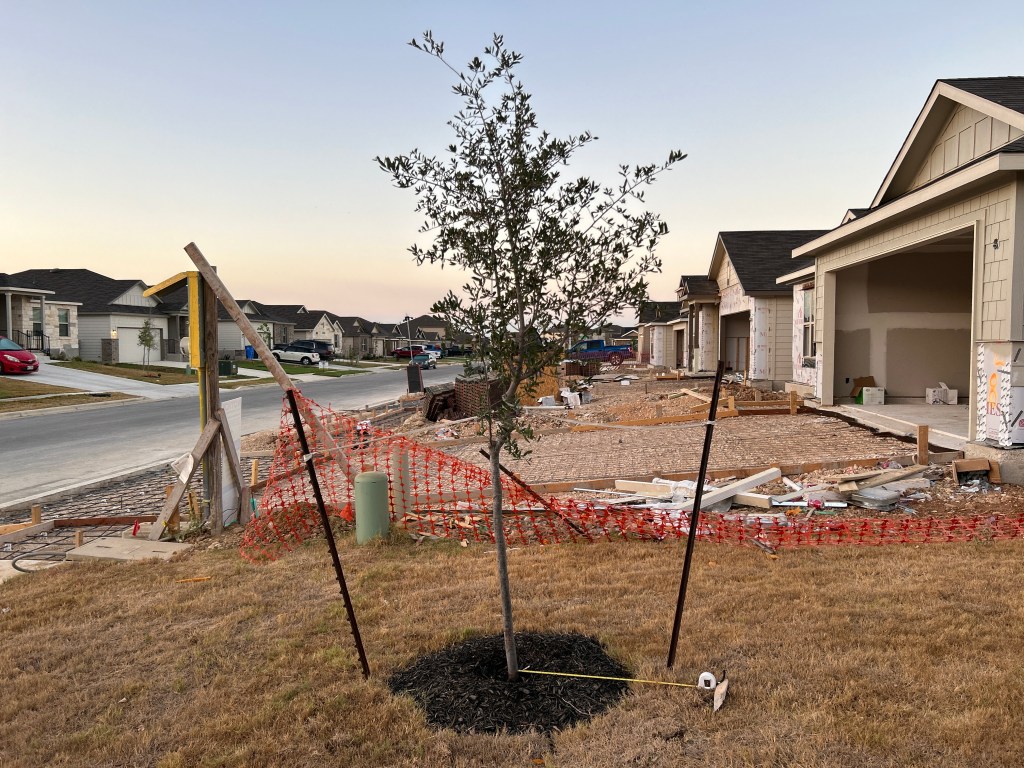
For now, I am extending those circles to 30 inches away from the trunk. I marked the circles, scored the edges, then yanked up the Bermudagrass cover and any lingering roots that I could see.
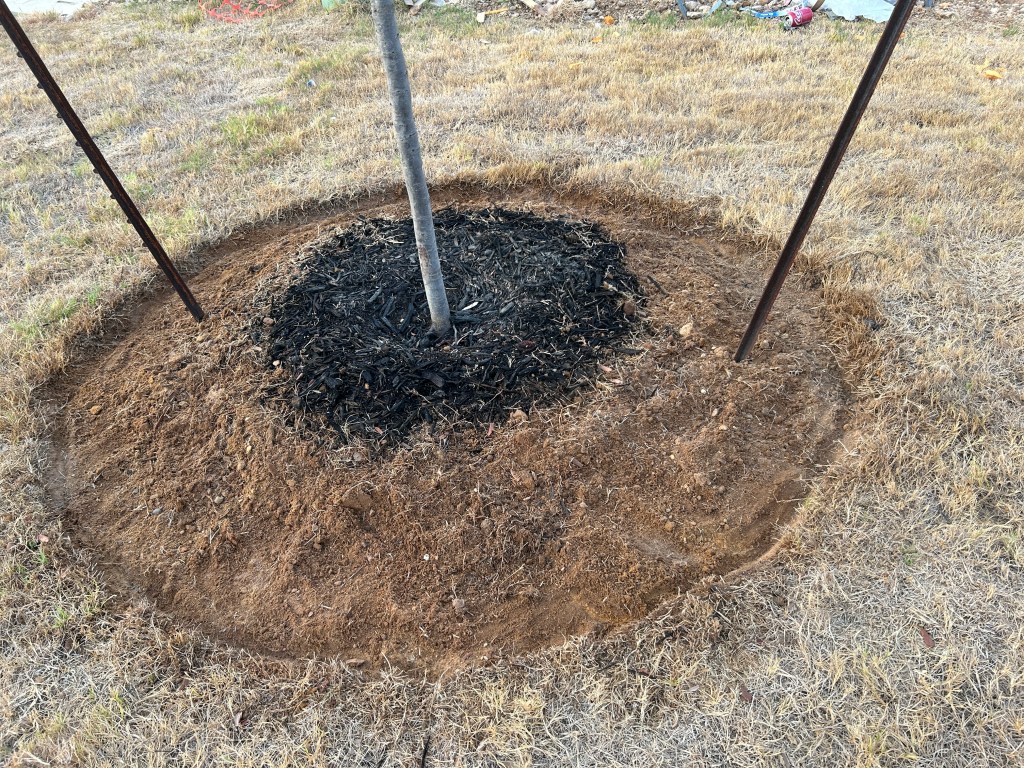
Then I added peat moss, scraped the original mulch to the edge of the circle, and added more native hardwood mulch. I did think about adding a boundary of stones to border the circles, but for now without a border will be easier to keep the edge clean of turf invasion.
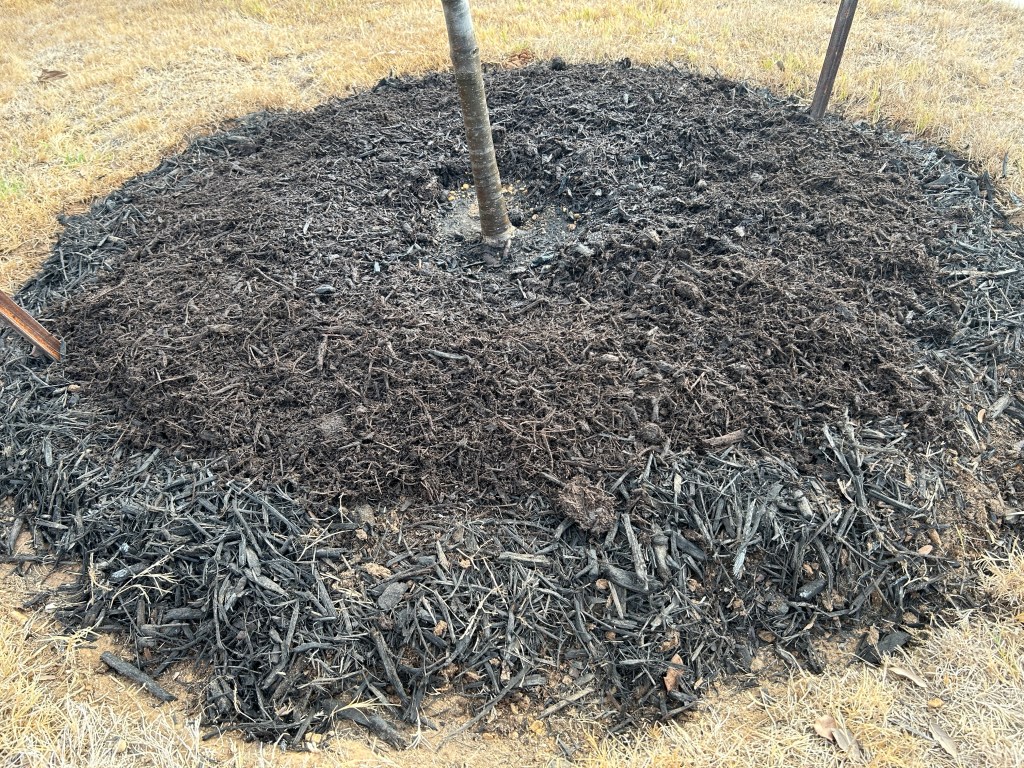
Note that I don’t place mulch right up against the trunk of the tree. I leave a few inches clear so that the root flare at the base of the trunk is exposed. Trees can rot if mulch is piled up against a trunk in a “volcano” shape.
That should take care of the tree circles for at least a year or two, except for a little weeding now and then.
I think these trees are sturdy enough to not need their stakes now, but I’m going to wait for two things before removing them: (1) when this year’s hurricane season is over, and (2) when I see new branch or leaf growth (a sign that the root system is working well). The trees were probably planted in January 2023, so they’ve been in the ground less than a year.


 Rewilding My Lot
Leave a comment