I had heard about galls before, but didn’t really know anything about them. So when I found three on a branch of one of my Live Oak trees, then of course there had to be research.
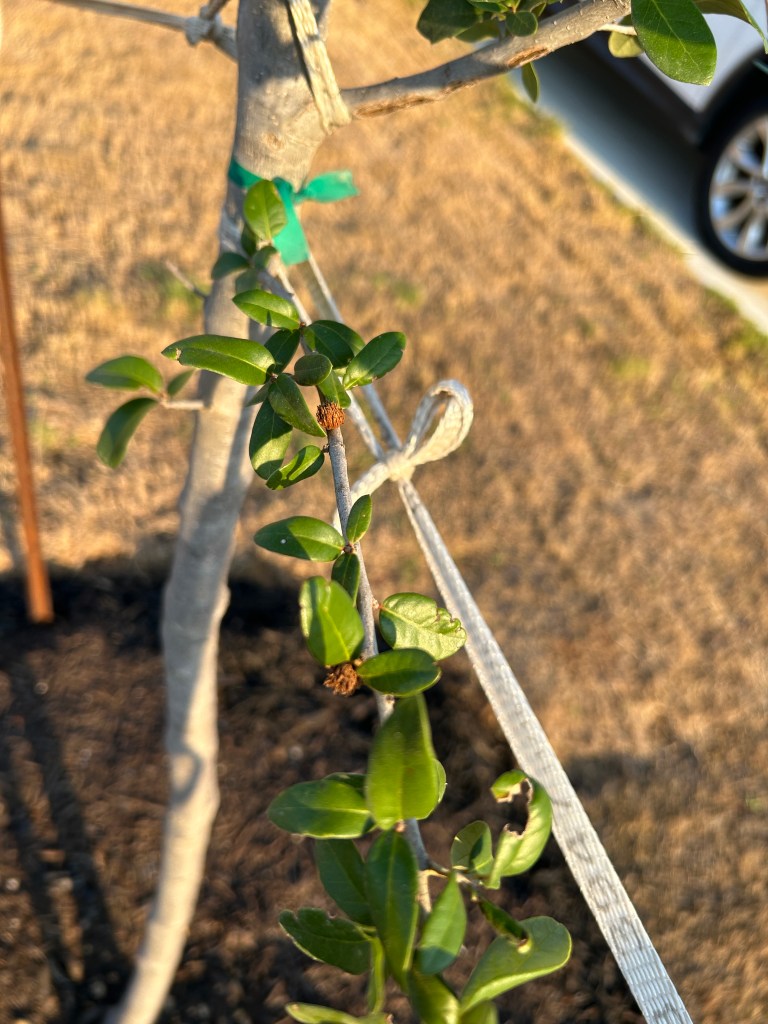
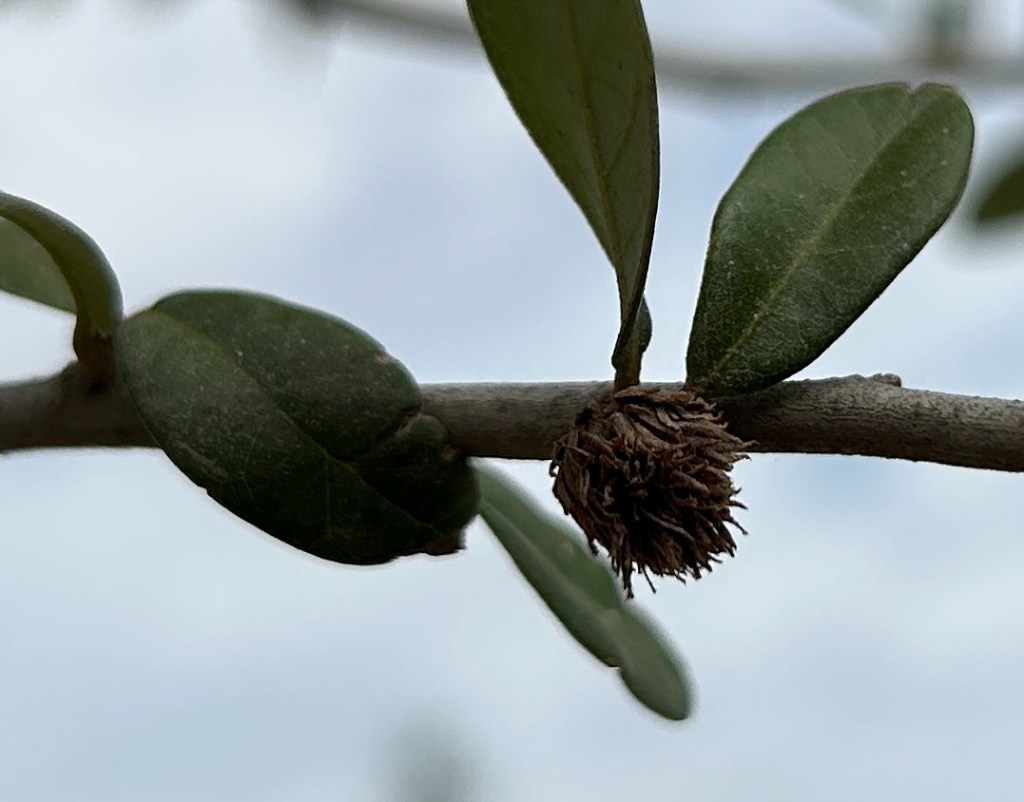
A plant gall in general is an abnormal swelling of plant tissue, usually caused by some other organism (e.g., insects, fungi, bacteria). They can be found on all parts of plants, in a variety of sizes up to about two inches.
Although the gall is made of plant tissue, it is the insect (in this instance) and the chemicals it produces that control the form and shape of the structure. In most cases, the plant is not harmed by the presence of galls.
So what do I have? I believe that it is the result of a Leafy Oak Gall Wasp, Andricus quercusfoliatus. According to this article, there are 12 kinds of cynipid wasps that induce galls on Live Oak trees and they have two generations per year — this is presumably part of the spring generation since I noticed these in August. Early in the life cycle, there is a green growth that essentially hijacks what the tree would otherwise be doing at that location. Inside the green structure is an inner pod that is jettisoned when the gall turns brown, so that is presumably the stage we are at now. Somewhere in the leaf litter below the tree is that inner pod, which contains a wasp larva, and when the adult wasp is mature it chews its way out.
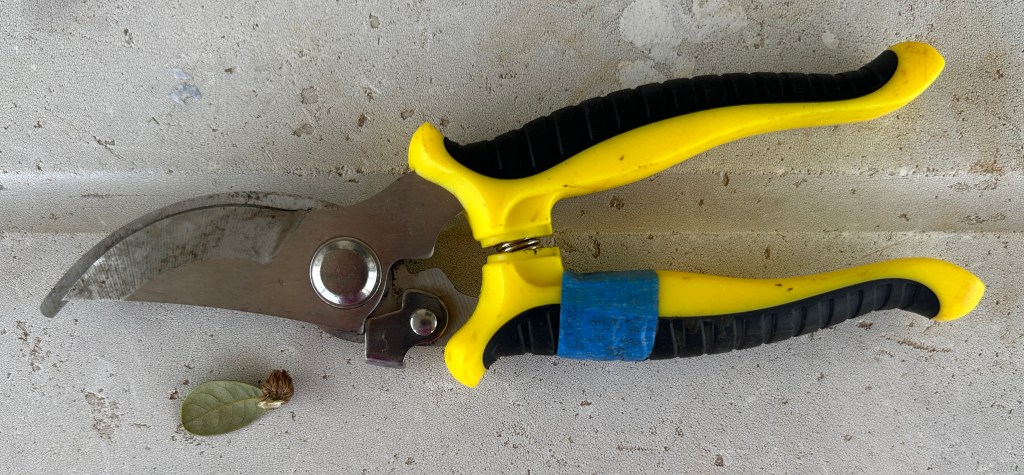
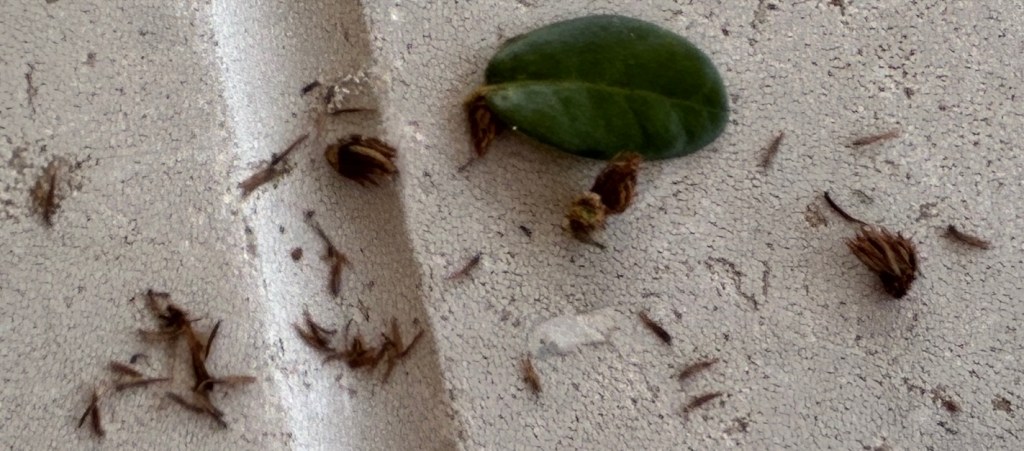
On the assumption that the wasp that was originally growing in the gall is either now on the ground under the tree or fully matured, I decided to take one of the galls apart. It was firmly attached to a point on the branch where a leaf was growing. The brown hairy-looking things were soft and dry and easily broke away. I can certainly imagine how a larval pod might have been released through the bristles, and I didn’t find anything that looked like it was, or would turn into, a wasp. Nevertheless, I did drop all the bits back under the tree. Here are a couple of photos of the crude dissection process.

 Rewilding My Lot
Leave a comment