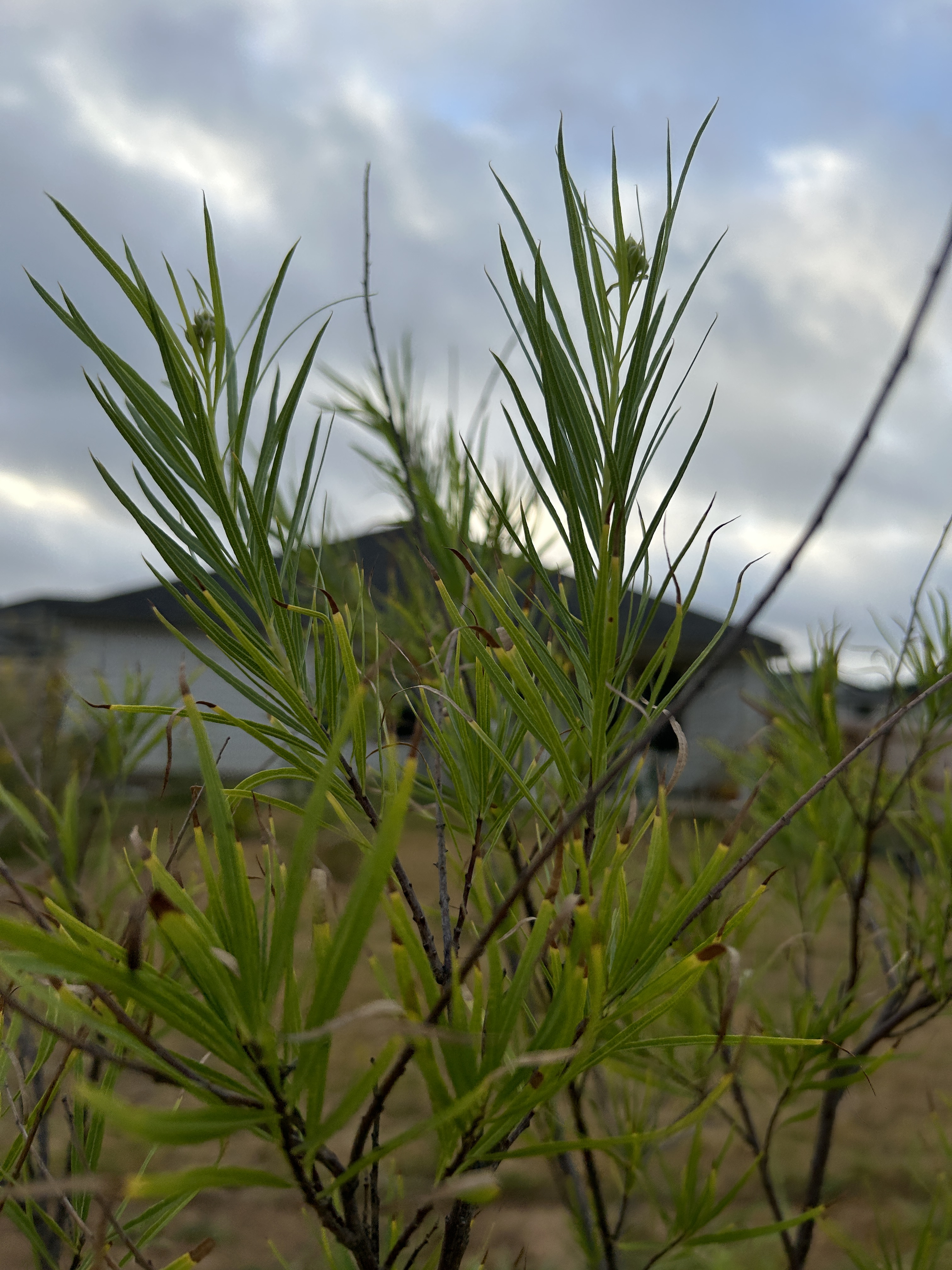
This is not a post that I have enjoyed writing, but I want my story here to be complete and honest.
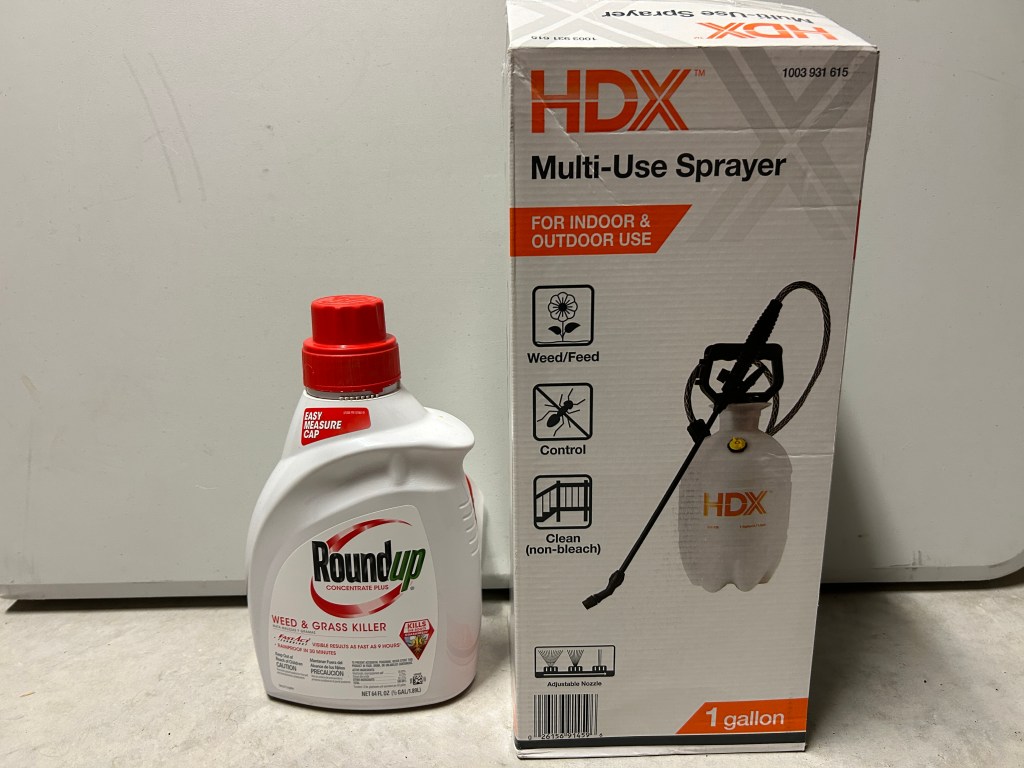
I never thought that I would use Roundup (a weed and grass killer). However, in tackling the task of removing Bermudagrass from the entire back yard (approximately 3,000 sq ft), I have come to this. I have talked to many native gardeners since I came here, and almost all said the same thing — use Roundup but be very careful to avoid contamination. For months I used other mechanical methods (summarized here), but have concluded for myself that this is the best way to proceed for the area that remained.
Here’s what I did.
PREPARATION
- I started preparing weeks beforehand, by manually removing at least 6 inches of Bermudagrass next to any other plants that I wanted to protect.
- Most of the grass was already fairly short because it had not grown during our summer drought. But the parts that were a little longer were trimmed down.
- Roundup will only work if there are green leaves. During the drought the grass above ground largely turned brown, although I knew the roots were alive underneath. Finally we got a day of rain, and I waited two weeks after that before doing the treatment.
- The day before the first treatment, I watered the Bermudagrass with a hose (very resentfully, I must say — I hate watering lawns!).
- Also before the treatment I practiced with the 1-gallon hand sprayer that I have purchased for this project (using water), and adjusted the nozzle so that the spray was not too wide or narrow.
TREATMENT #1 (September 7, 2023)
- I designated a bare earth area within the back yard as the place to prepare the spray, ran a hose out to there, and made sure I had a clean path back to the house. (This is an open area where I have previously removed Bermudagrass mechanically and is not yet planted.)
- About six times (I didn’t count) I prepared one gallon of Roundup at 6oz per gallon in the sprayer and pressurized it with the pump.
- In strips of about 3-feet wide across the Bermudagrass area I walked slowly backwards and sprayed side to side close to the ground. I left a marker whenever I had to refill the spray tank.
- Once I had covered the whole treatment area, I poured the dregs left in the pump slowly into the bare earth area. I didn’t want any to run off or find its way into drains.
PREPARATION #2
- A couple of weeks after the first treatment, I mowed the area. I thought that this would encourage growth of and make more visible any grass that was still alive.
- I had hoped for rain after the first treatment but it never came. So one evening I (again resentfully) watered the area. I watered again the day before the second treatment.
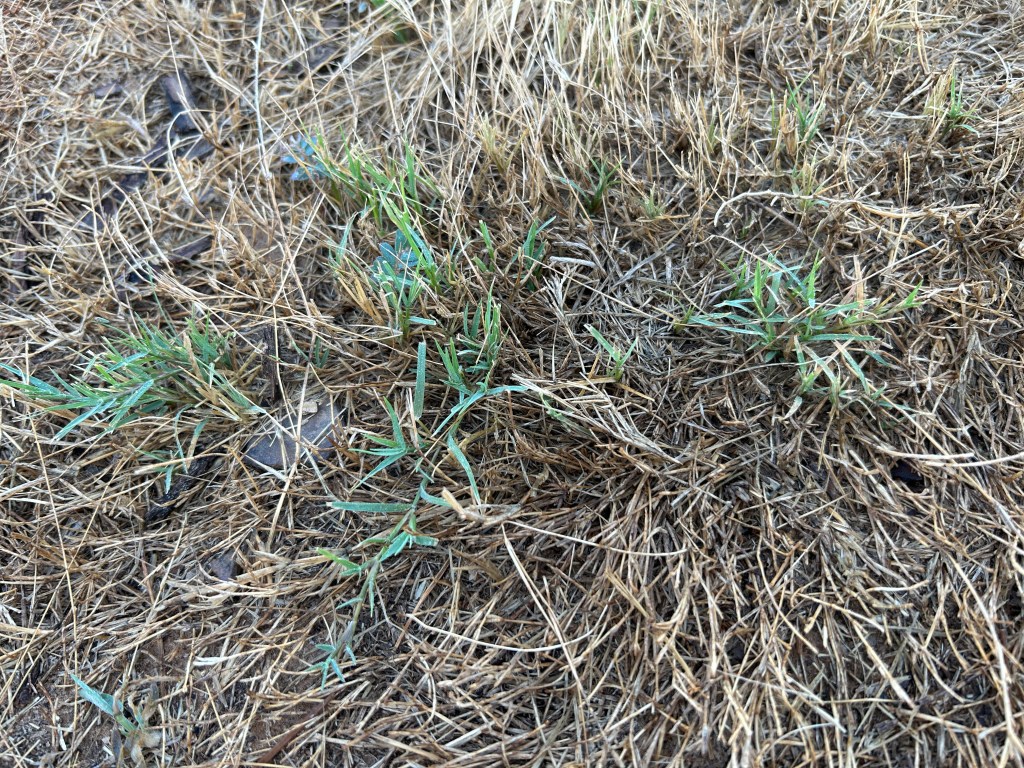
- Most of the grass area was brown by now, but there were certainly some areas that were still living, like this.
TREATMENT #2 (September 29, 2023)
This went pretty much the same way as the first treatment.
Realistically, I won’t know how effective the Roundup treatment has been for several weeks or months. By next year I will know whether mechanical or chemical removal was more effective, judging by where remnants of Bermudagrass pop up, which I feel sure they will. In the meantime, I will continue with plans to install a couple more plants from pots, and cover the rest of the area with native plant seeds.

 Rewilding My Lot
Leave a comment