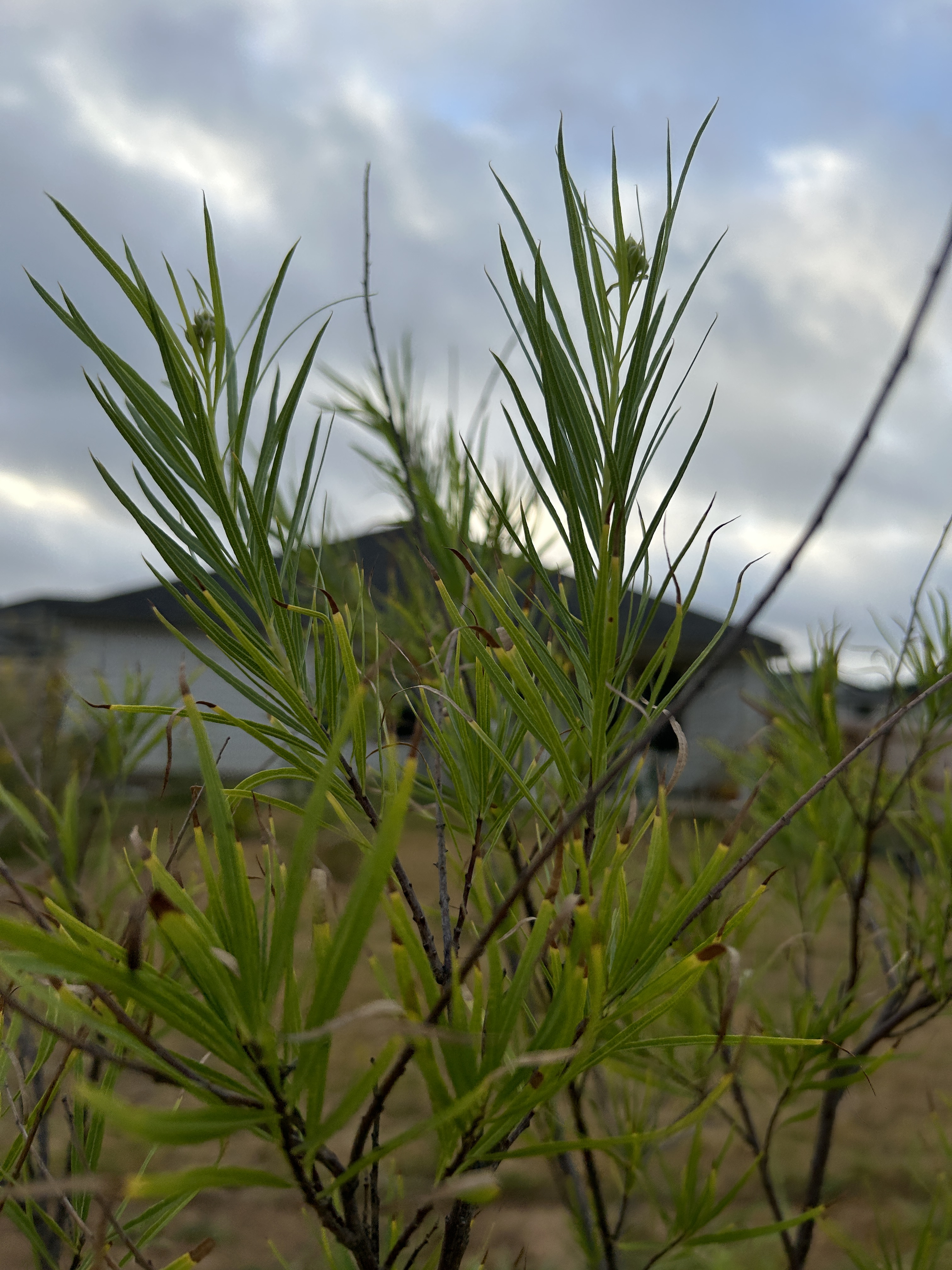
Soil and dirt in the context of a garden might seem to be words that are interchangeable, but they really aren’t, and certainly here I believe there is a clear distinction between the two.
The garden I left in Houston had benefitted from decades of biological activity, such as plants growing and decaying, leaves dropped from mature deciduous trees, aeration of the ground by earthworms, and all of the general life & death cycles that happen in nature. The general texture was heavy clay with a definite component of organic matter, and thus nutrients. That was soil.
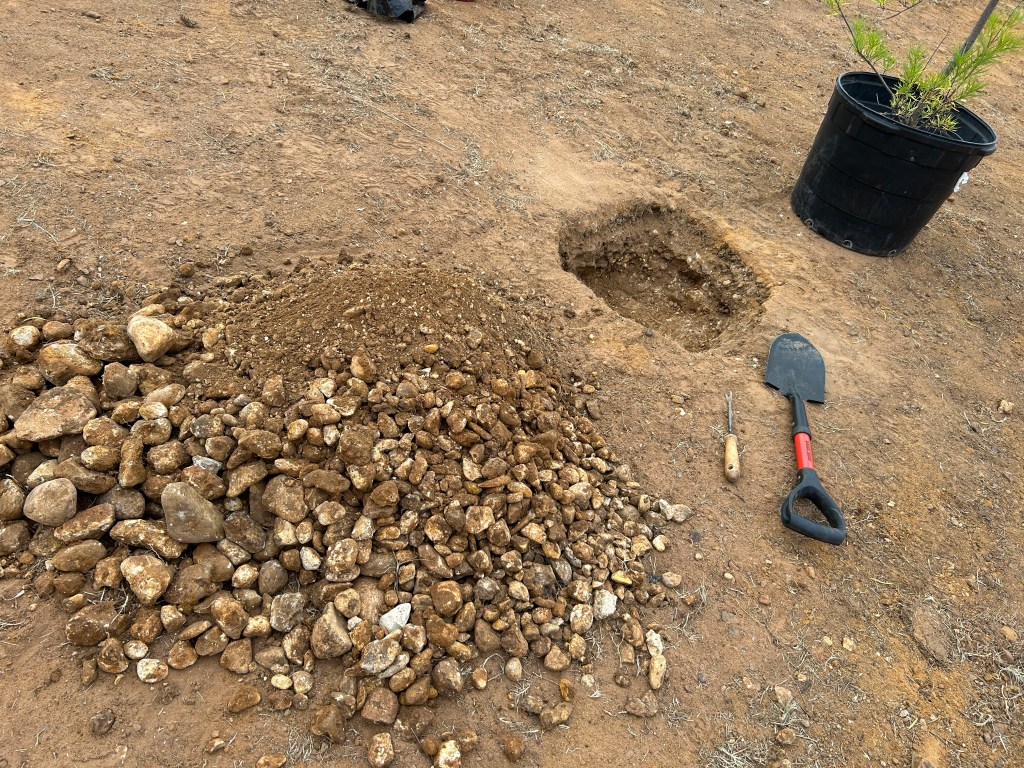
When the new development where I now live was built, the original topsoil was scraped away and replaced with builder-delivered sand and stones. When I first arrived, the ground was compact, stony, and pretty much devoid of any organic matter. That was dirt.
Here’s what I dug up to plant a tree in the early days here.
The following picture is of the side of the swale I have hollowed out. The foreground is the ground that the builder provided. In the background are remnants of hopefully dead Bermudagrass, left in place to provide structure and decaying organic matter, and above that an inch or so of purchased enriched topsoil (i.e., soil plus compost). There is also a bonus Bluebonnet plant!

So as I build a garden here, I have to include the ground in my plans to create a healthy environment. To make a truly nutritious soil will probably take years, and I need to take every opportunity to improve it. Until then, plants may not thrive as they otherwise would, seeds may not germinate well, and rain water may run off instead of being absorbed into the ground.
So here are some things that I have done or am continuing to do:
- Purchased enriched topsoil (i.e., soil plus compost) to be added to the garden.
- Adding compost or mulch at every opportunity.
- Planting native plants that put down deep roots to help with capturing water. If supplemental water is provided, then it is done infrequently and deeply (this also encourages deep root growth).
- Planting nitrogen-fixing plants such as Bluebonnets and Clover to increase nutrients underground.
- Letting ants do their thing, because whenever they dig their mounds they are aerating the ground underneath.
- Giving the land back what it has grown, so if a plant that is not a weed is being trimmed back, I’ll cut it into pieces and leave it on the ground or compost it.
- Encouraging wildlife to visit. Unless a visitor is specifically harmful to something I want to nurture (e.g., Genista Broom Moth caterpillars on the young Texas Mountain Laurel tree), then I will not interfere. The more diversity of nature here, the healthier this ecosystem will become.

 Rewilding My Lot
Leave a comment