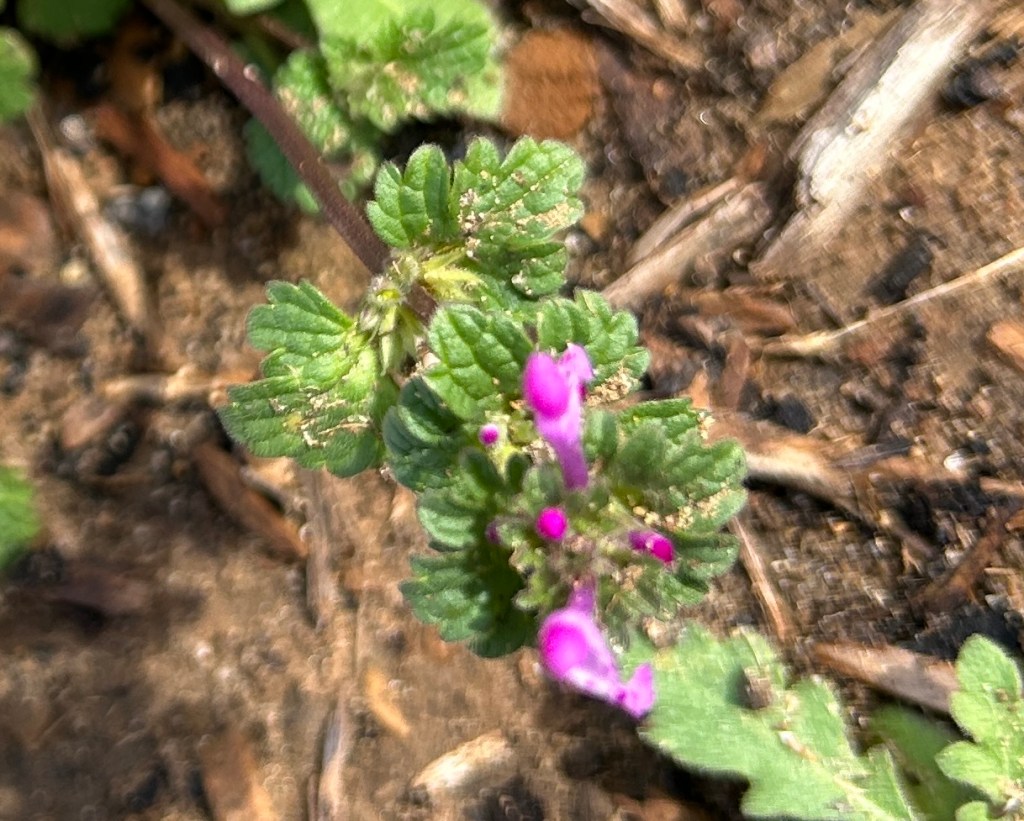
As new plants start to grow here for the spring season, I need to identify them as soon as possible so that I can decide what to do with them. Plants will generally fall into one of three categories:
- Plants that I introduced and that I want to keep
- Volunteer plants that I want to keep
- Volunteer plants that I do not want to keep — i.e., weeds
The main thing to determine for a volunteer plant is how invasive or aggressive it is. By definition, a native plant is not considered invasive, although it certainly can be aggressive and undesirable in certain situations (e.g., Huisache). If non-native plants are reproducing well and stealing habitat from natives, then they would be considered invasive (e.g., Ligustrum aka Privet).
Sometimes it’s easy for me to know what to remove quickly, such as grasses in my flower areas or thistles in my grass areas.
Other choices will not be so easy, like this one.
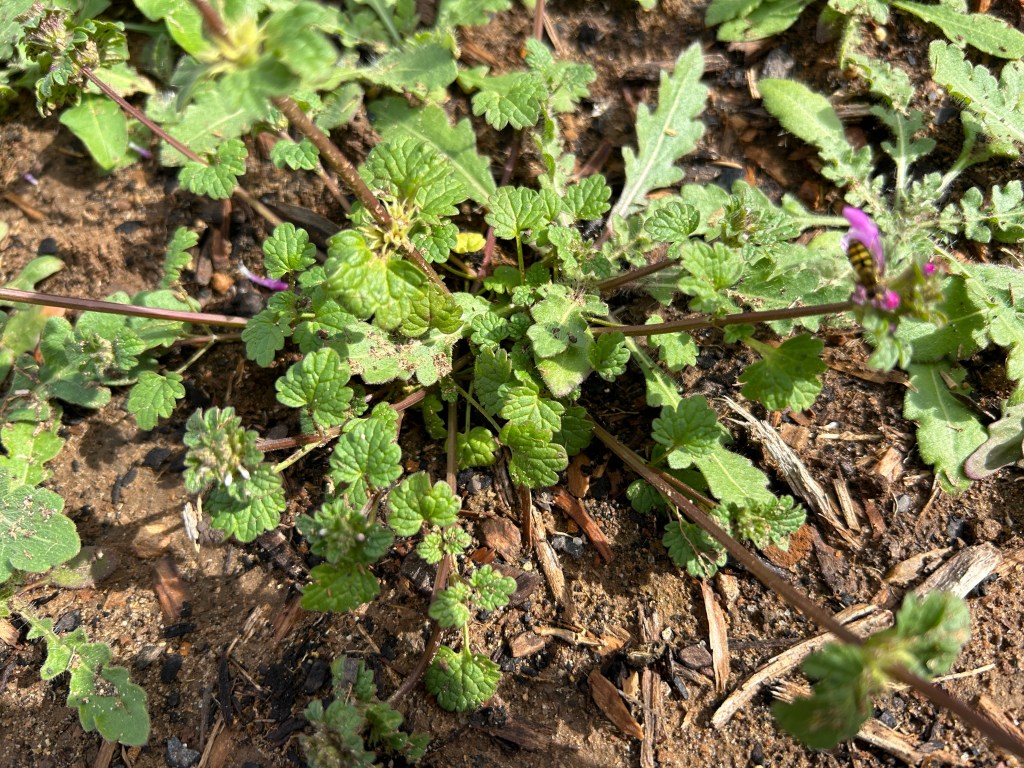
Henbit Deadnettle (Lamium amplexicaule) is one of the first volunteer plants that I ever saw on this lot when I first arrived last year in February. It catches the eye because it is so early to flower, and as it is already flowering in January 2024, it is almost the only nectar food available in the back garden. In the photo above, you might be able to spot a tiny bee on the right side.
–Is it native to this area? No. It’s probably native to the Mediterranean region but has since spread around the world.
–Is it invasive? Yes. It seeds very readily and can crowd out neighboring plants, especially if they are seedlings.
–Does it serve any useful purpose? Maybe. It can be food for early pollinators. It’s also edible for humans, and chickens love it!
On balance I have decided to remove Henbit Deadnettle when I see it, unless it happens to be in an isolated spot. Although it is feeding insects, it is also growing over seedlings that I have planted (or not yet identified), like here.


 Rewilding My Lot
Leave a comment