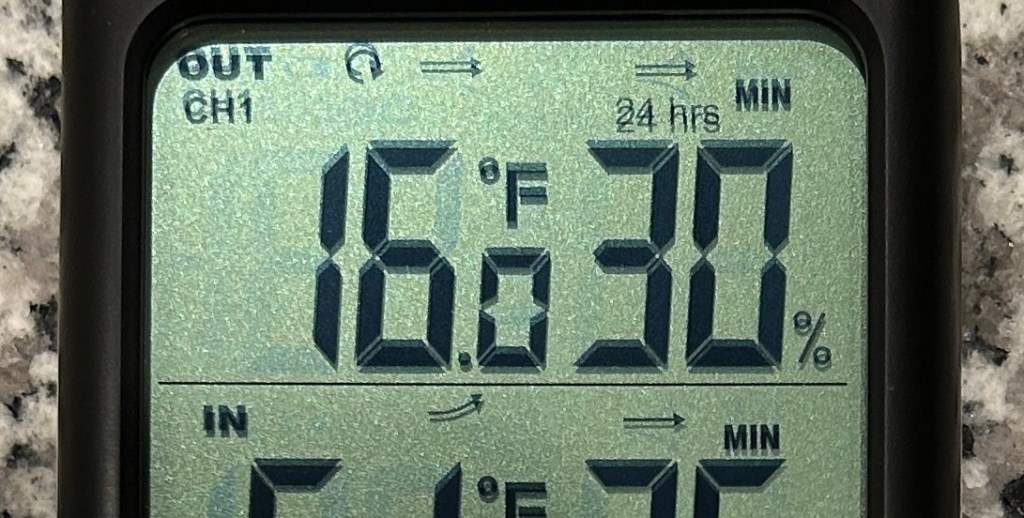
In the past week we have had five nights of below freezing temperatures, with the lowest recorded here of 16.0 F.
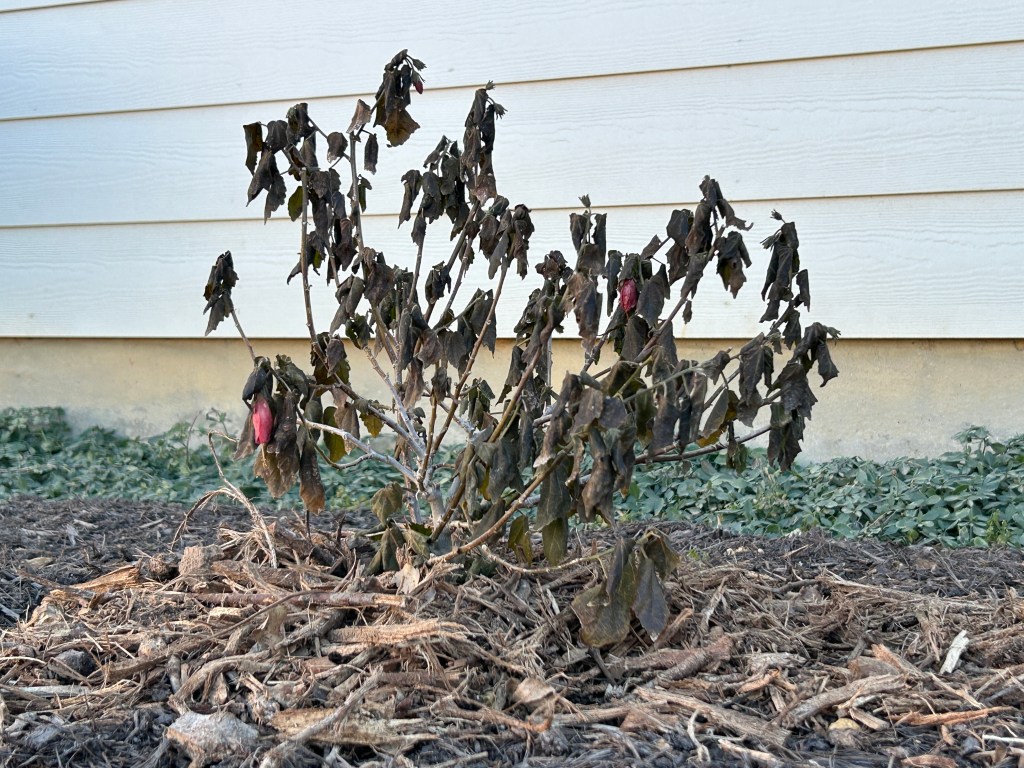
I expected to see some wilting, blackness, or loss of leaves and we certainly had that. With native plants, that is almost never a concern, and it’s just a part of nature cleaning up. Where possible, I will avoid trimming anything until we have passed entirely through our frost season — newly trimmed plants could be more vulnerable to future frosts if we have them. So it’s perfectly normal for parts of a native garden to spend some time over the winter period looking black and straggly. This is my Turk’s Cap, looking exactly the way I expected it to.
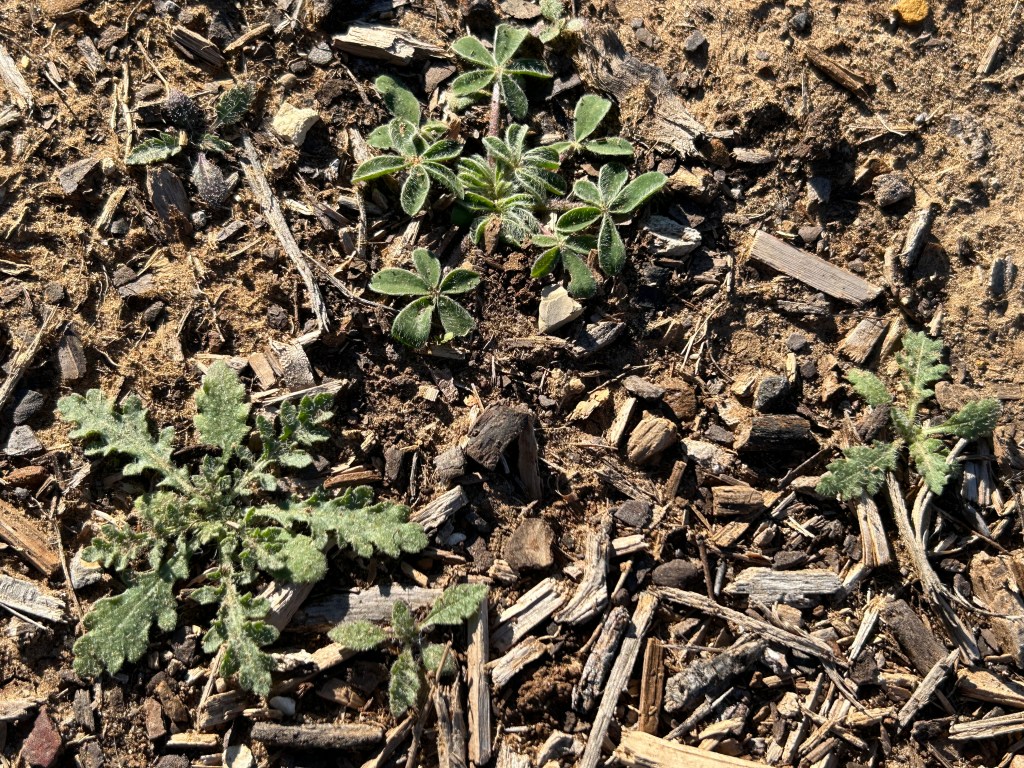
Wildflower seeds that I planted last year, such as Bluebonnets (Lupinus texensis) at the top of the next photo, normally grow “rosettes” in the fall where leaves lie flat to the ground and roots are growing strong. Then in the spring, the plants grow taller and produce blooms. They don’t mind cold winters. These guys are just waiting for warmer weather to proceed further.
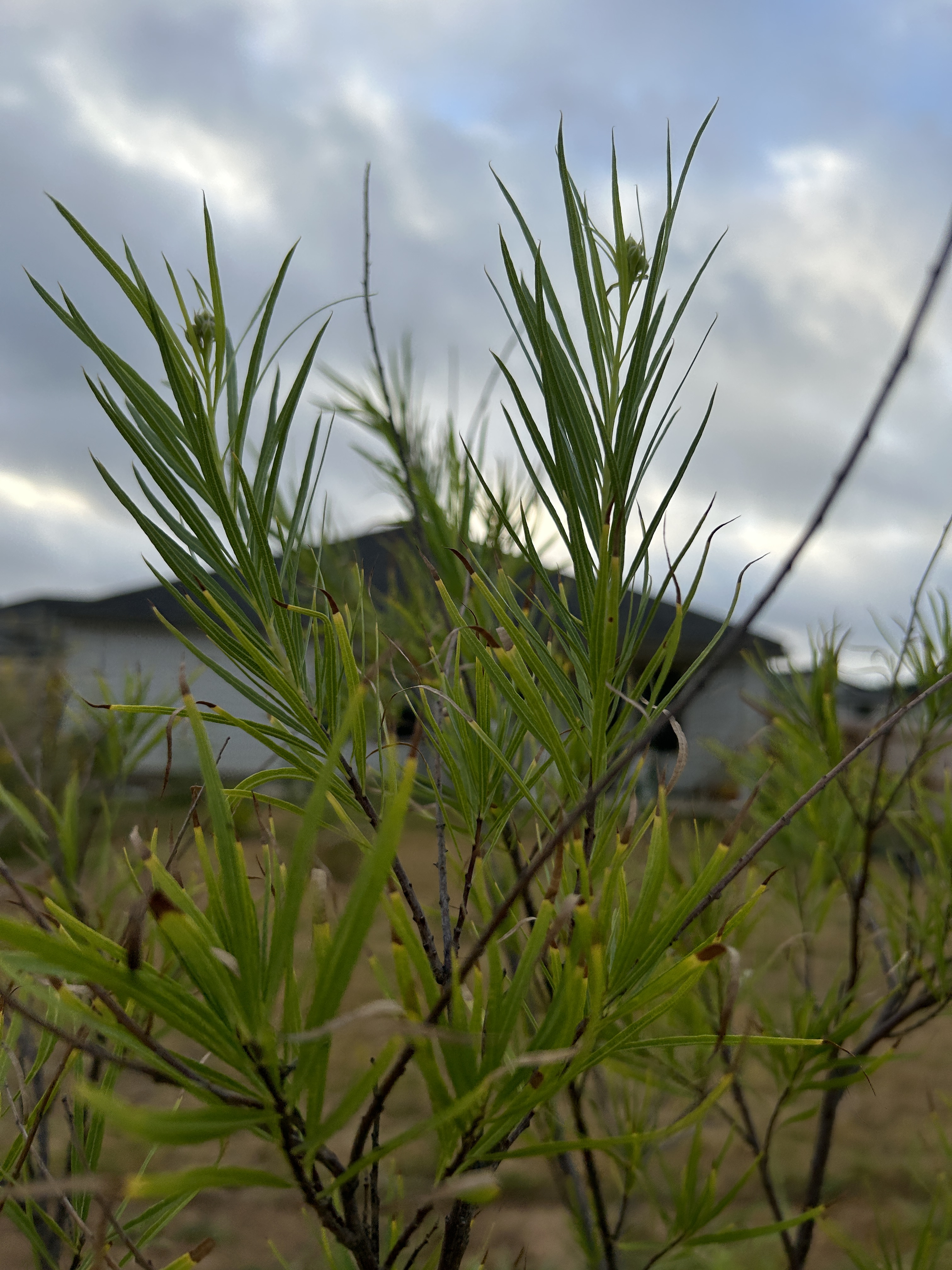
My four trees in the back yard (Texas Mountain Laurel, Desert Willow, Mexican Plum, Mexican Olive) represent my greatest investment in terms of money spent to purchase them, and the time they will need to reach maturity. So I am watching them closely.
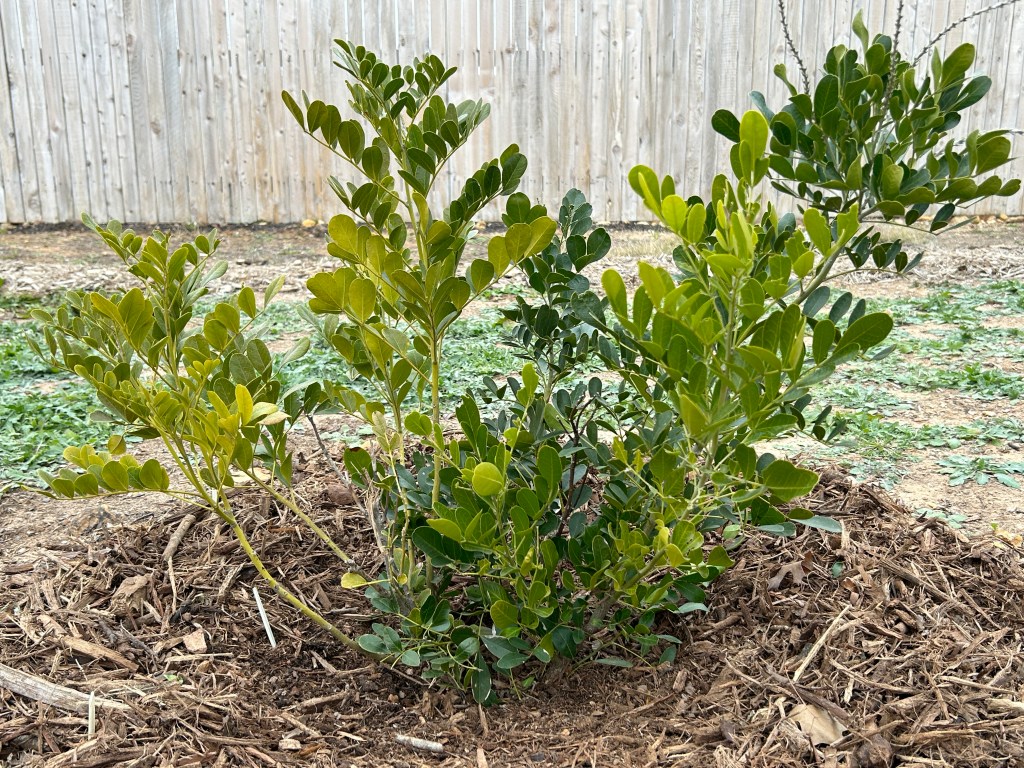
The Texas Mountain Laurel (Sophora secundiflora), an evergreen, looks mostly unperturbed by the freeze. This tree does have issues with some parts of it not producing new growth, and perhaps being iron-deficient, but those were pre-existing conditions long before this month. It is supposed to be cold tolerant.
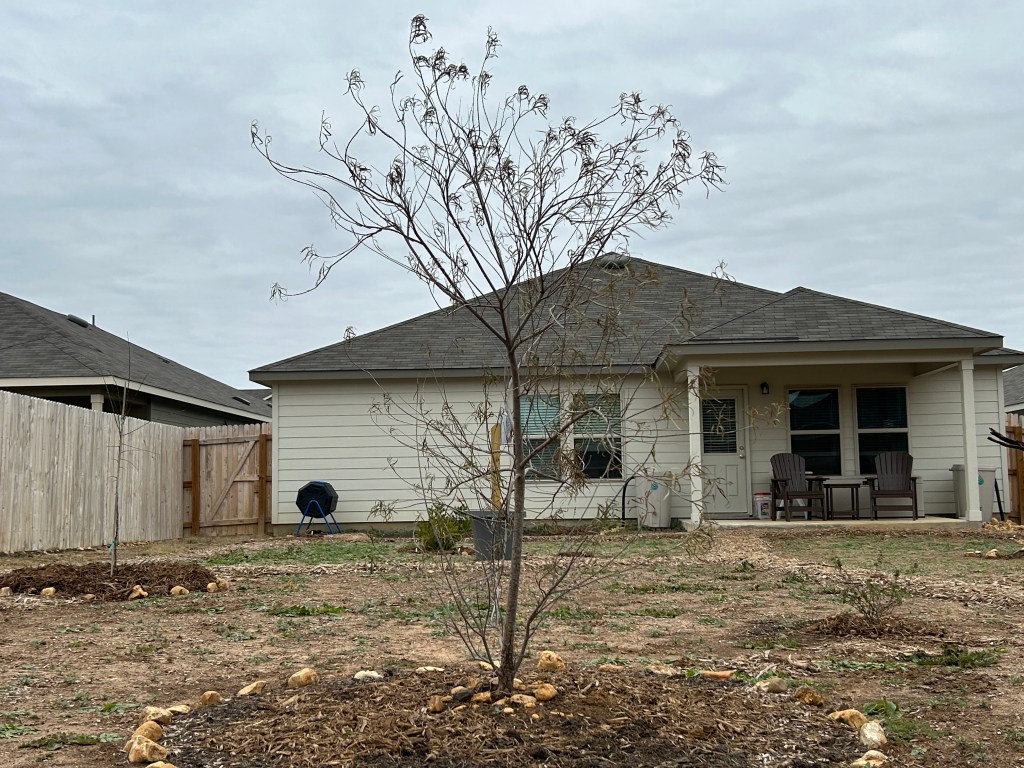
The Desert Willow (Chilopsis linearis) lost some leaves during the freeze, and will presumably lose the remaining brown ones. However, this tree has already shown tremendous hardiness during last summer’s drought and I feel confident that it will come through this winter just fine. It is supposed to be cold tolerant.
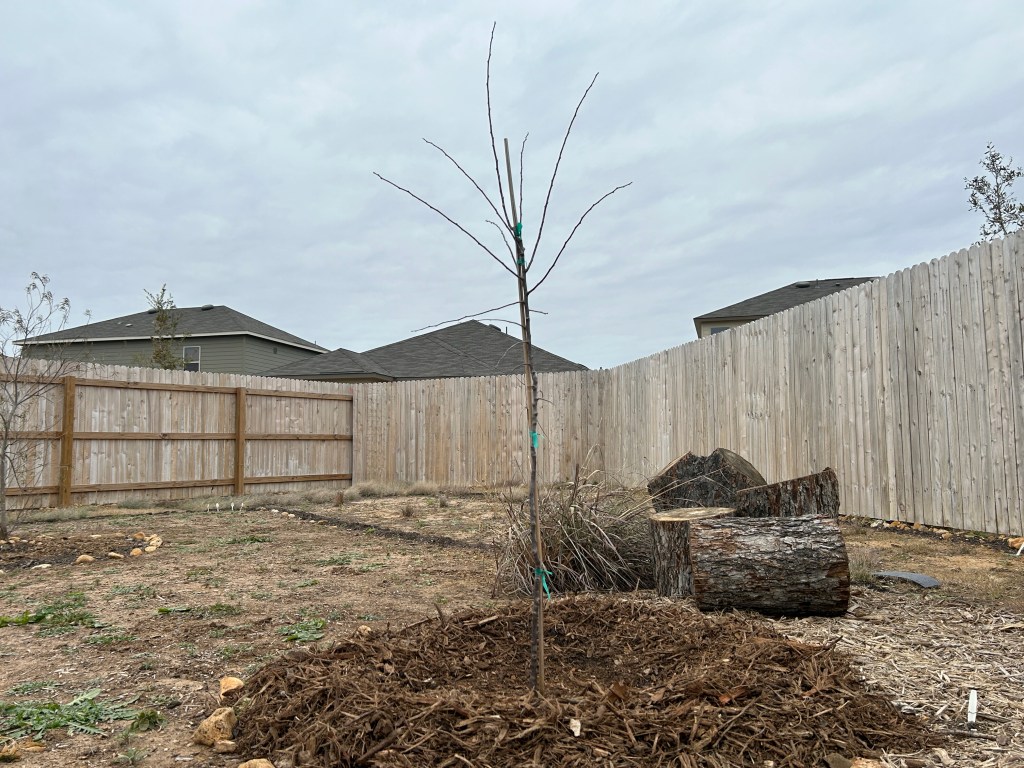
The Mexican Plum (Prunus mexicana) is deciduous and was planted in the fall after its leaves had fallen. I won’t know until spring how it has fared. Hopefully I will see new growth once it gets warmer. It is supposed to be cold tolerant, and I hope that it is established enough for that despite its recent planting.
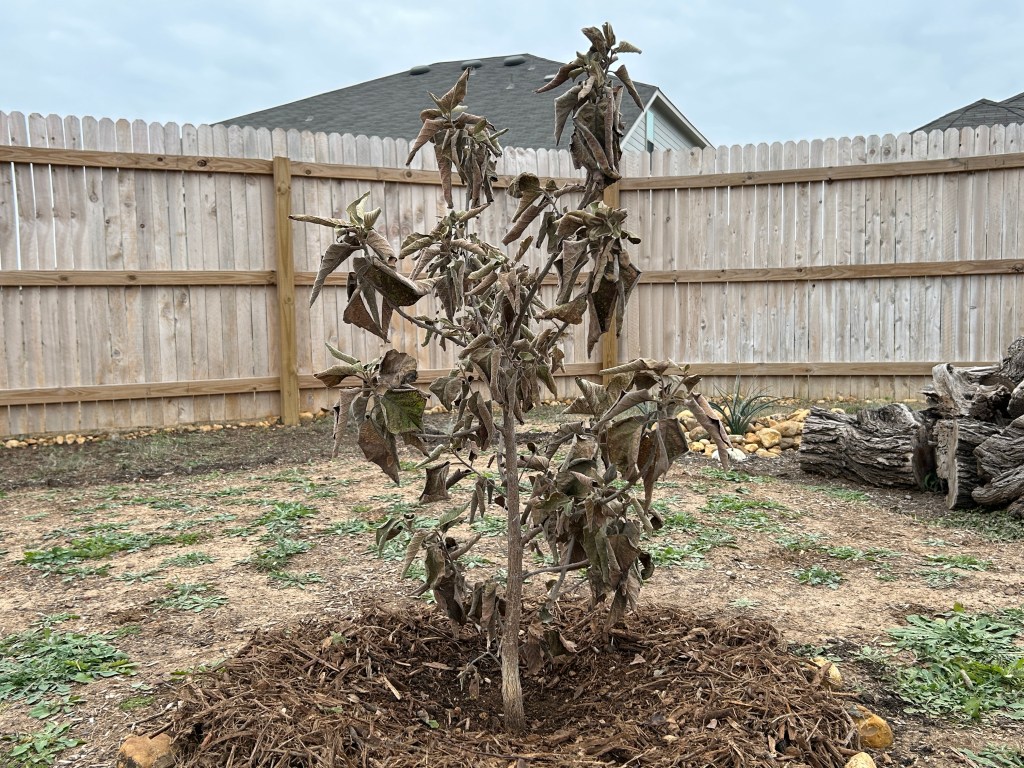
The Mexican Olive (Cordia boissieri) is towards the north end of its optimal range and supposedly some die-back may occur during particularly cold winters. My tree does seem to have suffered damage in that its evergreen leaves have turned brown and will presumably fall. According to the Lady Bird Johnson Wildflower Center regarding a similar situation, a hard freeze in actively growing structures causes water to expand and cell walls to burst. If I am lucky, all that will happen for me is leaf loss and new ones will grow in the spring. If any of the woody growth is dead, then I will need to prune it back later. However, I will not do any intervention for now — my best strategy is to wait to see what happens in spring and hope for the best. With hindsight, I could perhaps have wrapped this tree for better protection.
And now that the freeze forecasts have ended for now, I’ve pulled mulch back away from the base of tree trunks to expose the root flares again. That was just a temporary situation, and it was important to reverse that as soon as possible.


 Rewilding My Lot
Leave a comment