In November last year I enrolled with the CoCoRaHS (Community Collaborative Rain, Hail, & Snow Network) citizen science precipitation monitoring system as a volunteer. I bought one of their required manual rain gauges and installed it in my garden in a location where there would be no interference from other structures. As station number TX-GP-173 I have been reporting rainfall here daily at 7am.
Why not use an automated weather station to measure rainfall in real time instead of going outside every morning at 7am to empty a manual cylinder? From the CoCoRaHS point of view, it comes down to accuracy because of the way the measurements are recorded. In an automated weather station, there is generally a little see-saw with tiny collecting vessels at each end that have capacity in the order of 0.01 inch each. One bucket fills, is counted, then emptied as its partner is then filled. In light or moderate rainfall, this mechanism can be very accurate, as colleagues who have both types of gauge have testified. However, in heavy rainfall, the automated systems tend to under-measure when the see-saws get overwhelmed.
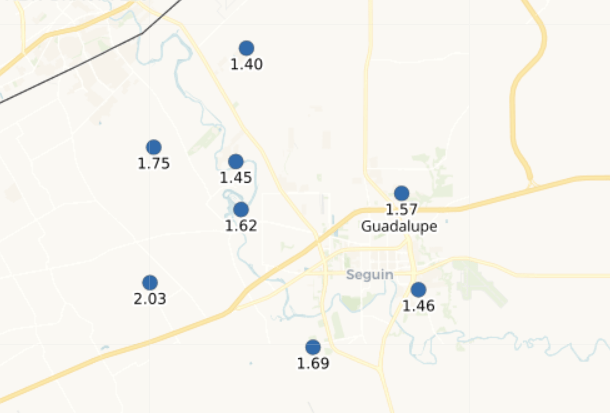
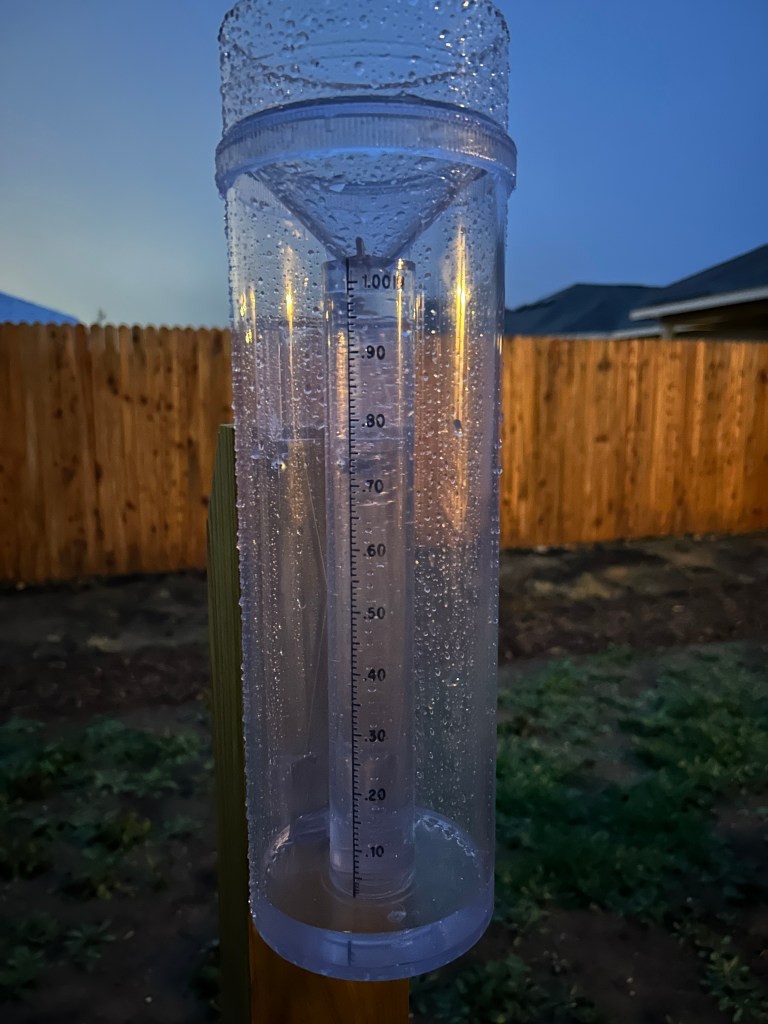
My rain gauge has a 4-inch diameter opening with a funnel that directs rain into an inner graduated cylinder that can measure up to an inch of rain to 0.01 inch accuracy. If there should be more than an inch of rain, then the excess is directed into the outer unmarked chamber, which can hold another 10 inches of rainfall. To make an accurate measurement of more than one inch of rain, I use the inner chamber to count each inch by filling, counting, and discarding until the outer chamber is empty as well. So for instance, on this day (1/24/2024), I recorded 1.46 inches of rainfall at 7am as my neighbor monitors were going through a similar process (see map at the beginning of this post).
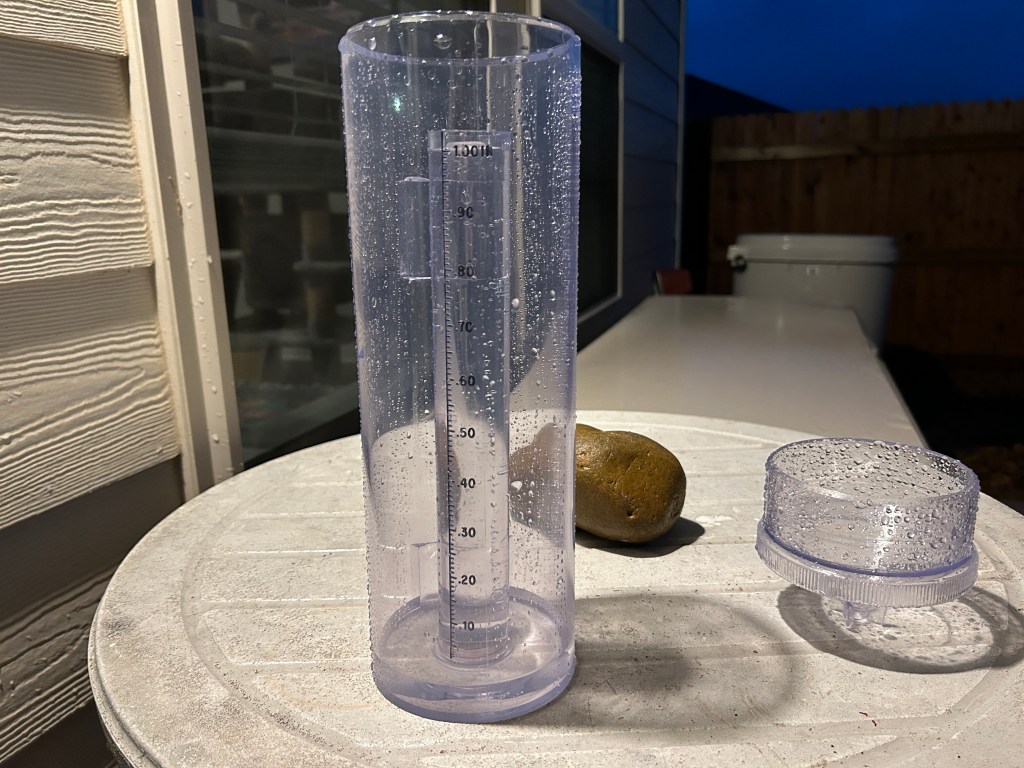
By the way, during our freeze a couple of weeks ago, I had only the outer cylinder in place. That was in case there was freezing rain (there was), which might have bounced off the funnel. The rain I did collect was thawed and measured in the inner cylinder, which I had stashed indoors. CoCoRaHS participants in colder climates make other adaptations to measure snow volume and depth, but given how rare that is likely to be for me, I will stick with the option to submit thawed measurements.

 Rewilding My Lot
Leave a comment