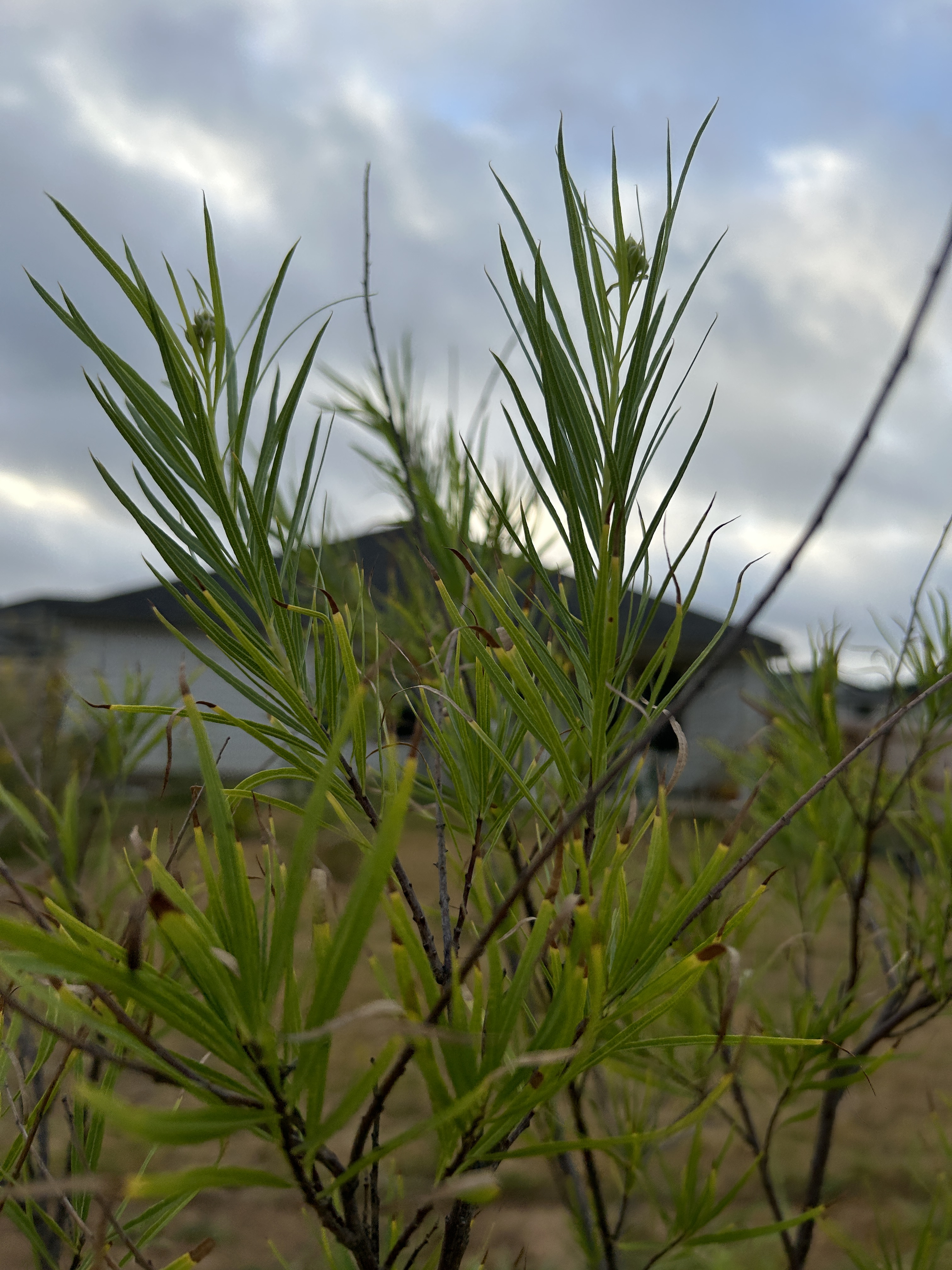
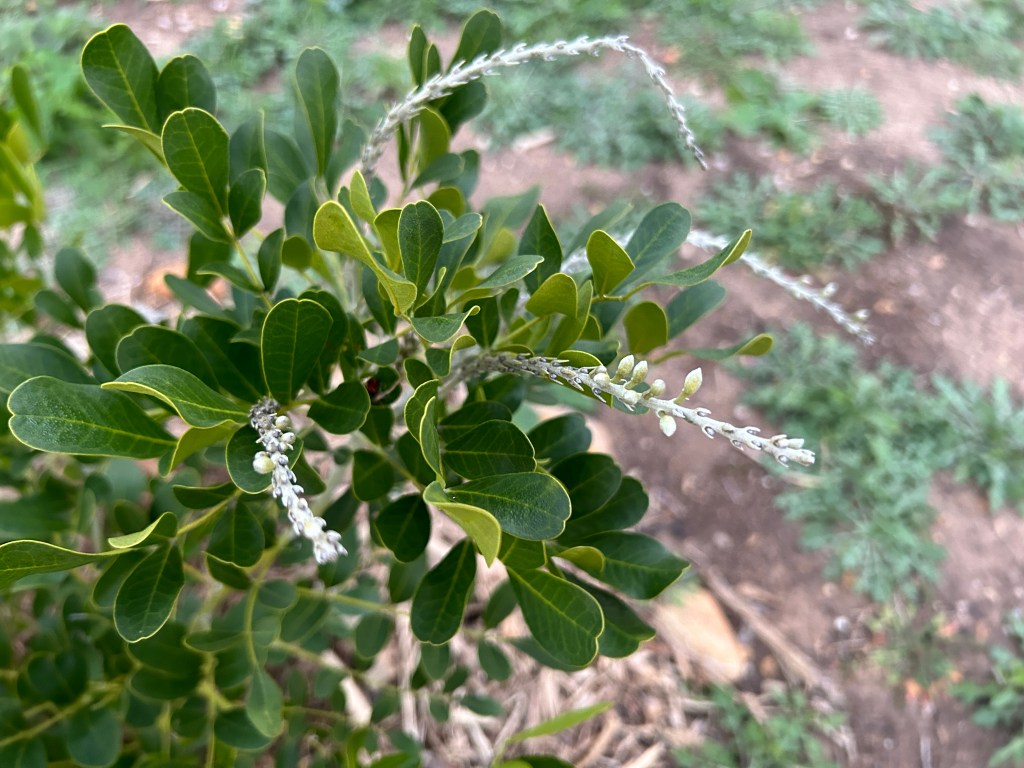
My little Texas Mountain Laurel (Sophora secundiflora) tree was one of the first things I planted here in spring 2023. Until I came to Seguin, I was unfamiliar with this tree, but it is very popular here and elsewhere in central Texas.
The progress of this tree has not been straightforward, and when it’s more mature, its shape may have a story to tell. But for now it is certainly alive, and I rejoice in the new growth that I am seeing. There are new flower buds emerging from stalks that grew last year.
So what is the story of this tree, which has been the subject of several previous posts? First, in my ignorance I dug the hole for this tree too deep and did not add enough extra soil, so it sunk a little after the planting. (I now know to dig holes for new plants no deeper than the pot they come in.) Consequently, the tree sits in a little hollow, but the ground drains well and the trunk is not buried in soil or mulch, so I am not overly concerned.
Then, a few months after planting I noticed that half the tree was paler than the other, and the pale half was not producing new growth. The leading theories as to what was going on was that I actually have two separate trees in the same hole, or that the root system has some damage that only affects half of the tree. One possible cause for pale foliage was iron deficiency, and so I have been giving this tree some iron-rich fertilizer (although not during the winter). The treatment does seem to have darkened that side of the tree, although it is still not producing new growth and it doesn’t match the other half in color. This is a recent photograph — the non-growing portion is on the left.

Another thing I tried was to plant Texas Mountain Laurel seeds, gifted by a friend who has a mature tree, under the pale part of my tree. My theory with that approach was that if half my tree did not survive, then seedlings on that side might grow up and merge with the original tree. In order to accelerate germination (which normally takes several years in nature), I scarified the seeds. However, none of the seeds that I planted, either beside the tree or in pots, has germinated so far.
All of that to say that this Texas Mountain Laurel tree is certainly alive, and parts of it are growing well. Other parts are not, and time will tell how things will sort themselves out.
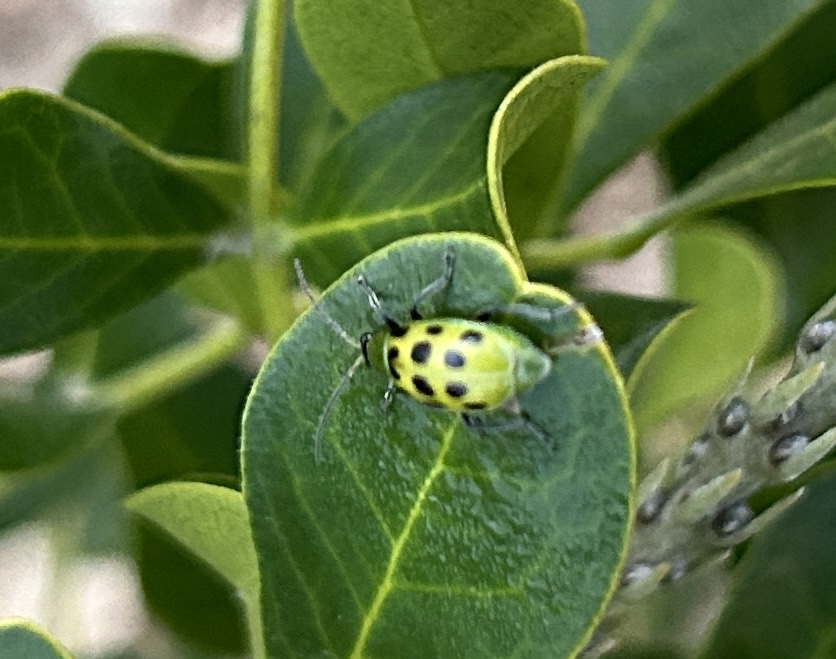
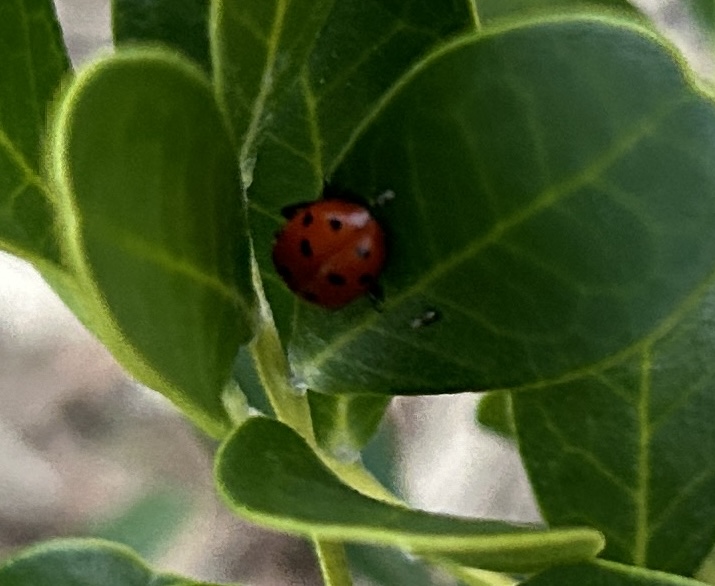
Here are a couple of examples of insect visitors that like this plant. The green one is a Spotted Cucumber Beetle (Diabrotica undecimpunctata) and the red one is, I think, a Convergent Lady Beetle (Hippodamia convergens) (the ID can’t be precise without being able to see the front end).

 Rewilding My Lot
Leave a comment