
I chose to grow Texas Bluebonnets (Lupinus texensis) here for several reasons:
- They are the state flower of Texas. In fact, to allow for the different ecosystems in this vast state, there are actually at least five kinds of Bluebonnet that are deemed the state flower. The variety I am using is the most common in central Texas and the easiest to grow.
- Bluebonnets like sun and well drained soil. Most of my seeds here were planted within the front lawn, which offers those conditions.
- Bluebonnets don’t mind growing in poor quality soil, which I also have here. In fact, they are legumes, which means that their roots form nitrogen-fixing nodules filled with beneficial bacteria that can capture nitrogen from the atmosphere and transfer it to the soil as a natural fertilizer.
- I wanted to incorporate a patch of wildflowers into my front lawn, and Bluebonnets are one of the three plants that I chose for that. [The other two are Indian Blanket aka Firewheel (Gaillardia pulchella) and Spotted Beebalm (Monarda punctata).]
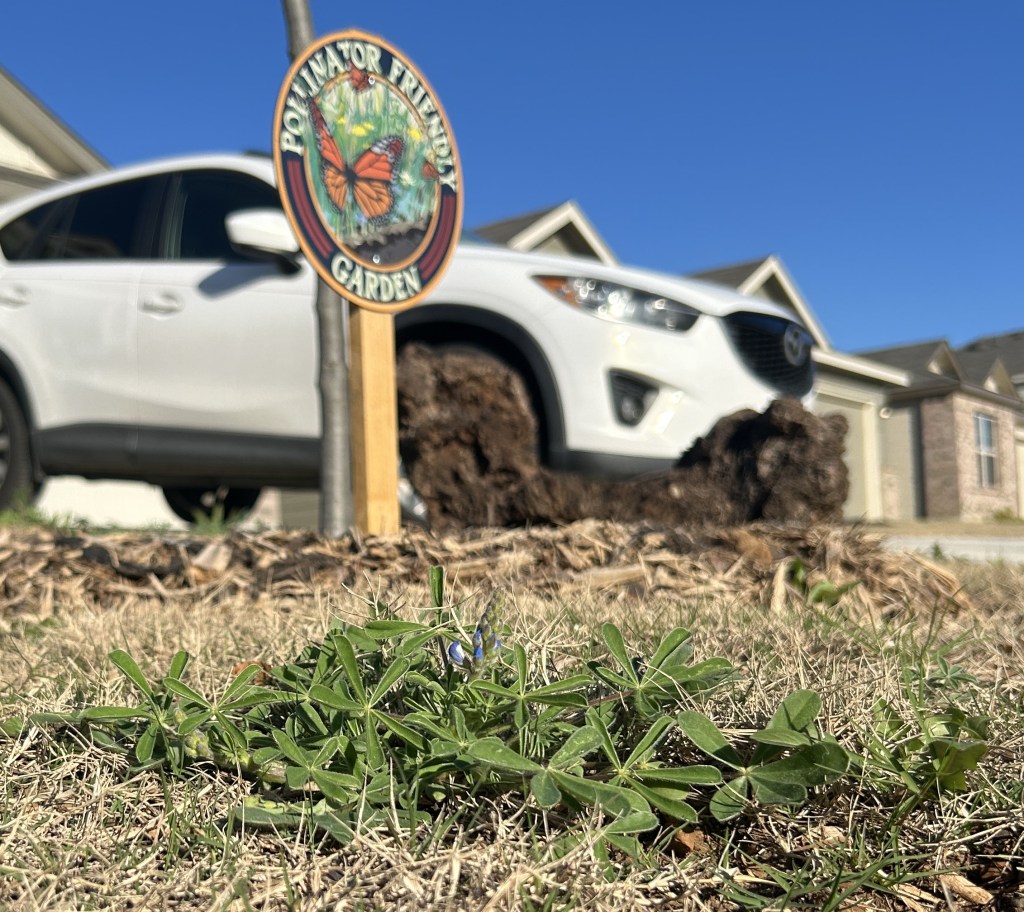
I dispersed Bluebonnet seeds last fall, which resulted in numerous small rosettes of leaves that emerged quickly after that and then quietly grew roots over the winter. More growth started above ground once we had warmer temperatures, and now I am starting to see buds and flowers.
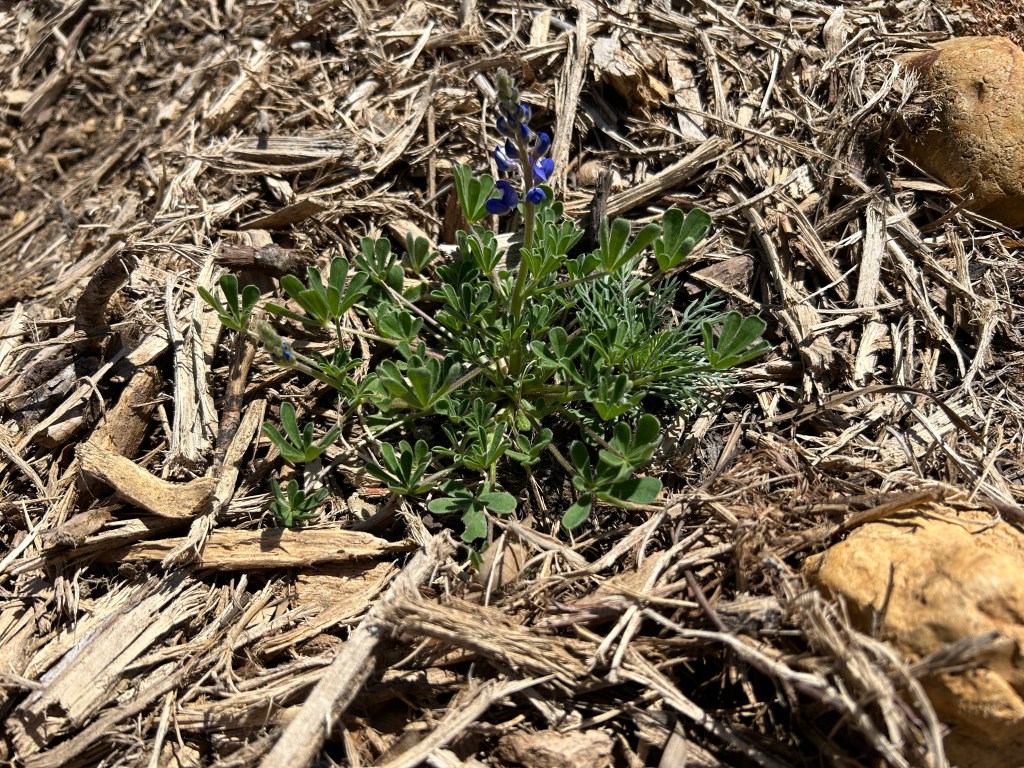
The majority of my Bluebonnet plants are in the front yard, but I also have several in the back as well. Interestingly, they have appeared in other places besides the areas that I sowed. Here’s one growing out of the mulch ring around one of my trees.
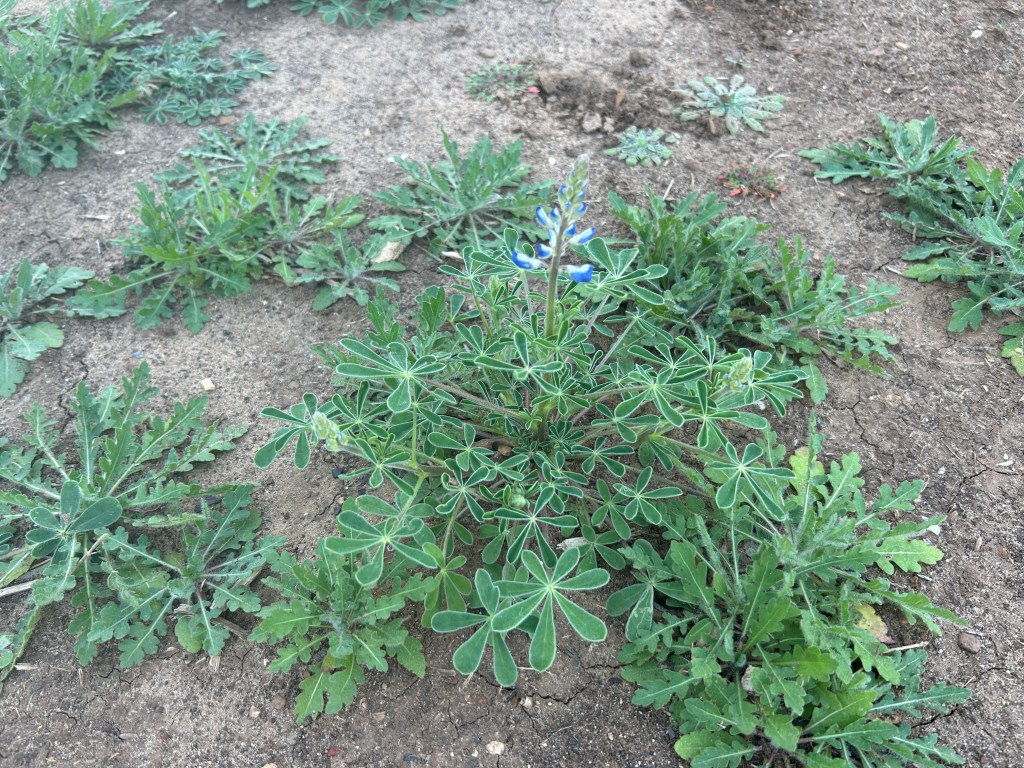
Bluebonnets are annuals, which means that if I want to have them here in future years without reseeding myself, I will need to leave them in the ground long enough for them to mature and drop their seeds. That was one of the reasons for the other two wildflowers in the front lawn — their blooms will be happening while the Bluebonnet flowers are converting to seed.


 Rewilding My Lot
Leave a comment