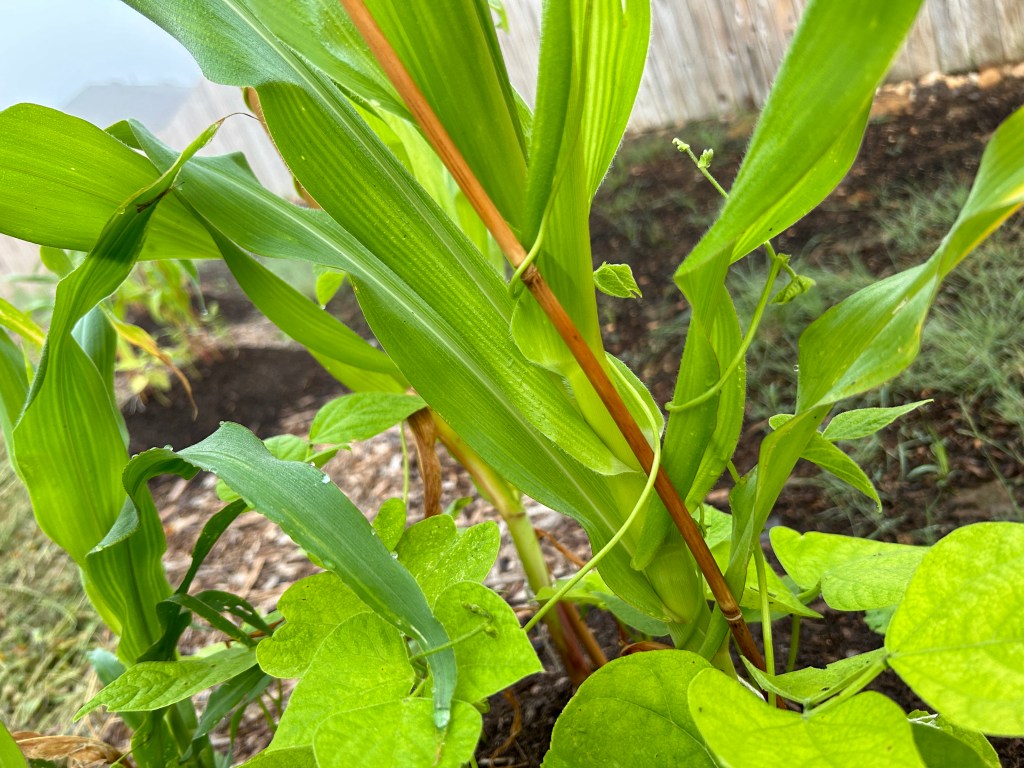
This year I am experimenting with a Three Sisters Garden, which is a cooperative planting of corn, beans, and squash in mounds of soil.
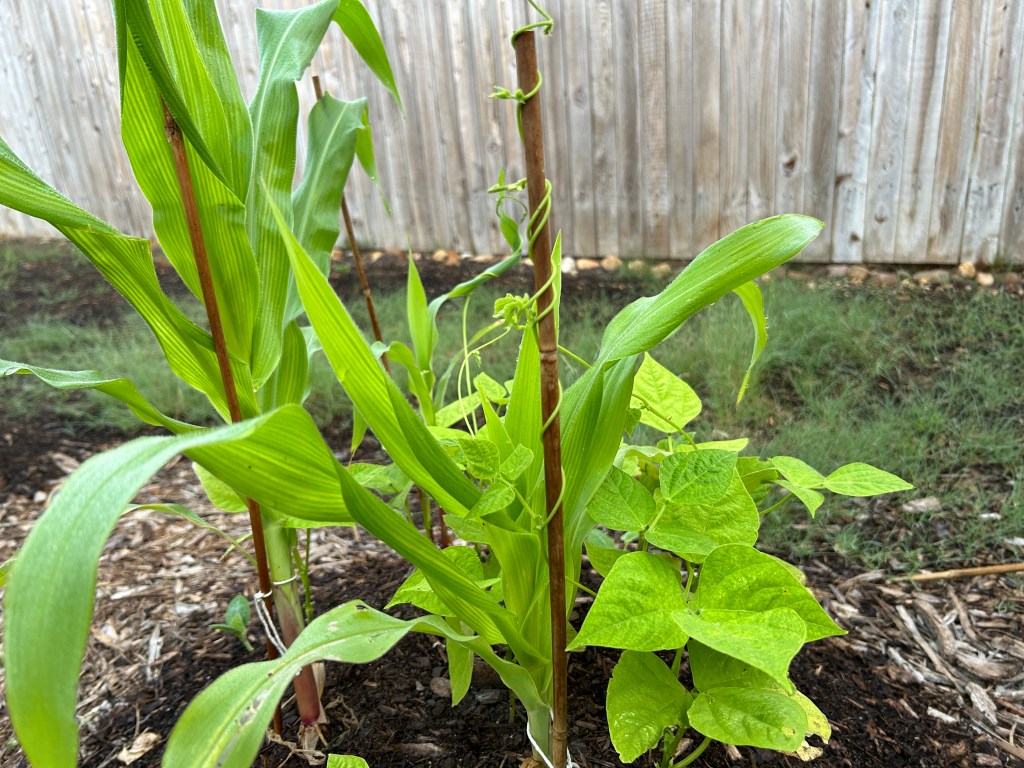
I have reached the point where all three vegetable plants are growing and the beans are beginning to climb, so it was time to get them a bit better organized and to remove the extra bean plants that I had seeded for redundancy.
The corn plants are only a couple of feet tall, and yet some of them are beginning to develop tassels at the top.
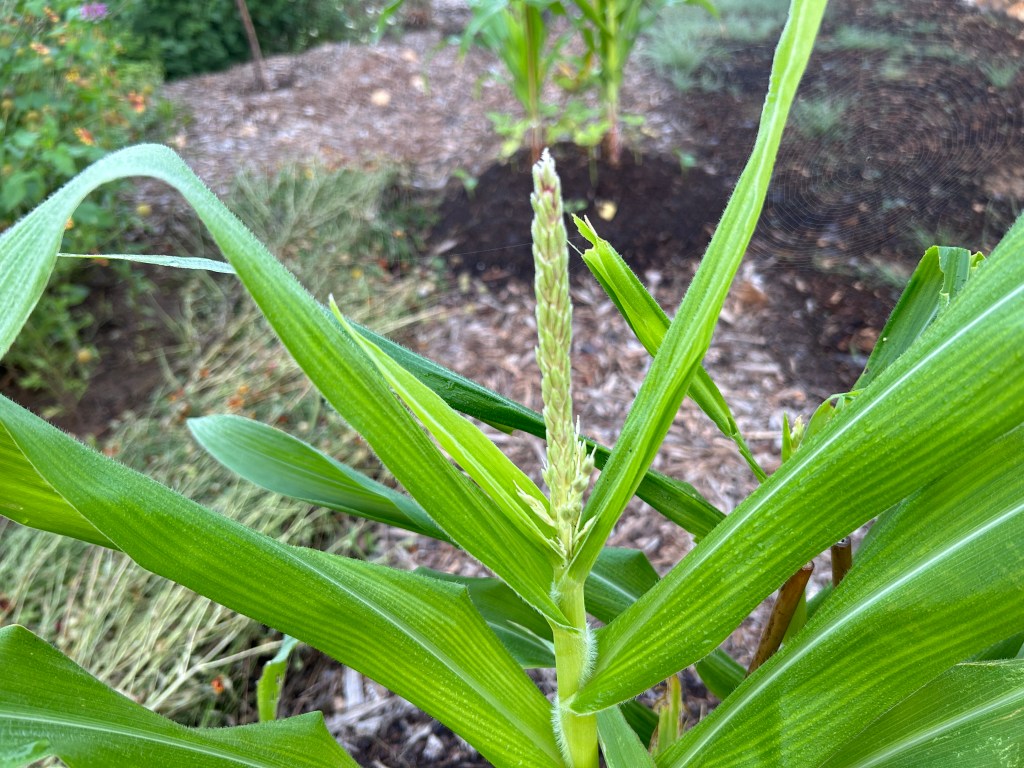
There are only 19 corn plants for the 5 mounds. One didn’t grow and so I’ve placed a pole there for the neighboring beans to climb.
Learning from the corn lesson, I had planted extra bean seeds. Now that I can see who is growing in what direction, I’ve reduced the number of bean plants to two per corn and I put the rest in pots. If they survive the transplant, they can be given away.
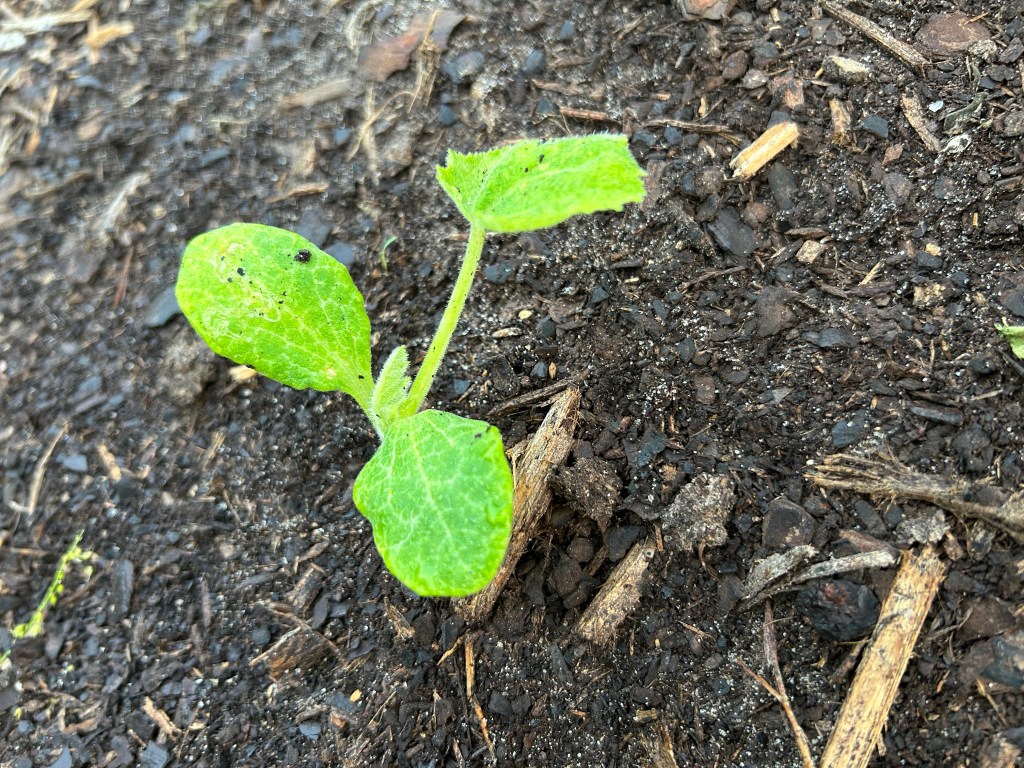
There are currently four squash plants per mound, but I only need two. Until they grow a bit bigger, I’ll leave all of them there; I can thin them out later.
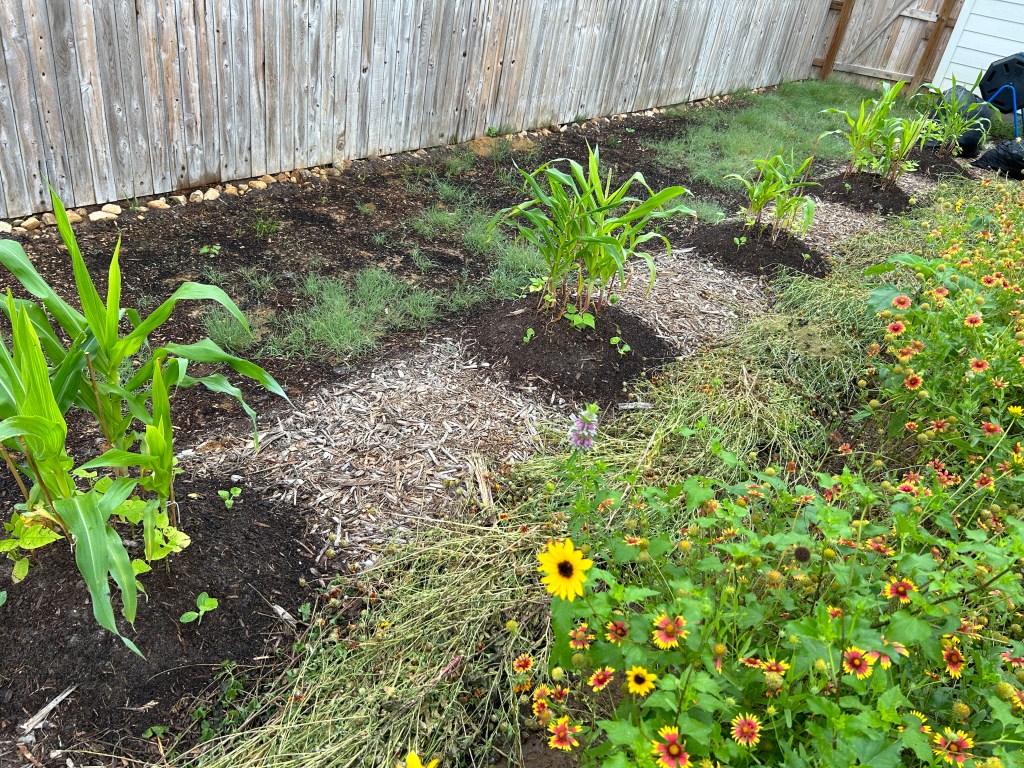
And here are some observations on the growth of the mounds in general. There are five, and if I number them 1-5 starting at the house end, mounds 2 and 4 had a fresh fish buried within them at the beginning — this is what the Native Americans used to use for fertilizer.
If I look at the overall growth of each mound, I’d place them in this order of general vigor (strongest first): 5, 2, 4, 1, 3. So given the small sample size, I’d say there is no obvious difference in the mounds that had the fish treatment. I guess the final test will be the harvest from each mound.
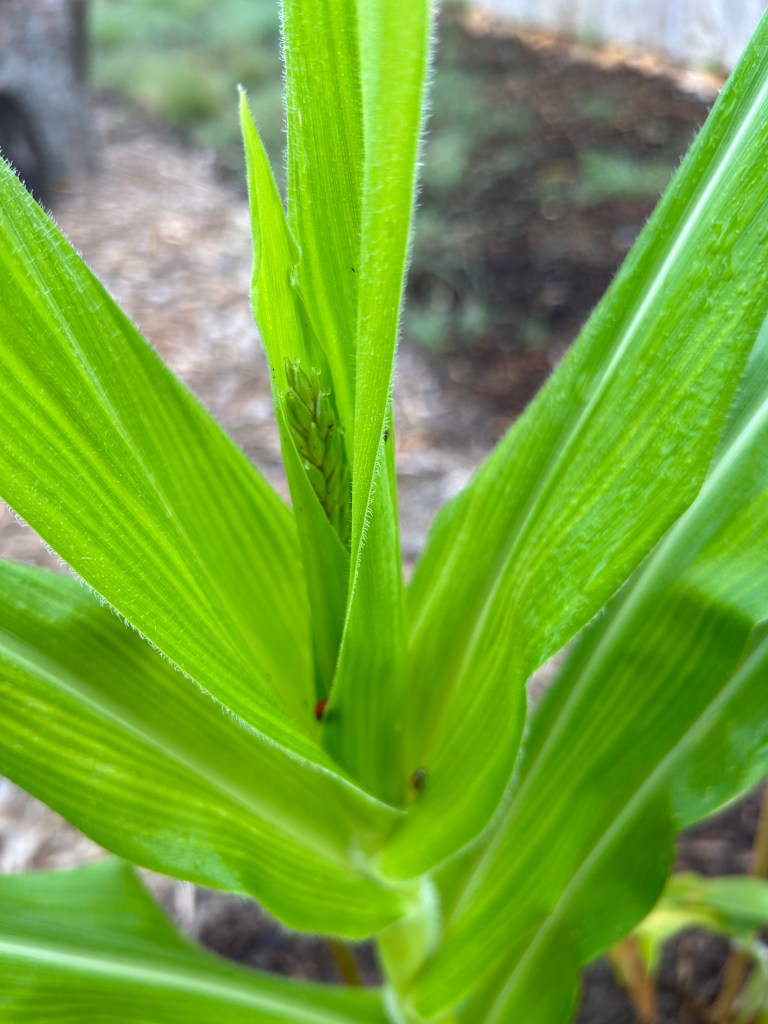
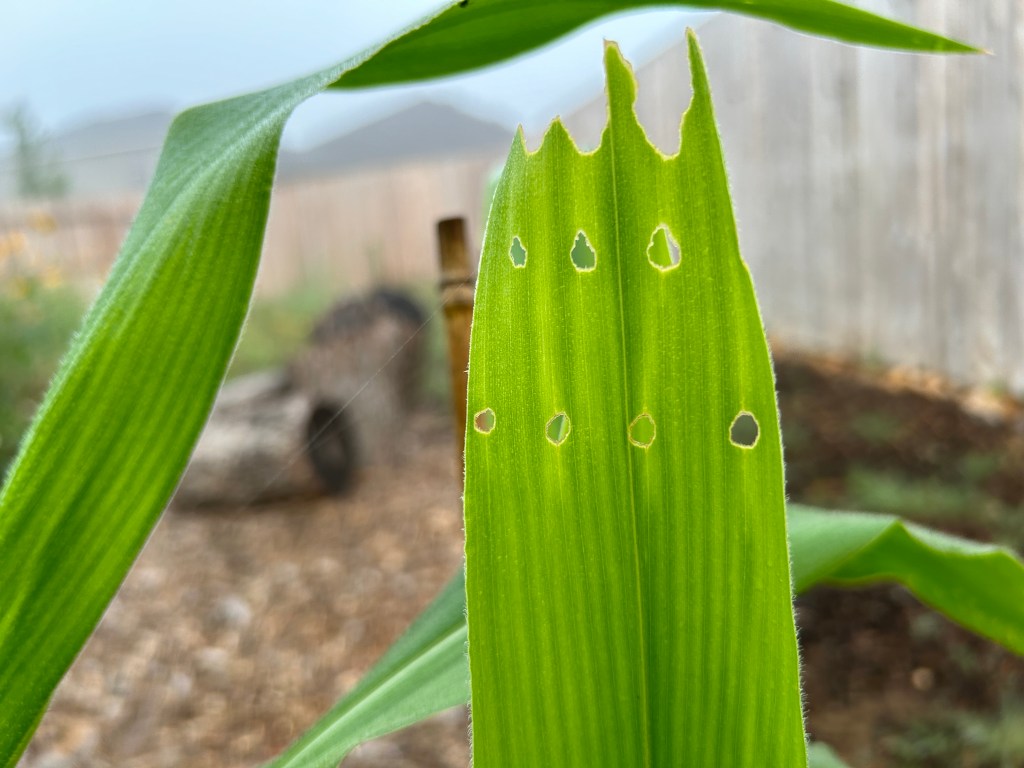
And just because this is an interesting picture. This is what happens when a caterpillar bores through a leaf that is still rolled up.


 Rewilding My Lot
Leave a comment