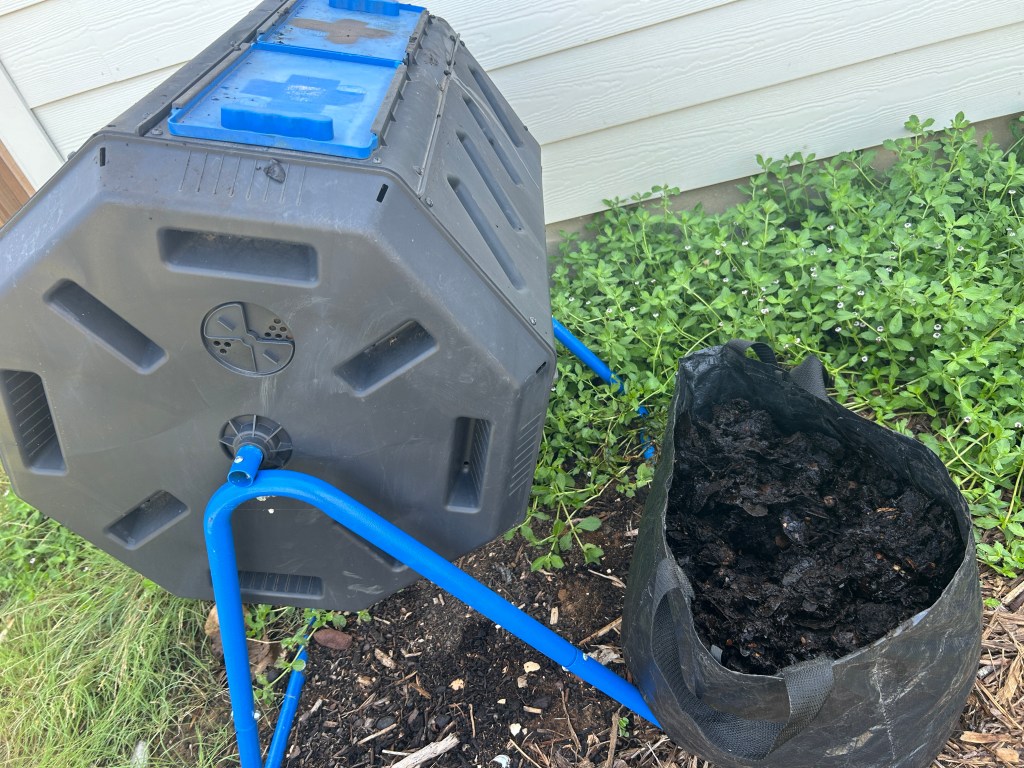
In October 2023 I wrote about how the first few months of composting had not gone well. I use a small dual-chamber tumbling composter, and my first loads had merely dried out without evidence of decay or reduction in volume.
I emptied the composter then and started again, this time paying more attention to not letting it get dry and using a purchased compost additive, which I have been adding about every six weeks.
Finally I am seeing success in that the compost is staying moist and the chamber that was filled first has reduced in volume to about a third during its subsequent two months of “cooking”.
The second chamber is now full and so it’s time to harvest the first batch so that I have room to continue the process. That’s the beauty of a dual-chamber composter — one side is being filled while the other is going through the cooking process, and then you harvest and switch.
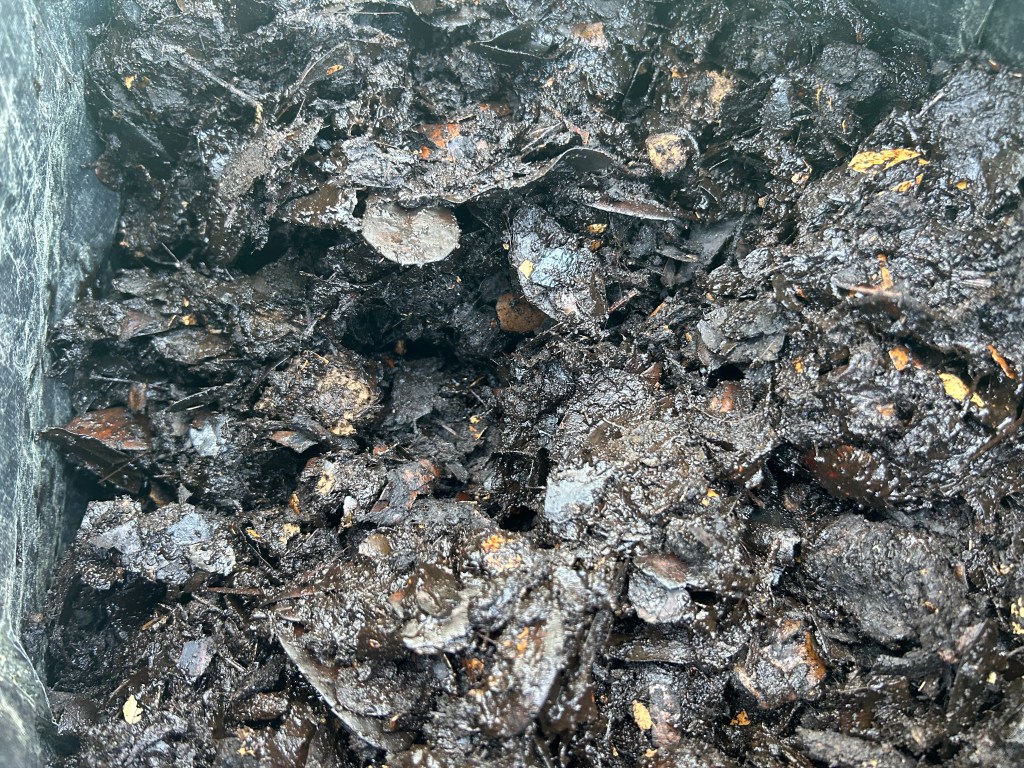
After I emptied out the chamber, the yield was a small bag of a wet substance that I would liken to a mixture of compost and mulch. (It wouldn’t normally be quite so wet, but we had had rain the night before.) This is not the consistency of compost that one can buy, but I believe it to be nutritious for the garden all the same. My system isn’t big enough, nor do I have the processing time, to properly break down things like oak leaves and small twigs. I don’t need my compost to be pretty, so I don’t bother to sieve it.
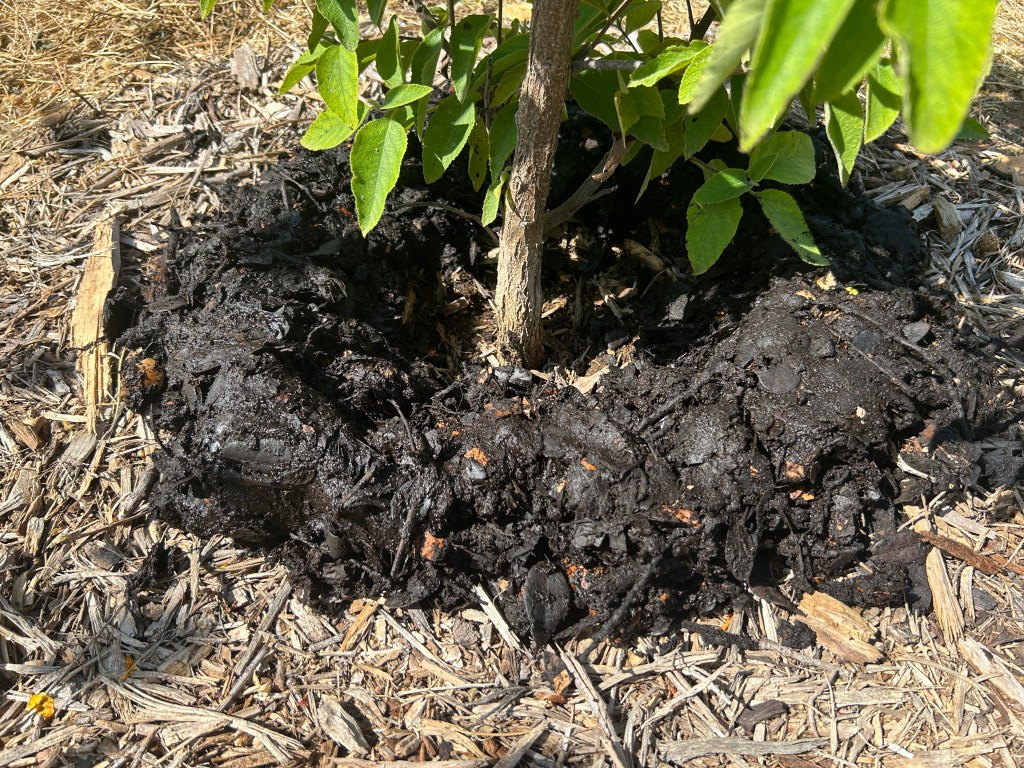
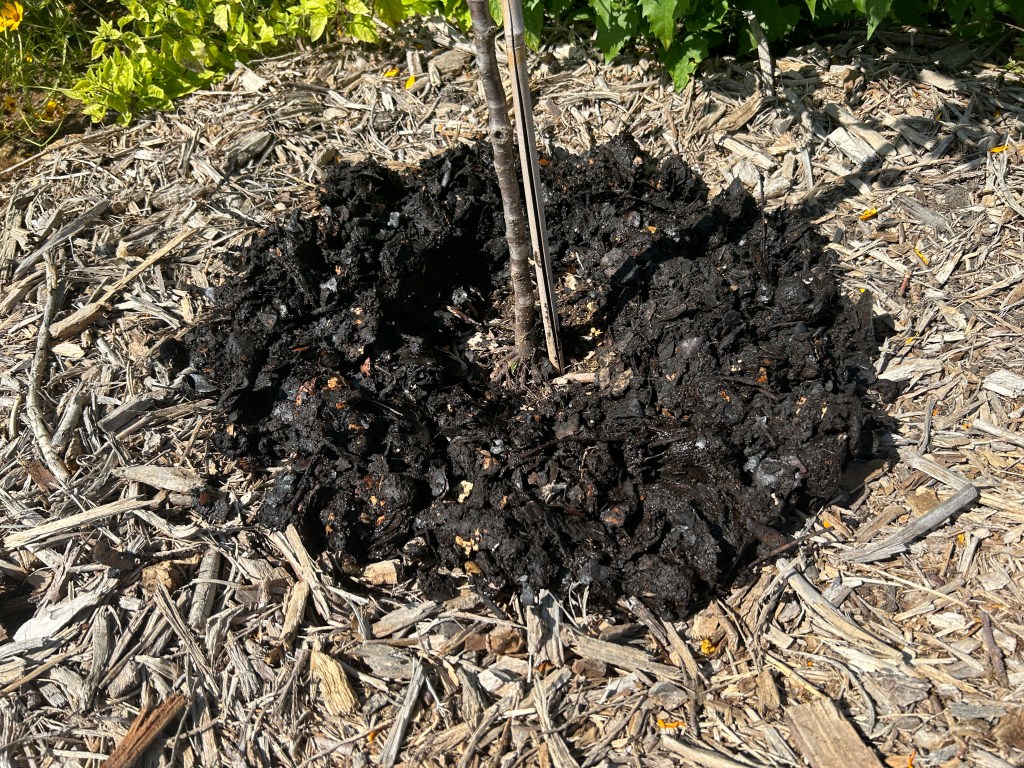
I chose to give this batch to my three youngest trees in the back yard (Mexican Olive, Mexican Plum, Red Buckeye), so I placed the compost in the center of their mulch rings — although importantly not right up against their trunks. As it dries out and continues to break down, I may spread it out a little thinner.


 Rewilding My Lot
Leave a comment