Drake White, Owner and Founder at The Nectar Bar, is very knowledgeable about Central Texas native plants. She recently posted with recommendations for June pruning. This is what she said, and I’ll follow her list with notes about my own plants, almost all of which are in my pollinator garden near the front porch. (Some of the plants that Drake mentions I do have here, but they’re so tiny that I’m leaving them intact for now.)
Drake White: “June is the time to prune! So many plants are growing VERY well right now from all our rain this Spring. And as much as I don’t mind things growing a bit wild, even I’m like WOWSERS. It’s time to get pruning! Plants benefit from being trimmed, even if they have flowers. They’re just going to give you more flowers and be more bushy, healthier, and prettier. Some plants that are Fall bloomers (like Frostweed) should get a heavy prune so they aren’t too tall and become top heavy with their blooms. Here’s a list of things you should be pruning now.”
Drake’s list (I added the links):
- Frostweed: cut by a least 1/2 of whatever its height currently is. (I cut mine back to 8”)
- Tall Goldenrod: Cut 1/2 way its current height.
- Turks Cap: Cut 1/4-1/2 its current height. (I cut back to 8”)
- Maximilian Sunflowers: Cut by 1/2.
- Salvia greggii: 1/4 trim all around.
- Texas Fall Aster: Cut back 1/4 and long and leggy stems.
- Mistflowers: 1/2 their current height.
- Flame Acanthus: anything leggy (or to your desired height/width)
- Mealy Blue Sage: 1/2 up to 3/4 of current height, with optional trim all the way back to the new growth rosettes showing.
- Texas Greeneyes: back to 6”
- And ALL NON NATIVE MILKWEED CUT TO THE SOIL LINE. This mimics our native milkweed going dormant for summer and will grow back with OE [Ophryocystis elektroscirrha] clean leaves/flowers for Fall migration. If native milkweed isn’t dormant, cut that too, because ALL milkweed can carry OE.
The plants of mine that I trimmed (with before and after photos):
Gregg Salvia (Salvia greggii). My plant is young, but it’s growing well. There are only a few branches, so trimming them by 1/4 made the plant more compact.
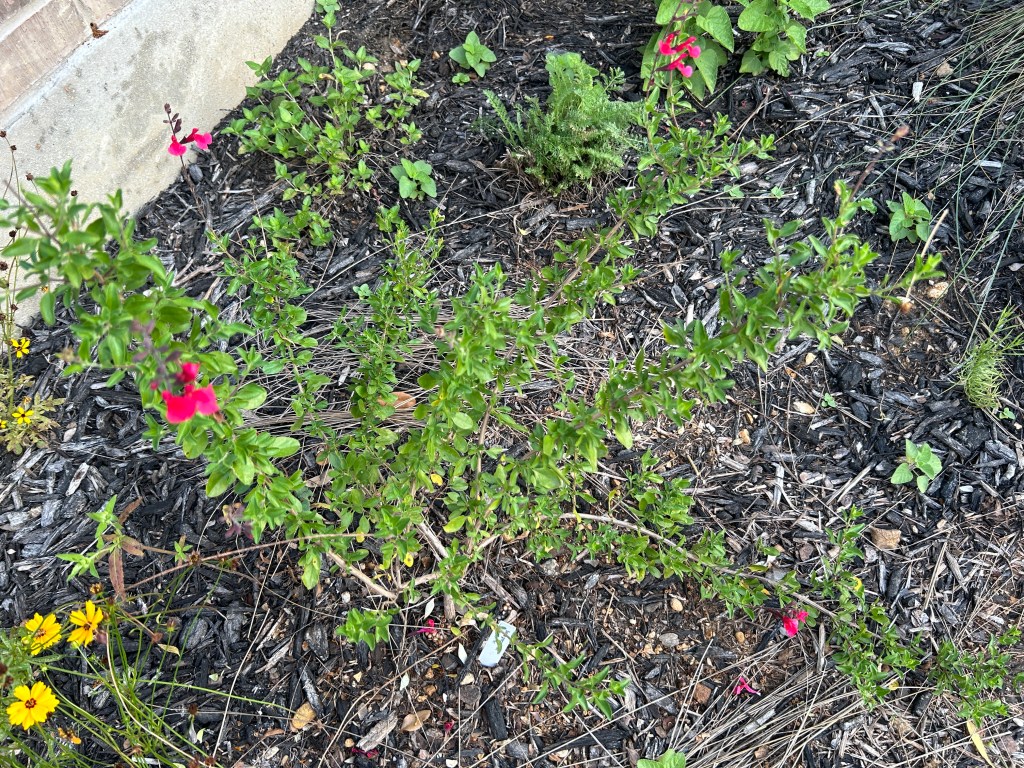
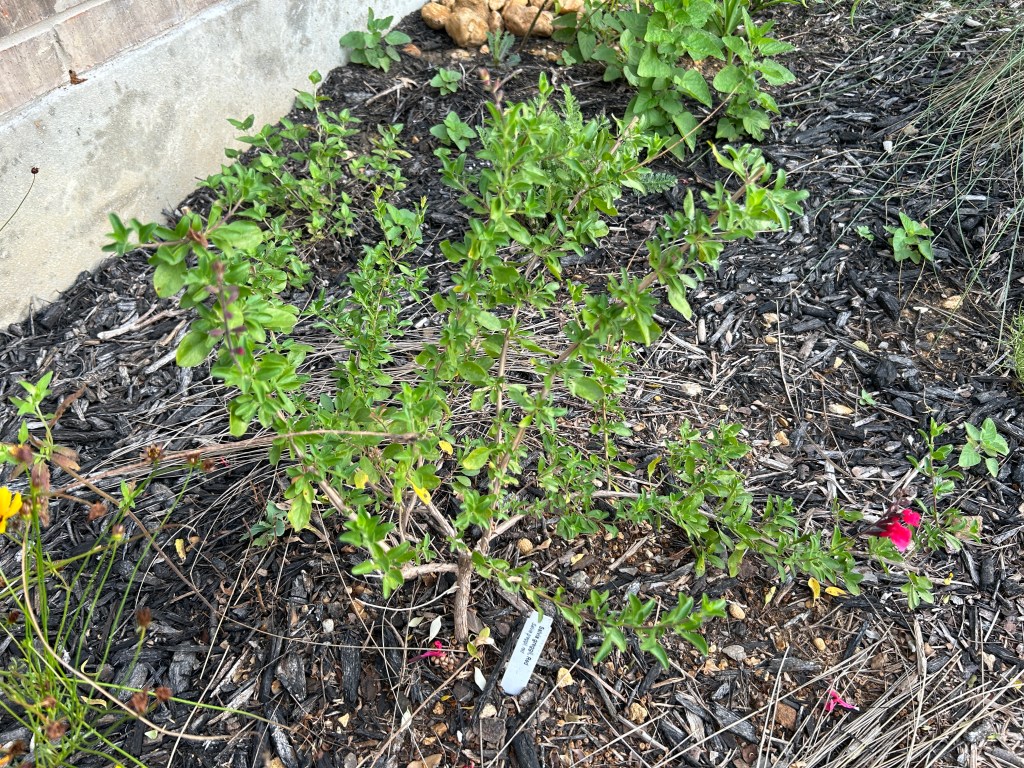
Fall Aster. This was also a bit leggy, so I trimmed it back by 1/4.
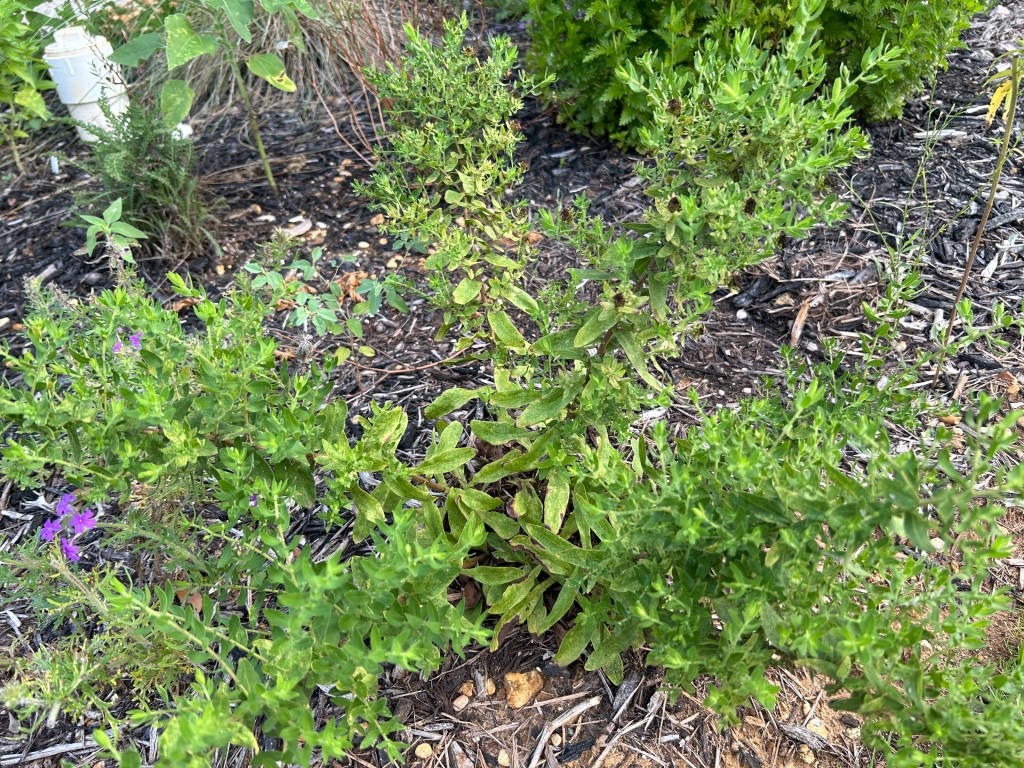
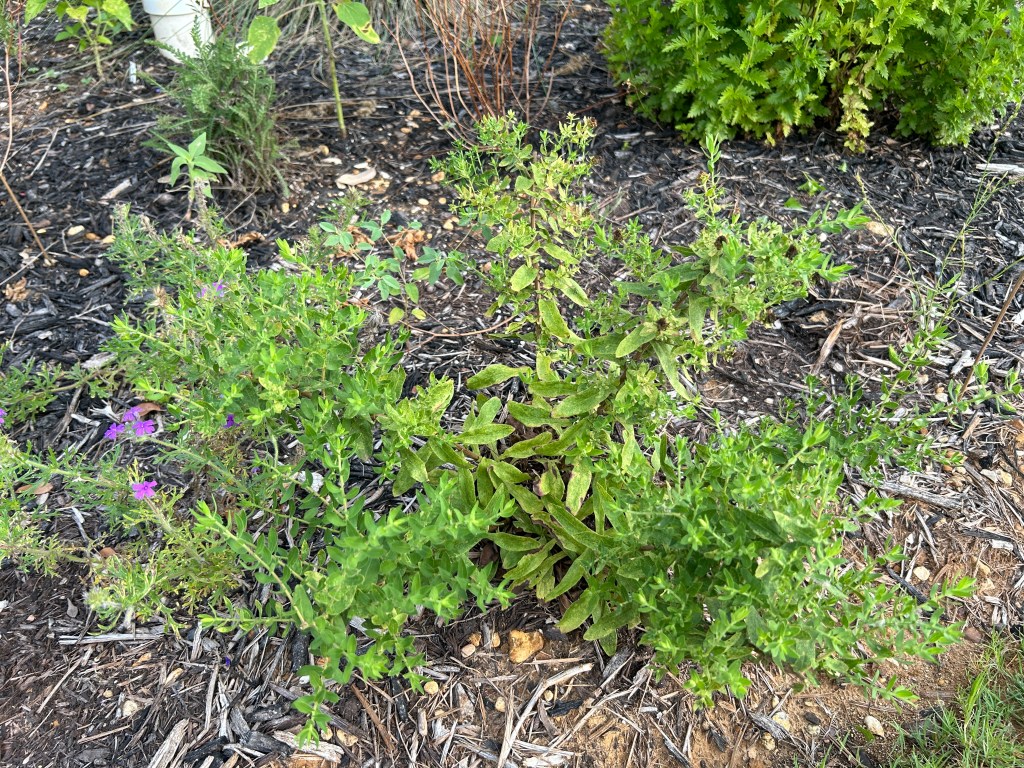
Gregg’s Mistflower (Conoclinium greggii). This pollinator magnet has grown really well since it was planted last year — the clump is several times its original size. This plant had 1/2 its height cut, and a few internal stems that were brown were cut even lower.
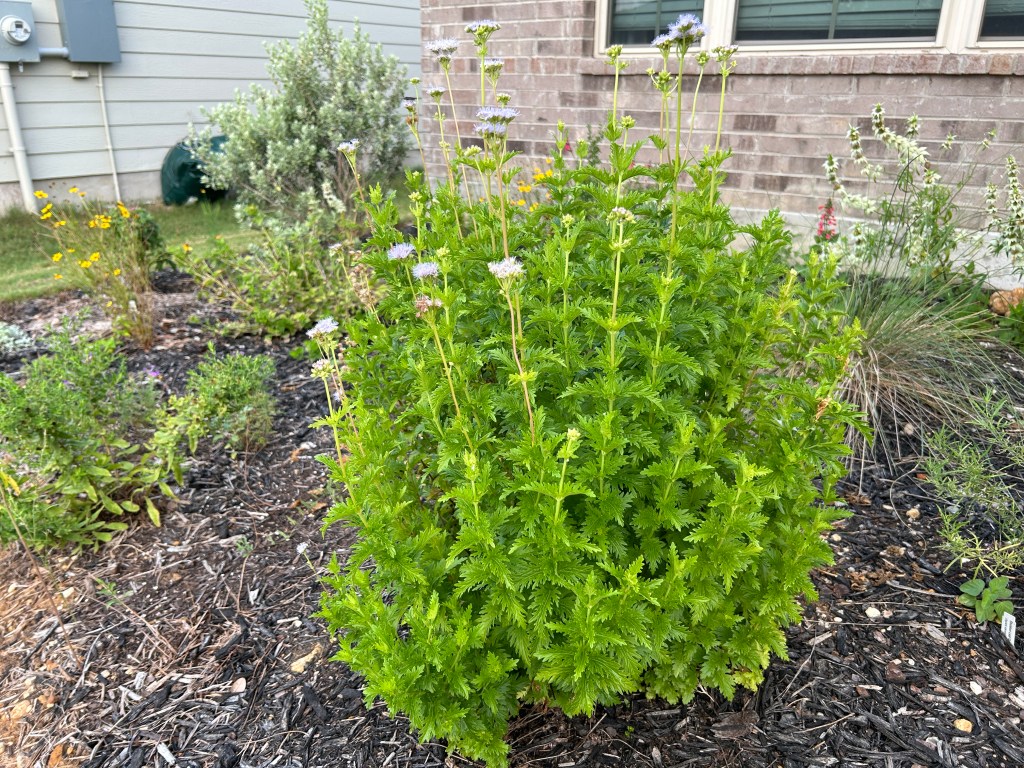
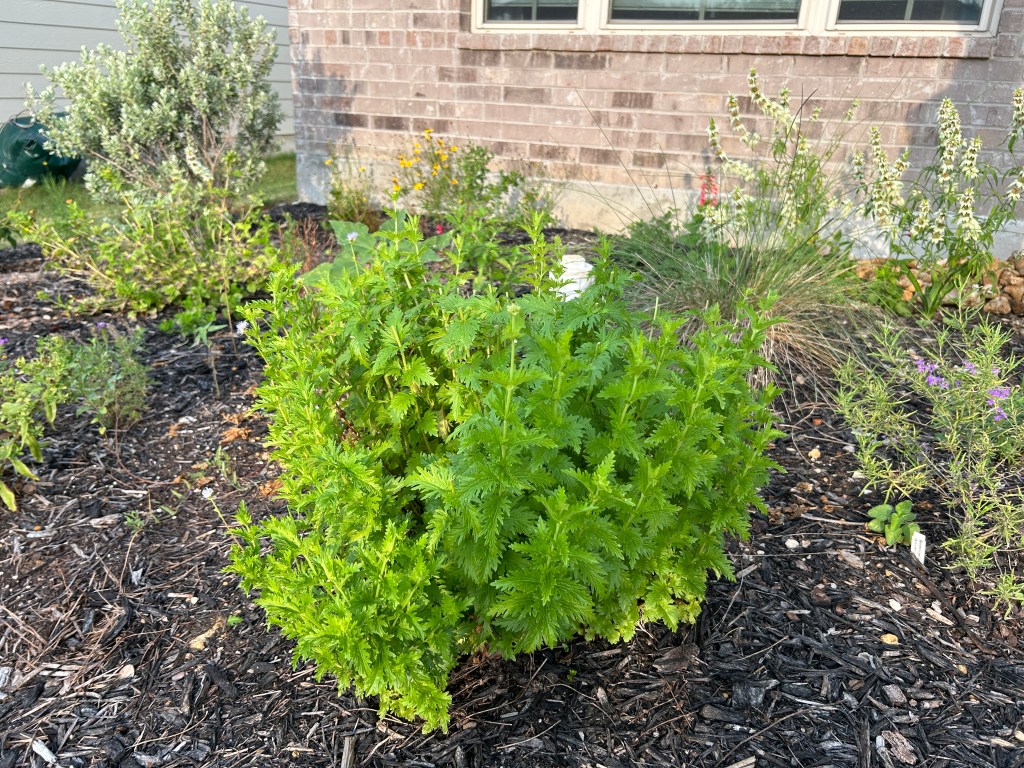
Mealy Blue Sage. My two plants are newly planted and tiny, but I did take a few inches off the taller stems. I gave the same treatment to the tallest of the little Scarlet Sage (Salvia coccinea) seedlings that are in the same bed (their parents did not survive the winter, but their offspring live on!).
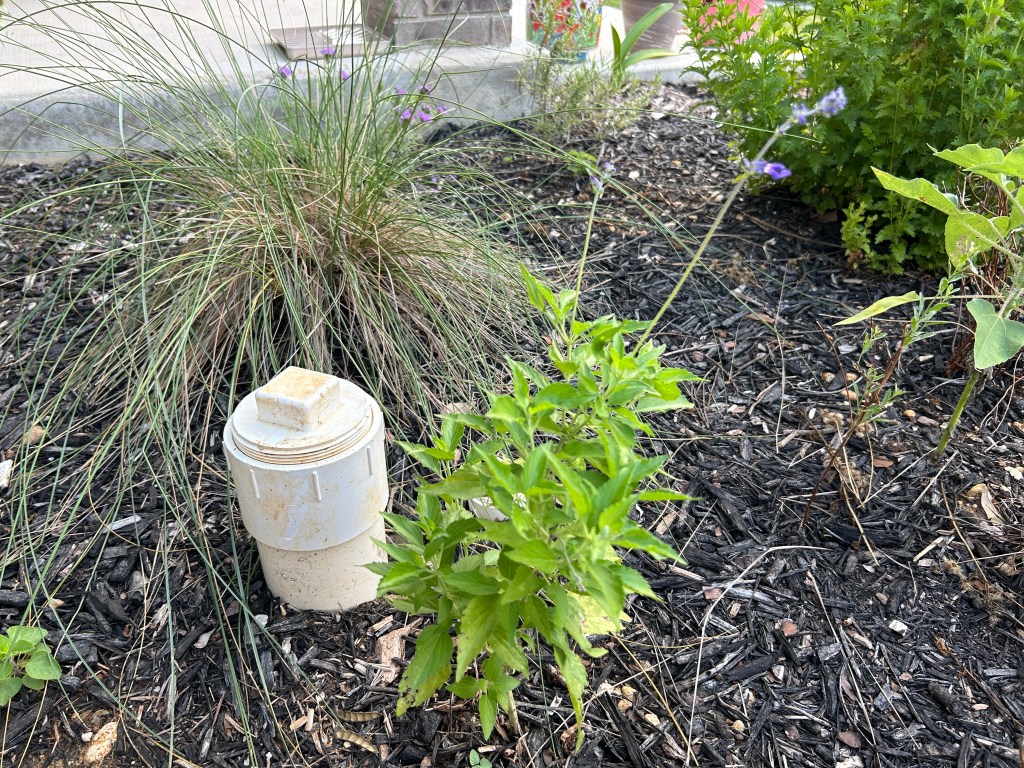
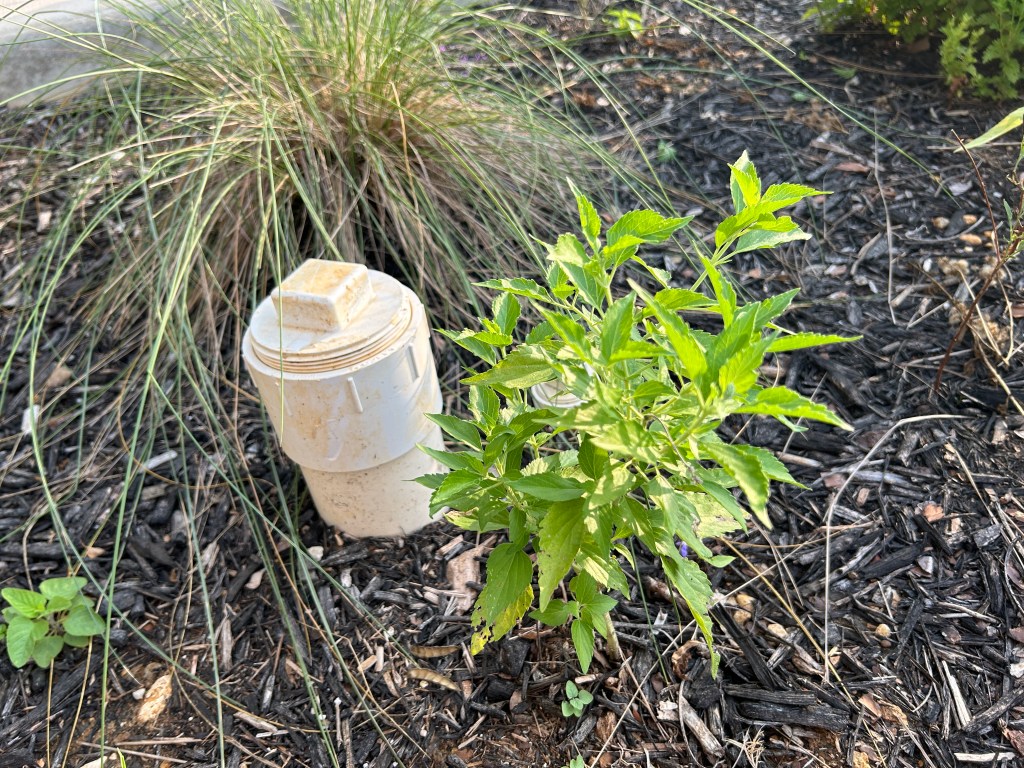
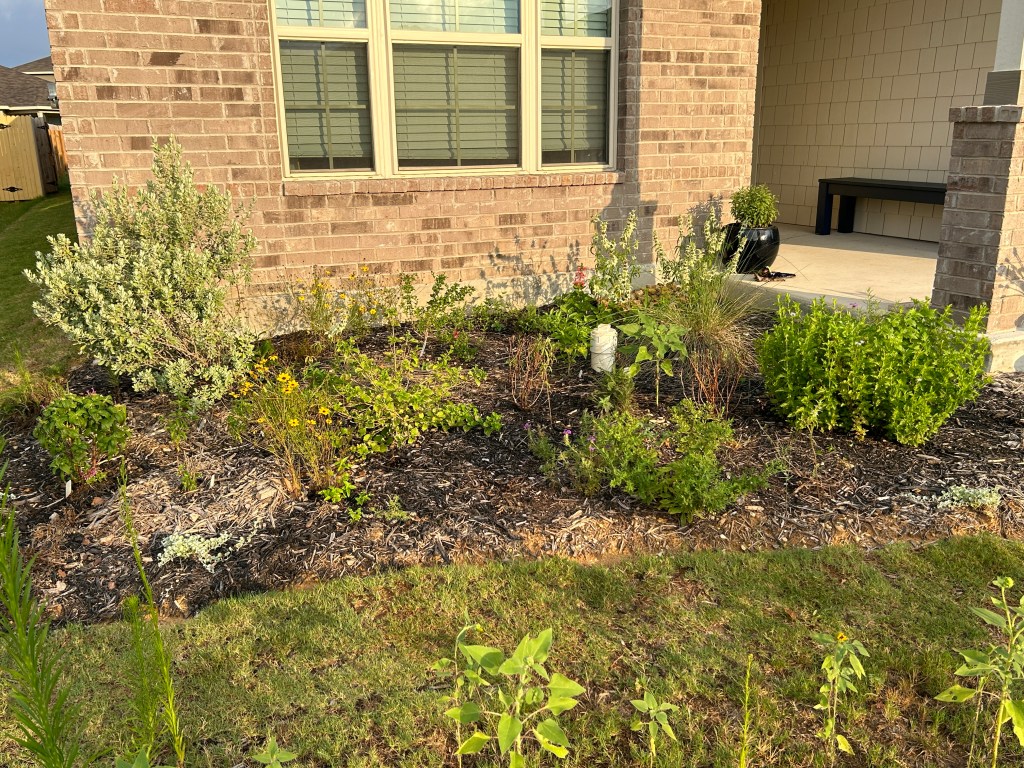
The photo at the top of this post is of the overall pollinator garden after its trim.

 Rewilding My Lot
Leave a comment