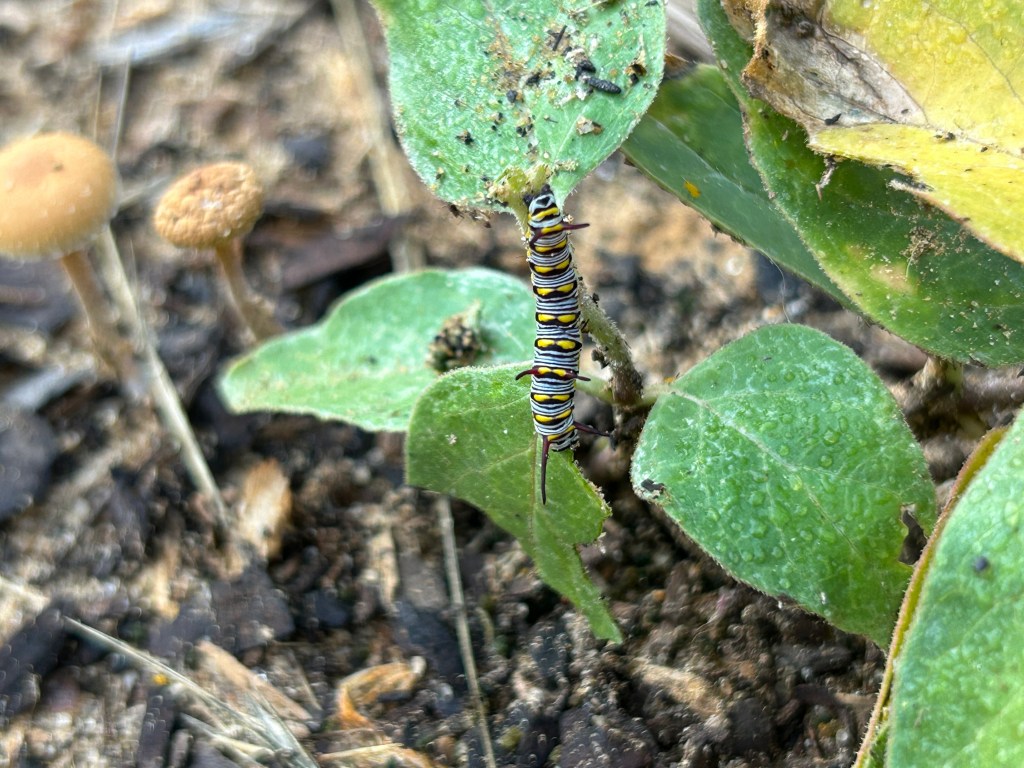
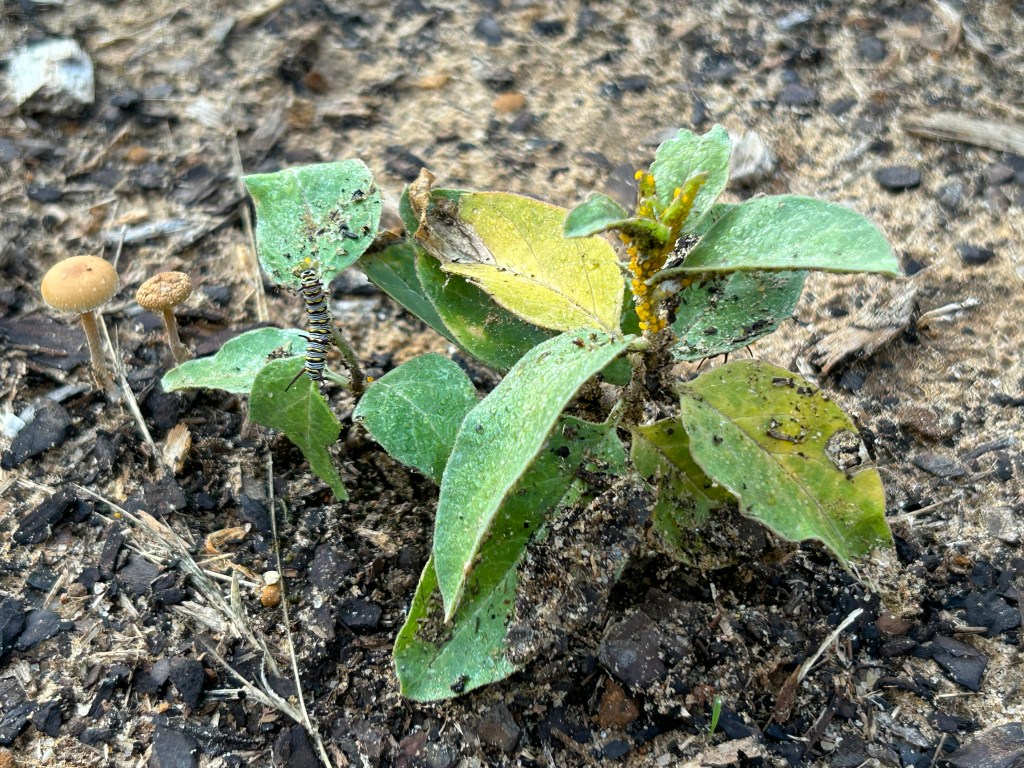
I have seen Queen (Danaus gilippus) butterflies here, so it is not surprising to find a caterpillar. Queen caterpillars are very similar in appearance to Monarch caterpillars, and they also use milkweeds as their host plant, so I had to look very closely at this one to know which it was. (Another clue is the timing, because Monarch butterflies should have migrated away from this area by now.)
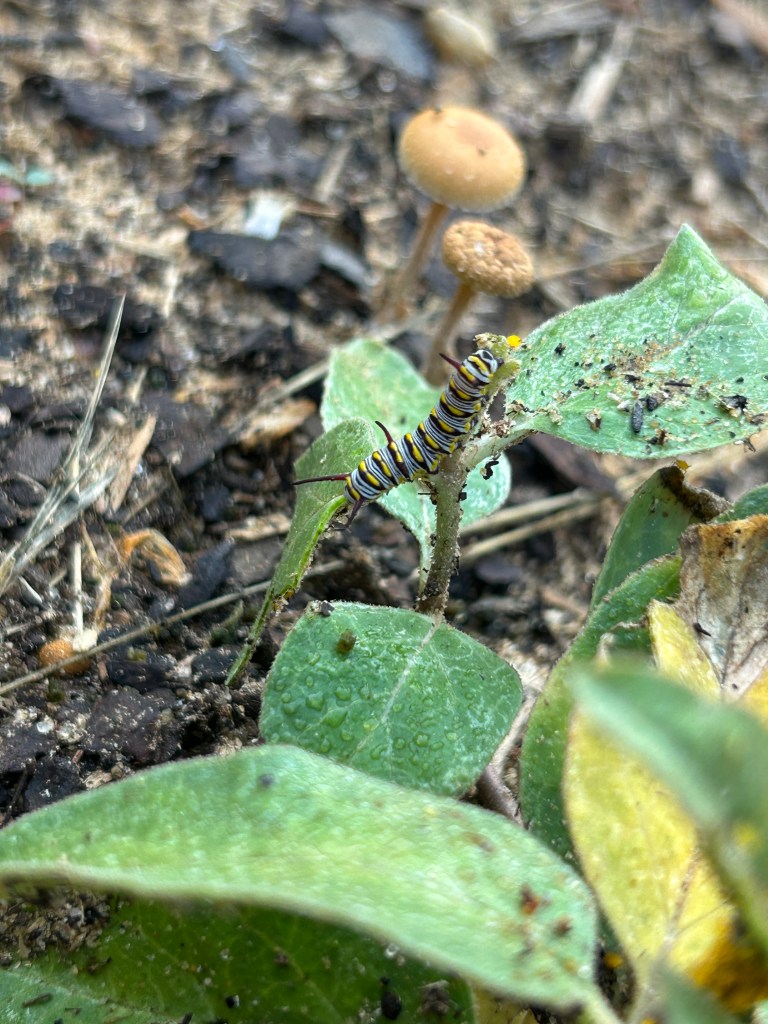
The key difference between Queen and Monarch caterpillars is that Queens have three pairs of filaments vs. two for Monarchs. See this page for a nice description of how to tell them apart.
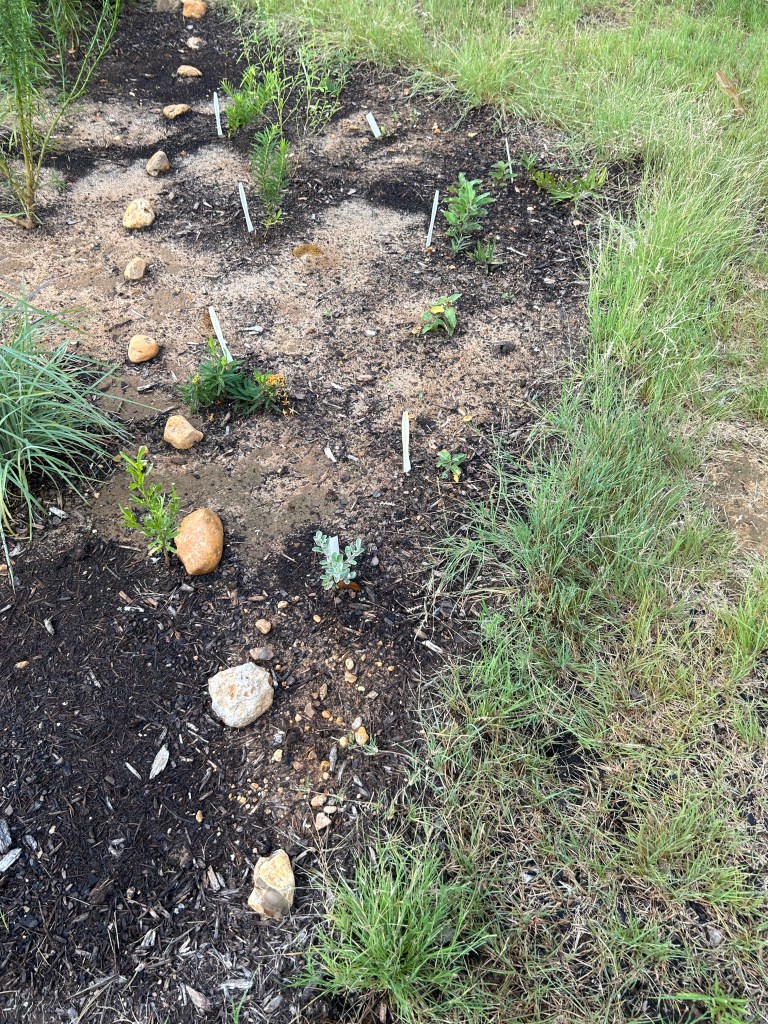
This caterpillar (still quite small) was on a plant in my milkweed area that I did not plant. However, I have also spread seeds in that area for Zizotes Milkweed (Asclepias oenotheroides) and I think this may be one of those. I will watch closely to be sure the caterpillar doesn’t eat so much of my young plants that they cannot recover, but for now I think my little milkweed patch is enough that I don’t need to remove the caterpillar.
In the photo below, the occupied plant is one of the unmarked ones on the right. In this small area I have planted Zizotes Milkweed (Asclepias oenotheroides), Antelope Horns Milkweed (Asclepias asperula), and Butterflyweed (Asclepias tuberosa).
It is not uncommon to find Oleander Aphids (Aphis nerii) on milkweed plants, as I have here. Unless they become a problem, I will leave them since they are food for other things. If I do choose to remove them, most likely the method would be squishing. I certainly don’t want to use any insecticide.


 Rewilding My Lot
Leave a comment