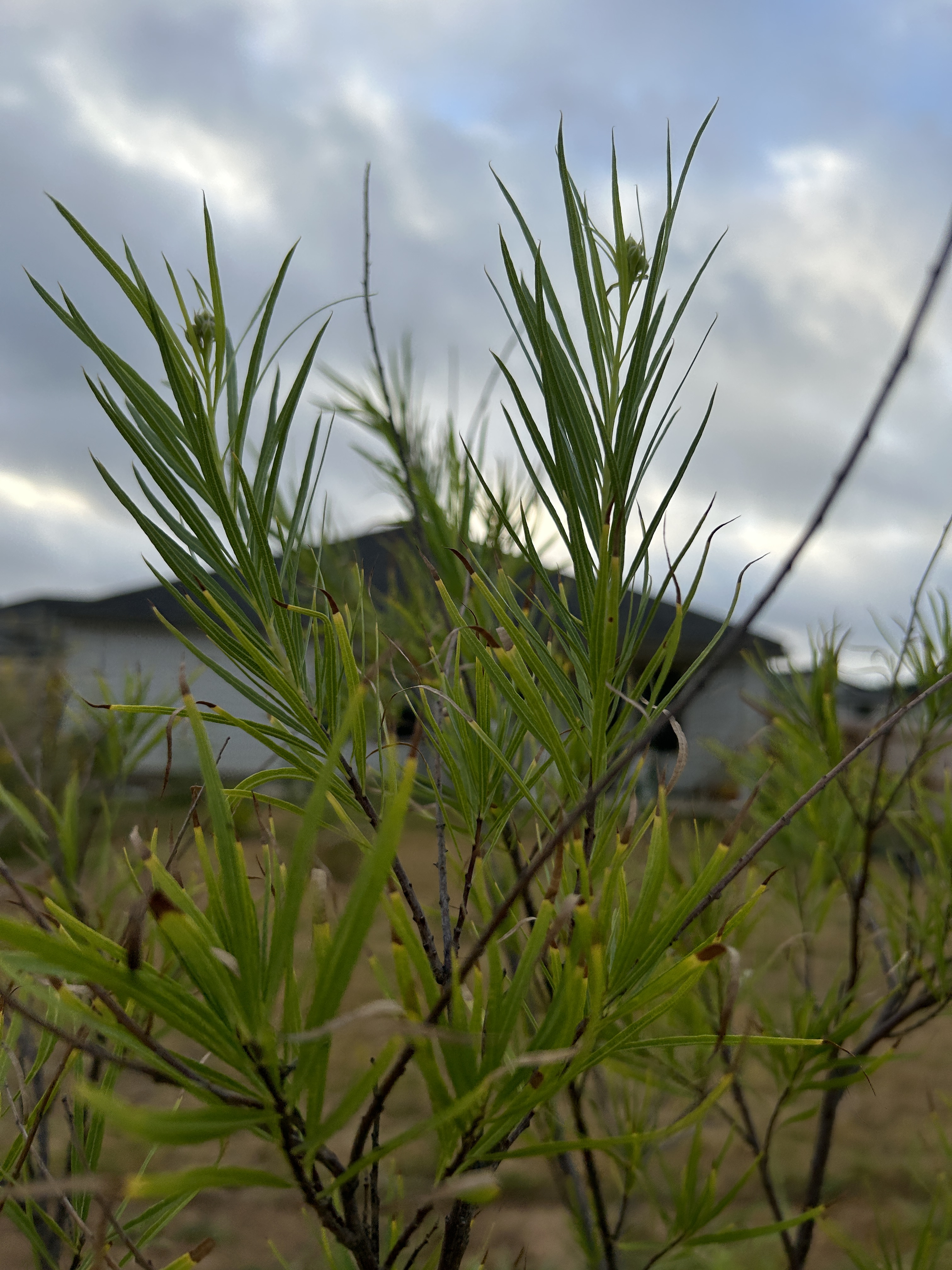

Since I last reported finding a Queen caterpillar in my milkweed patch, of course I visited often to see how it (and the plant it was eating) was doing.
Over the course of the next two days I realized that there were actually three other Queen caterpillars moving among the milkweed plants. Each was about the same size, so perhaps derived from eggs laid at the same time.
At first I tried to keep track of which caterpillar was which, and what plants they preferred, but this proved difficult. Sometimes I would even go out there and only see three, but then the next time there would be four again.
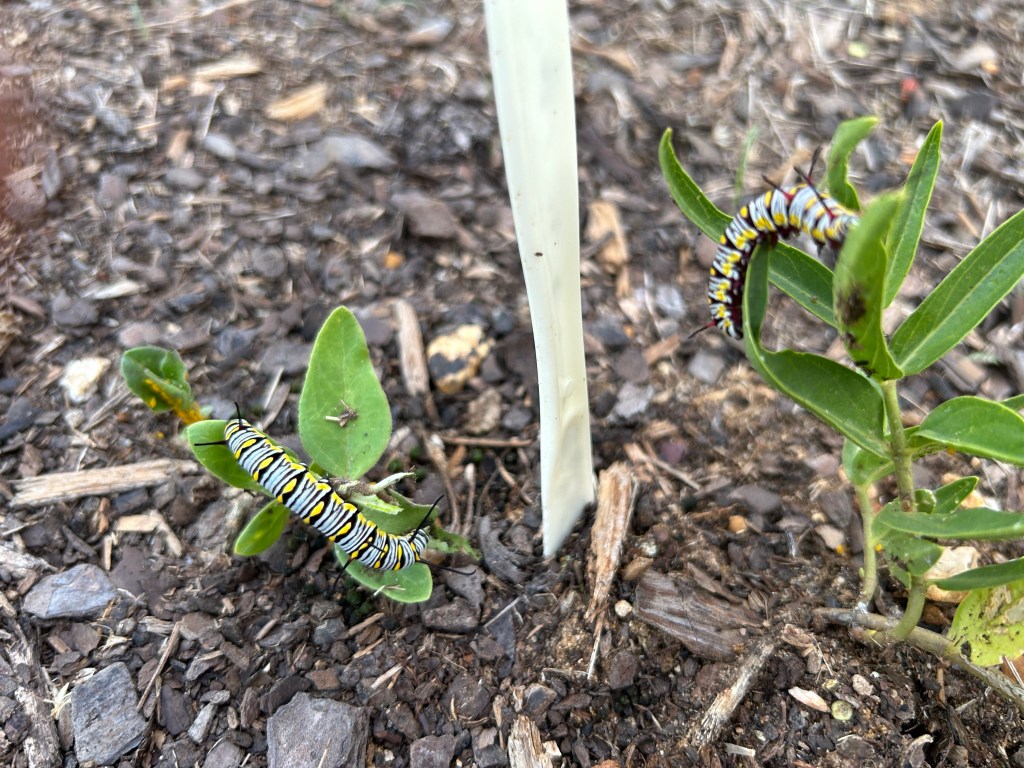
In my milkweed patch I have three kinds of plant that can be host to Queens: Zizotes Milkweed (Asclepias oenotheroides), Antelope Horns Milkweed (Asclepias asperula), and Butterflyweed (Asclepias tuberosa). They are all small plants, and some of them are particularly tiny Zizotes seedlings.
My small and not very rigorously documented sample of Queen caterpillars would suggest that Zizotes are the favored plants, followed by Antelope Horns, and then Butterflyweed. I base that on where the caterpillars went themselves when they moved to another plant, and whether or not they moved away if I placed them somewhere myself, even if the new plant had plenty of leaves.
The photo below shows two different plants close together. The one on the left is an Antelope Horns that I planted, and the one on the right is a Zizotes grown from seed.
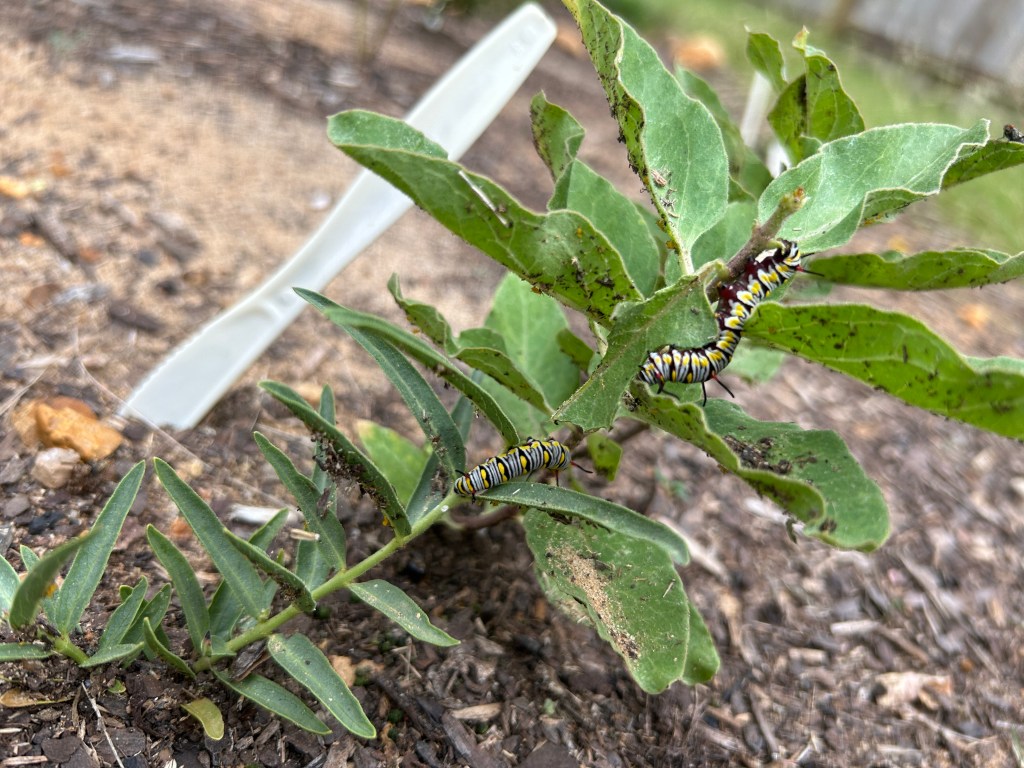
I wanted these four caterpillars to do well, but I also wanted to take the long-term view of not killing my precious little milkweed plants. So if I saw a plant that was being eaten too much, then I moved that caterpillar to another plant. As soon as the photo below was taken, this hungry caterpillar was moved to another plant. It had almost completely consumed a Zizotes, ignoring the Antelope Horns plant next to it.
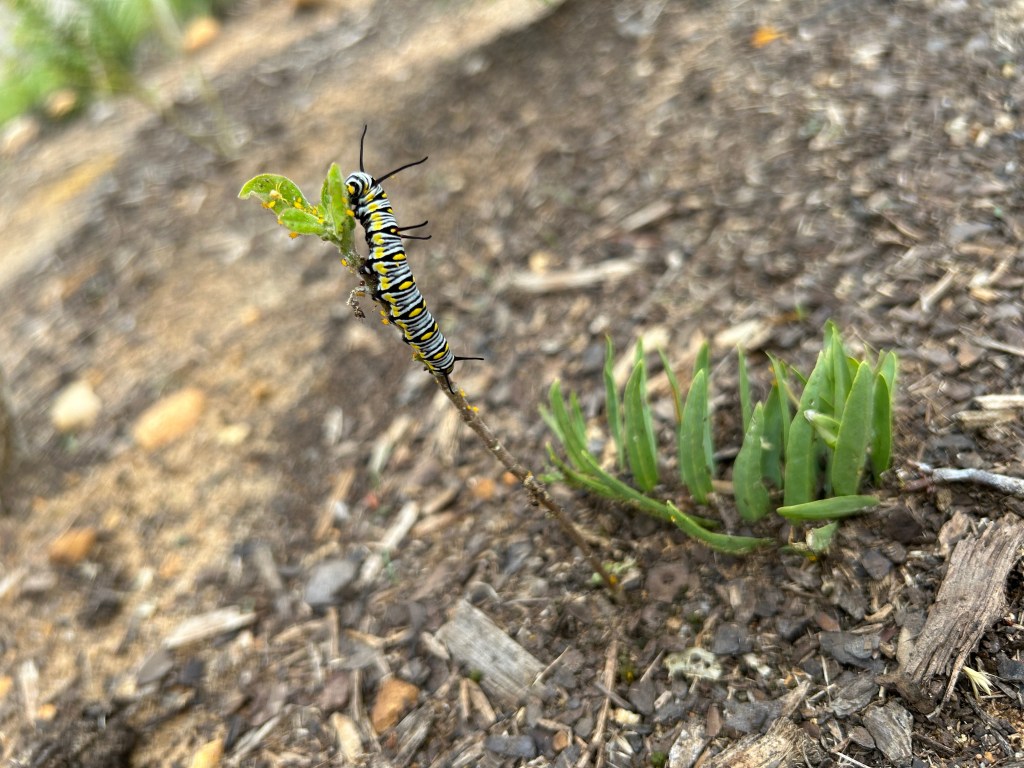
After a few days of this caterpillar/plant management, one caterpillar disappeared and did not return. The next day I saw none. Of course it is possible that some predator bird visited for a snack, but I’d like to think that it was time for them to pupate. Caterpillars will usually move away from their host plants to do that. I’ve looked, but have been unable to see any nearby chrysalises.
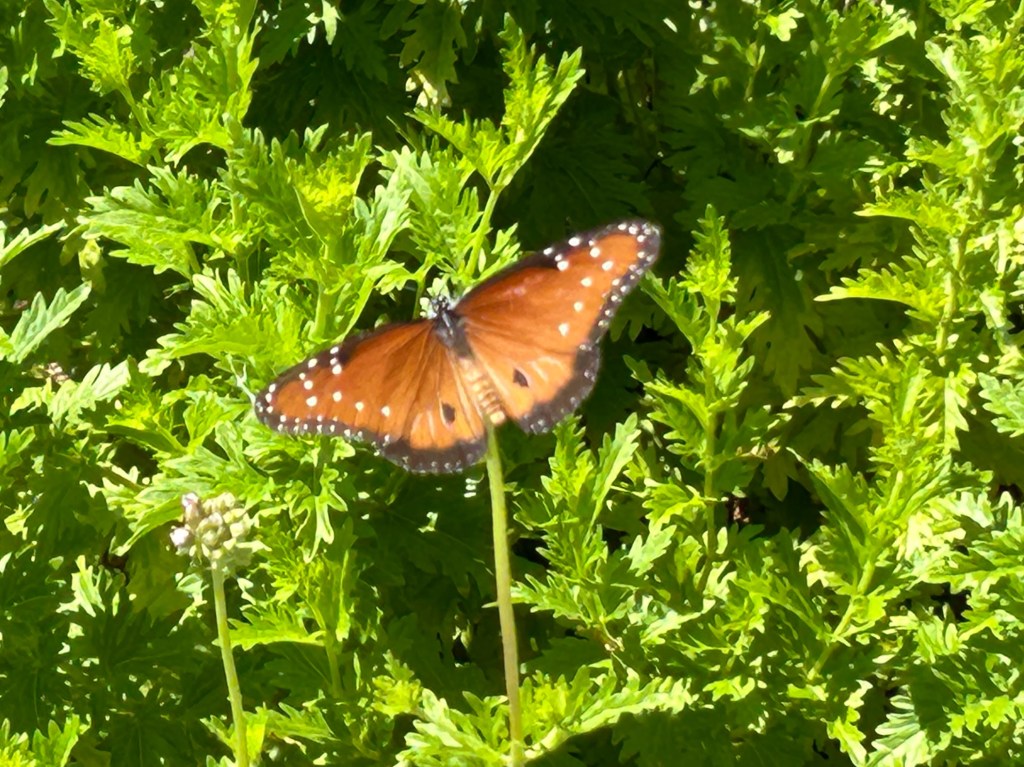
As I was writing this post, I spotted an adult Queen on the Gregg’s Mistflower (Conoclinium greggii) in the front pollinator garden, so I include it here for comparison. It always amazes me how different larval and adult colorations can be.


 Rewilding My Lot
Leave a comment