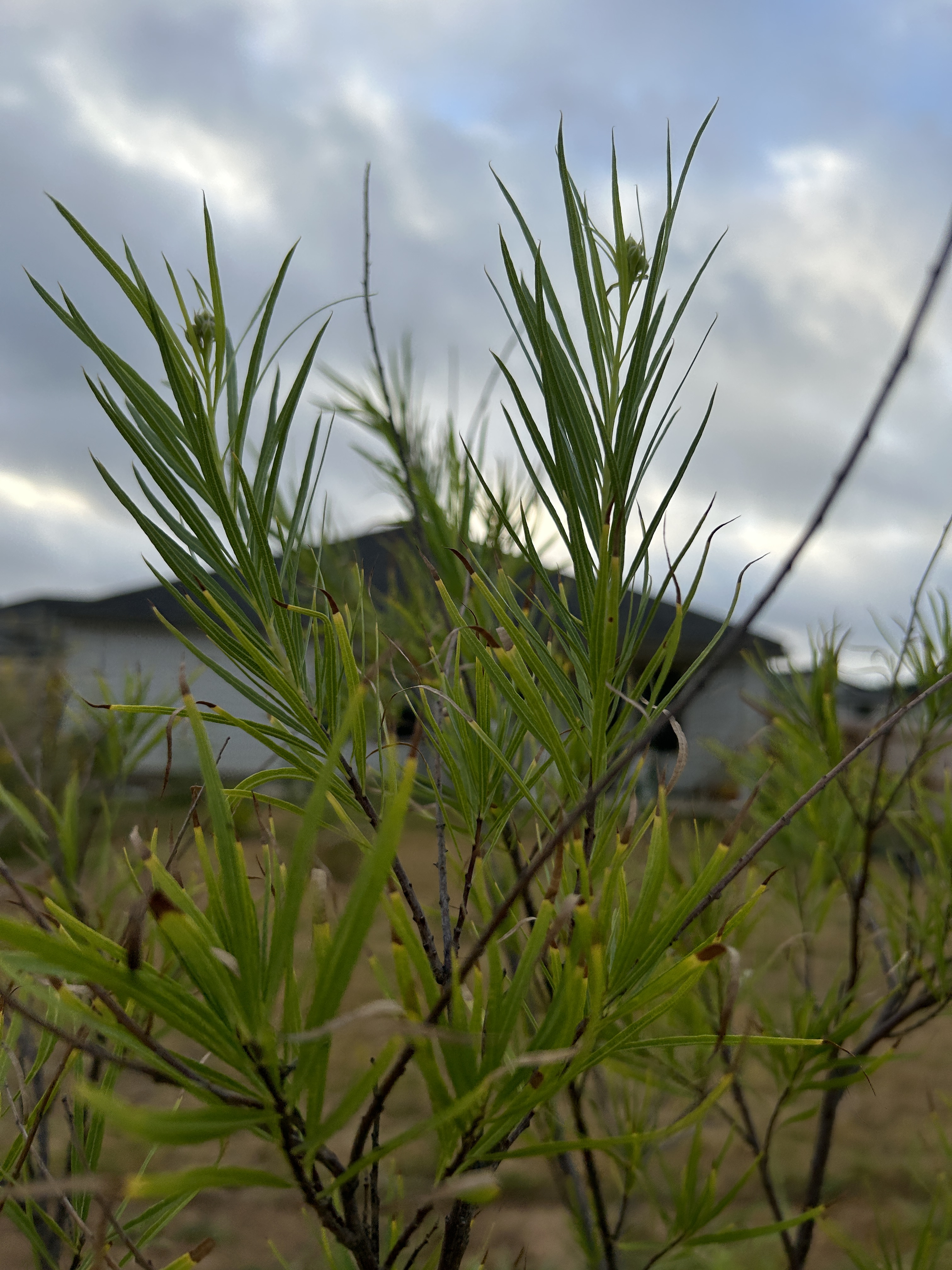
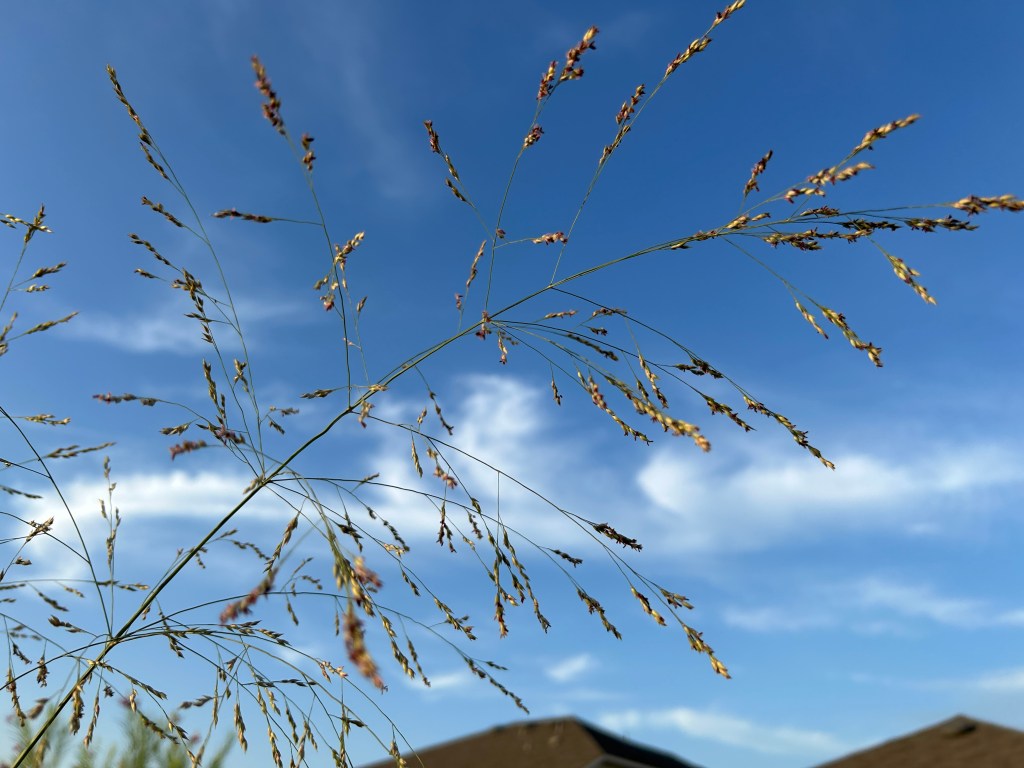
I have a small area of the back garden that I designated for mid-height prairie grasses. Some of the intended plants were transplanted in and some were seeded.
One of the grass clumps that grew was clearly going to be tall, but I couldn’t identify it until it flowered. By the time that happened, the flower heads were 7 feet tall and the whole thing splayed out to be 15 feet across (beyond both sides of the first photo below). I eventually tied it up, but that didn’t work well either.
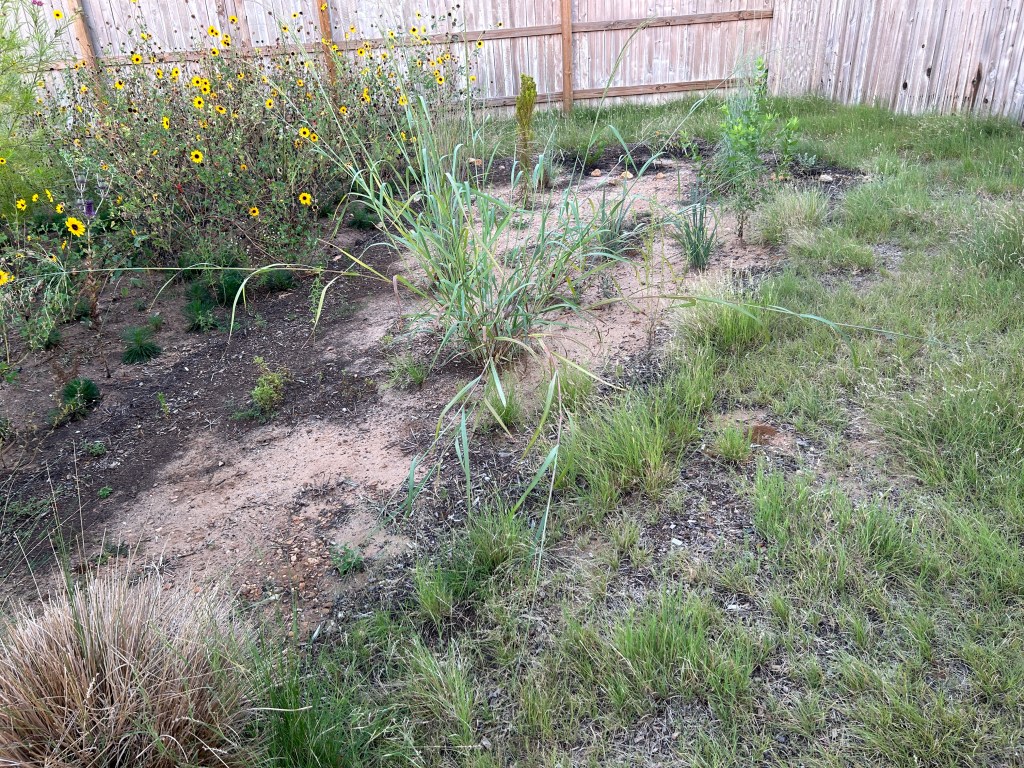
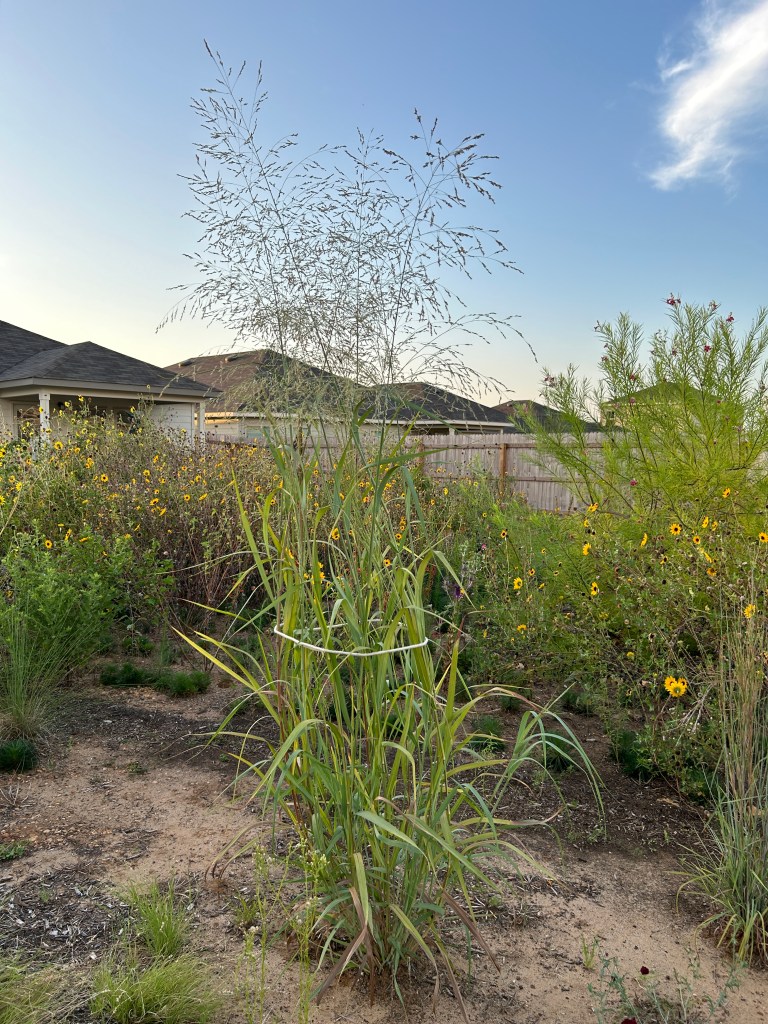
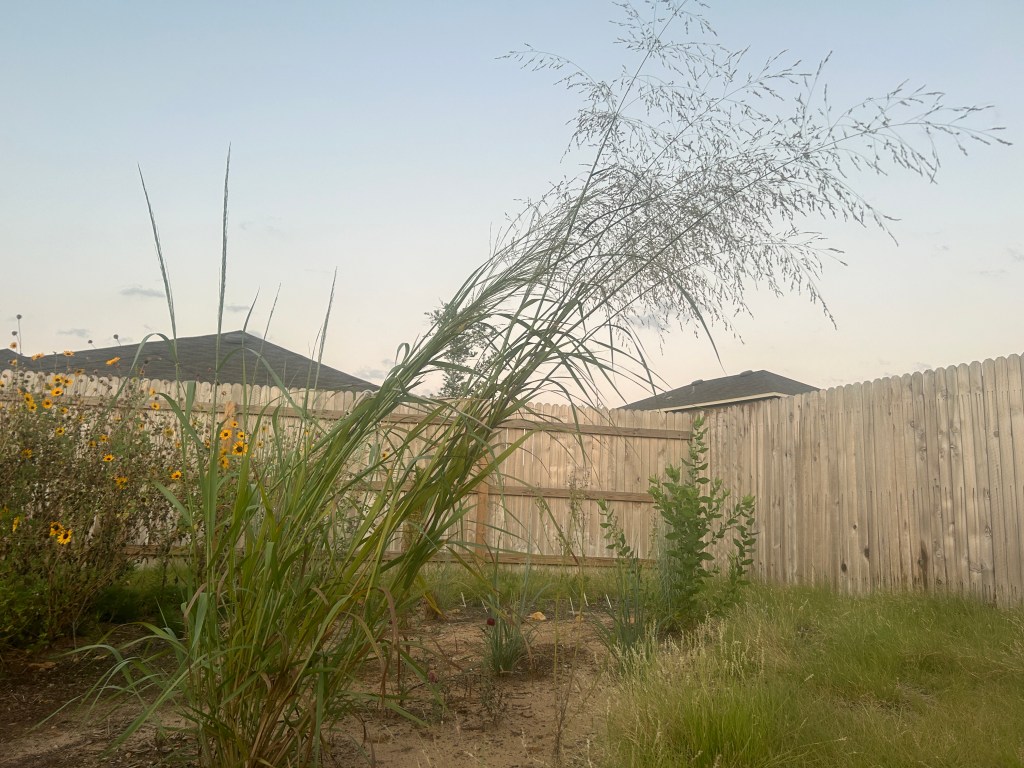
One of the grasses I had seeded was Waco Indiangrass (Sorghastrum nutans), using seed gifted to me by Headwaters at the Comal, where I sometimes volunteer. Was this that?
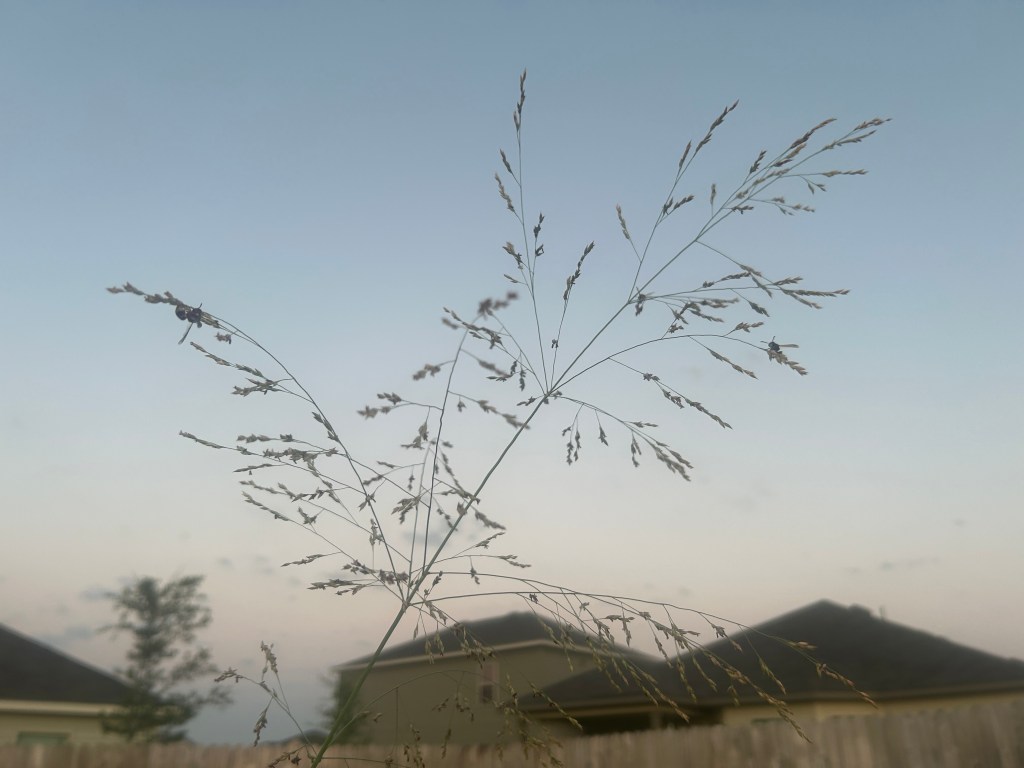
My knowledge of grasses is weak and I wasn’t able to find a good answer online. In the end I took a head of my grass back to the Headwaters when I was next volunteering to ask the folks there. It turns out that what appeared here was a clump of Switchgrass (Panicum virgatum), which can grow up to 10 feet tall.
Switchgrass is a good prairie grass, but it’s more than my little space can handle so I have removed it. Apologies to the insects that have been enjoying it, like here.
This whole experience illustrates an important part of my process here, and that is identification, especially in the case of volunteer plants. Once I know what something is, then I know what to do with it. Some volunteers are welcome native plants that form a useful part of the diverse ecosystem that I am building (e.g., Beach Sunflower, Helianthus debilis), some are native plants that just don’t work well for my particular situation (e.g., Switchgrass, Panicum virgatum), and some are invasive non-native plants that I want to remove (e.g., Burclovers).


 Rewilding My Lot
Leave a comment