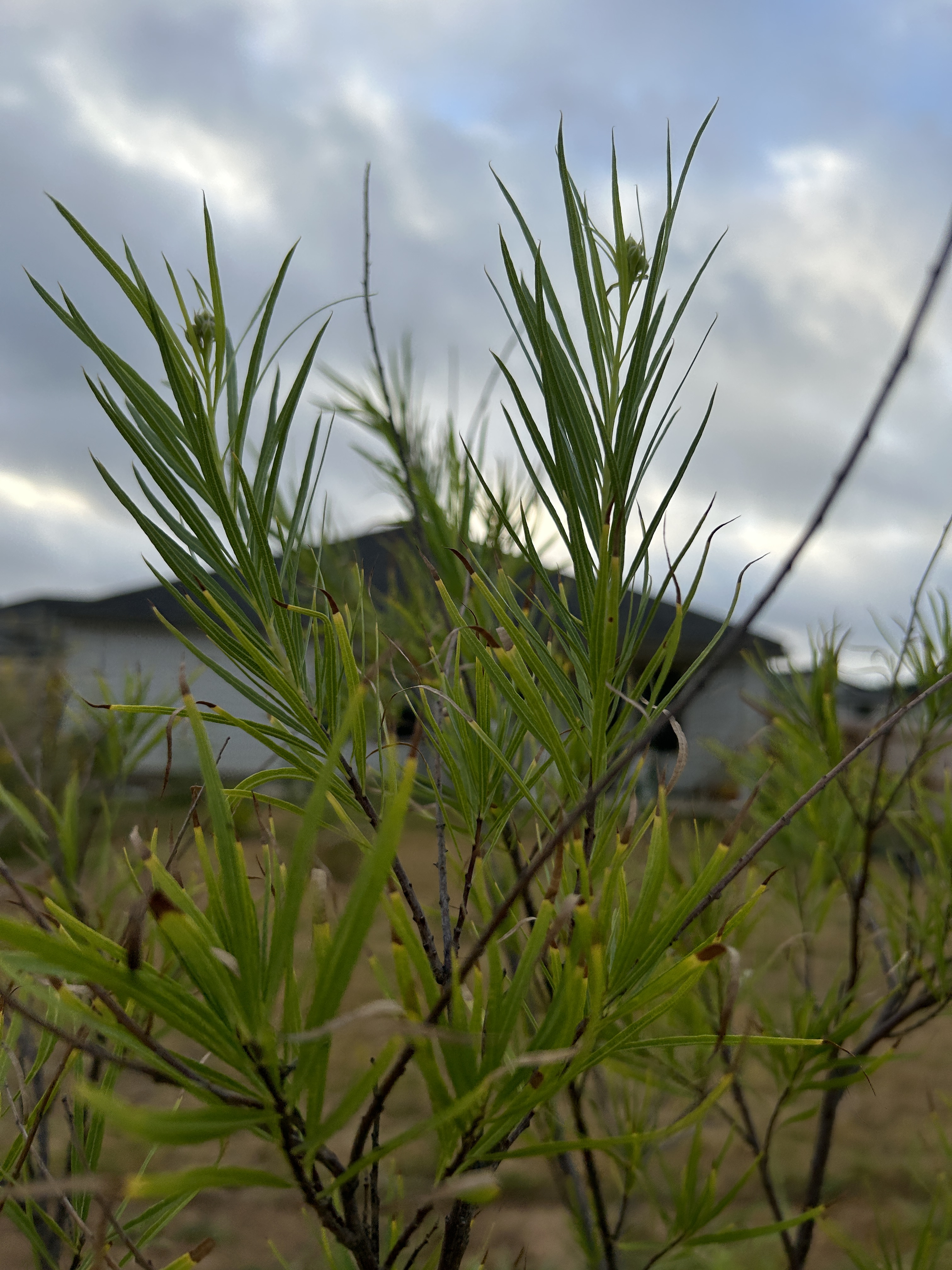
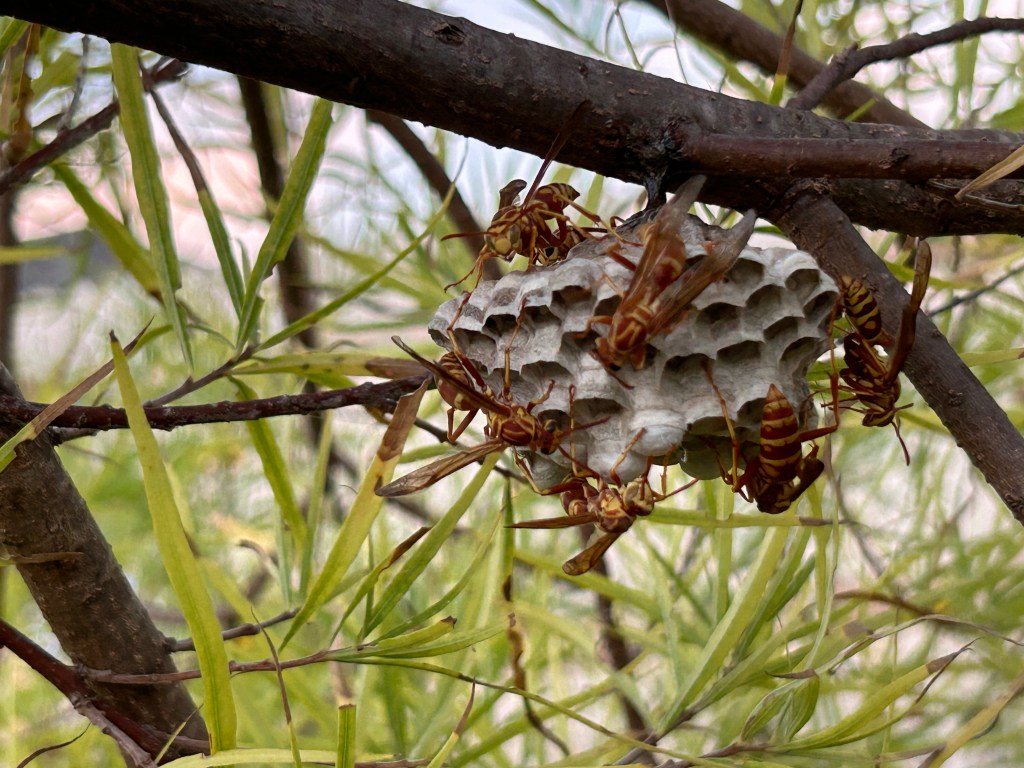
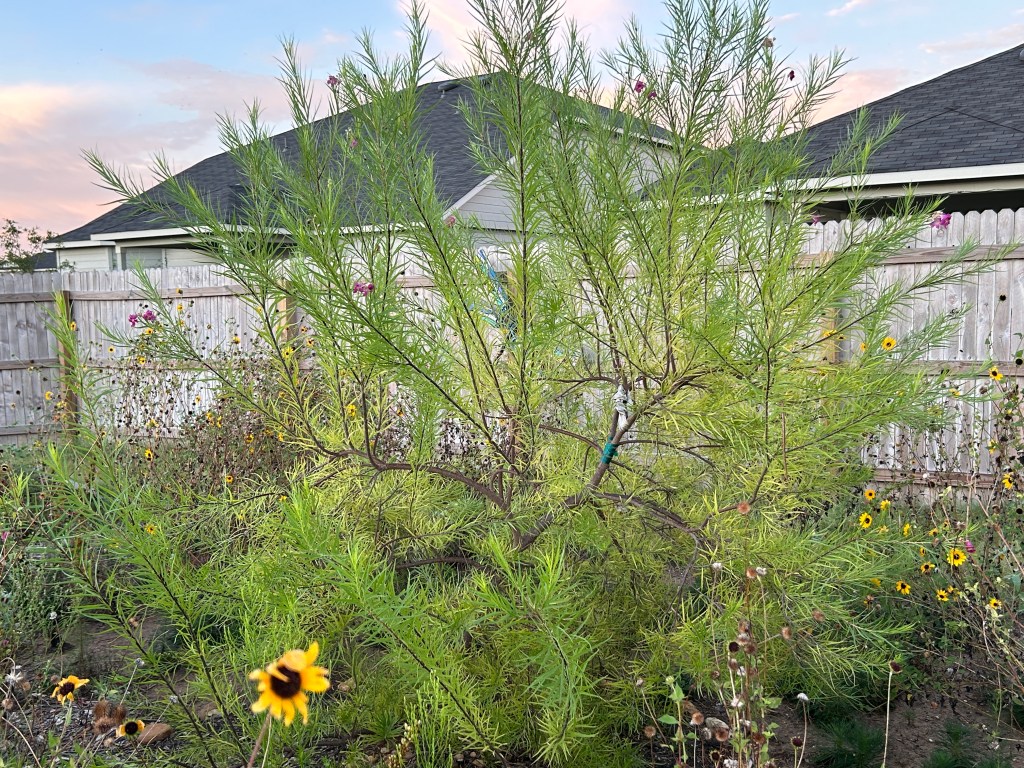
In my Desert Willow tree, not doing any harm, there is a nest of Apache Paper Wasps (Polistes apachus). It is fairly low down in the tree, just below the green tape.

Paper Wasps are interesting and useful, and since they are not bothering me then I will not interfere with them. Paper Wasps are not as aggressive as Yellowjackets, and although their bodies may look similar, they are easy to tell apart by the types of nest that they build. Yellowjackets usually live underground, whereas Paper Wasps build hanging nests that resemble umbrellas.
I found useful information about Paper Wasp lifecycles here and here.
A queen Paper Wasp hibernates over the winter. When she emerges she builds a small nest on her own, constructed from wood pulp and saliva, and lays eggs. The first brood are female workers, who tend to and expand the nest as the queen lays more eggs.
When eggs hatch, the legless larvae remain in their cells to be fed by workers. When they reach the pupation stage, workers cap off the cells until the adults are ready to break out. As the colony grows, more cells are added to the nest.
By late summer, the wasp population in the nest reaches its peak, and the queen lays eggs that can become future queens and fertile males. Soon after that, the current queen dies and the remaining adults leave the nest to forage, breed, and in the case of the new queens, hibernate. In the winter, cold and food scarcity kill all but the safely hibernating queens.
The nest that I have in my tree appears to have several chambers in different stages of empty, filled, and capped, being cared for by a few adults. When the nest is abandoned later in the year, I’ll cut it down and compost it.

How are Paper Wasps useful in the garden? They are omnivorous, consuming flower nectar and other insects. Therefore, this gives them a role in pollination and pest control.


 Rewilding My Lot
Leave a comment