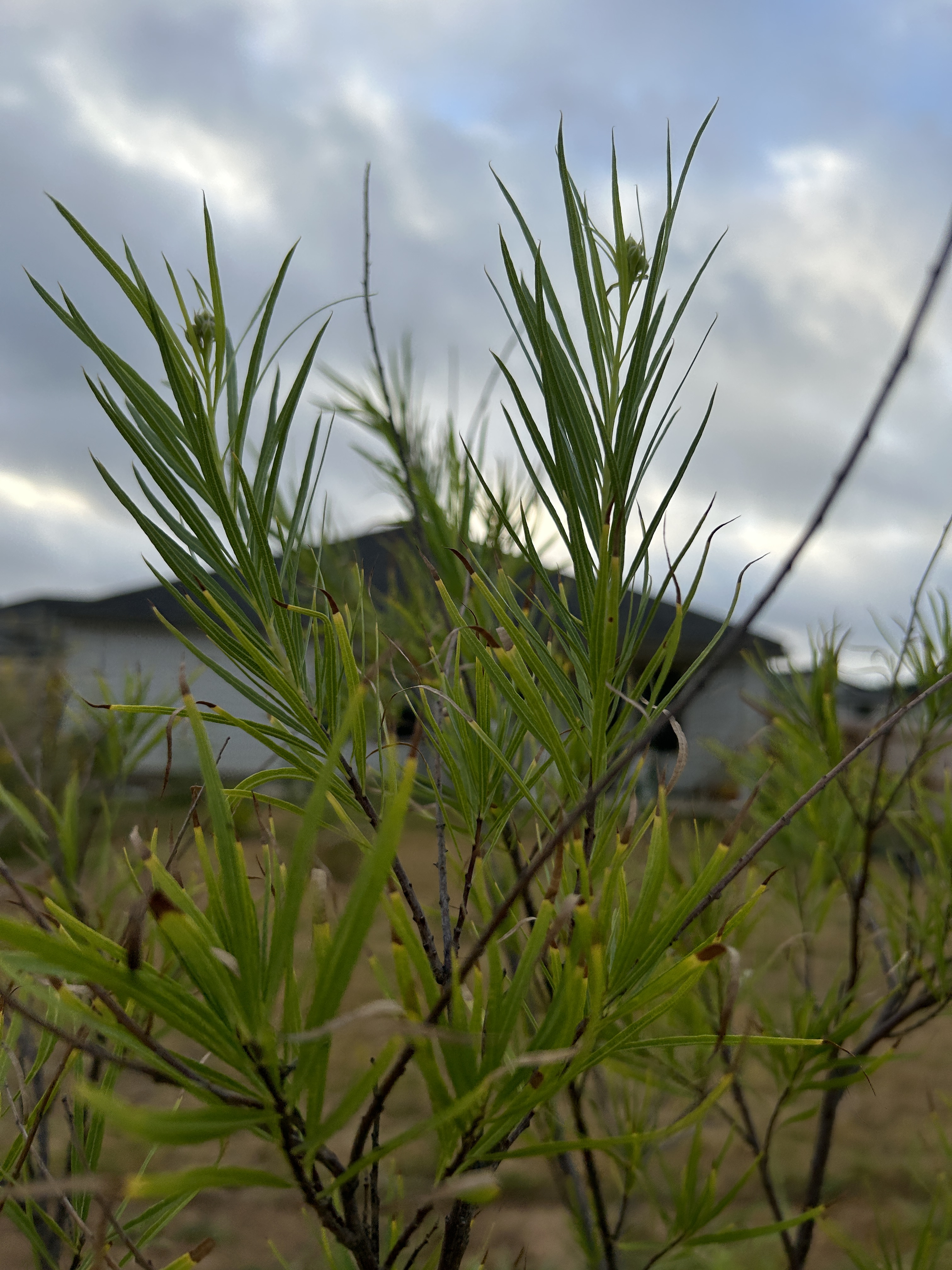
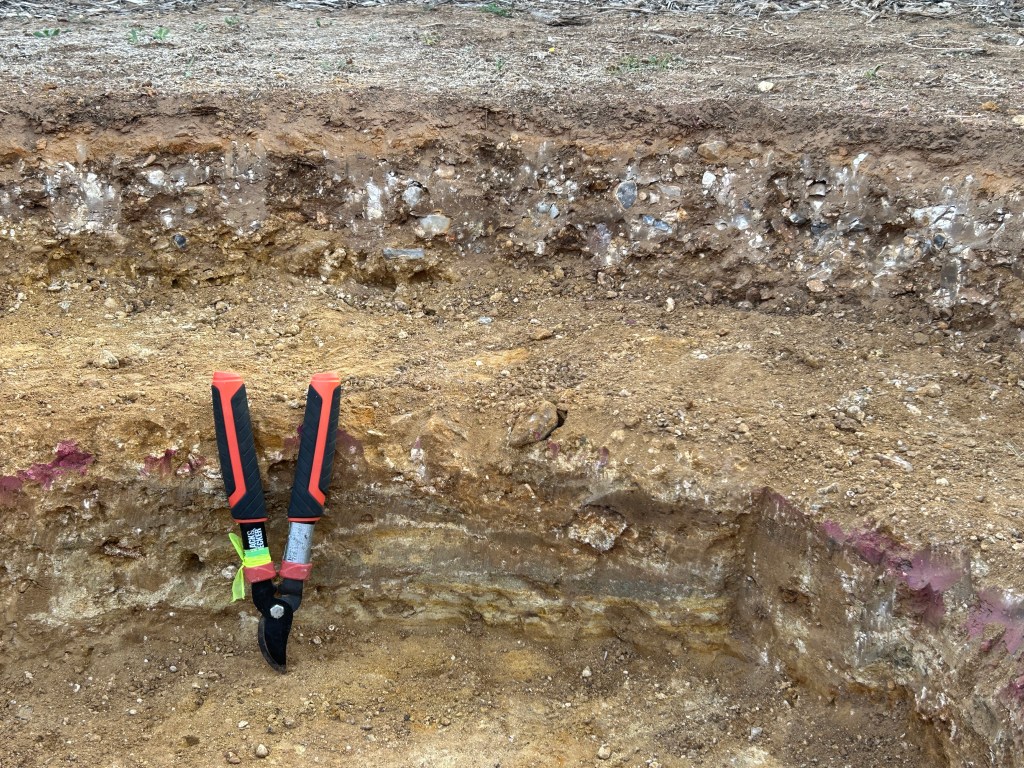
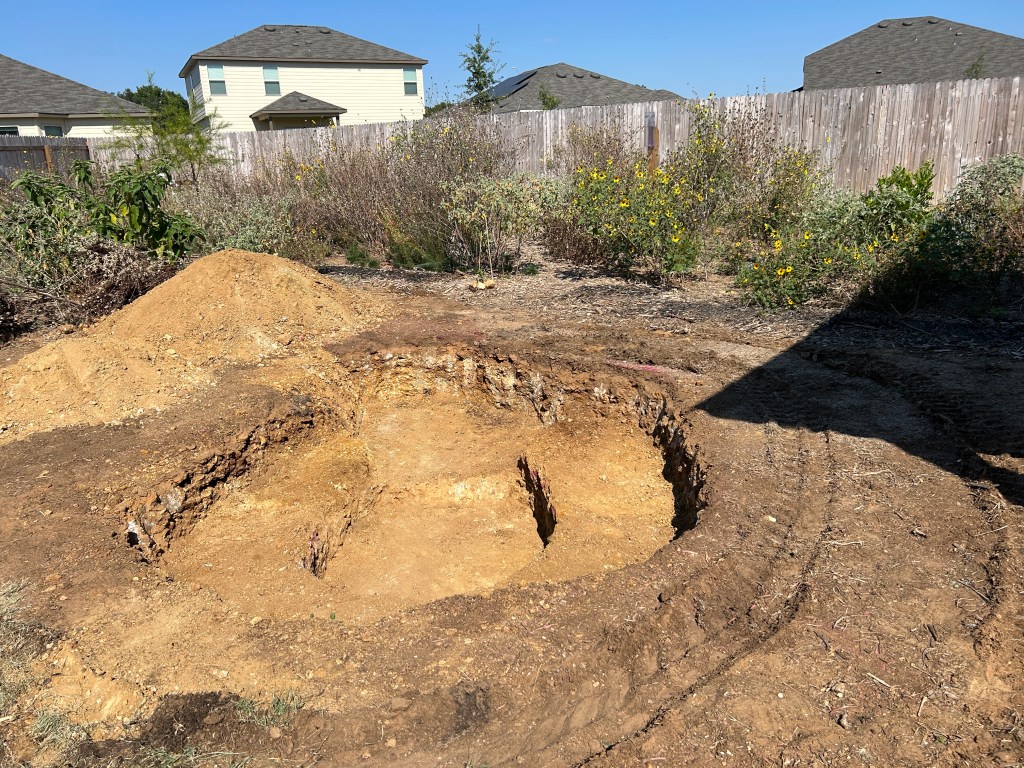
Having a hole dug down two feet to prepare for an ecosystem pond allowed a nice opportunity to see a cross-section of the soil here.
So from top to bottom, here’s what I have. The tool I am using for scale is 12 inches long.
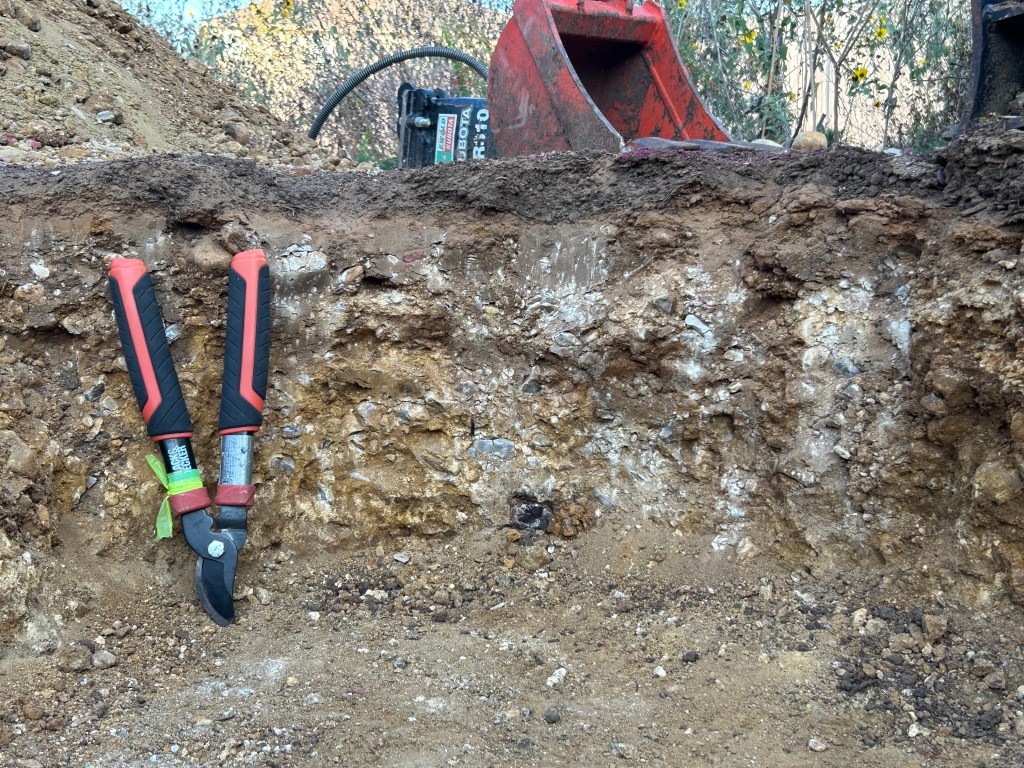
The uppermost layer (dark brown) is 1-2 inches of the rich soil and mulch that I have added in my time here. Improving soil health is an ongoing project!
The next layer (light brown) is 1-2 inches of poor quality “soil” that the builder added. It’s mostly sand.
Then there are about 12-18 inches of stones mixed with sand, which is primarily what the builder used to build up and grade the lots here. Before the area was developed, most likely anything that resembled healthy topsoil was scraped off and sold. (This area was formerly farmland.)
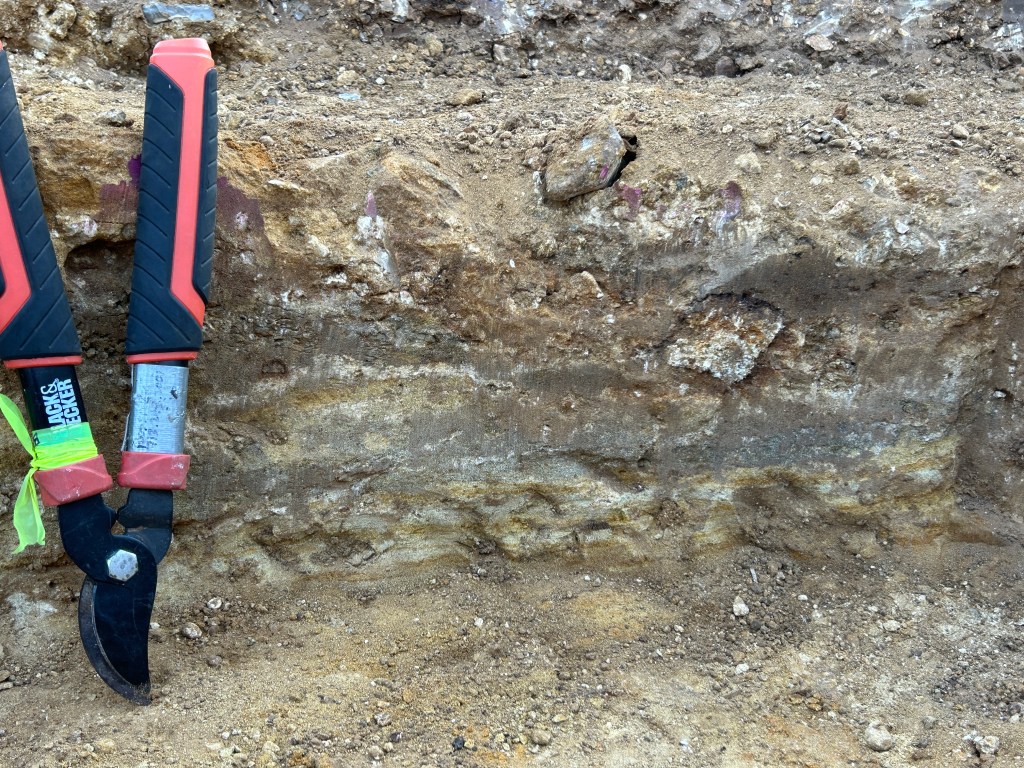
And finally, about 18 inches down (the last 6 inches in the above photo), I start to see original soil for this area. Seguin sits on a transition between two ecosystems, and so residents not too far apart can experience rather different soil types. One of the types here is Blackland Prairie, and what I have is Post Oak Savannah, which is sandy and well-draining.
Knowing your soil type can be important in deciding what will grow well on your land. For instance, Blackland Prairie soil is clay-based and Post Oak Savannah soil (what I have) is sand-based, and the two drain very differently. What will grow best in my garden are plants that put down deep roots to find water, and that don’t like to have wet “feet.”

 Rewilding My Lot
Leave a comment