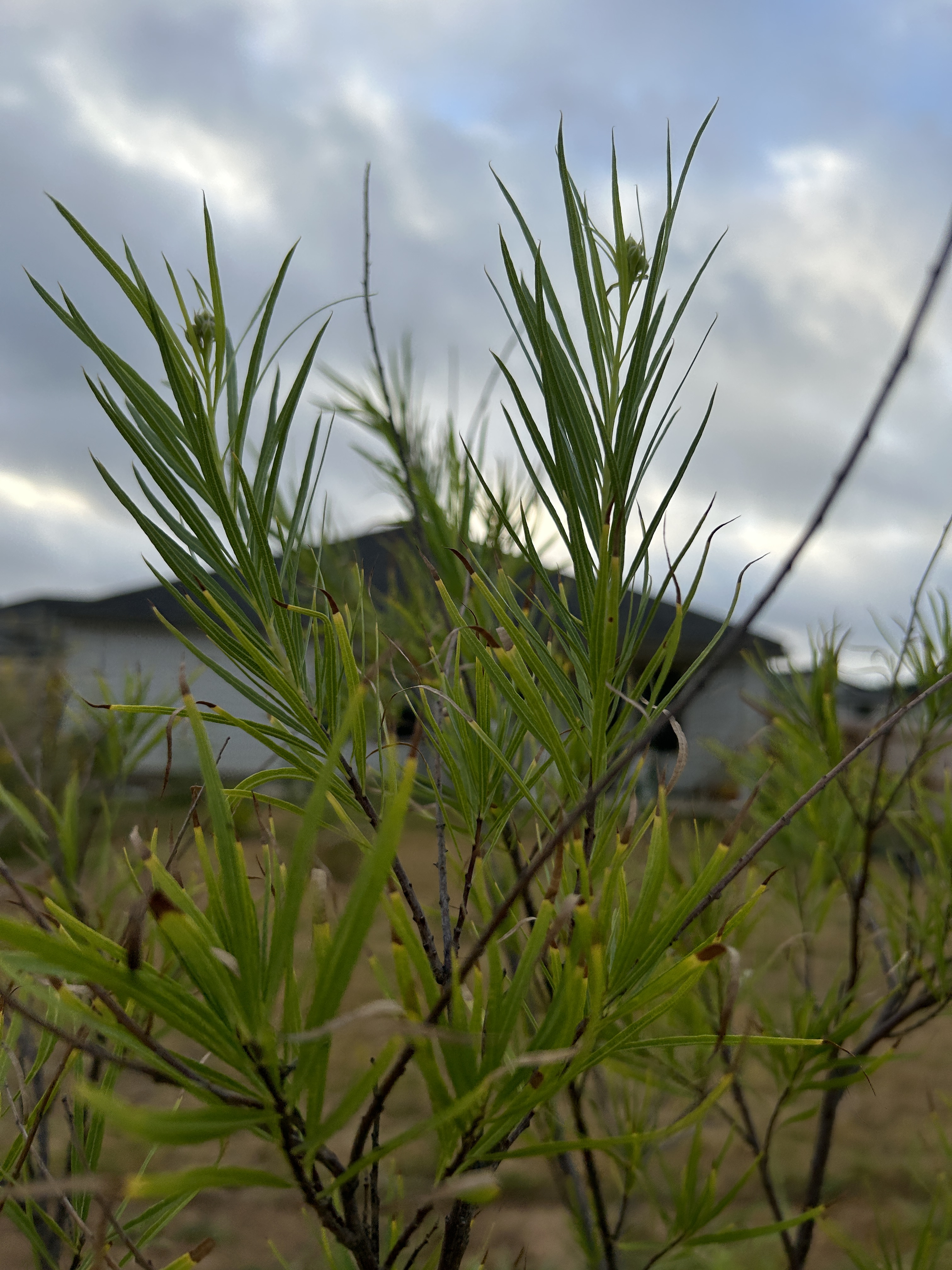
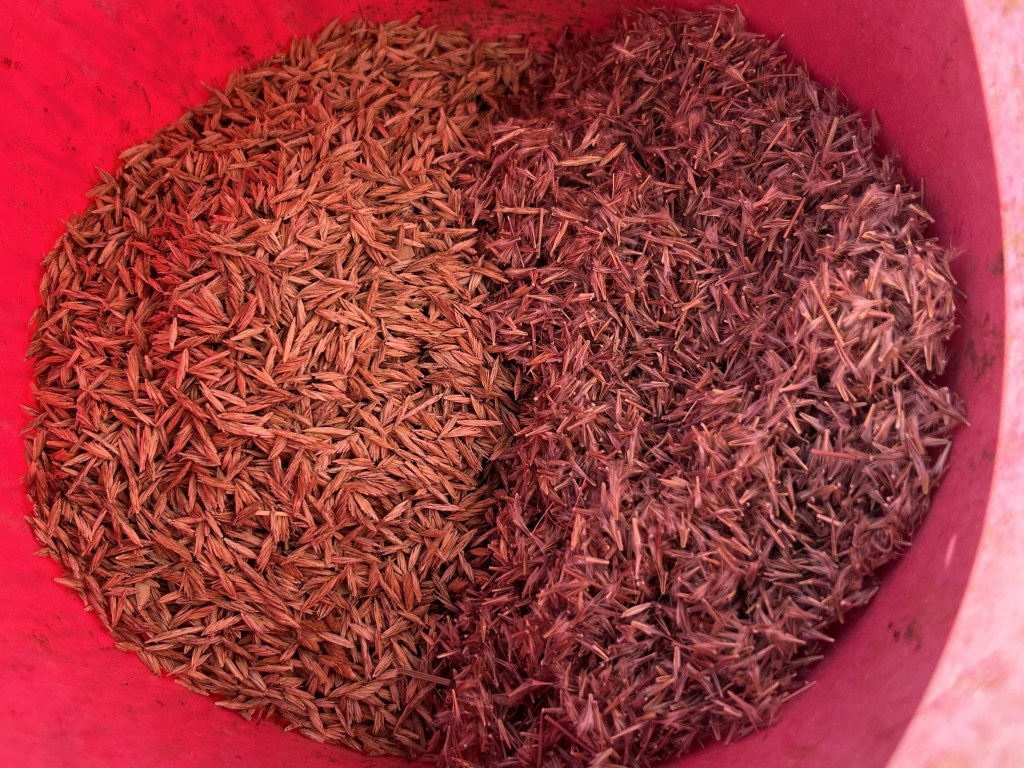
I have designated a small area at the back of the garden for mid-height prairie grasses. This is developing quite nicely, and I currently have there:
- 4 clumps of Little Bluestem (Schizachyrium scoparium),
- 3 clumps of Sideoats Grama (Bouteloua curtipendula),
- 2 clumps of Waco Indiangrass (Sorghastrum nutans),
- 2 clumps of Gulf Muhly (Muhlenbergia capillaris), and
- a few stray non-grass plants that can stay there for now (e.g., Standing Cypress, Leavenworth’s Eryngo)
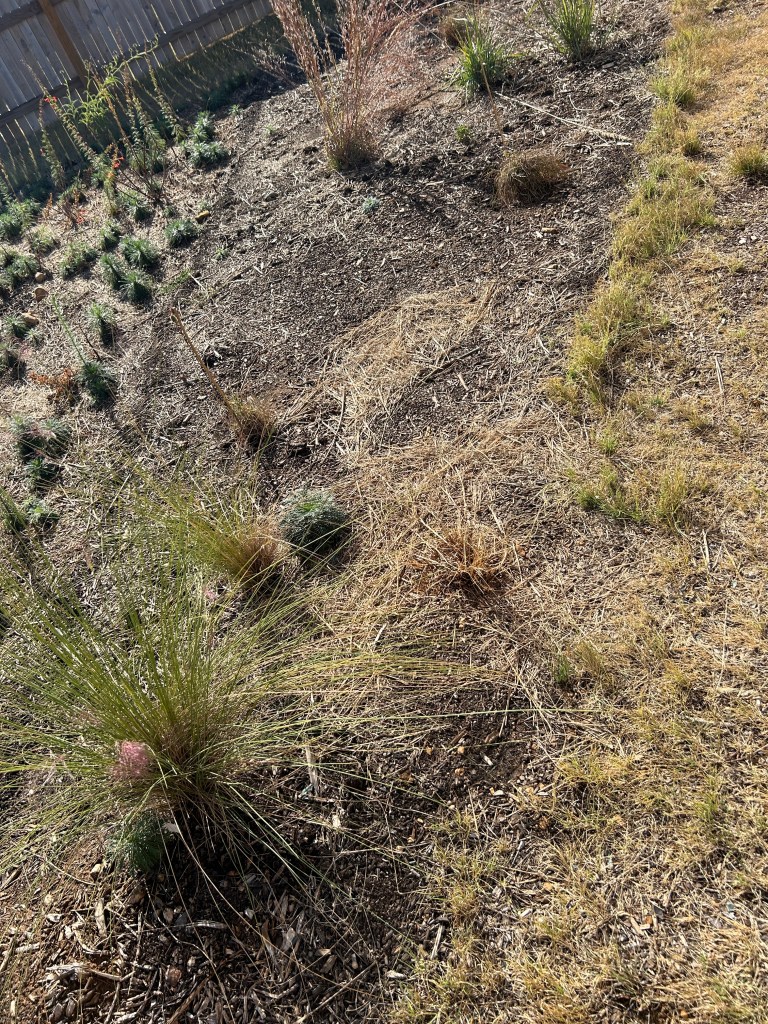
Although the grasses that are growing are producing seed themselves, I decided for one more year to add a little extra seed for Little Bluestem and Sideoats Grama to help to fill in the gaps.
We recently had a 2-inch rainfall that broke our 2-month drought and so I took that as a signal to proceed with fall seeding projects. The tall grass area was the first that I tackled.
My approach to seeding is usually to mimic nature and not to push germination. So as long as I get seeds on the ground by the end of November, I let the environment decide which seeds will germinate and when. I won’t provide supplemental water.
I had one pack each of Little Bluestem and Sideoats Grama, purchased from Native American Seed.
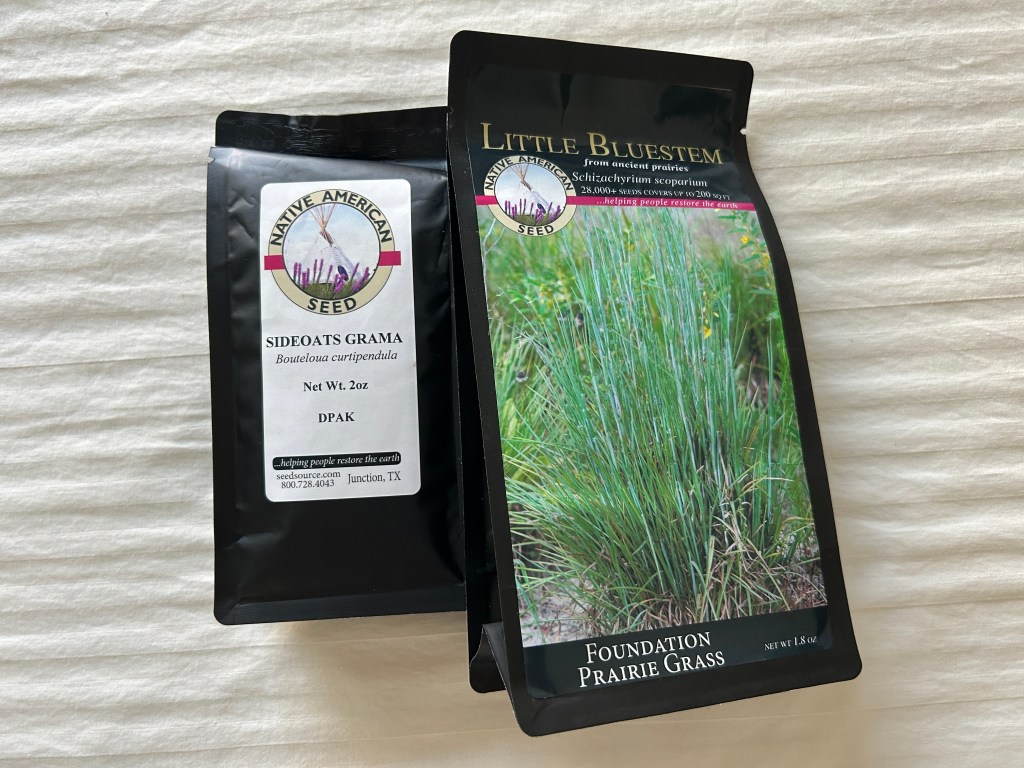
I mixed the seeds with a few handfuls of planting soil, just to make distribution easier.

And then I scattered the mix over the designated area.
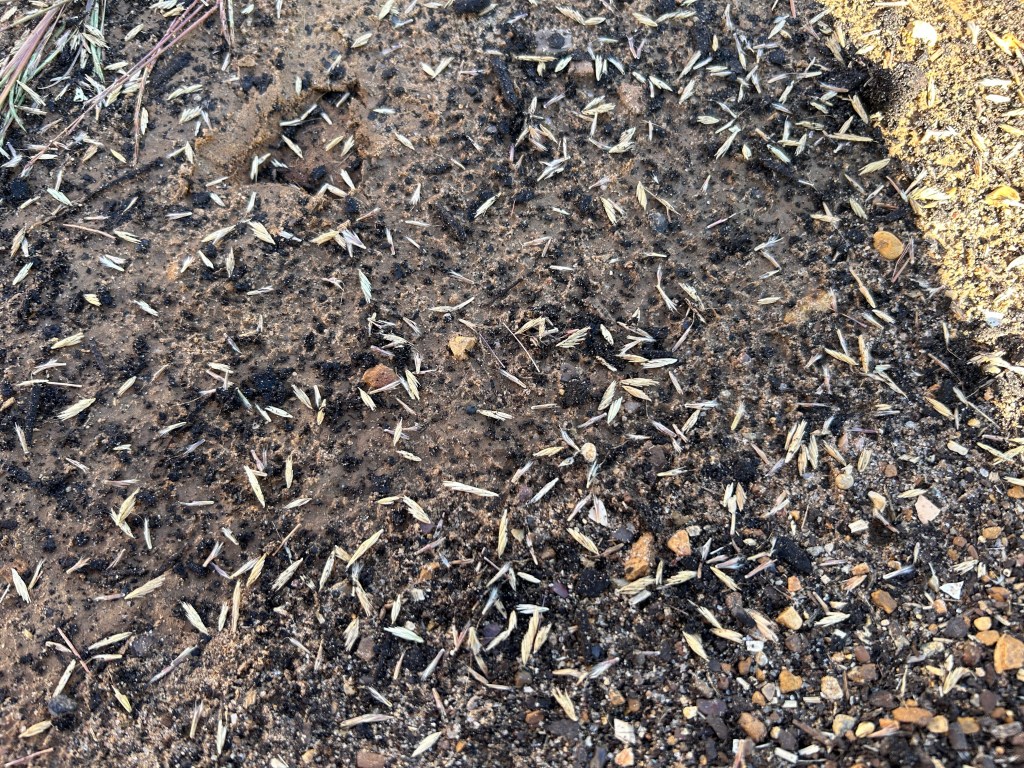
That’s it. Nature can take over from here. My task in the spring will be to weed out new plants in this area that are not the grasses I want.
I realize that some of this seed will be lost to birds or ants, but grass seeds aren’t accustomed to being buried and I’m not going to use extra water to get them to germinate quickly.

 Rewilding My Lot
Leave a comment