I’ve never had a pond before, so learning how to manage that environment will be a whole new thing for me. My goal is to build an ecosystem that relies as much as possible on biology and the interaction of different organisms to maintain a healthy equilibrium.
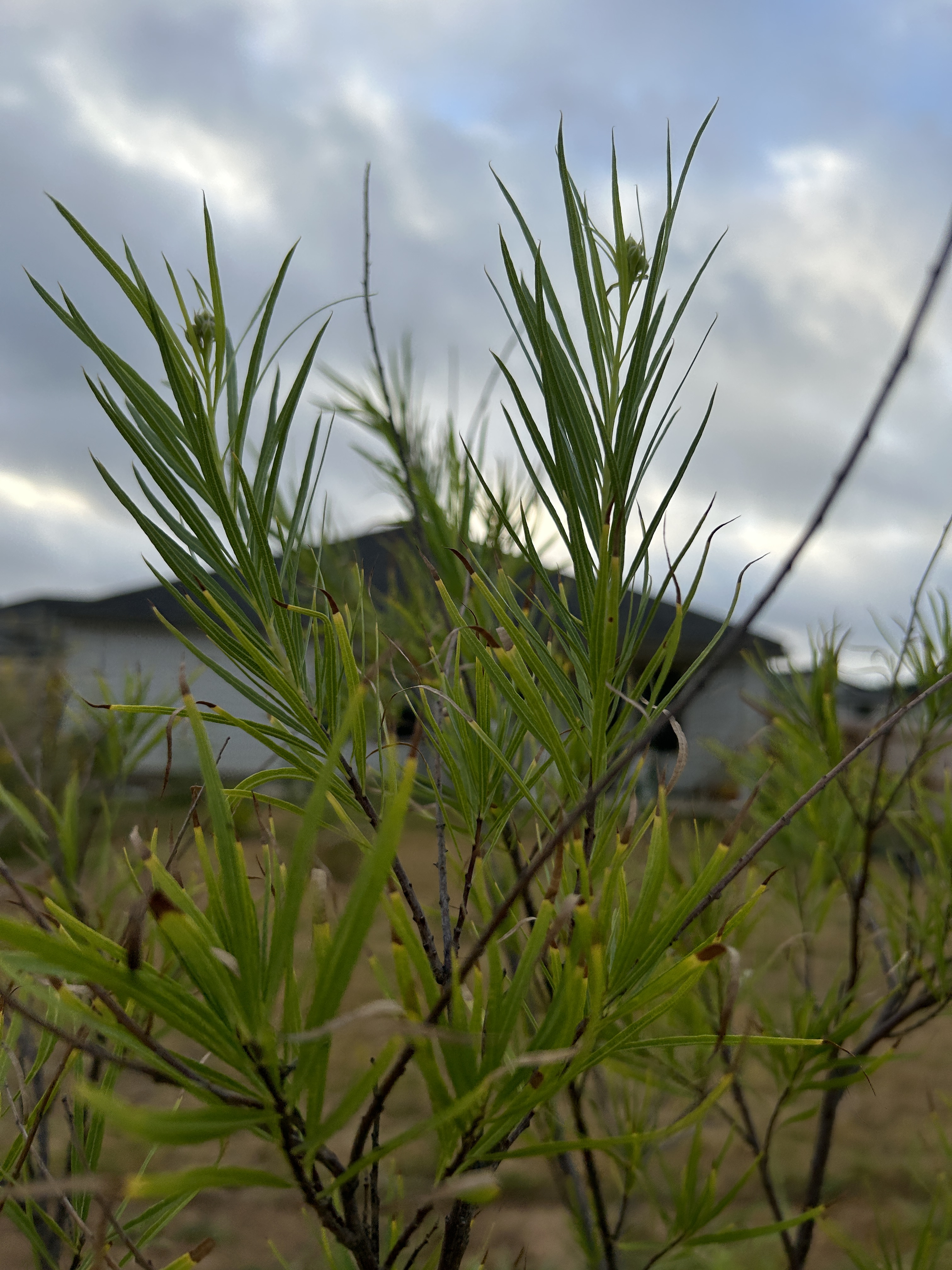
One part of that ecosystem will be plants, and as with the rest of the garden here I want them to be native to this area. So on a recent trip to Pollinatives, this is what I picked up.
American White Waterlily (Nymphaea odorata)
I particularly wanted a waterlily so that there would be floating leaves that could be used by small flying insects as drinking platforms. (I don’t know if they would do that, but I wanted that option to be available.)
When I first brought this plant home I submerged its original pots (2) in the deepest part of the pond, which left the leaves several inches below the surface. Impressively, in less than a week, the leaves had grown up to the water surface (before and after photos below).
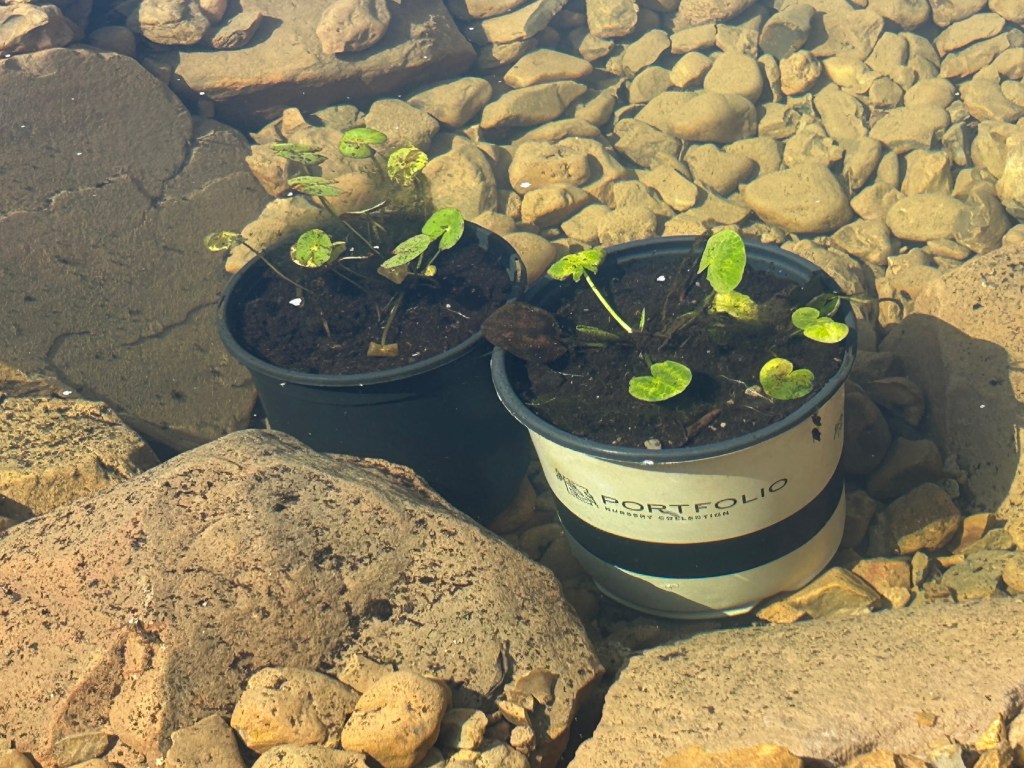
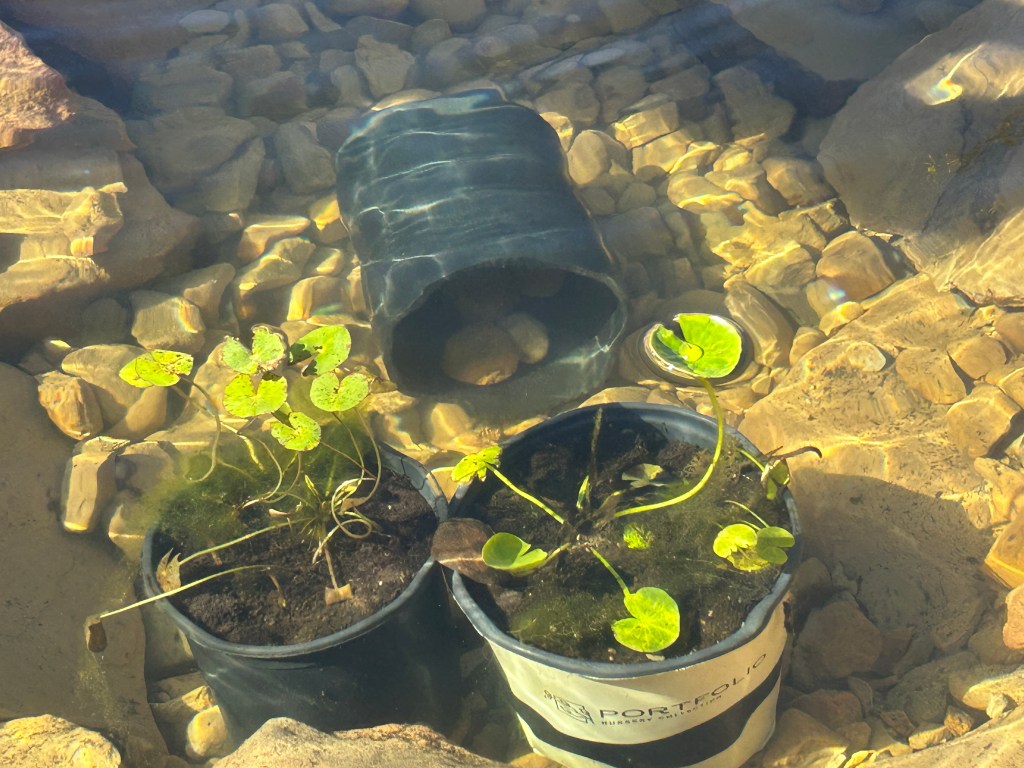
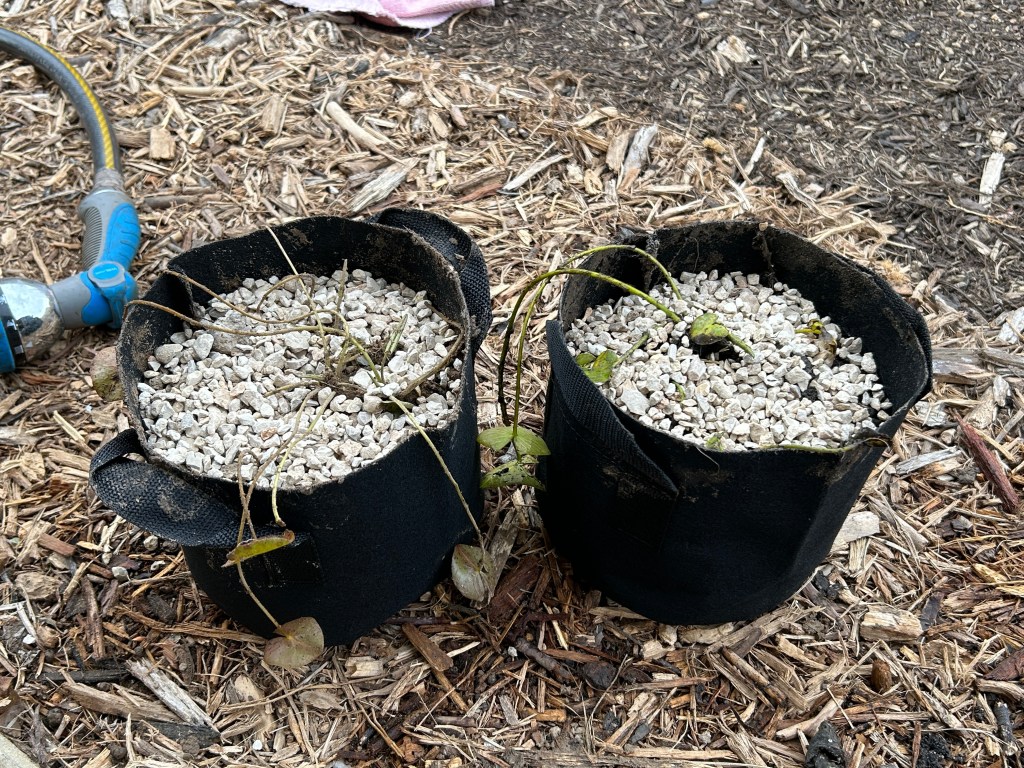
I repotted the original two pots into a fresh pair of fabric pots with some new soil and with a layer of small gravel on top of the soil. When I put them back in the pond, they were lower than they were in the first pots, so the stems have a little longer to grow to get to the surface again.
Aquatic Milkweed (Asclepias perennis)
I knew that there was a Swamp Milkweed (Asclepias incarnata), but I had never heard of Aquatic Milkweed. I have three other kinds of native milkweed here, so I was interested to try this one.
At Pollinatives, the two plants that I bought had acquired some extra passengers. So when I repotted them, I discarded (=composted) most of the volunteers except one, and I gave that a separate pot. As with the plants in the ground here, I will have to let the volunteer bloom before I can identify it and decide whether it stays or not.
Pickerelweed (Pontederia cordata)
I had no particular reason to choose this plant other than it was different from the other two. It also helps that, “It is a true pond plant; pickerelweed is easy to grow so long as it does not dry out. “
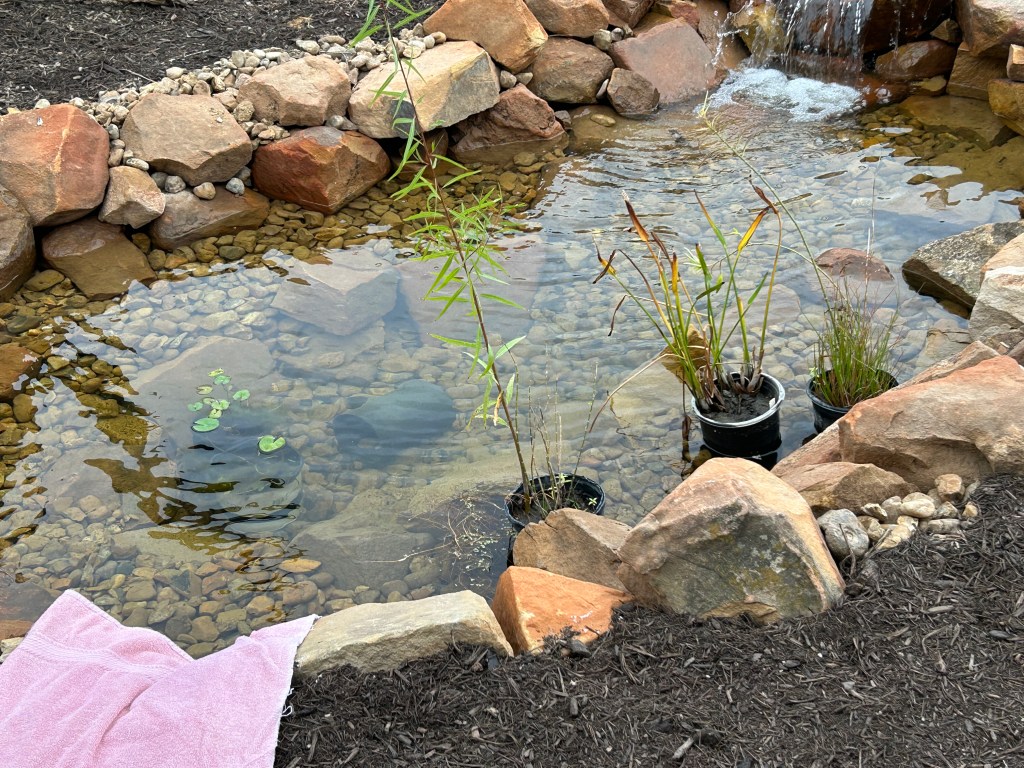
The first photo in this post shows the plants in their original pots in the pond. Following are a few photos taken during the repotting process, which was a rather muddy endeavor.
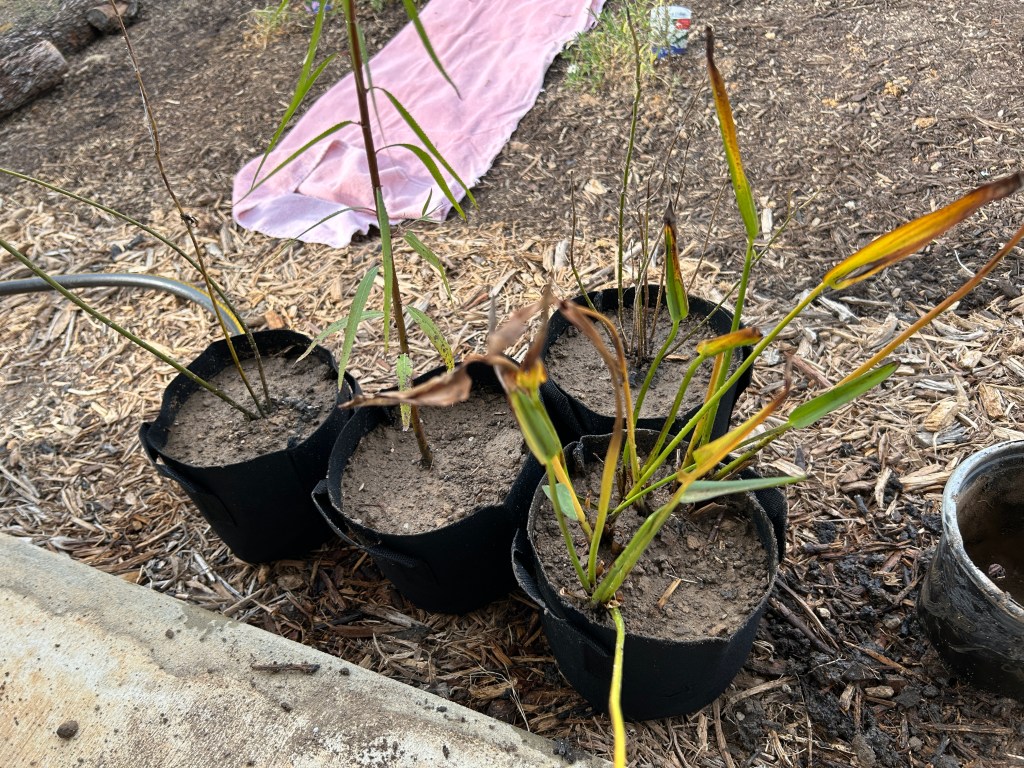
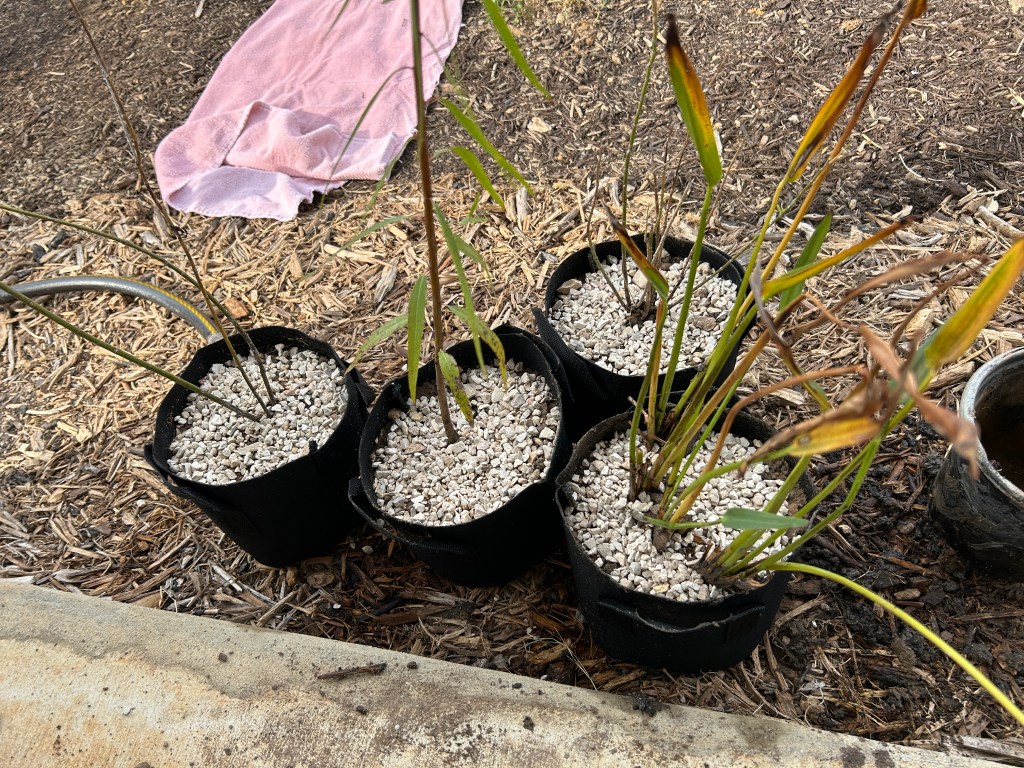
These are four of the cleaned up plants in their new fabric pots (porous so water can pass through) and with extra soil (high in clay content so it doesn’t lift out of the pot).
…and with gravel on top to further minimize soil loss.
Water lilies have very delicate stems and look very sad out of the water.
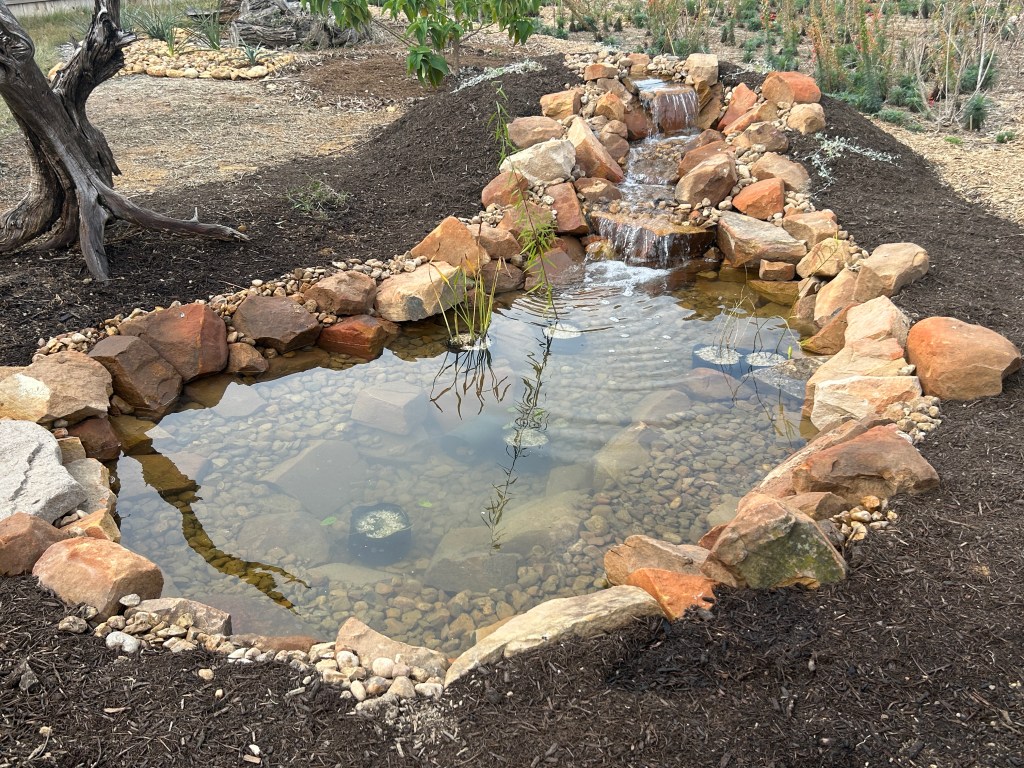
Here’s everything back in the pond. I had to wade in for this part, which I plan to do only if absolutely necessary. That stirred up some sediment so the water clouded up a bit. I didn’t see any fish, dead or alive, so I’ll take that to mean that they’re OK and hiding.

 Rewilding My Lot
Leave a comment