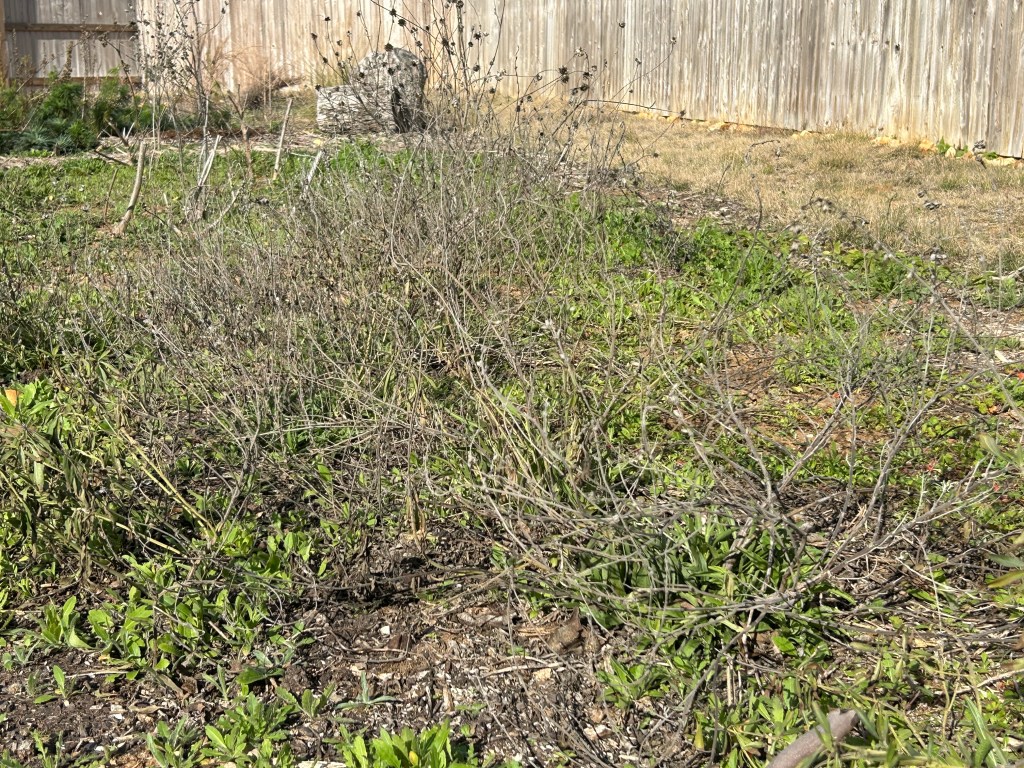
A few weeks ago, I trimmed back dead parts of the pollinator garden that is in front of the house. From a nature (habitat) point of view I should have left it longer before tidying up, but I did that particular project to keep the front of the house “neat” for the neighborhood.
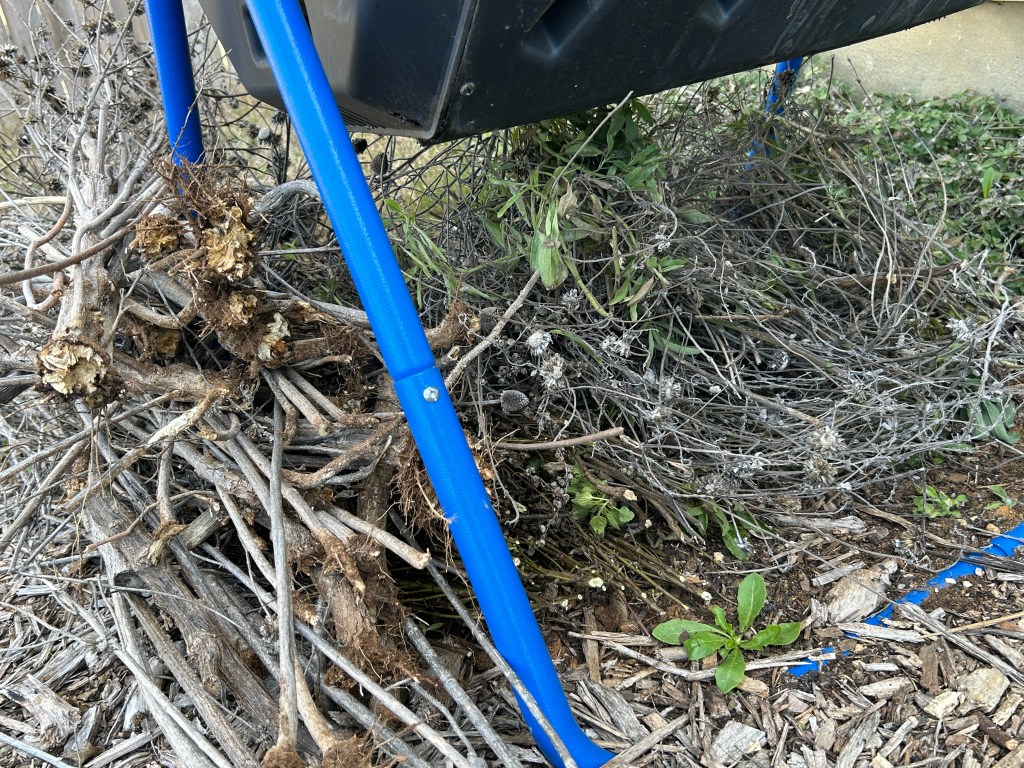
The larger back garden, however, is behind the house, and I could therefore leave things “messy” for longer. The first photo in this post is an example.
We had a few freezing nights in January (including a rare snowfall), followed by three weeks when it looked like the garden was beginning to wake up. However, that warming period was what we would call a “false spring” here because in mid February we had another cluster of freezing nights.
There is technically still a risk of frost in this area until March 10, but I really think that in this last week of February 2025 we are headed into spring for this year. Certainly I have been itching to get outside to do things in the garden! So I have begun to do some spring clean up.
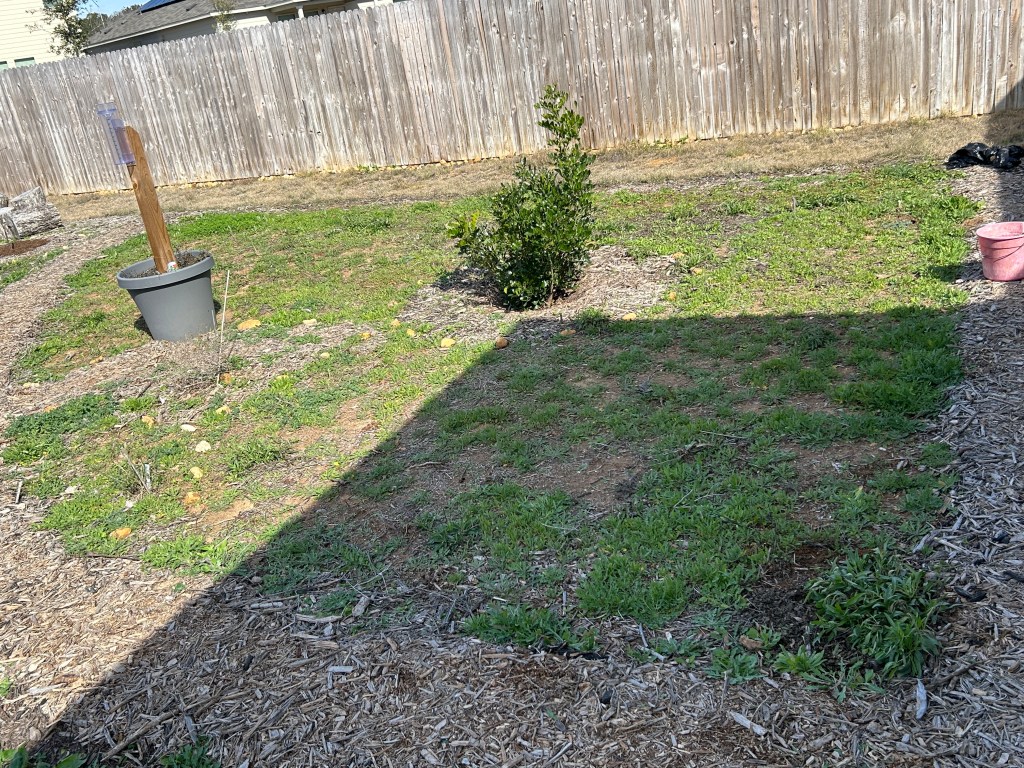
The first area I tackled is where there is a Texas Mountain Laurel tree, the rain gauge in a huge pot, a couple of shrubs (Flame Acanthus and Skeleton-Leaf Goldeneye), several Mealy Blue Sage plants, and a variety of annuals (last year those were primarily Bluebonnets, Firewheel aka Indian Blanket, and Sunflowers).
The Mealy Blue Sage (Salvia farinacea) plants here were mostly grown from seed that was spread in fall 2023. I didn’t think that anything had grown at first and then suddenly in July 2024 I noticed that there were actually about 20 new plants, which were particularly enjoyed by bees for the rest of the year.
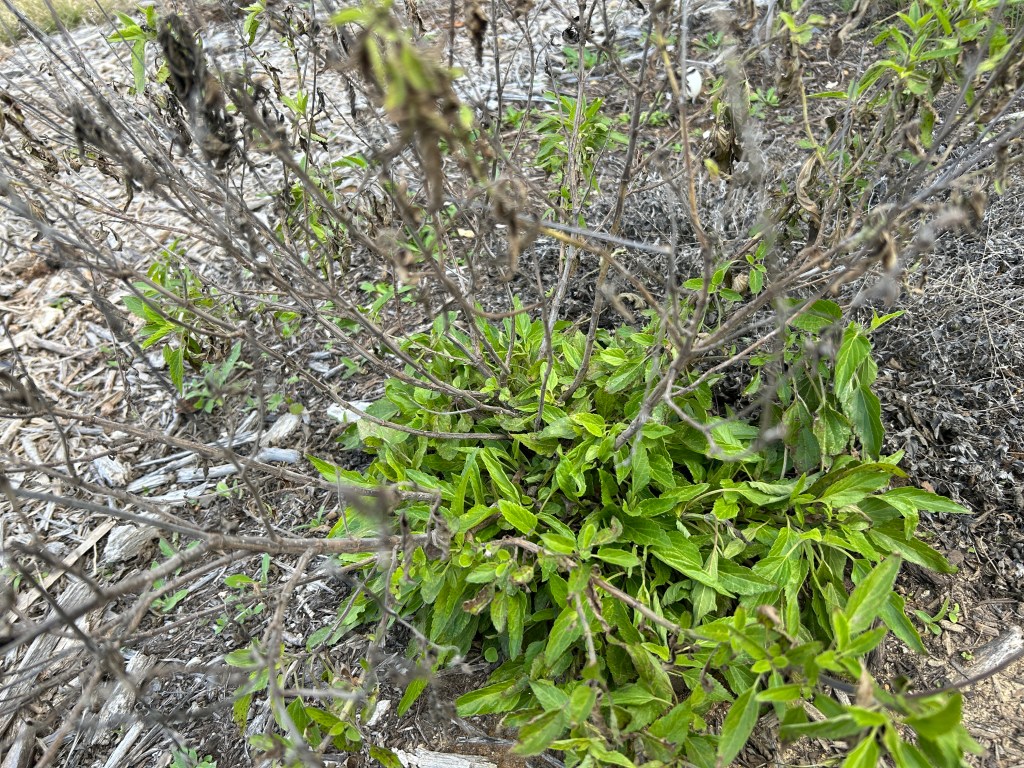
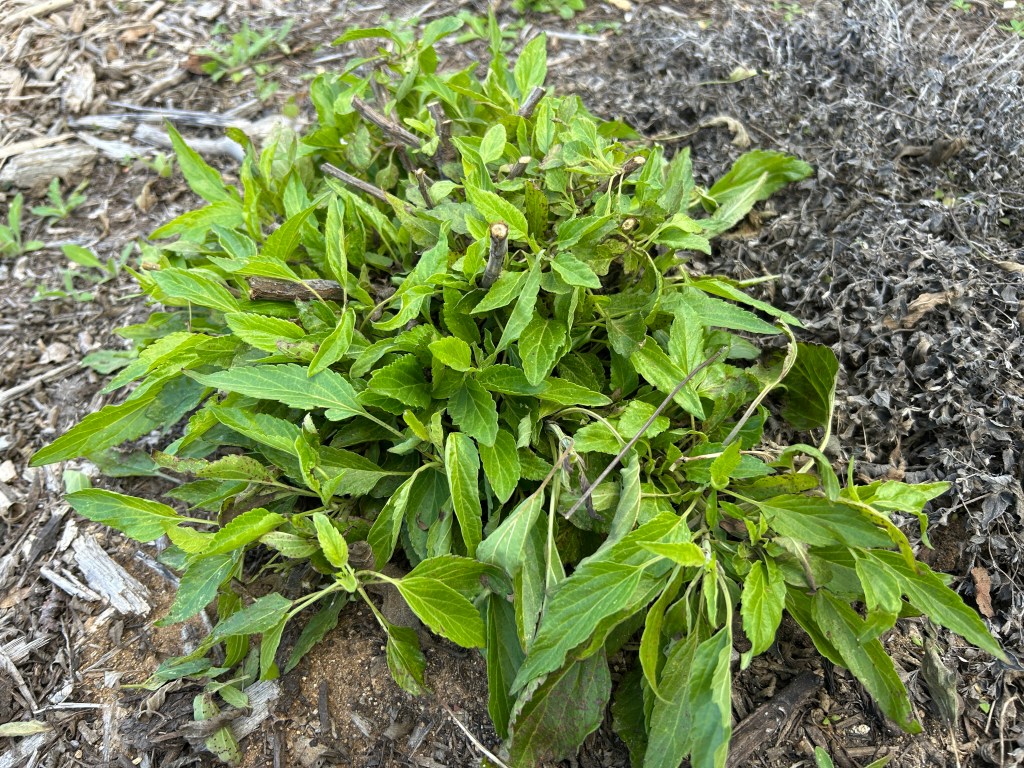
Mealy Blue Sage is a perennial plant. Like other salvias, older stems can get long and straggly, and it’s a good idea to cut them back a couple of times a year. Early spring is one of those times and the plant very helpfully makes it obvious which is the vigorous new growth close to the ground. So it’s an easy task to trim away last year’s growth. Below are “before” and “after” photos of one particular plant.
There were a lot of sunflowers here last year. Where I could, I left the old plants in place over the winter (for habitat and bird food), or if I cut them down, I left a few inches of stem in place (for habitat). Now that these plants have been dead for months, it was easy to break the stems off at ground level — I left the dead roots in the ground to boost the soil organic content.
I don’t want to compost or shred the stems I cut immediately, in case there are still things sheltering on them. So for now they’re stored in a pile and I’ll process them in a few weeks.
Now looking a little neater, this area is already bursting with new life.
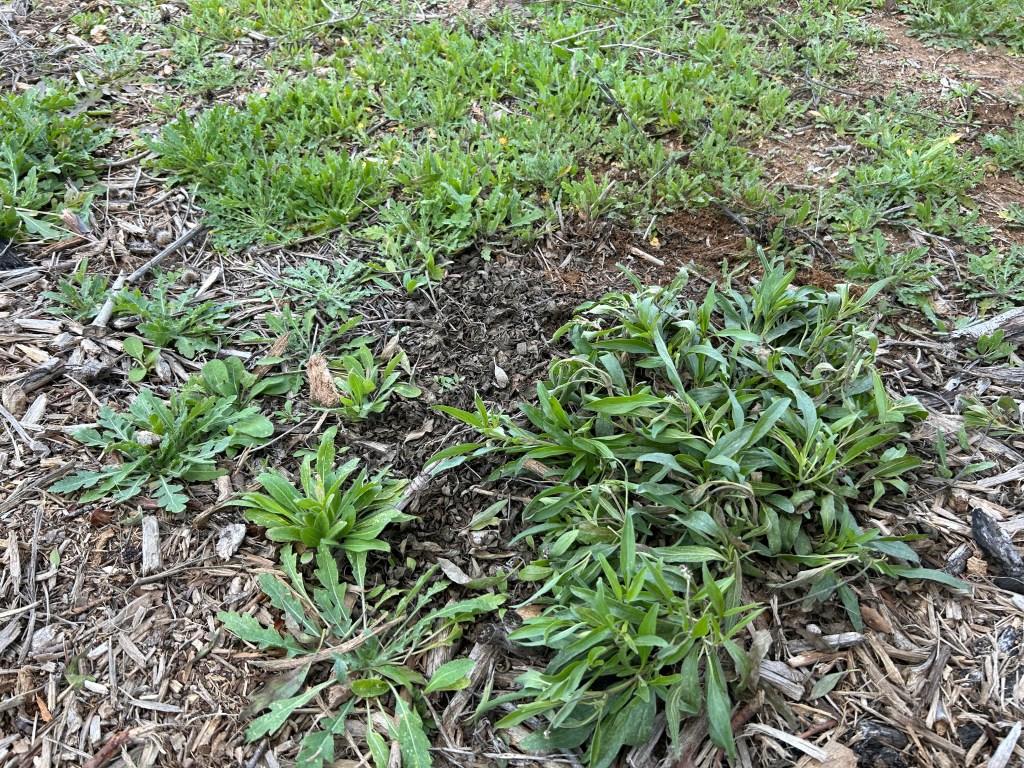
Even what look like bare patches from a distance have tiny new things growing.
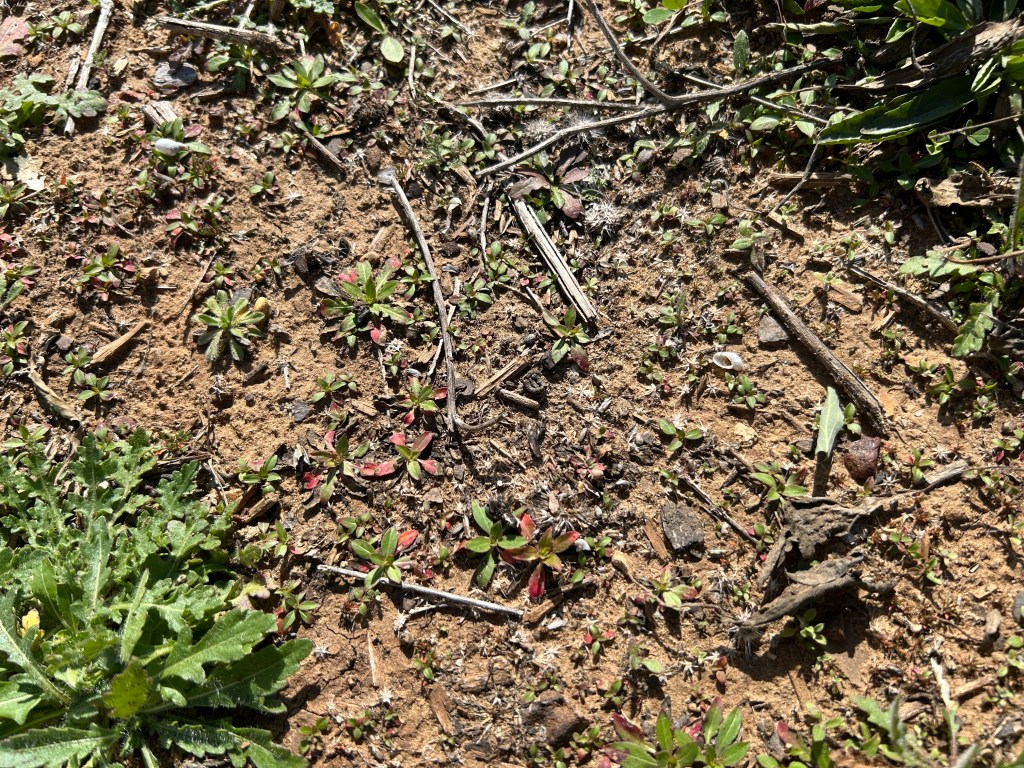
Like last year, I assume that there will need to be some maintenance of this area, primarily to remove invasive or aggressive volunteers. However, my hope is that each year the soil’s seed bank will contain more and more of the beneficial native plants that I want.

 Rewilding My Lot
Leave a comment