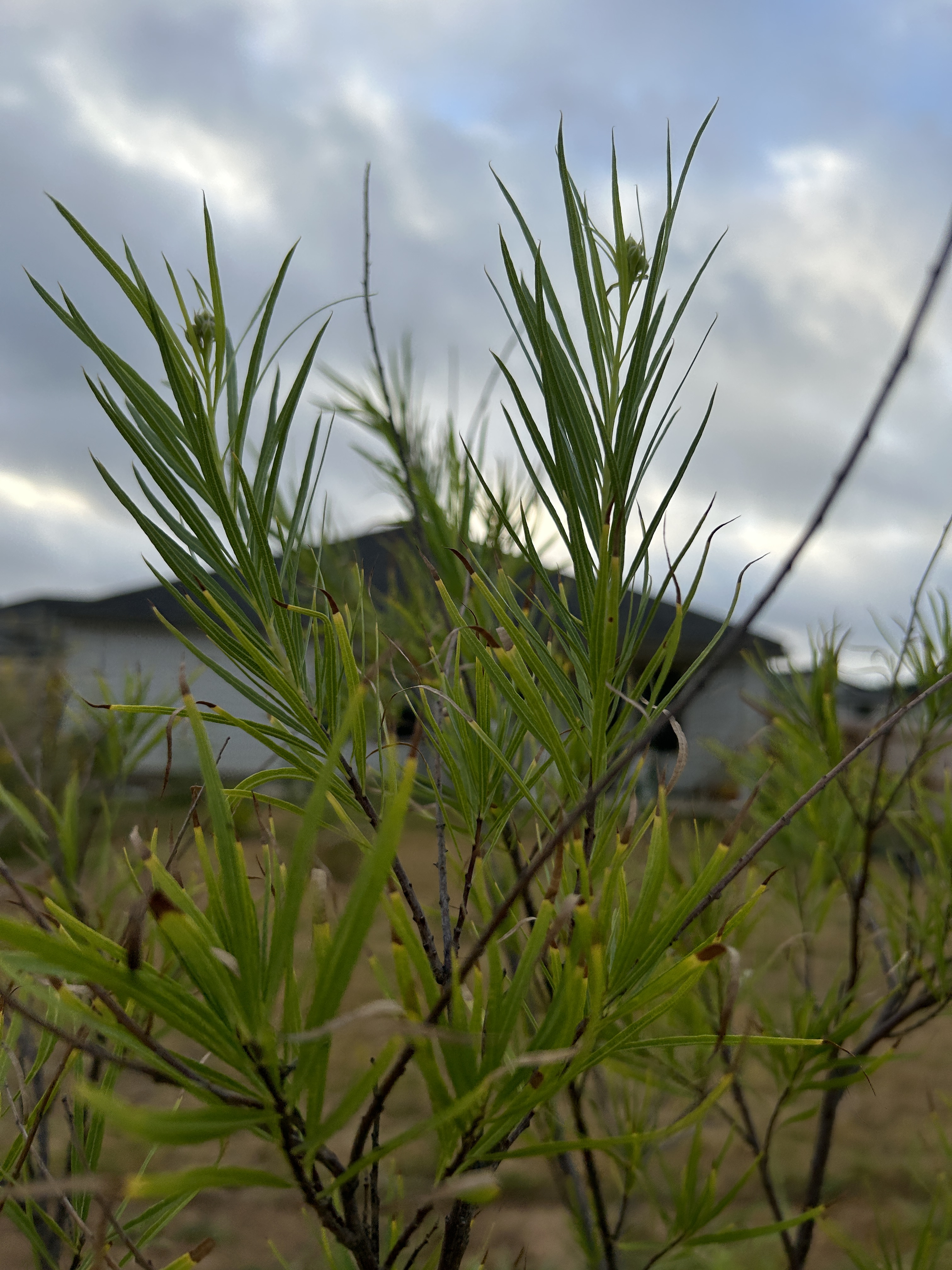

There was less to do on the left side of the garden for spring clean up than in other areas, but I recently took care of a few little things to tidy up there.
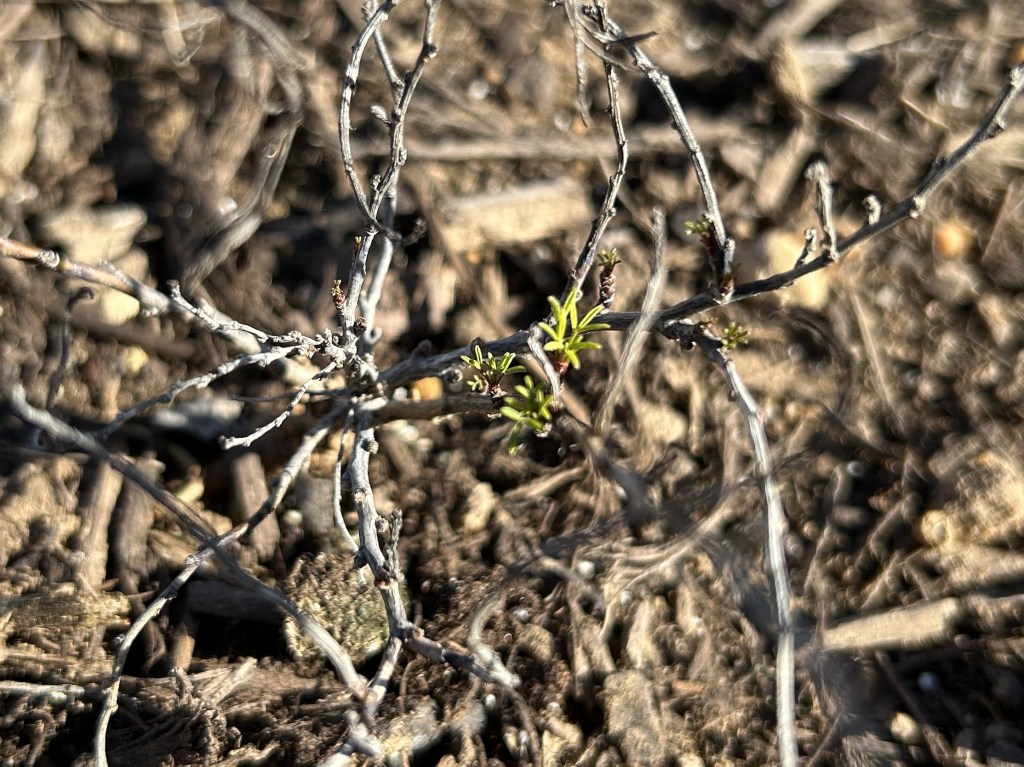
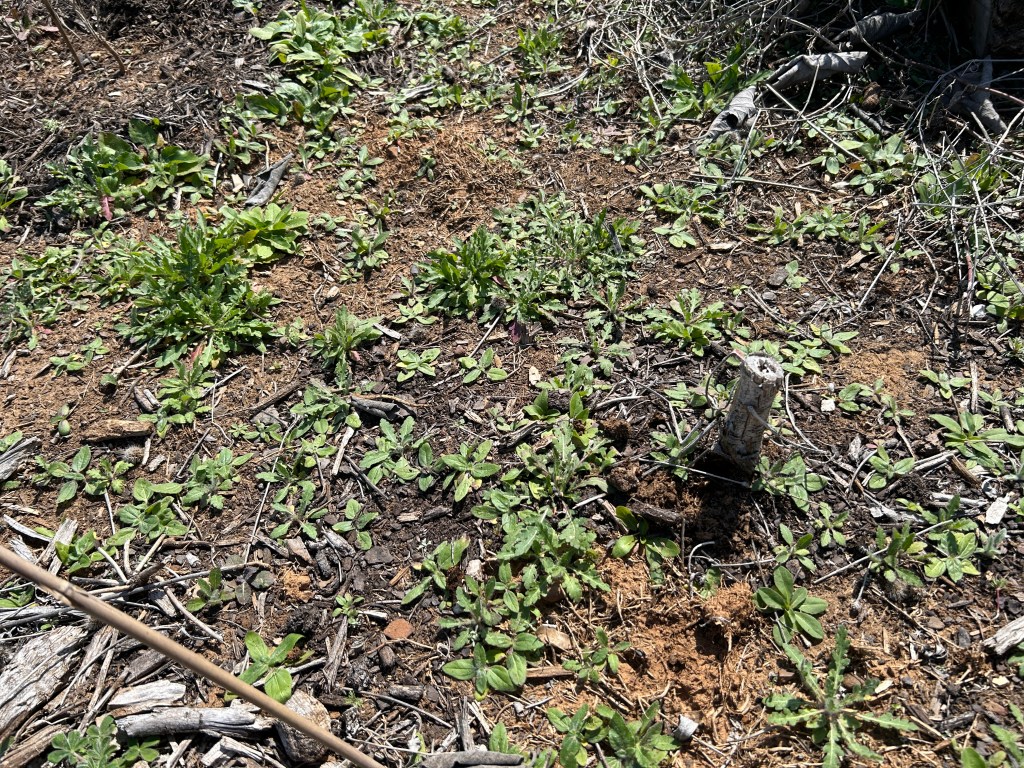
Late last fall (November) I planted three Prairie Verbena (Verbena bipinnatifida) in front of the new pond. This plant is considered an annual or short-lived perennial, in that it may die back in a freeze but reseeds readily. In my situation, however, these particular plants had not had time to produce any seed so it was a bit of a gamble as to whether they would survive the winter or not. I seem to have one each of three different scenarios — one that is thriving and has even spread since I planted it (first photo below), one that seems to have barely survived and has just a couple of green sprouts (second photo below), and one that currently shows no sign of life. For the one that is growing well, I trimmed off last year’s growth (the straggly stem in the photo). The others I’ll just watch. This is a plant that I have elsewhere in the garden (planted or volunteer), so I can replace if necessary. It’s a low-lying spreading plant that blooms for several months and is beneficial for wildlife.

Another plant added after the pond was installed was Blackfoot Daisy (Melampodium leucanthum). This is an extremely resilient plant, and in fact I was warned by several people that the slightest bit of attention on my part might kill it! Therefore, I watered my two plants only when I planted them in November, but never since then. The neglect seems to have paid off and both plants have many flower buds that look as if they’ll open soon (photo below).

The ground immediately behind the pond last year was occupied by annuals — primarily Bluebonnets, Firewheel aka Indian Blanket, and Sunflowers. Presumably the annuals that were able to seed last year will return, so the only thing I added in this area were some Sandyland Bluebonnets (Lupinus subcarnosus) seeds as an experiment. This was the original state flower of Texas, before legislation in 1971 broadened the definition to include at least five different varieties of bluebonnet. There are certainly plenty of things beginning to grow in this region, but it’s too early for me to know if I have any Sandyland Bluebonnets among them.
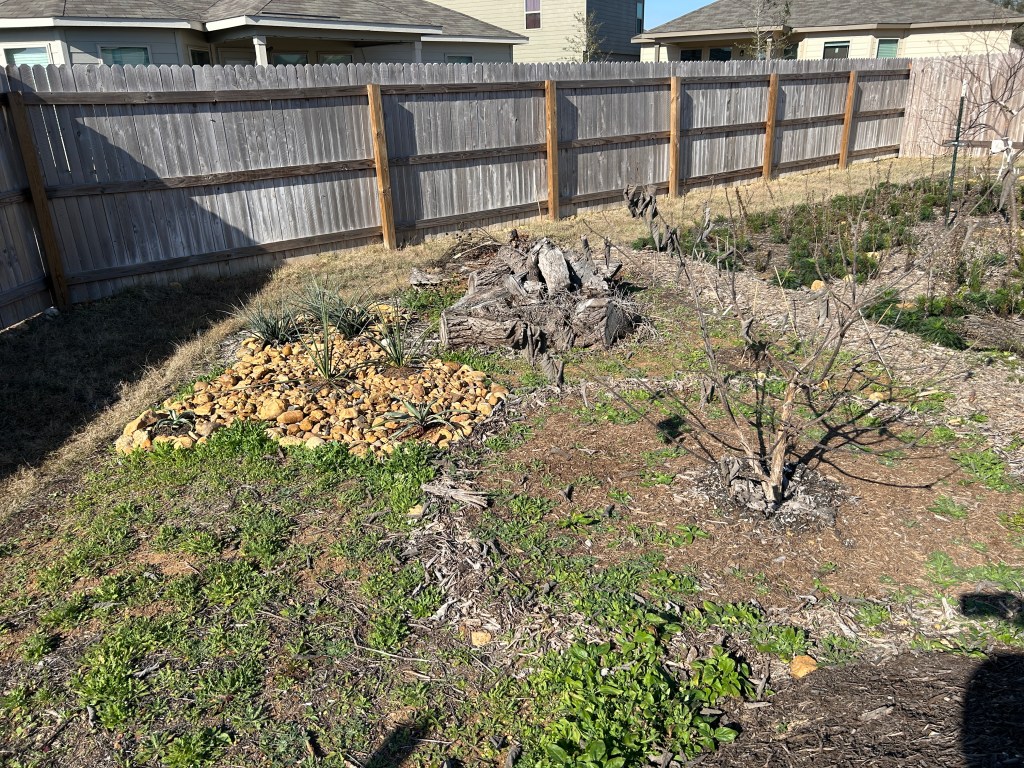
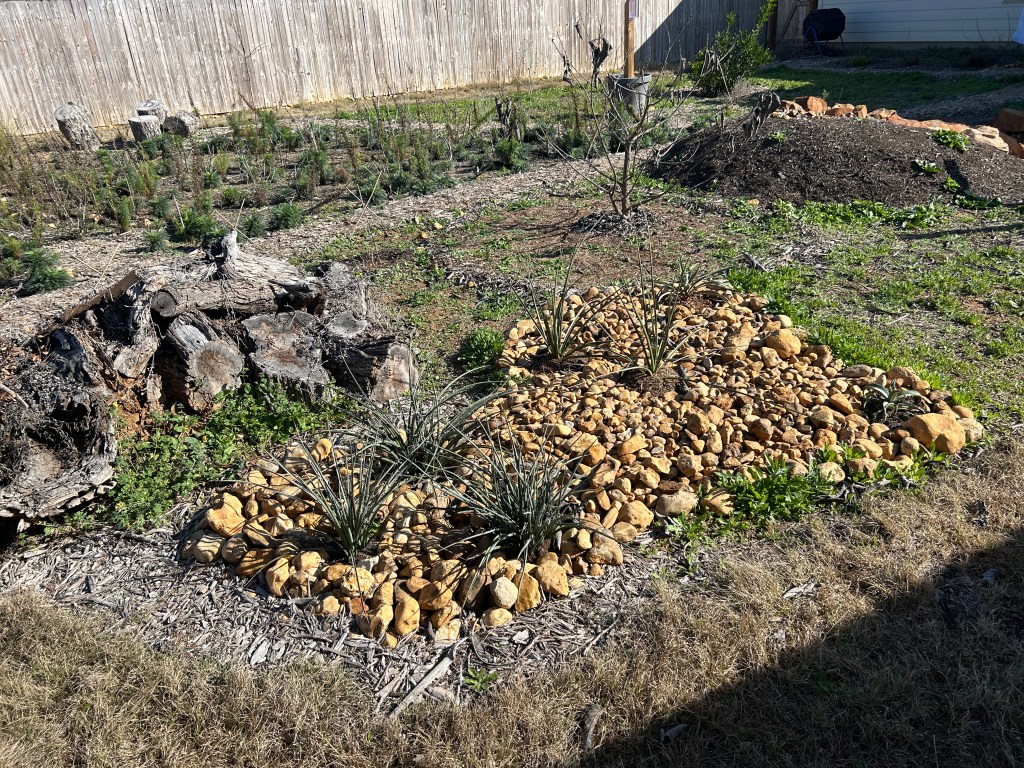
At the back of the garden I have defined an area with rocks for succulents — Red Yucca, Yellow Yucca, Variegated Agave, and Blue Twistleaf Yucca. To my surprise, in only the first year after planting, one of the Red Yucca clumps produced a spectacular flower spike. This tall spike produced blooms for months, and then seeds. After that, I left it in place over the winter in case anything was sheltering on it (photo below), but now I have cut it down.

The region immediately around the pond is still rather bare because I only planted a few things after it was installed in November. My thinking was that I would spend the early part of 2025 considering how to develop the area and perhaps plant some more things in the fall. Certainly in front of the pond I don’t want tall plants to block the view from the patio, which is why I have already begun to pull out sunflowers that are growing in the front section of the garden (in the pink bucket in the photo below, on their way to the composter). Volunteer sunflowers were almost the first thing to arrive here in 2023, and they have been a substantial source of food and shelter for birds and insects since then. However, now that the garden has developed a little, I plan to keep fewer of the sunflowers this year to allow other things to shine. Those that do stay will be located at the back of the garden.
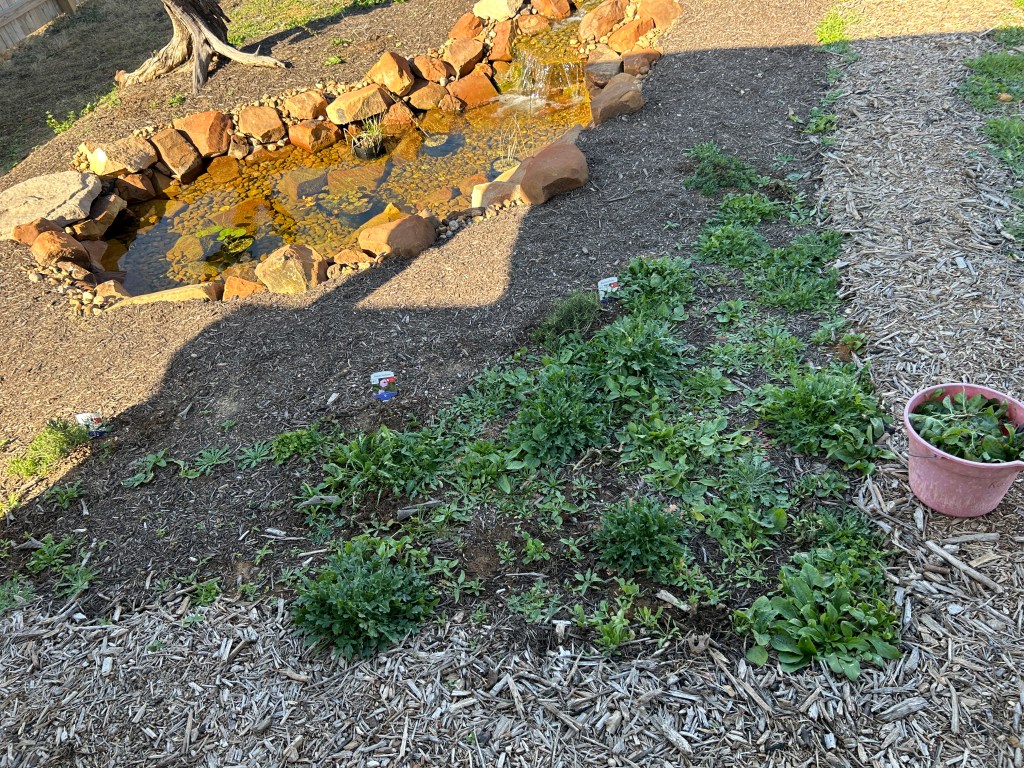
So after a little spring trimming, here are some more photos of the left side of the garden. The tree is a Mexican Olive that is still in its winter state. I expect it to wake up soon.

 Rewilding My Lot
Leave a comment