
Around the perimeter of the back garden there is a strip of Thunder Turf, a blend of three short native grasses. Those grasses grow low to the ground and get mown a couple of times a year.

Toward the back of the garden there is an additional area for native grasses (the triangle in the photo above) that are medium height and grow in clumps. The area hasn’t completely filled in with grasses yet, but I do have three kinds that are reliably growing, and a fourth that is newer but probably doing fine. All of these have attractive leaves and seed heads, and are important for wildlife food and shelter, especially through the winter. Their long roots also help with water retention.
In order of seed head height (tallest first), I have:
Indiangrass (Sorghastrum nutans). There are two clumps of this, which grew from seed harvested at Headwaters at the Comal (I am a volunteer there). There is new growth occurring at the edges of the clumps.

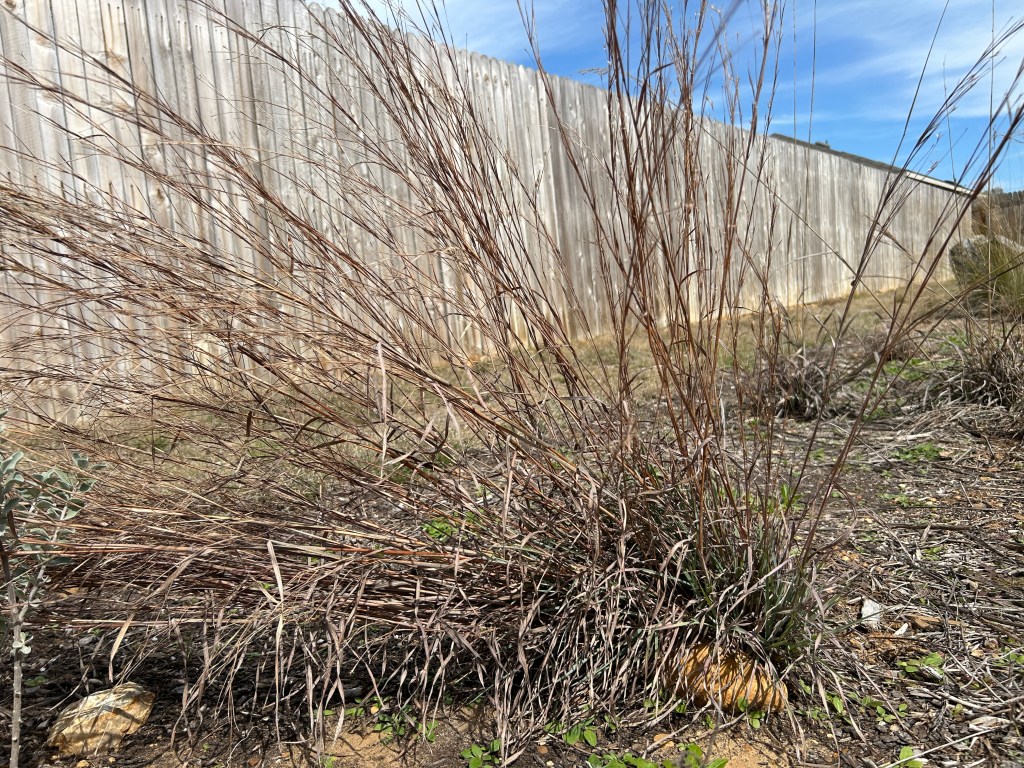
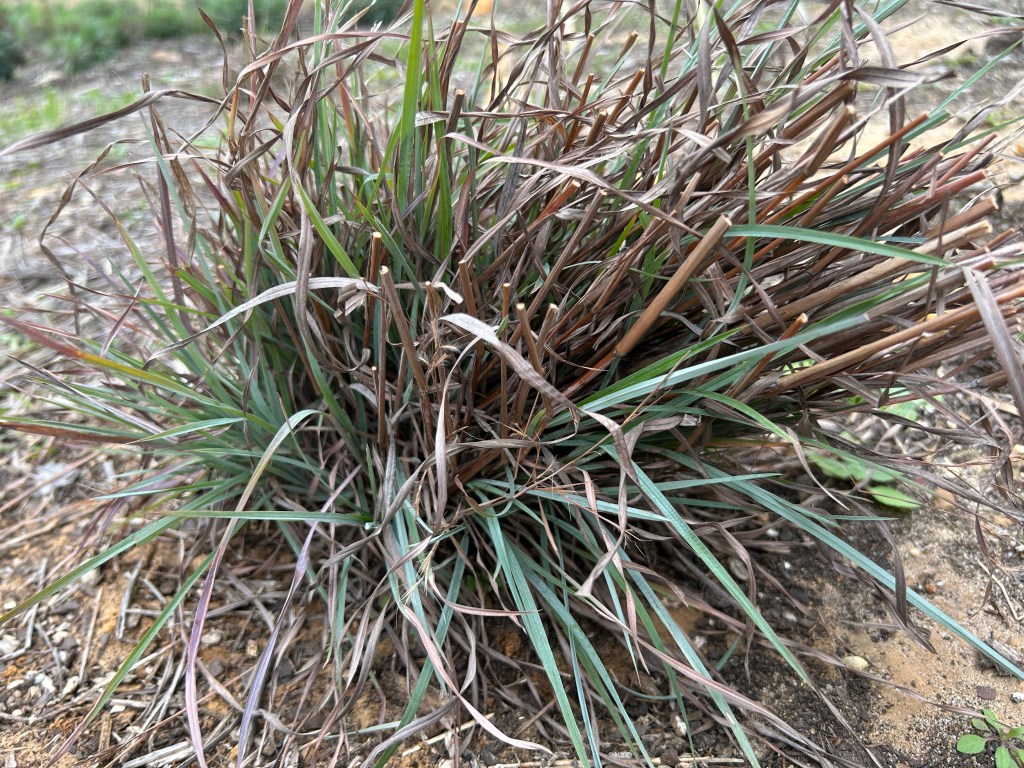
Little Bluestem (Schizachyrium scoparium). There are four clumps of this, grown from pieces of a plant that I purchased and seed that I scattered. Photos below are before and after trimming.
Gulf Muhly (Muhlenbergia capillaris). There are two clumps of this, each purchased in a pot and transplanted into the ground.
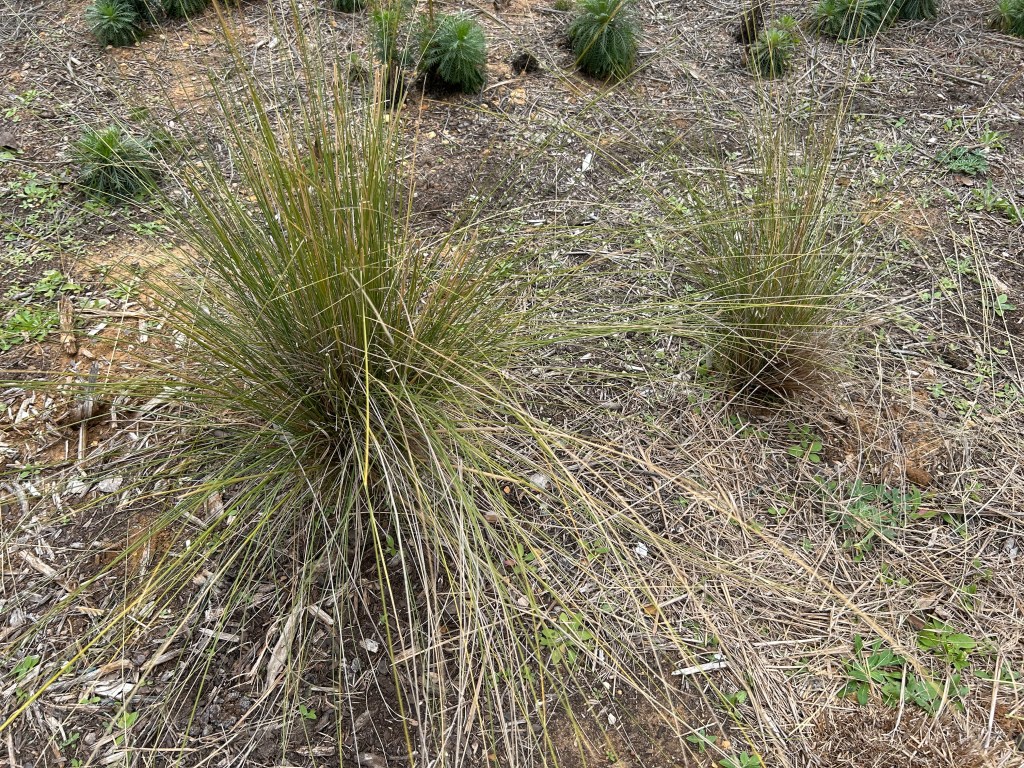
Sideoats Grama (Bouteloua curtipendula). This is the official State Grass of Texas and was only added to the garden last fall. There are three clumps growing, derived from one plant that I purchased and split, and I also scattered seed. This grass has not had time to bloom here yet (the other three have), but I do see green leaves in the clumps so I assume there is still life there.
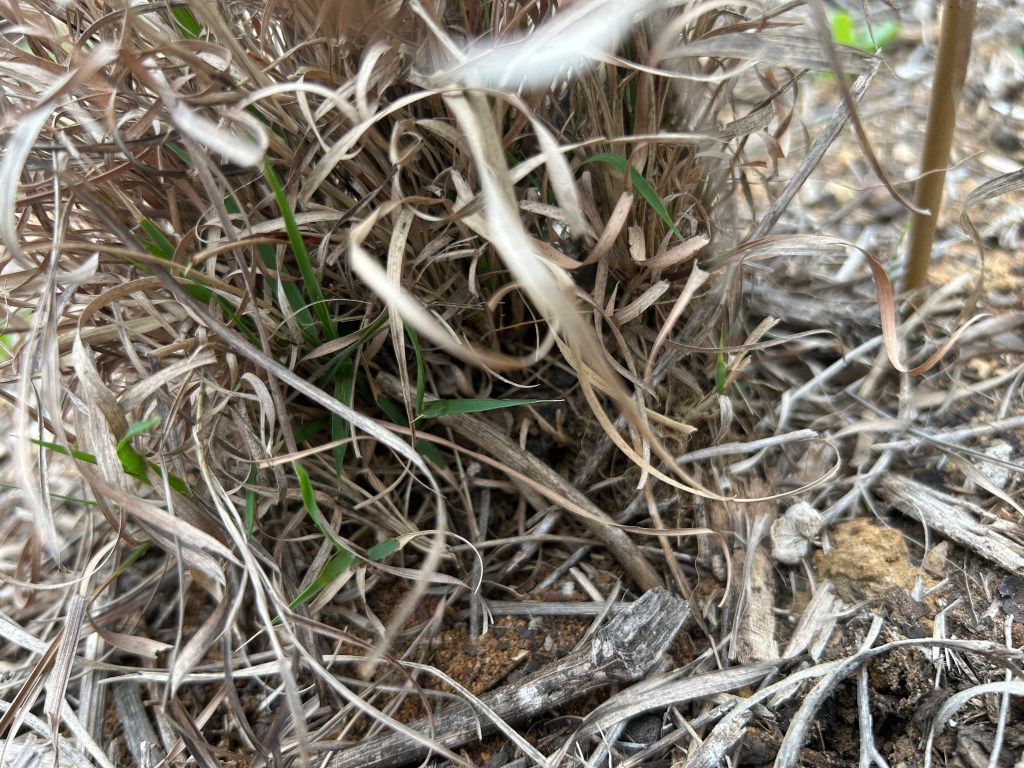
Spring cleanup of the clump grasses involved cutting down spent seed heads (keeping the stems intact for now in case anything is still sheltering there), and a light finger combing of the clumps to pull out some of the dead leaves.

There are plenty of non-grass things growing between the clumps, and since I hope there are more grass seeds in the ground, I don’t want to be vigorously weeding, which would disturb the soil.
Most of the non-grass items are annuals that have seeded from elsewhere in the garden. I think a good strategy for this area, given that it is still quite bare, will be to let many of those extra annuals grow in place but cut them down before they reproduce. The advantages of that approach will be that there will be roots in the ground to hold down the soil, the plants will die at the end of their growing season and decay back into the soil, and cutting rather than pulling them out will be less disruptive to germinating seeds.
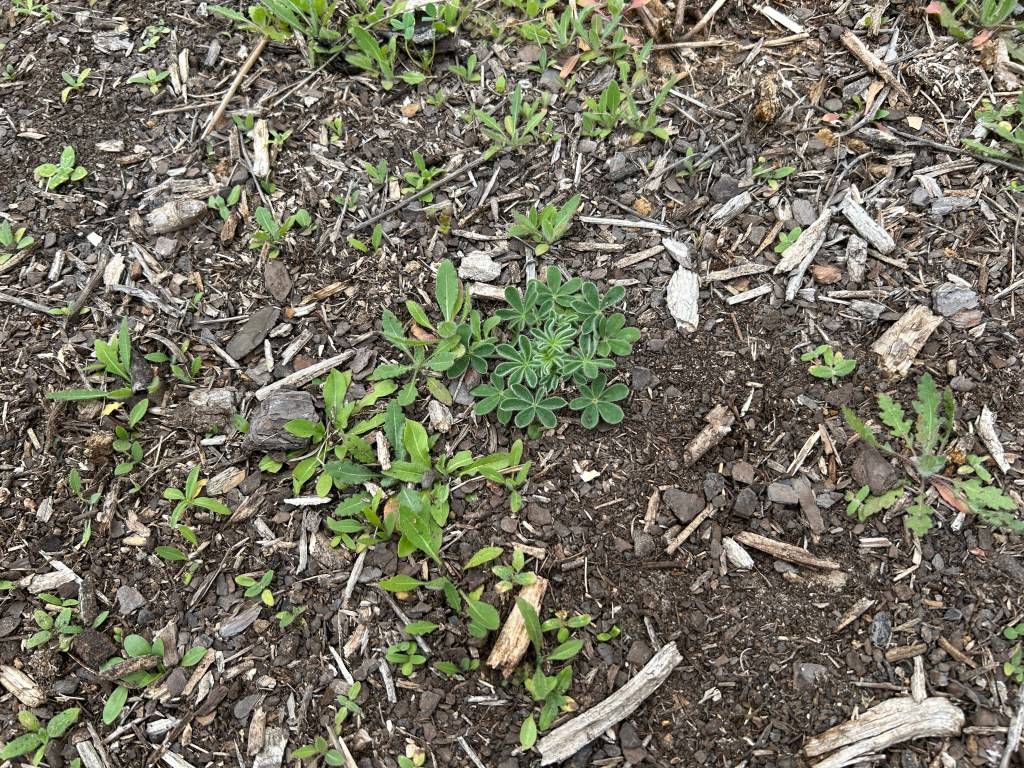
I will have a different approach for Bluebonnets (like the one in the center of the next photo), which fix nitrogen into the soil. As long as they are not in the way of anything else, I’ll let them grow through their full lifecycle before cutting them down. I want to give them the best opportunity possible to fertilize the soil.

 Rewilding My Lot
Leave a comment