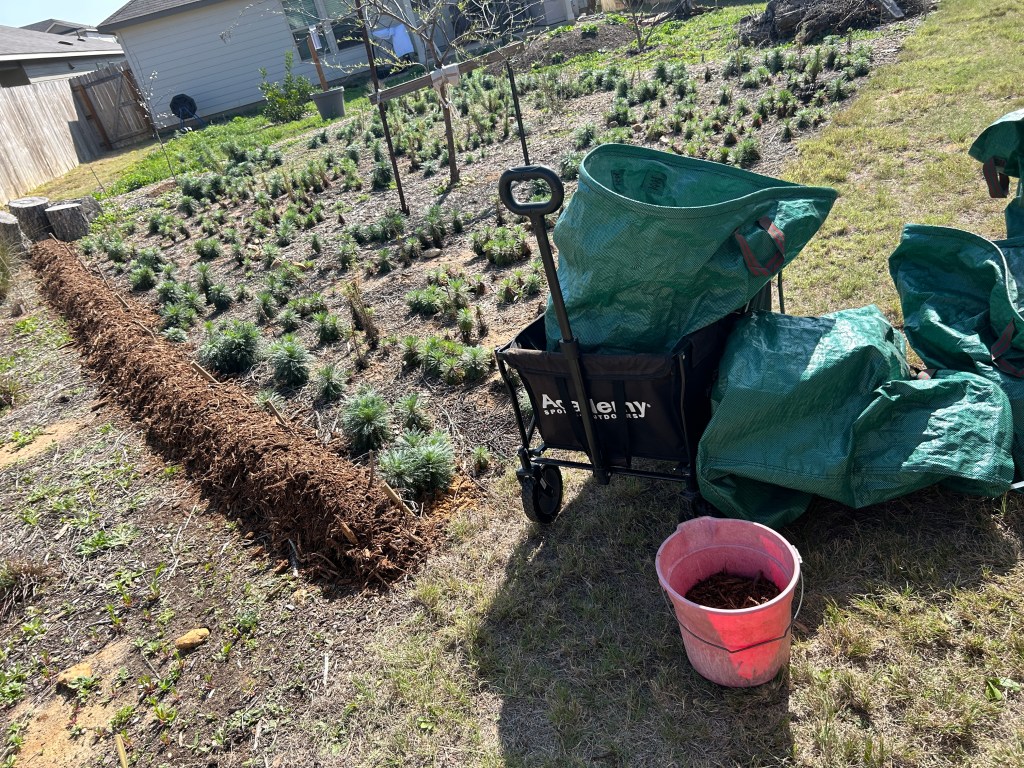
From the time I arrived here two years ago, I have known that excess rainwater drains from neighbor properties behind us into our garden on the back right side and exits from the front left (looking at the back garden from the house). From there it runs beside the house and into the street.
Ideally, any rain water falling or draining onto this property would be captured before escaping into the storm drains. The three main ways that could happen is (1) being absorbed into the soil or held by plant structures, (2) draining from the roof into my two rain barrels, and (3) being collected by the pond. I used to have a swale, which was just a hollow dug into the ground, but the pond took the place of that.
There is a fairly large mound on one end of the pond, which houses the waterfall. Water flowing towards that, therefore, will need to pass around it on one side or the other.
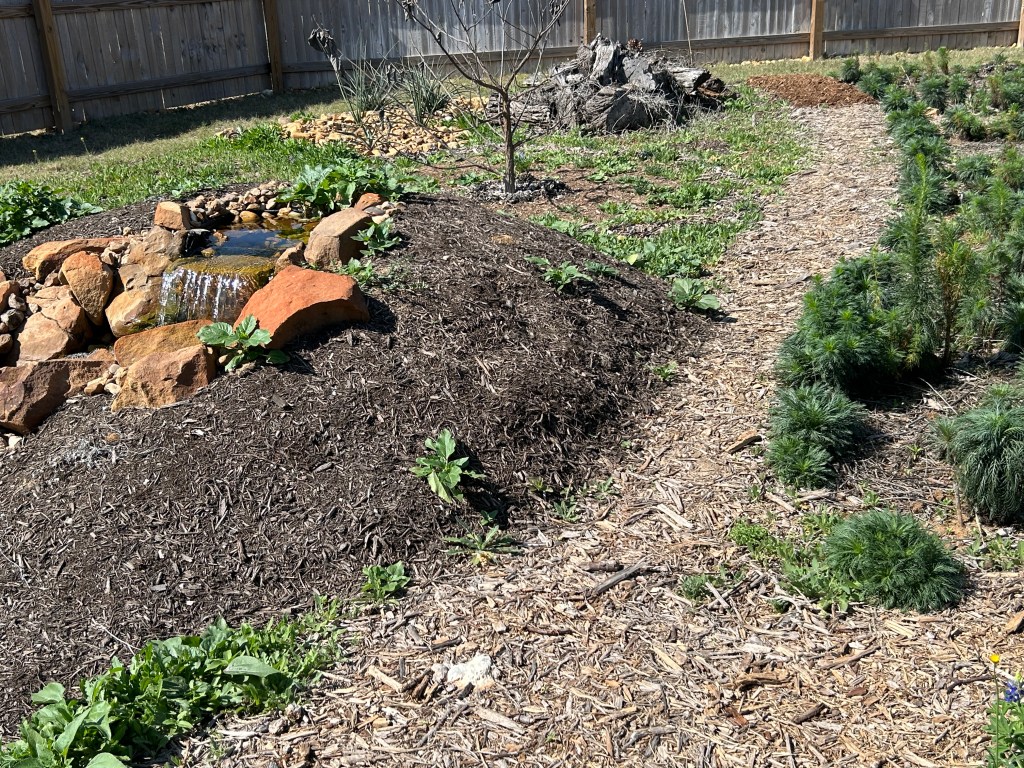
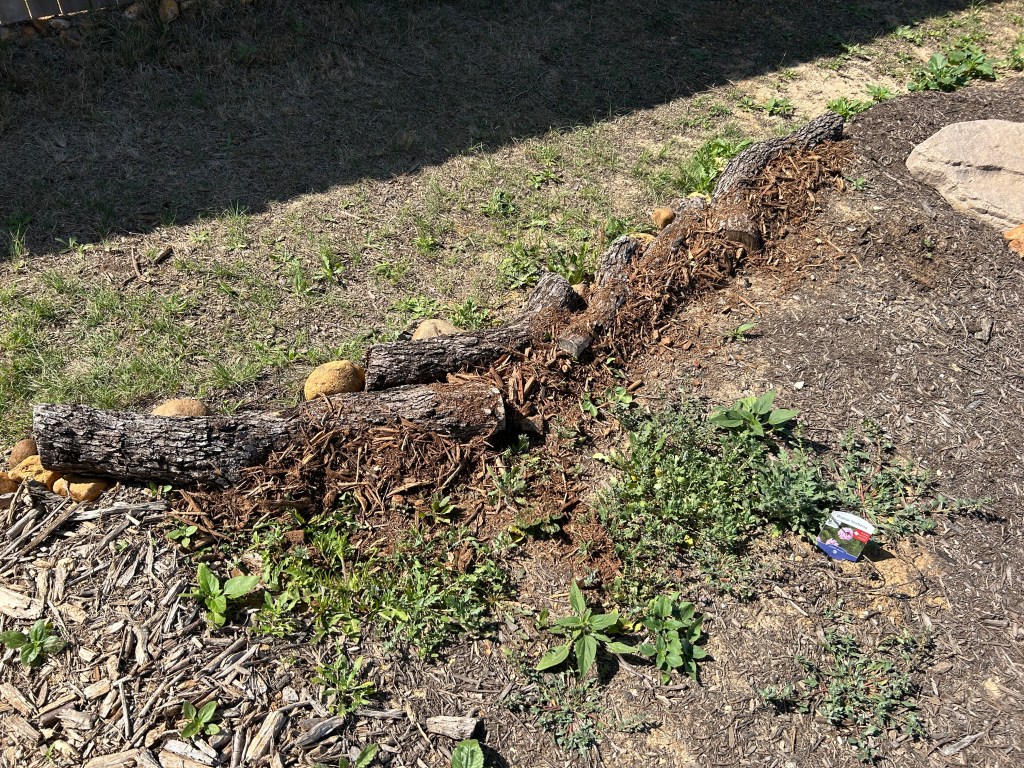
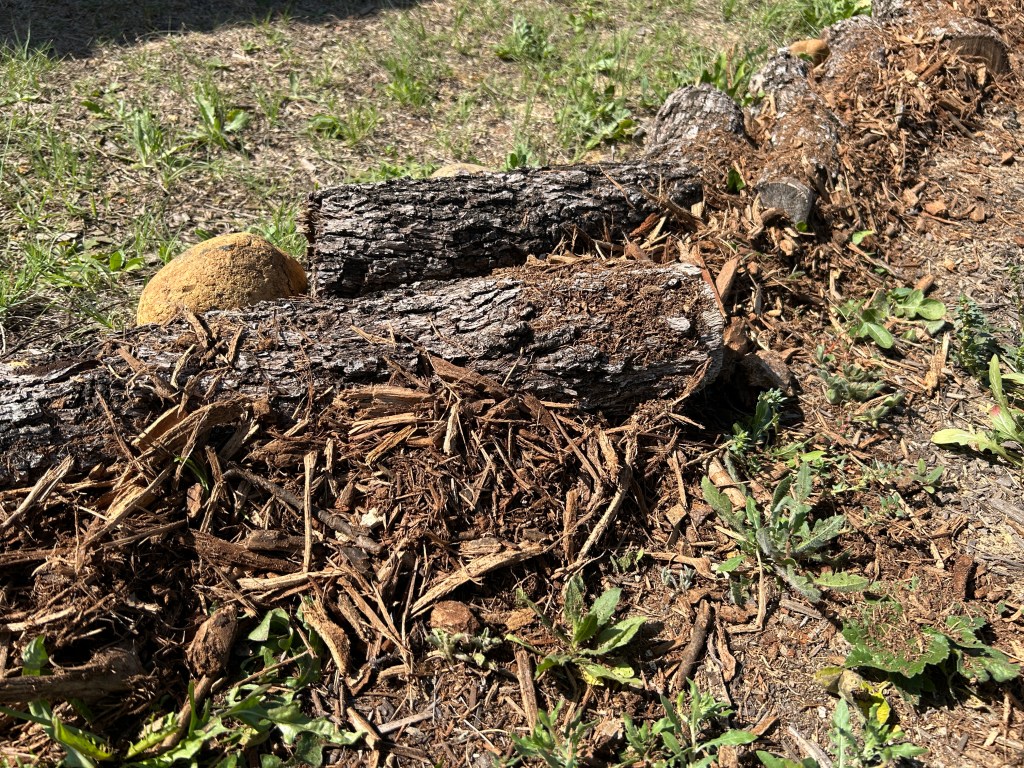
On the “downhill” side of the pond, I have formed a berm with some logs and woodchip across a major pathway for water. The intent there is not to create a dam to block water, but if possible to slow down the flow to give the ground a better chance of absorbing it. Since I put those logs down (weeks ago), we have not yet had a heavy enough rain to observe what happens there.
I have decided to add another berm at the top end of the garden, also with the purpose of slowing water flow as it passes through the property. This one I have constructed with recycled organic materials that will eventually break down over time, but I don’t mind adding to it as that happens — the soil badly needs more nutrients anyway.
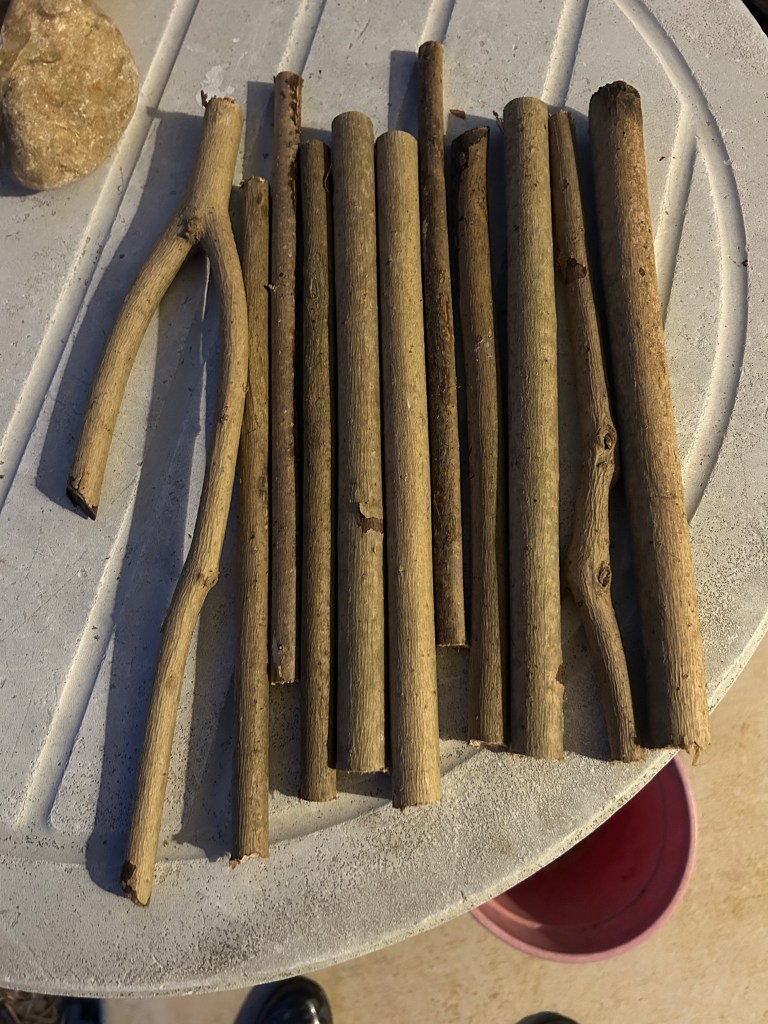
First I placed a row of stakes that were cut from invasive Ligustrum (Privet) trees that are being removed from Seguin’s Park West (I am on a volunteer forest restoration team there).
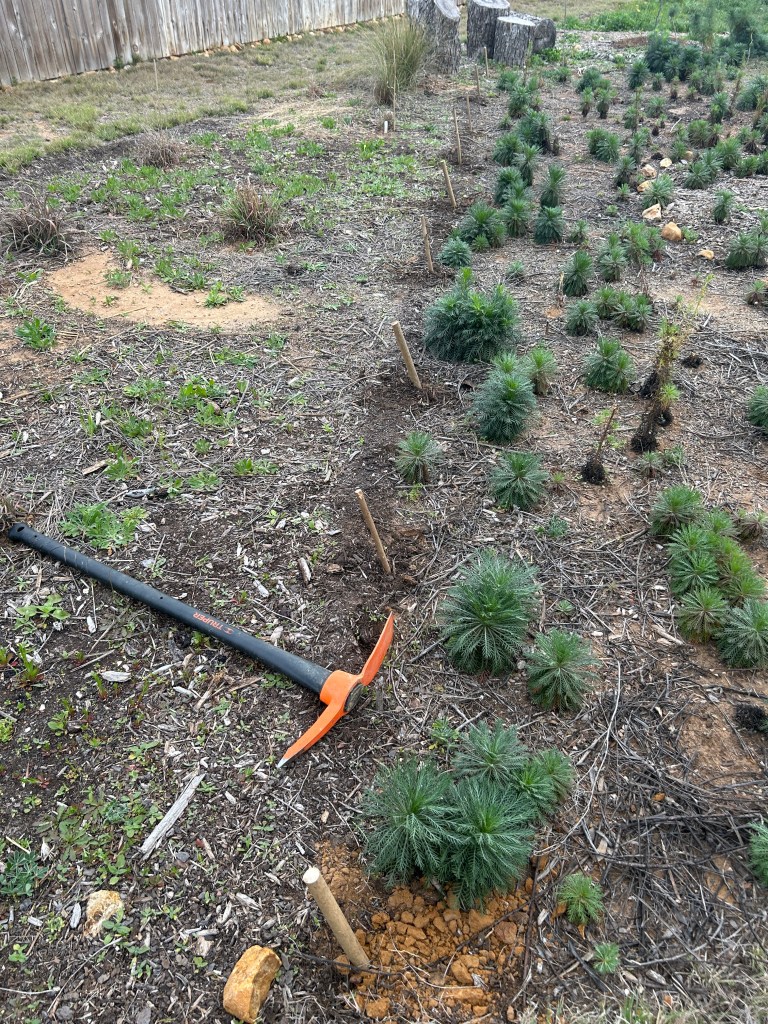
Against those stakes I stacked stems collected from annual plants after I had cut them down in the winter or spring.
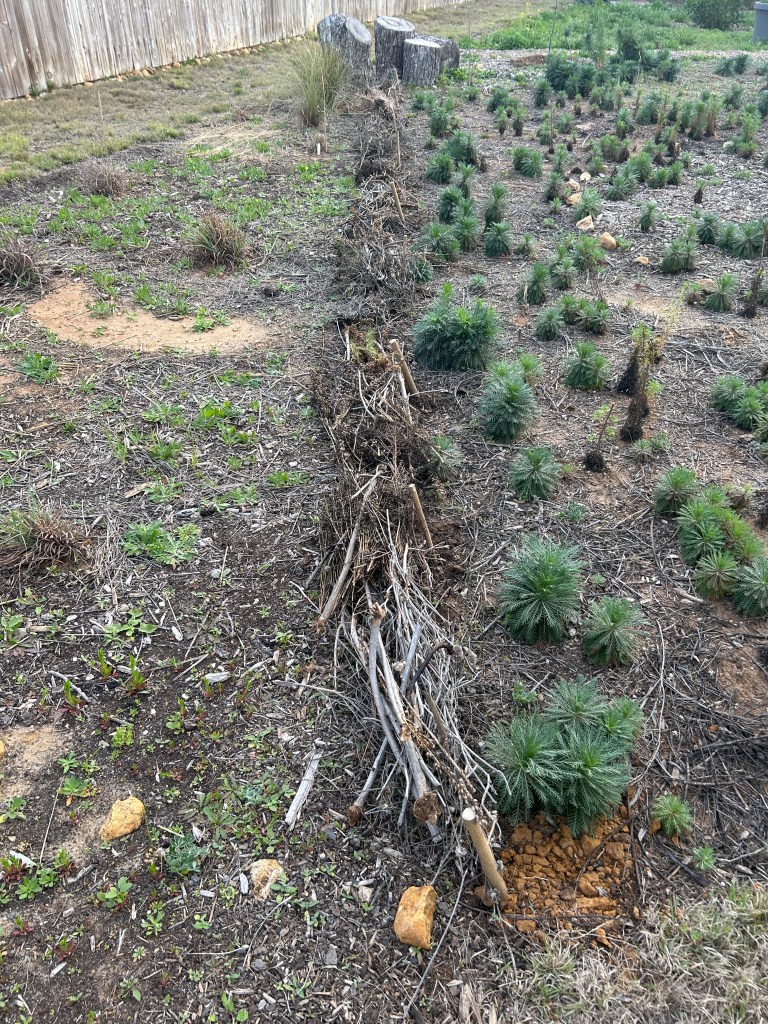
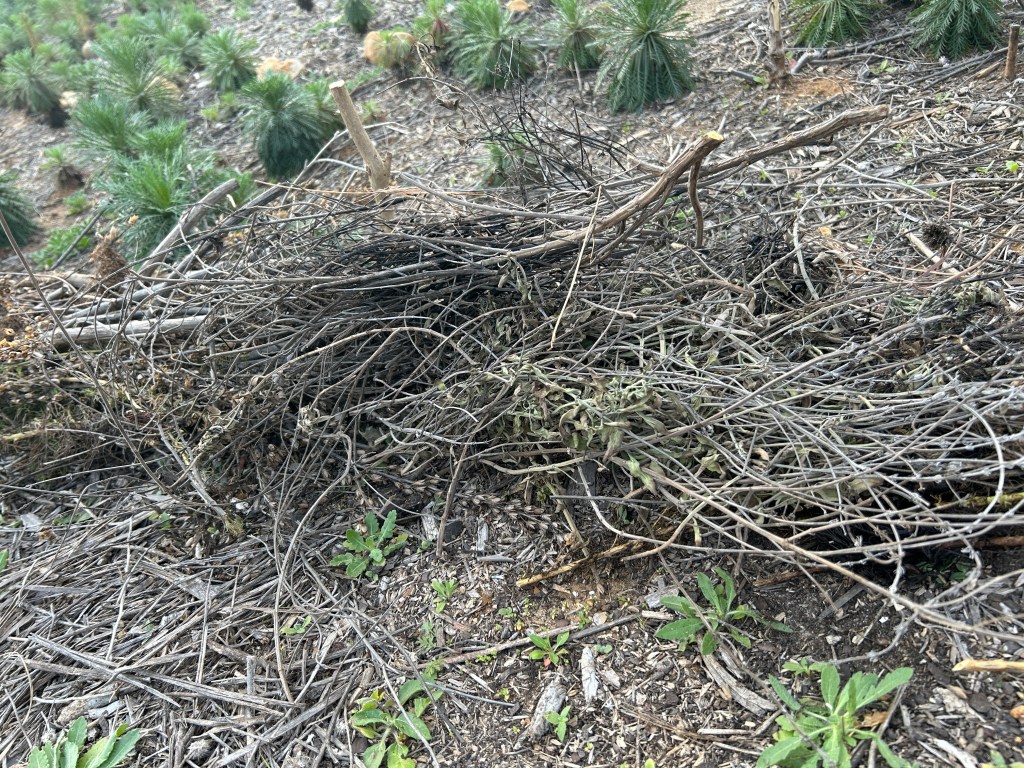
On top of that I put a layer of woodchip (offered free by the city of Seguin). I expect this berm to settle over time, but adding more woodchip can easily be done.

Upstream of the berm (left in the photo above) is an area being developed with medium-height prairie grasses, and beyond that are short prairie grasses. As these grasses continue to establish, my hope is that their deep roots will help with water capture in heavy rains.

 Rewilding My Lot
Leave a comment