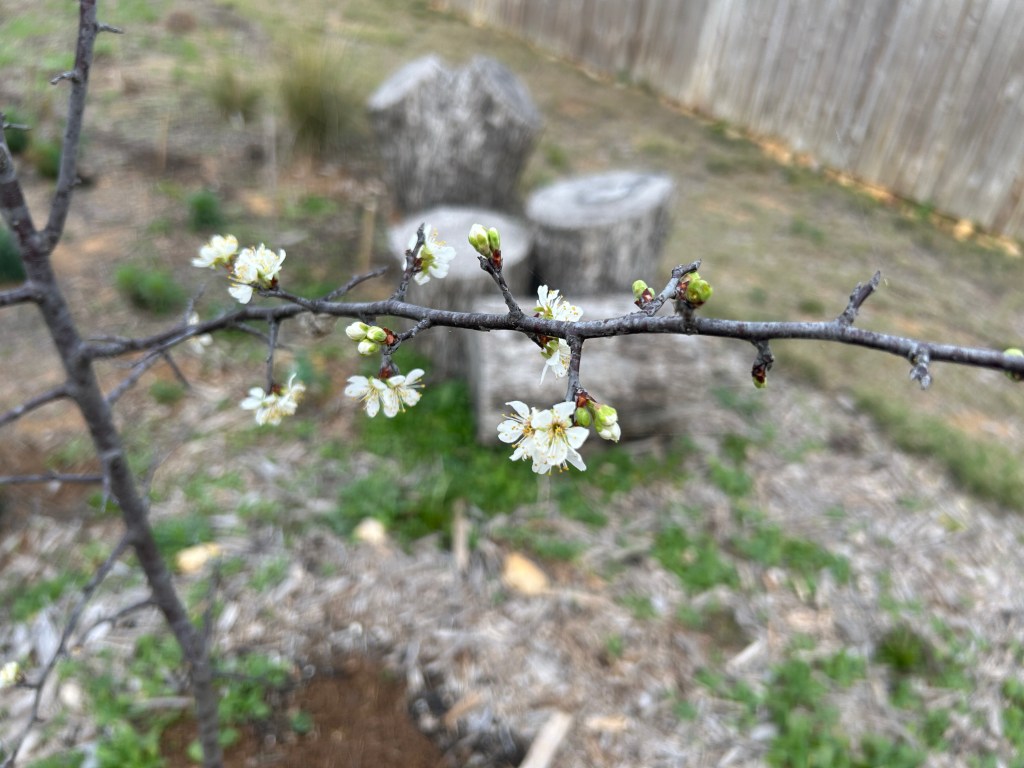
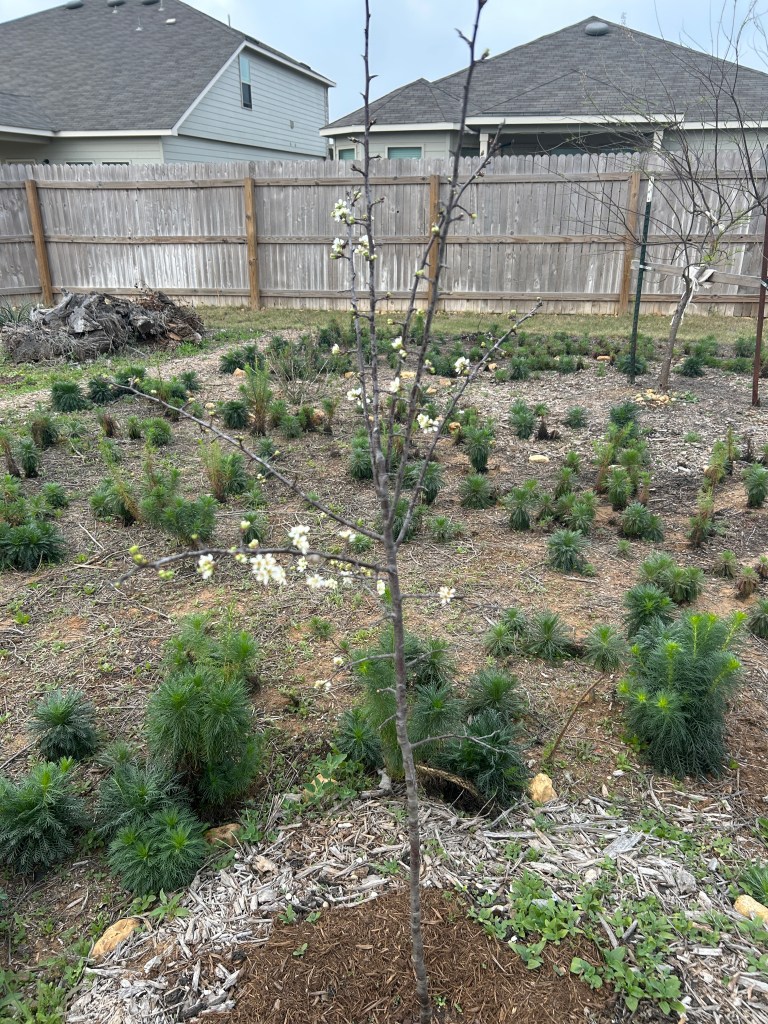
My Mexican Plum (Prunus mexicana) tree has been here almost two years. Last year it only produced leaves; this year I hoped for blooms as well. Spoiler alert: yes, there are blooms. That alone would make me happy, but given that this tree was sick during the winter I am even more thrilled to see it flowering.
If you just want to see the happy spring blooms, you can stop here. But read on if you want to know more about what was going on over the winter.
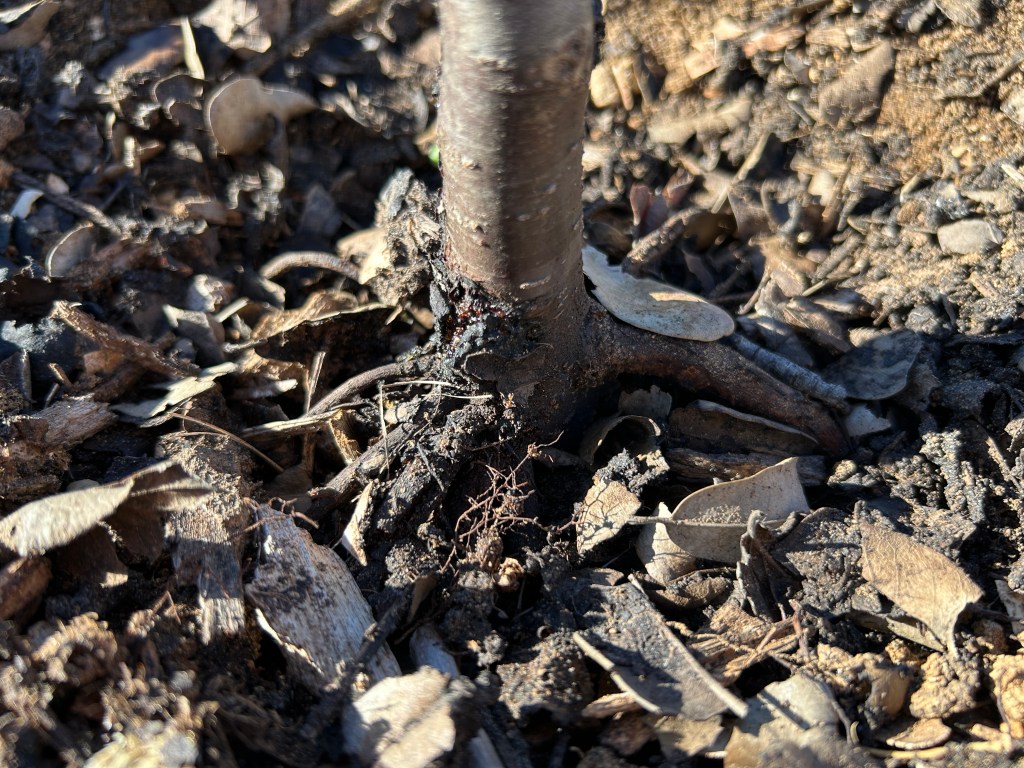
As we were emerging from a period of freezing nights in late January 2025, I noticed that a clump of gelatinous material had appeared at the base of the Mexican Plum tree.

Some research led me to conclude that this was gummosis, a fungal infection that can take hold in locations where a tree is damaged by a tool or insect (in my case, more likely an insect). As in animals, a fungal infection can sometimes indicate an underlying weakness that needs to be addressed in addition to combating the fungus.
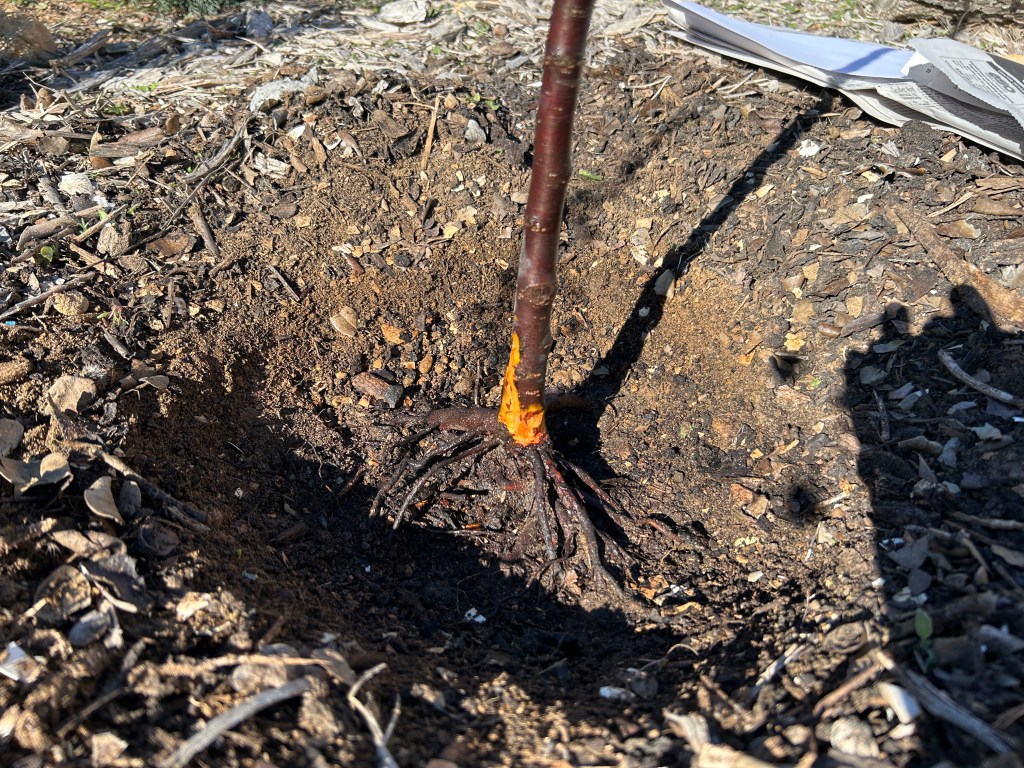
This is what it looked like after the gel had dried in the sun a few hours later. The root flare is visible, so I know that I hadn’t planted the tree too deep.
Articles that I read on what to do were not terribly optimistic about the survival of the tree, but I certainly wanted to do something to try to save it. A best case scenario would be to clean up the infection and try to get the tree as healthy as possible so that it could heal itself.
The first task was to get rid of the infected tissue as completely and cleanly as possible. With surgical gloves and a fresh blade, I scraped off and discarded what seemed to be gel, diseased tissue, and loose soil/mulch. Some of the roots seemed dead (ending a couple of inches from the trunk), so I cut those off, too.
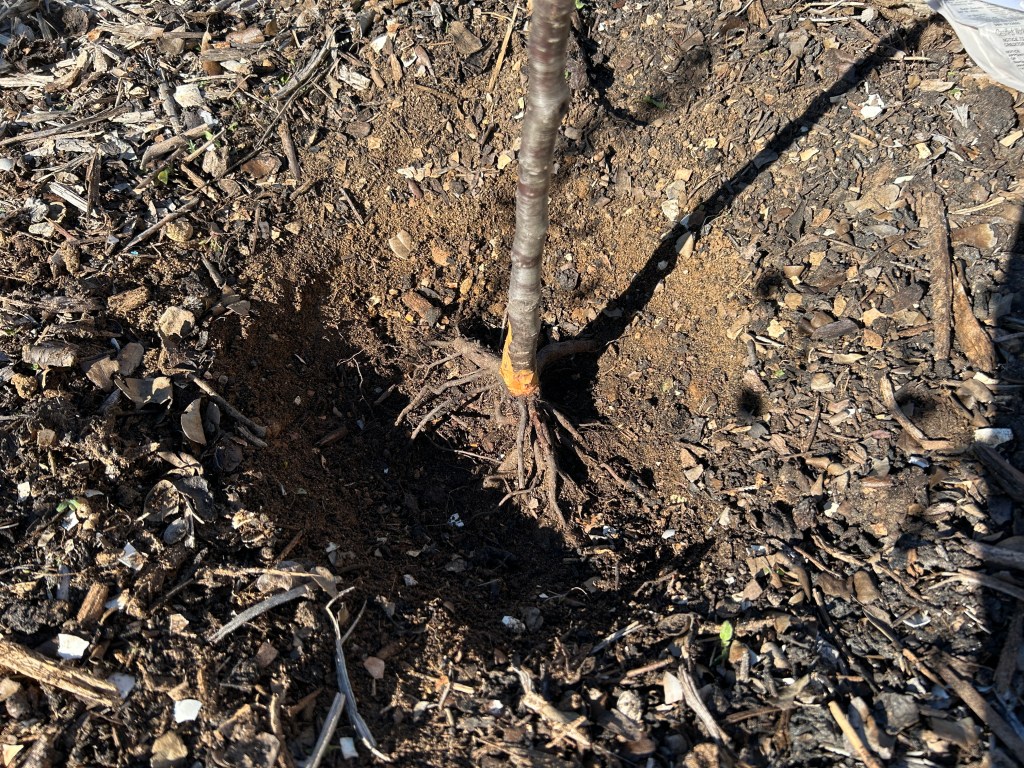
I didn’t apply a fungicide, but I did spray on some dilute apple cider vinegar in the hopes that it might deter ants (they had been eating the gel) without doing any more harm.
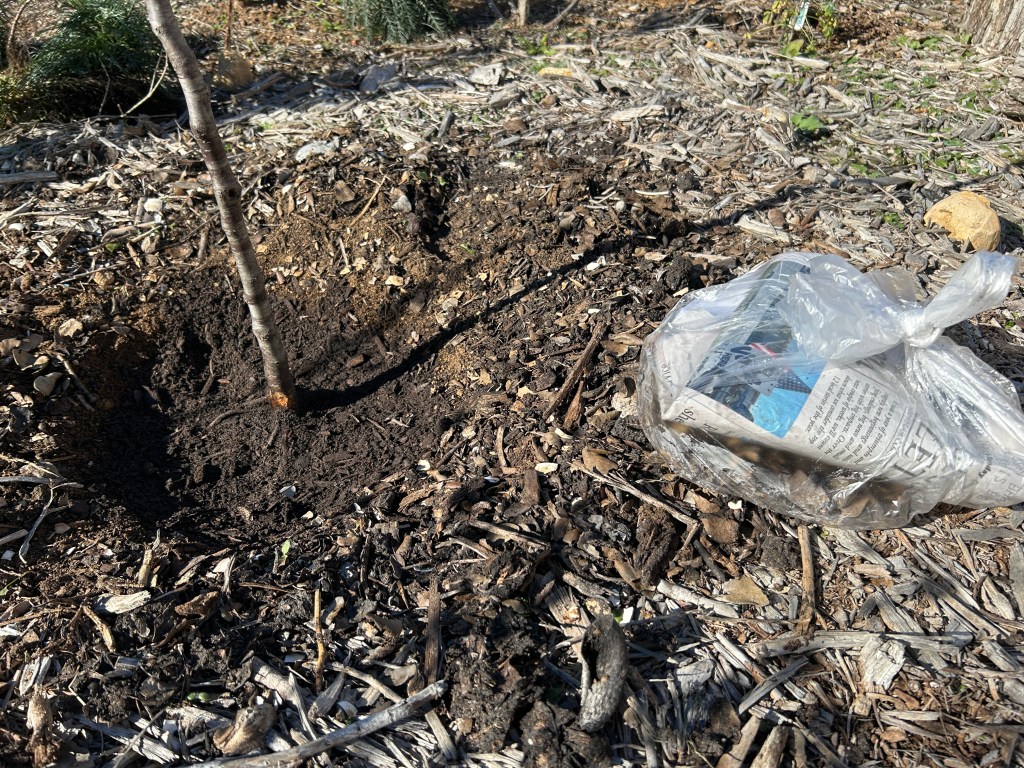
Then I added back some clean purchased soil to mostly cover the roots. And I watered the zone around the work area that I had dug out, but not at the trunk itself. The plastic bag to the right contains the contaminated materials that I removed from the site.
I kept the tree well watered through the winter and watched it closely. The wound area has remained clean and I never saw a return of the gel. The photo below was taken in March 2025.
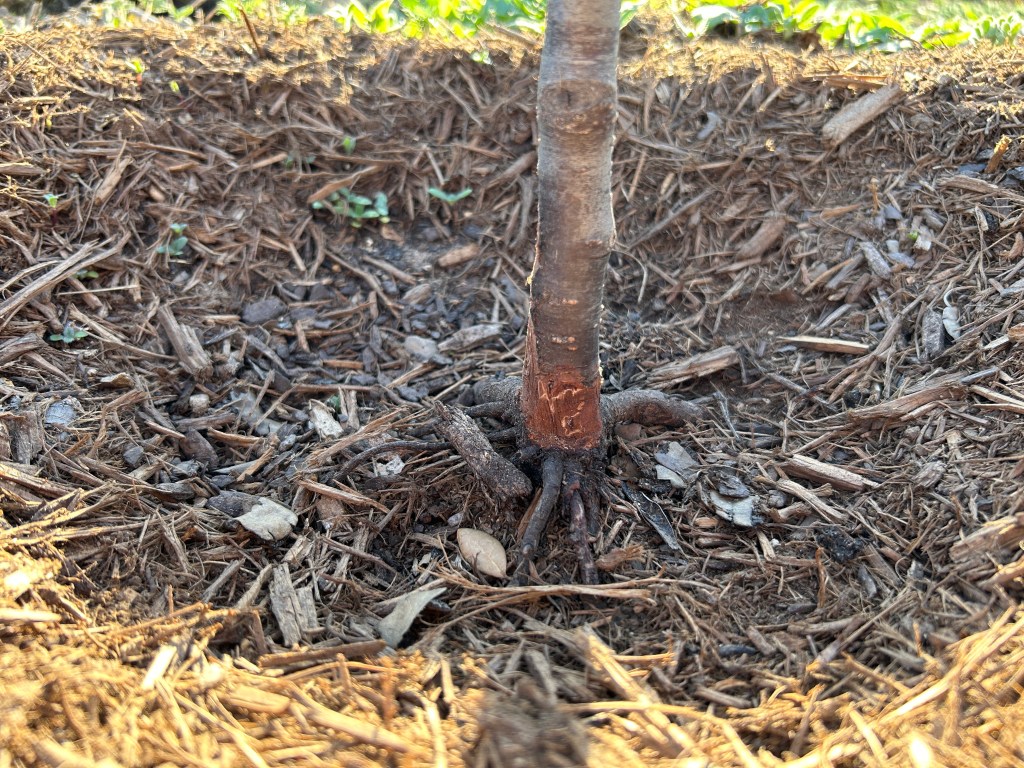
Was I right in my diagnosis? I’ll never know, but I’m obviously very glad that the tree seems well enough to bloom. I’m also curious (and hopeful) to see how the wound from me scraping bark away will heal, and overall how the tree will fare in the future.

 Rewilding My Lot
Leave a comment