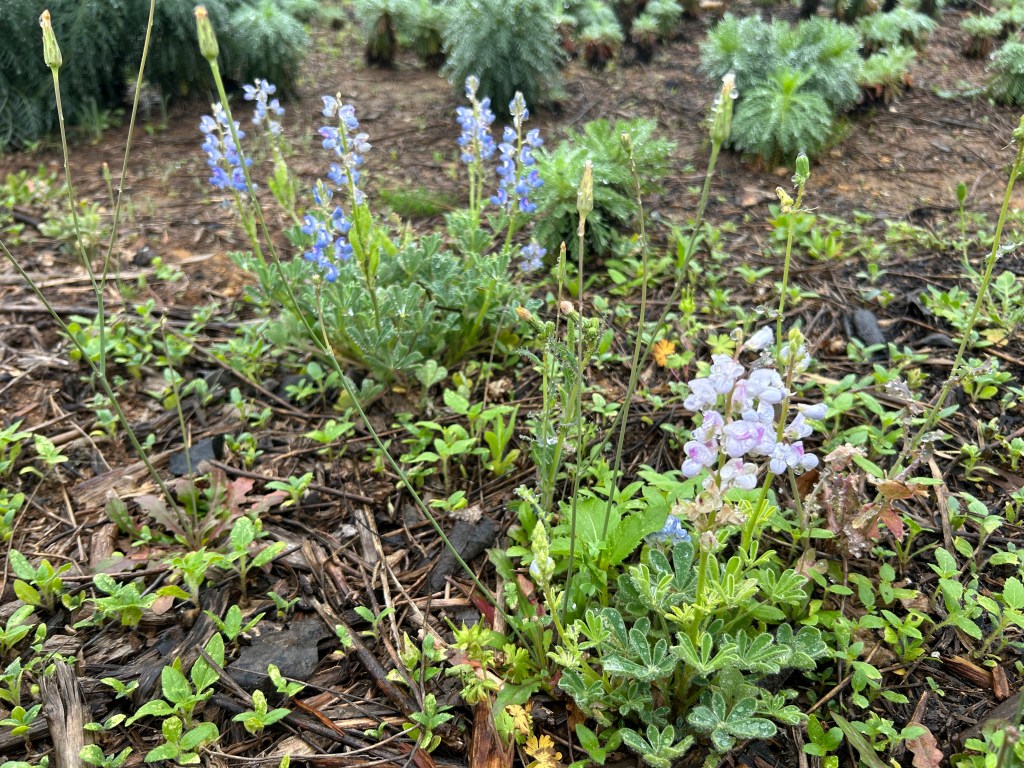
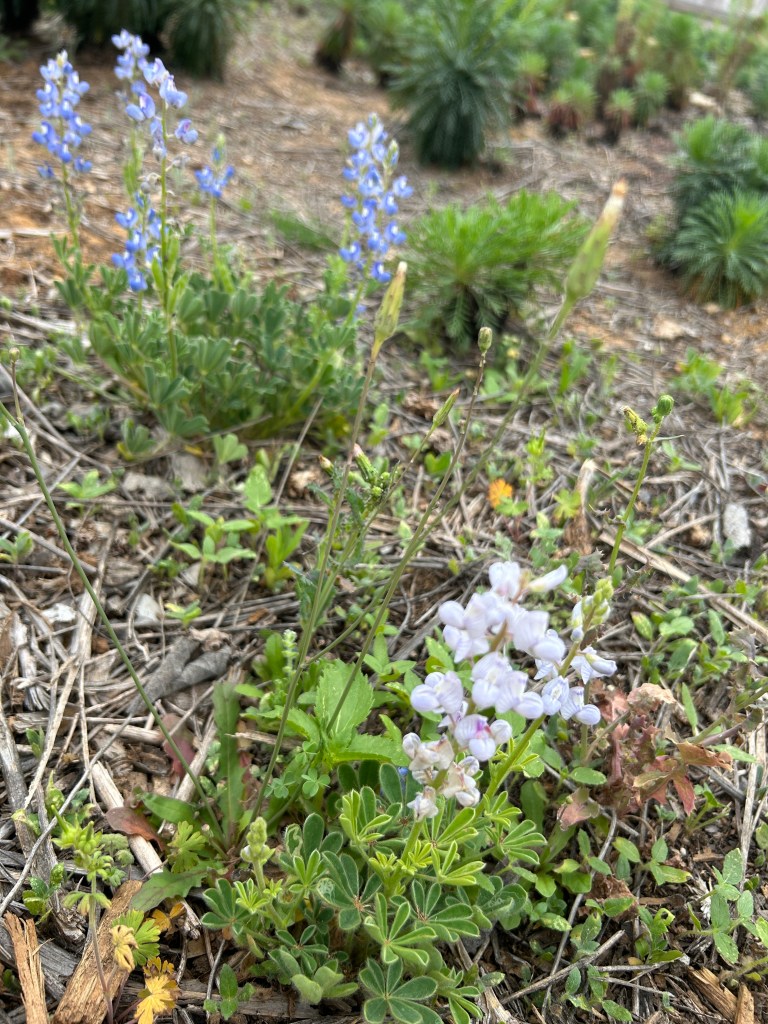
Bluebonnets in the wild are typically blue. However, genetic variations can occasionally occur that cause the flowers to be pale blue, white, or pink.
I have so many bluebonnets here this year that it is perhaps not surprising to see one such variant in my collection — this one has white flowers.
In general, color variations don’t stick around in the general population because the blue color is dominant. If pollen from a more common blue plant pollinates the flower of another color, then the offspring of that cross will have blue flowers. Therefore blue will easily swamp out other colors in a general population.
Horticulturalists can use selective breeding of color variants to create new varieties, such as the maroon variant affectionately nicknamed the “Aggiebonnet” released in the year 2000 (see Texas A&M horticulture history page here). However, I don’t plan to do anything special with this one beyond enjoying its variety.


 Rewilding My Lot
Leave a comment