Rewilding My Lot

Converting a new developer lot into a nature ecosystem — my journey


Frogfruit As Lawn

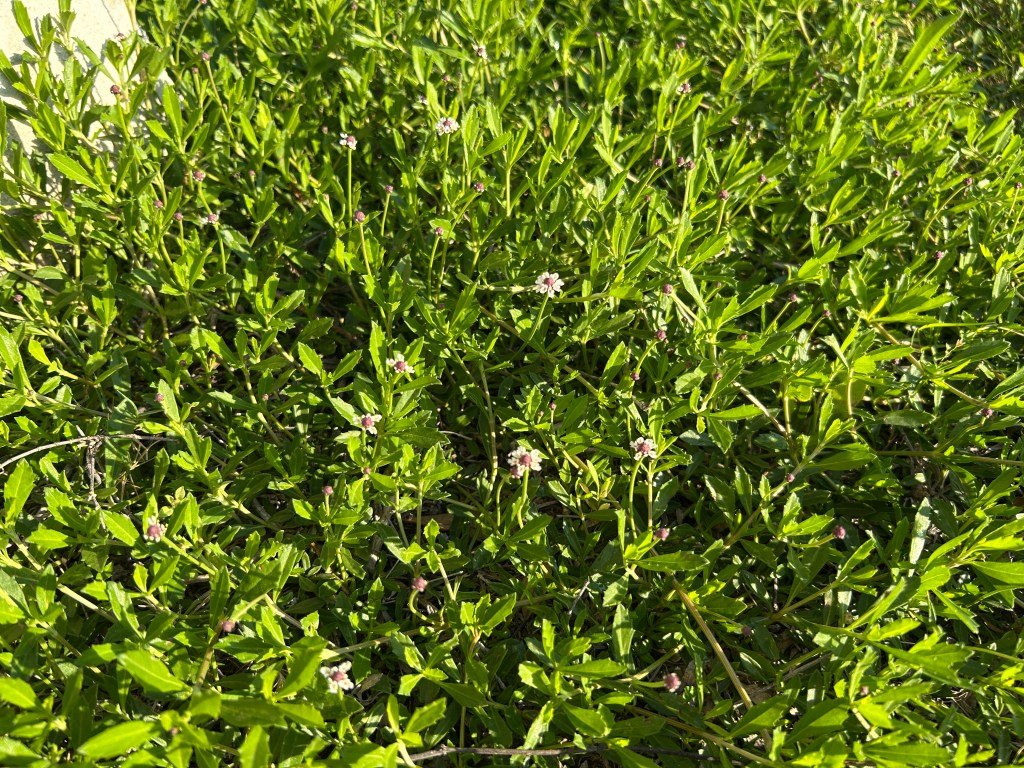
I use Frogfruit (Phyla nodiflora) here as a sturdy groundcover. As a native plant, it’s healthier for the ecosystem here than is Bermudagrass, and I enjoy watching the tiny insects that feed and breed on it.

Unlike behind the house, I have not removed Bermudagrass from the front lawn. However, I have intentionally not nurtured it at all and I encourage other things to compete with it. In the central area, the competitor is the wildflower meadow, and around two of the edges, the competitor is Frogfruit.

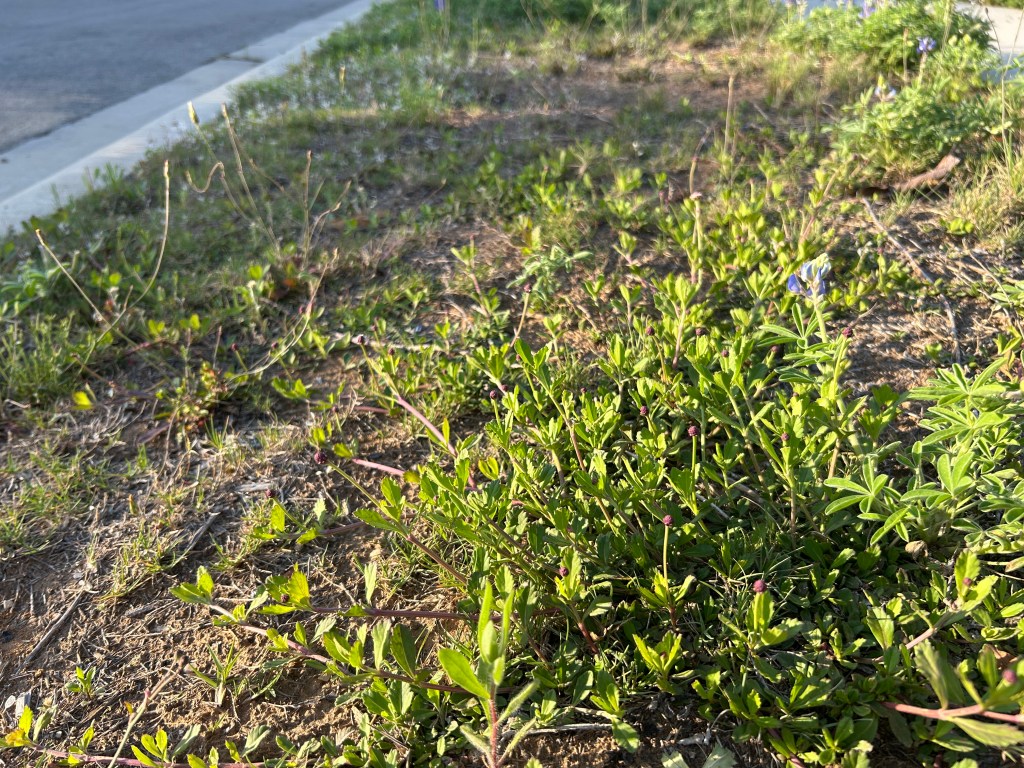
The Frogfruit areas in front of the house get mowed when the grass is mowed for about half of the year — that keeps it flat to the ground. However, in spring and summer, I skirt around those areas to keep the flowers which are feeding their little visitors (you can see the little white flowers in the first photo).

As I do every few months, here’s a review of the various places where I have Frogfruit. It spreads readily once it has established in an area, so I do periodically have to pull it back, i.e., yank out strands. Those strands can be composted, or plugged into bare spots here, or given to friends to fill their own bare spots.

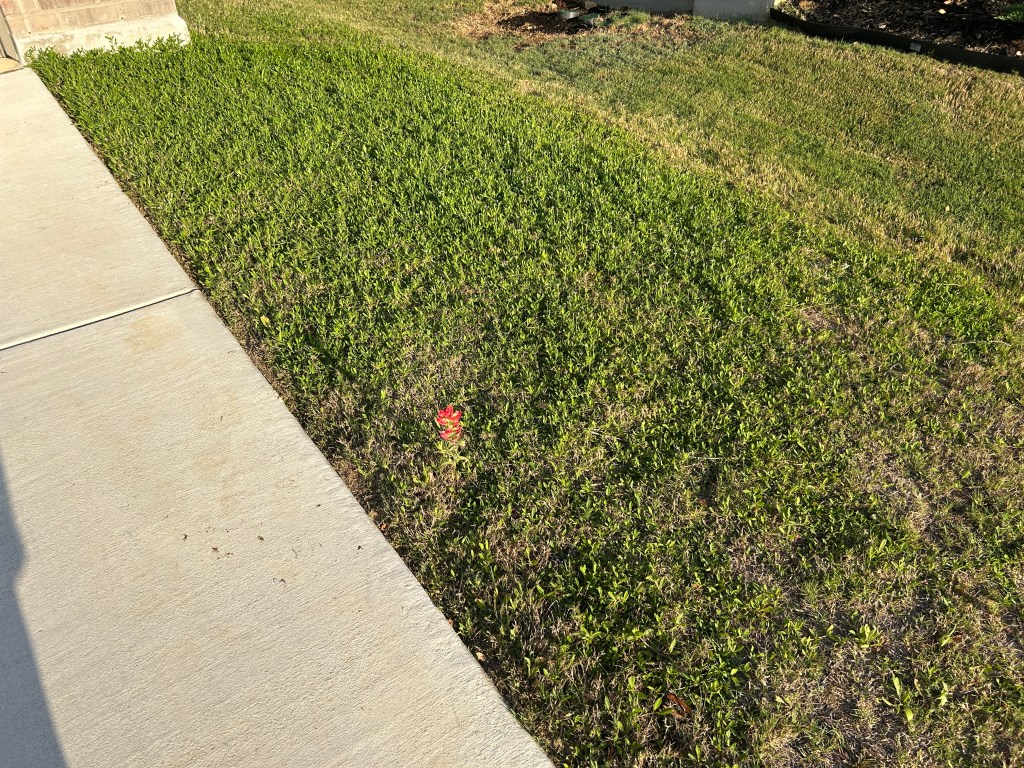
The biggest Frogfruit area here is in the strip between the driveway and the neighbor’s yard on that side. From the house to about half-way to the sidewalk there is pretty much complete Frogfruit coverage, and there is partial coverage for the rest of that area. The Frogfruit is the lighter green in the photo below. (That one volunteer Indian Paintbrush is being preserved because I’d like to harvest its seeds to place in the wildflower meadow on the other side of the driveway — it volunteered just a few feet too far north and it’s the only one I have!)

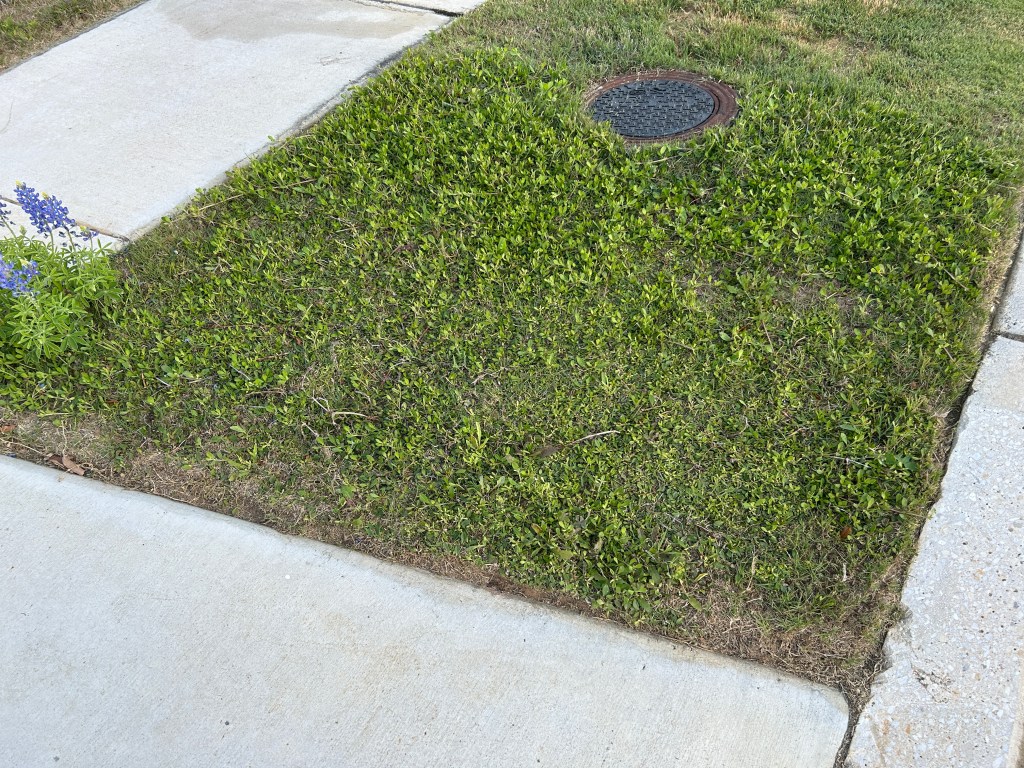
Nearby is the “utility corner,” which was almost completely bare soil when we moved here. Frogfruit has taken over nicely.

The “hell strip” between the sidewalk and the street is still rather bare in places. So whenever we next have a decent rainfall to moisten the ground (can it please be soon?), I’ll move some strands from behind the house and plant them here.

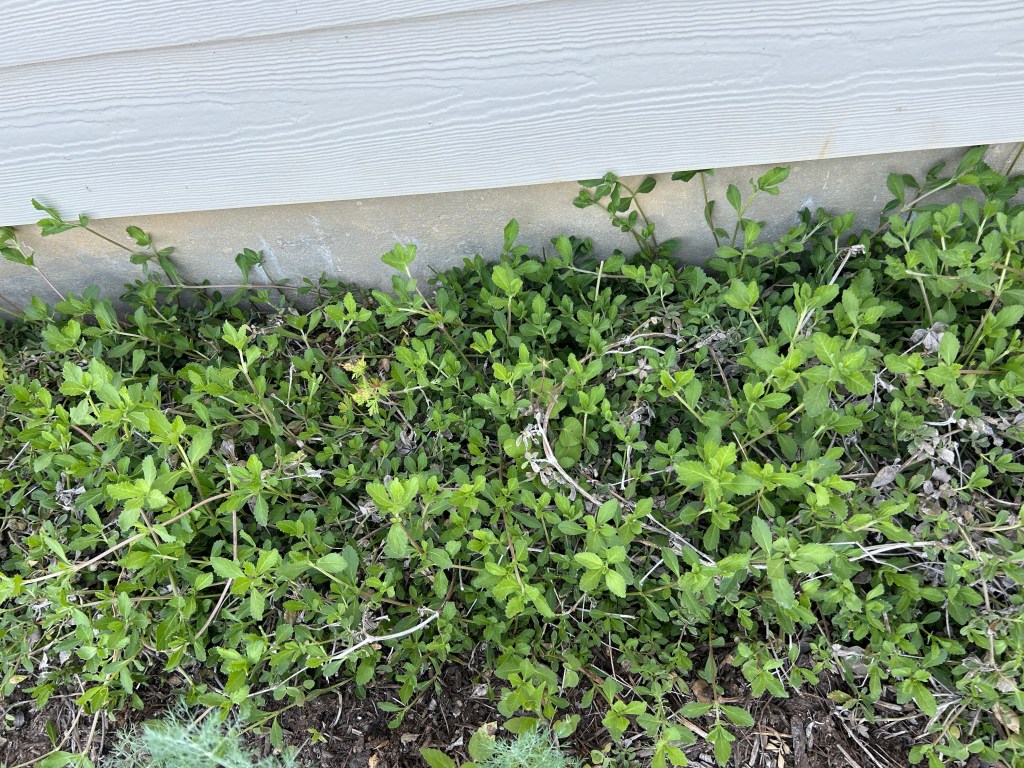
There is a strip of Frogfruit immediately behind the house, which is my primary source for strands to plant elsewhere. Because this area isn’t walked on, the Frogfruit grows a few inches taller.

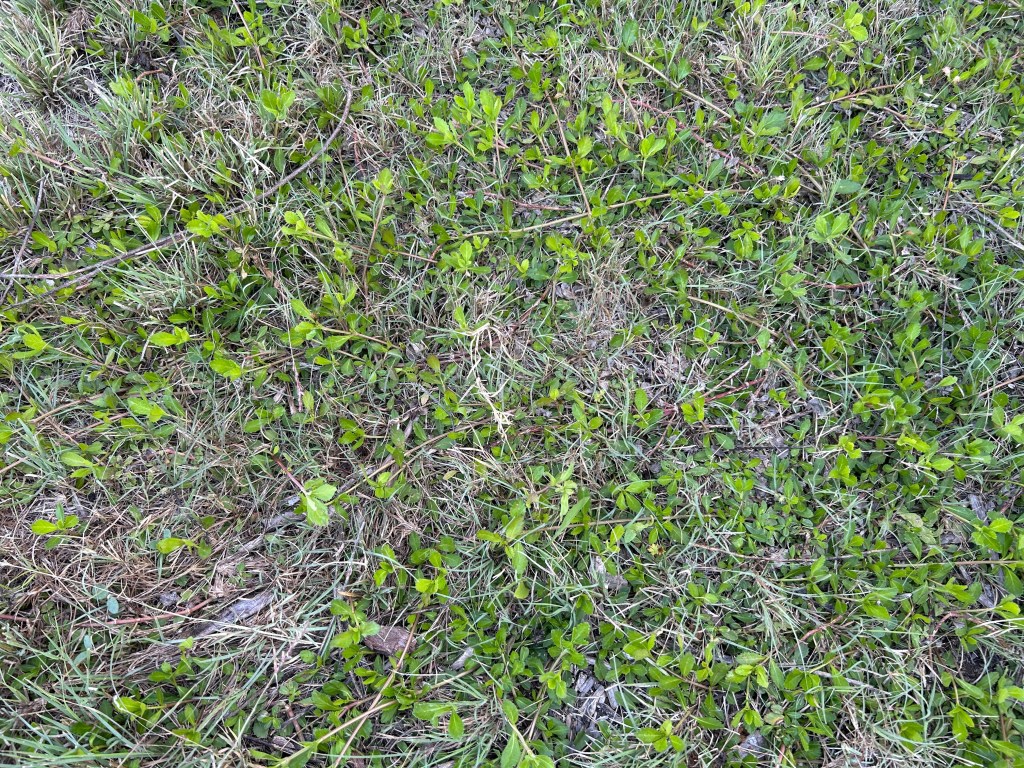
Frogfruit has infiltrated the Thunder Turf areas around the edge of the back garden. On the south side, that was deliberate because I thought that location might be a little too shaded by the fence for the native grasses. On the north side, the Frogfruit wandered there on its own and I didn’t stop it. Frogfruit is just as valid a native groundcover as are the Thunder Turf grasses, so I’m happy to let them sort themselves out.

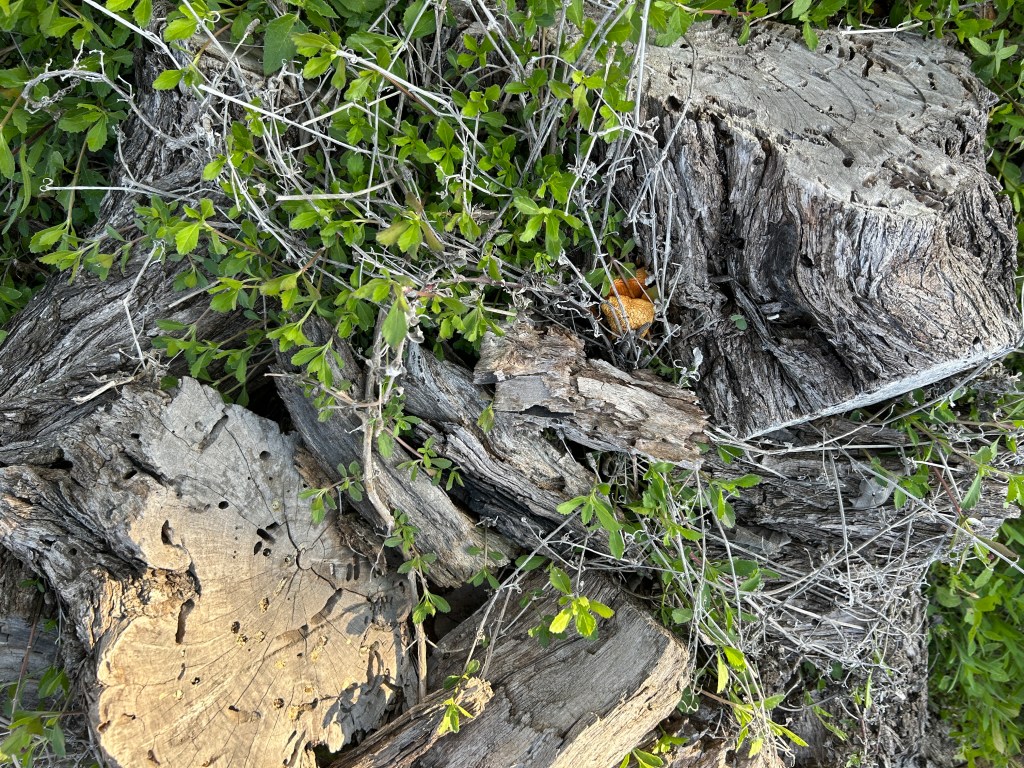
In addition to the groundcover features of Frogfruit, I also have it scrambling over the original wood pile. I gave it a good cut-back in November 2024, and that might need to be an annual activity to keep it from getting too ambitious.


4 responses to “Frogfruit As Lawn”

  1. How do you move strands of Frogfruit to a new location?

    I grew up in Phoenix, and my grandparents had Lippia (which I think is what is now called Frogfruit) because it was drought and heat tolerant and drew the pollinators.

    I now live in Sacramento, and Frogfruit is showing up all over my neighborhood, but not as sod, just mixed in with the grass. I’d like to plant it, but I’m a renter with a big corner lot and don’t want to pay for sod or plugs. Also, the owner won’t pay for it. A neighbor offered to let me take some from her lawn, but I can’t find any info online about transplanting. Any suggestions or guidance?

    Like

    1. Here’s what I’d do in an ideal situation. Wait for a time after rain when the “donor” and “recipient” ground is damp. If you look at the donor Frogfruit, you may be able to see that some of the strands have tiny roots at nodes along the stem. Those roots might be touching the ground, or they might even have taken root. I yank up several of those strands and cut them into pieces that are a few inches long, preferably with each piece having at least one or two of those little root clusters. In the recipient ground, I make shallow trenches. Then, some distance apart (your choice) lay down the rooted stem pieces and lightly cover with soil (especially the root parts). Stomp them in and water them.
      Your percentage of success will probably depend on how much you water the newcomers to get them established. I haven’t been very diligent about that and so I know there’s some loss — at this point I have an unlimited supply! I’ve been moving Frogfruit around for a couple of years now and I’m getting better at it. So for instance I no longer bother planting strands that don’t already have roots.
      I don’t know how harsh your summers are there. Here, it’s easier to establish things in the fall. It’s certainly possible in the summer, but it needs more water.
      Good luck!

      Like

  2. […] the Frogfruit situation, where I have an infinite supply of new plants on my own property, I may only have one chance to get this Powderpuff established. So it’s worth the extra […]

    Like

  3. This looks incredible! I live in Houston and have been spending this year slowly pulling up my back lawn and throwing in frogfruit. I started in March. The amount of butterflies has been amazing- and this is just from one small 3′ x 2′ patch. I can’t wait until it’s taken over most of my yard! I am amazed at how popular frogfruit is to all the little insects! I am also mixing it in with occasional Mimosa strigillosa plants, too, which I see you have as well!

    Thank you for keeping a site like this in 2025. So many people have their gardens locked behind social media, and because I don’t use it, I hardly ever get to see other people’s amazing gardens. I have had a really nice time reading yours. 🙂

    Liked by 1 person

Leave a comment

About Me

Nature Lover.
Inquisitive Observer.
Student Gardener.

I invite you to join me on my journey to convert my sterile (from a nature point of view) new house lot to a healthy and diverse ecosystem, as I make discoveries, mistakes, and hopefully progress. I am not an expert or professional. The project started in February 2023 and the location is Seguin, Texas, USA.