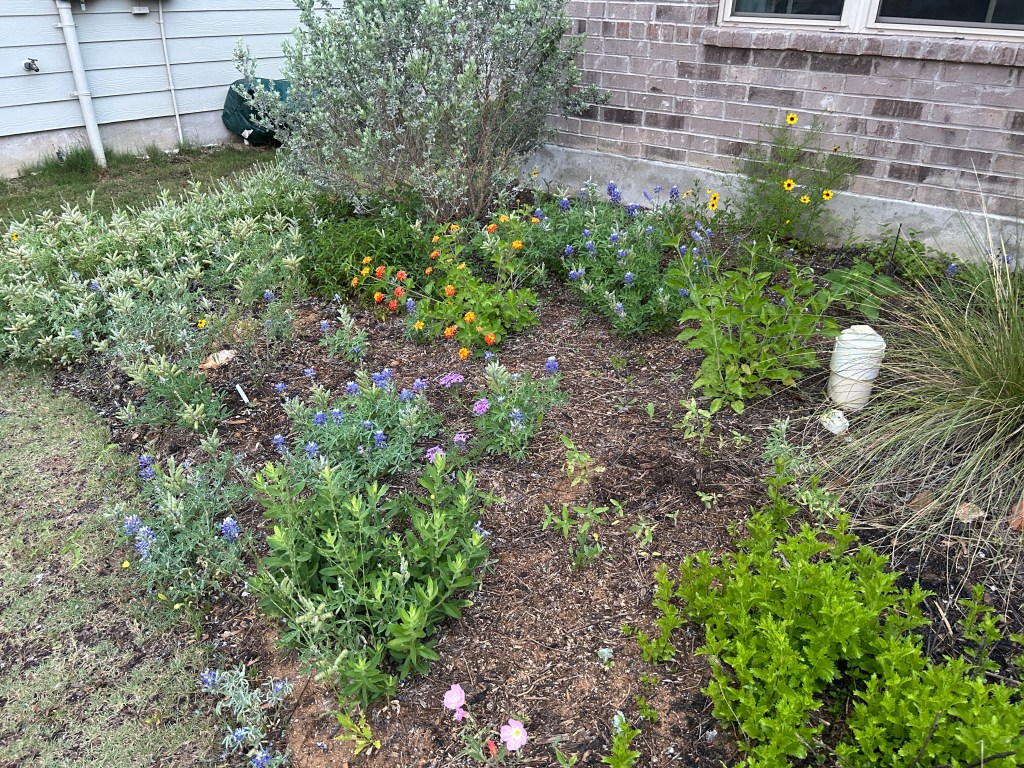
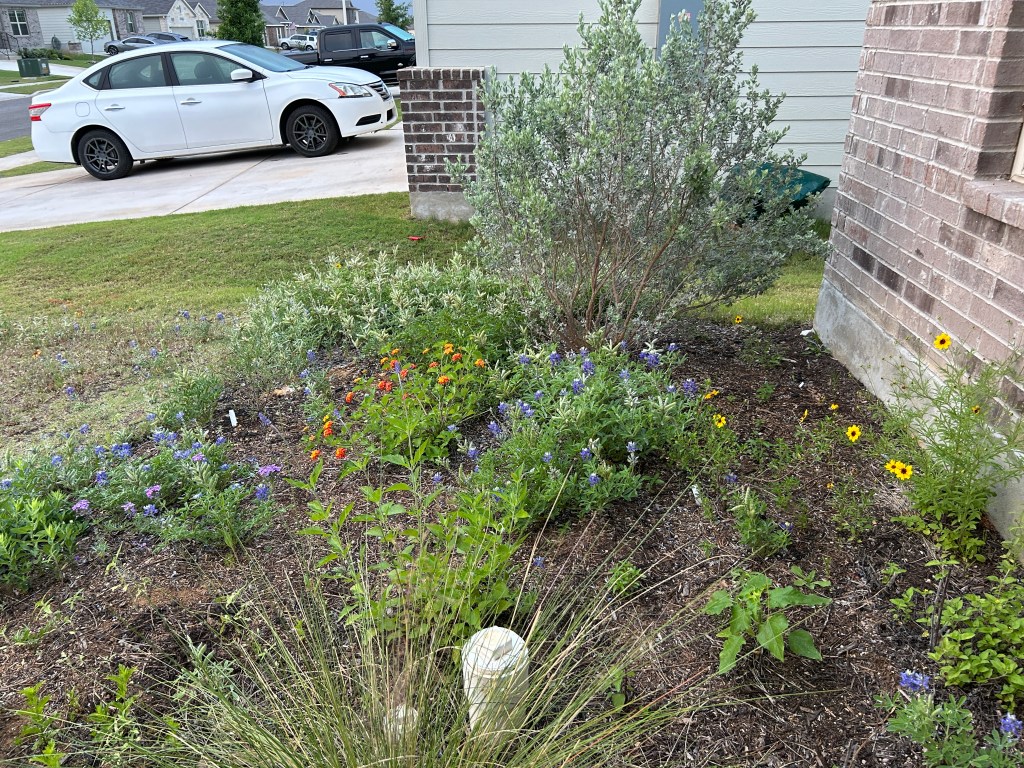
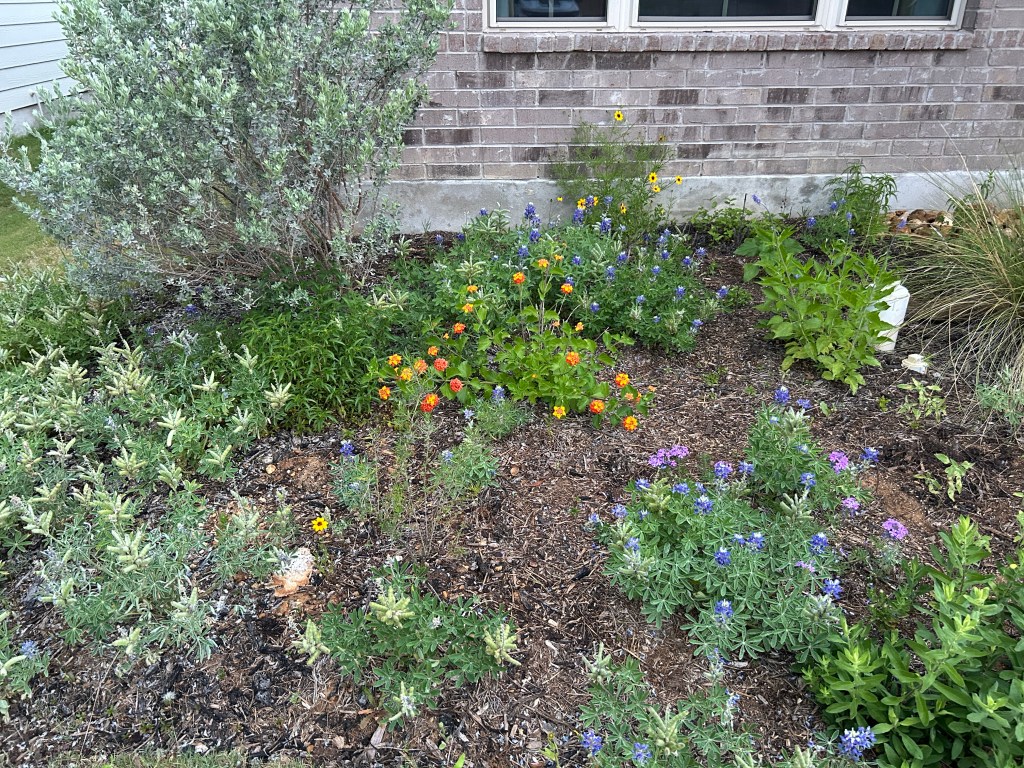
The pollinator garden in front of the house is waking up nicely and a number of things are now blooming. Most are perennials, which die back or lose their leaves during the winter break and then make new growth the next spring. Some are annuals, which grew from seed dropped last year.
And note, this is a garden that is not watered. This is one of the big reasons why I am an advocate for native and adapted plants — they are accustomed to living in our soil and climate.
Here are some highlights.
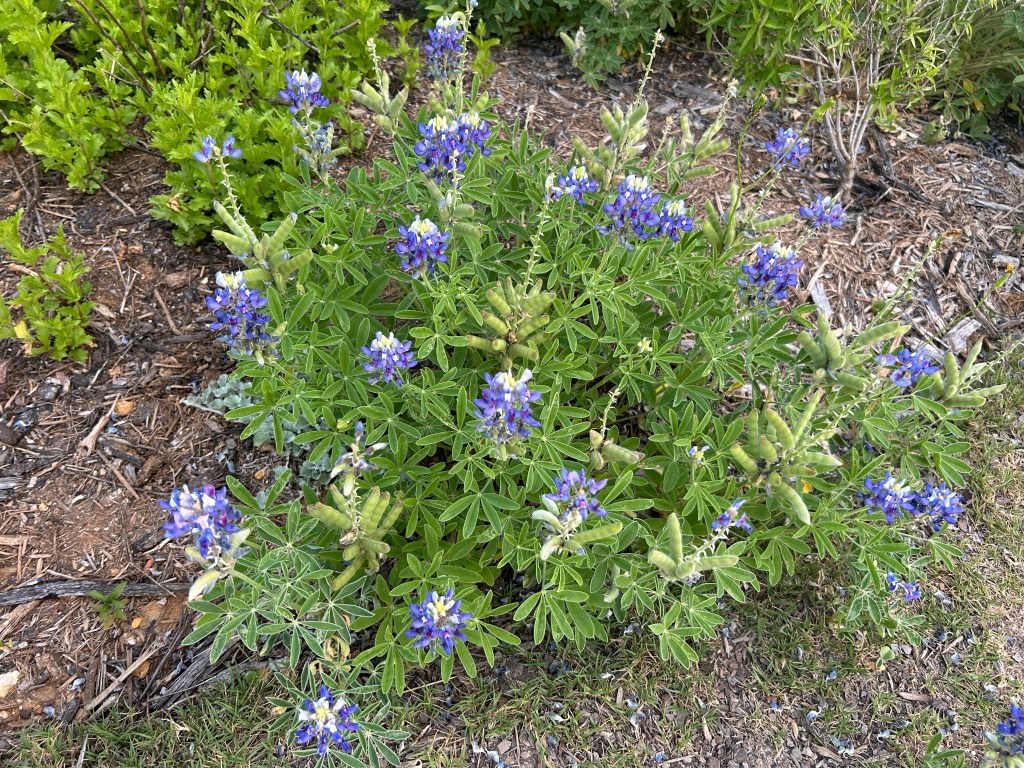
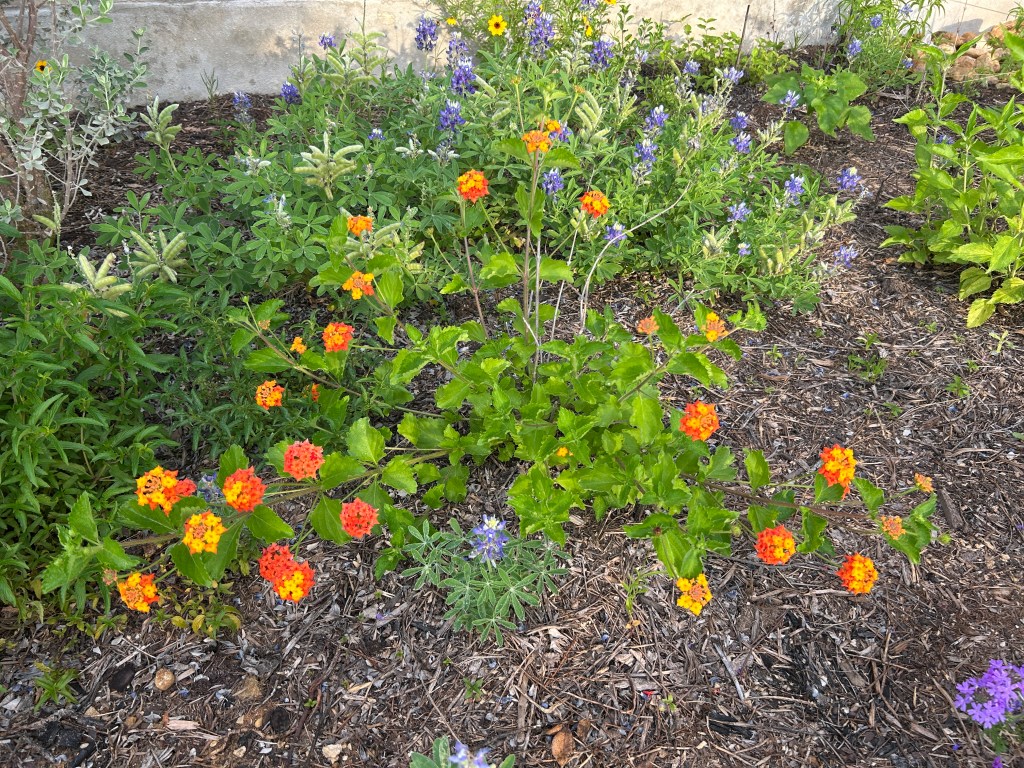
Texas Bluebonnets (Lupinus texensis). I did not plant Bluebonnets in the pollinator garden, but these were self-seeded from last year’s plants in the nearby wildflower meadow. I welcome them, because they provide early blooms before other things have woken up, and their nitrogen-fixing action fertilizes the soil. As further nutrition for the soil, once the plants have finished blooming, I can cut them down and mulch them.
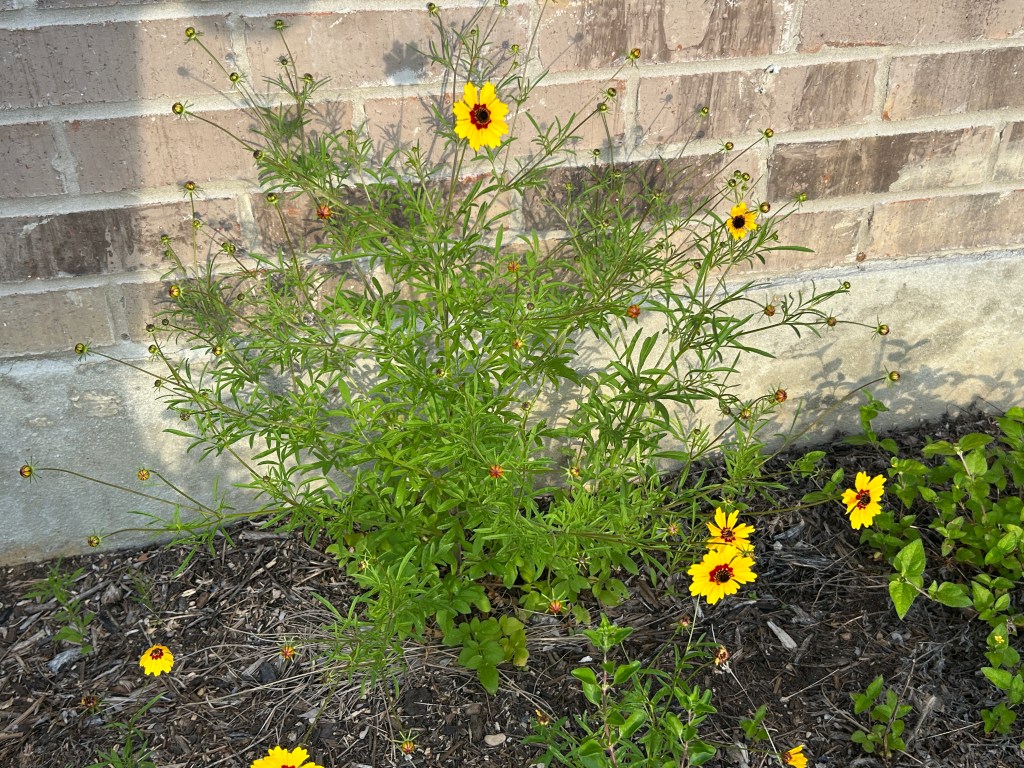
Golden Wave Tickseed (Coreopsis basalis). This is a pretty volunteer plant that arrived here last year and I’m glad it did. It’s a very drought-tolerant annual that has returned after self-seeding last year.
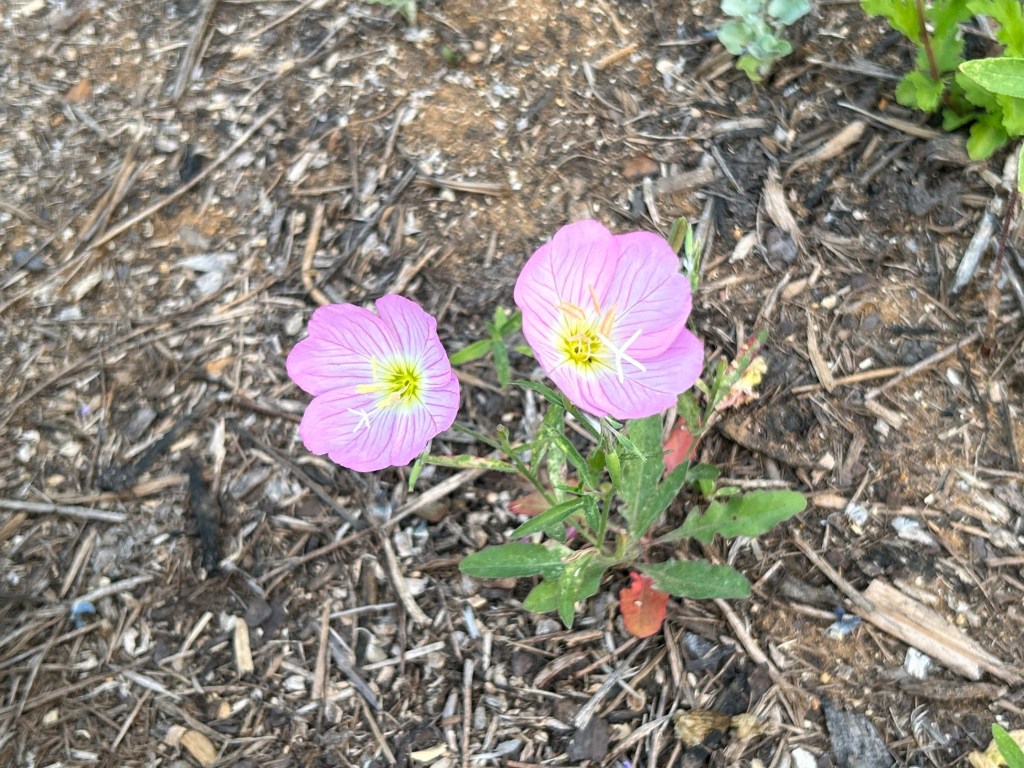
Pink Evening Primrose (Oenothera speciosa). I introduced this plant last year from excess at the pollinator garden in Park West where I volunteer. It’s a perennial that is likely to spread, but I only have a small amount at the moment and it’s easy to keep under control.
Texas Lantana (Lantana horrida). This shrub got a severe cutback in January because it was growing along the ground instead of upwards. It’s recovered well and seems to be assuming a better shape. Note, a number of different Lantanas are available to buy at nurseries, but this is the only one that is native to Central Texas. To confuse the story further, the botanic name has recently been changed but a lot of places still use the former name, Lantana urticoides.
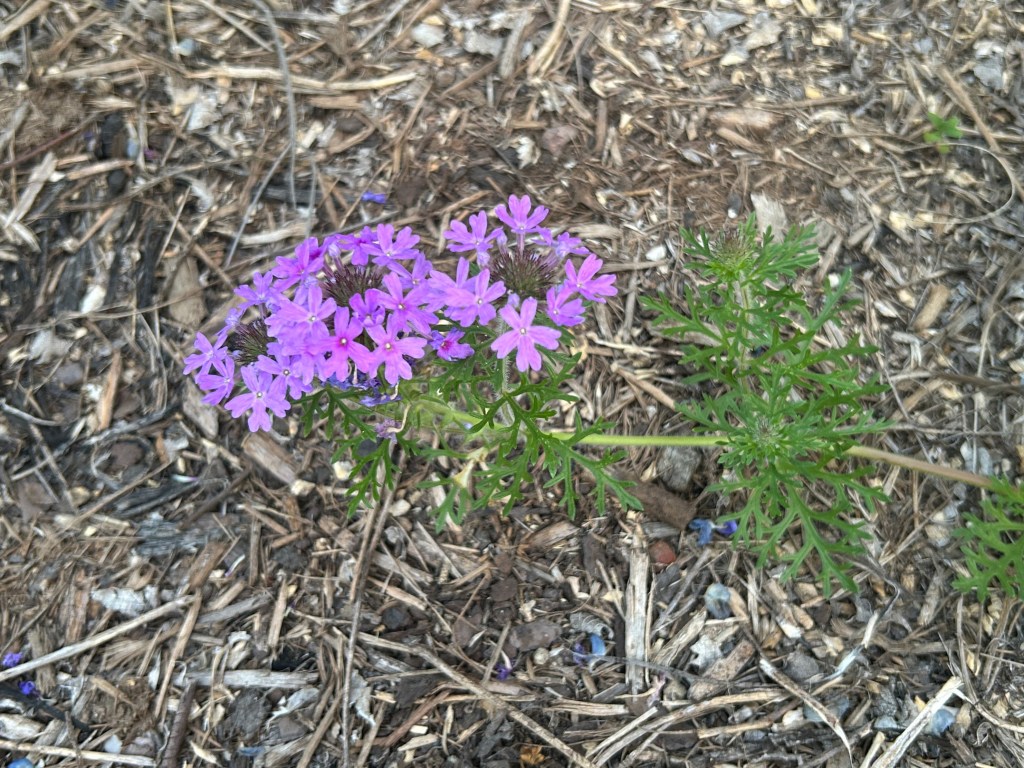
Prairie Verbena (Verbena bipinnatifida). I have this plant both in front of and behind the house because it’s a useful groundcover. It doesn’t always survive winter freezes, but it reseeds well and so there are usually other volunteers to fill in gaps.
Mealy Blue Sage (Salvia farinacea). This plant in the front pollinator garden is fairly small compared to the masses that are behind the house.

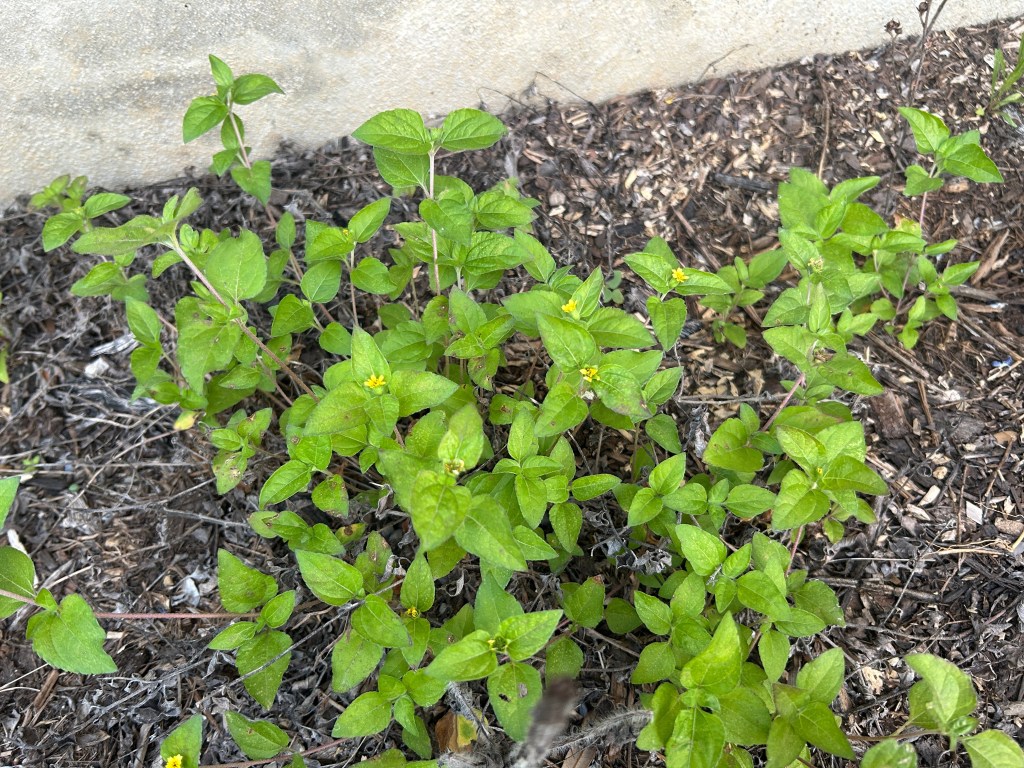
Horseherb aka Straggler Daisy (Calyptocarpus vialis). This is a useful groundcover with tiny yellow flowers. The plant in the front pollinator garden was introduced by me, but it also has volunteered behind the house.
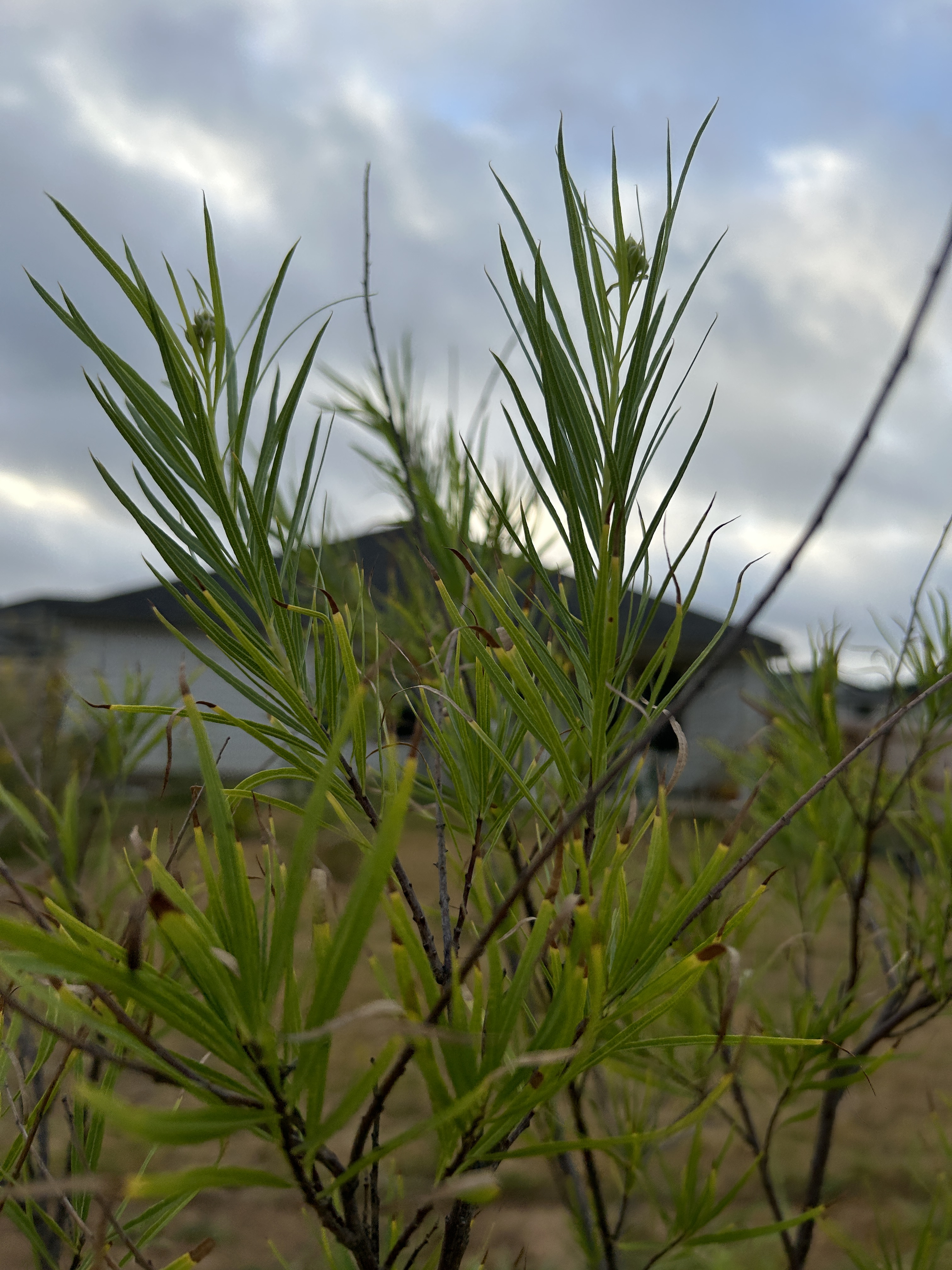
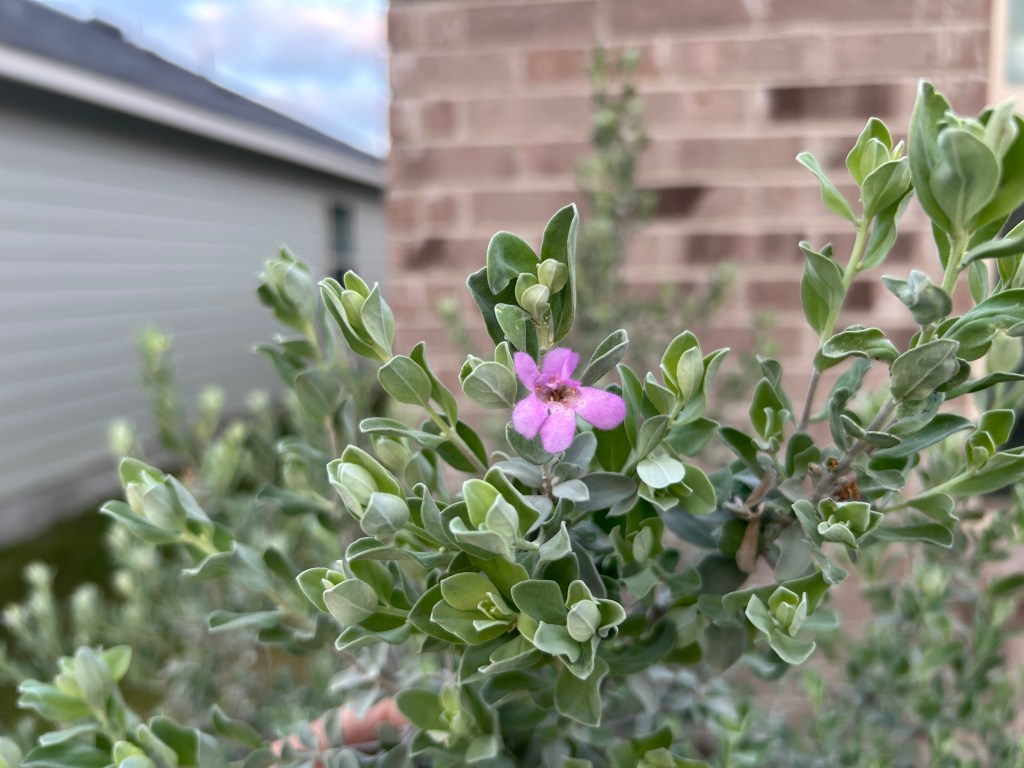
Cenizo aka Texas Sage (Leucophyllum frutescens). This is now a substantial shrub after its small beginnings two years ago (see photos at the beginning and end of this post). I’ve also seen this plant called Barometer Bush because of its habit of blooming before or after rain. We have had a very dry spring, so I really hope that the blooms currently on this plant (and others around Seguin) mean that rain is coming. We badly need it.
Other plants in the pollinator garden bed that haven’t bloomed yet include Gregg’s Mistflower, Fall Aster, Flame Acanthus, Skeleton-Leaf Goldeneye, Gregg Salvia, Scarlet Sage, Lemon Beebalm aka Purple Horsemint, Gulf Muhly, Silver Ponyfoot, and Common Sunflower. One of my goals in the pollinator garden is to have blooms (i.e., food) available for as much of the year as possible, so it is intentional to have some flowers appear early and some later.

 Rewilding My Lot
Leave a comment