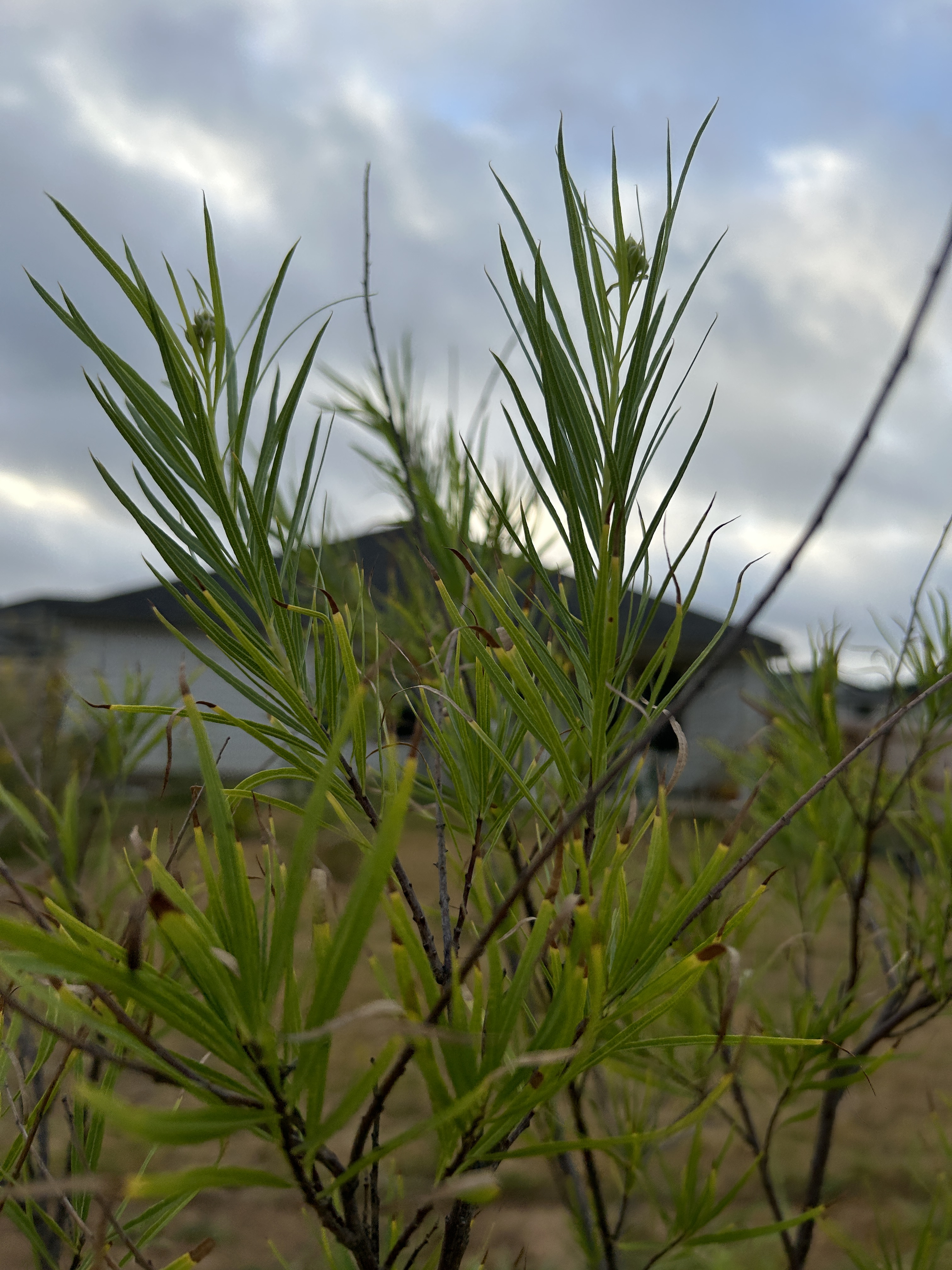
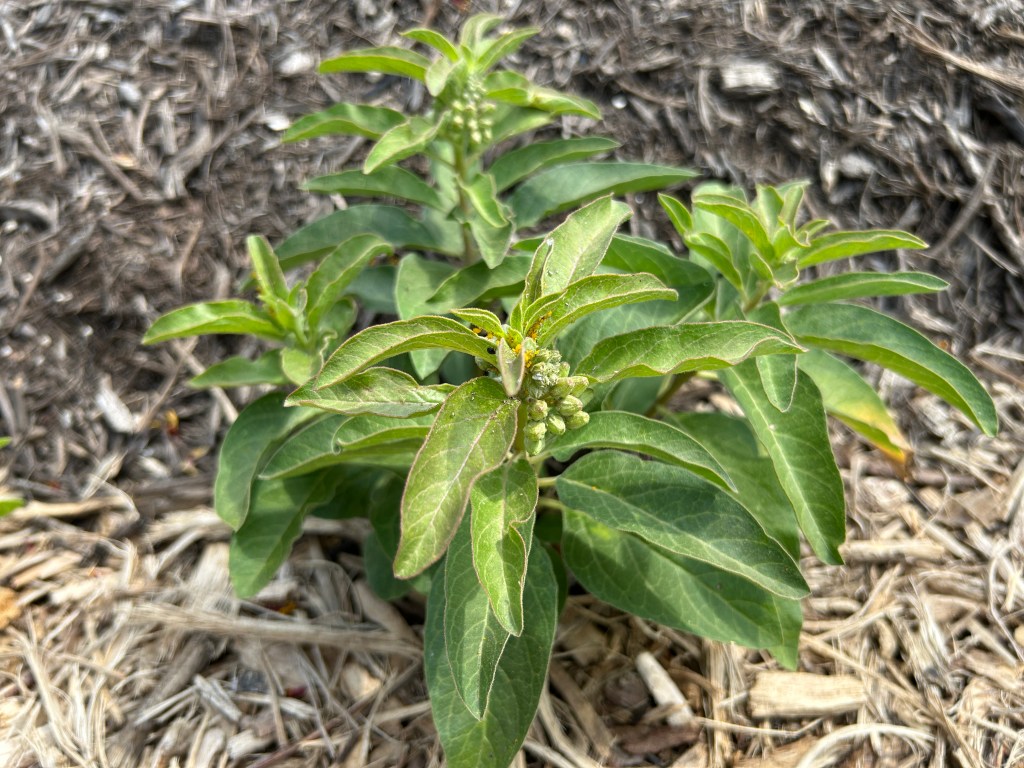
Milkweeds are the only plant that Monarch butterflies will use to lay their eggs and host their caterpillar larvae. However, Monarchs will feed from a lot of other nectar sources, as will other creatures, and so before planting milkweeds I focused more on building a garden with a variety of food sources to be more generally helpful to pollinators.
Last year I did start to introduce milkweed host plants, but I particularly only want to use the native kinds. Most of my plants are located in a small area at the back of the garden, but some have grown elsewhere from seed and there is also an aquatic version in the pond.
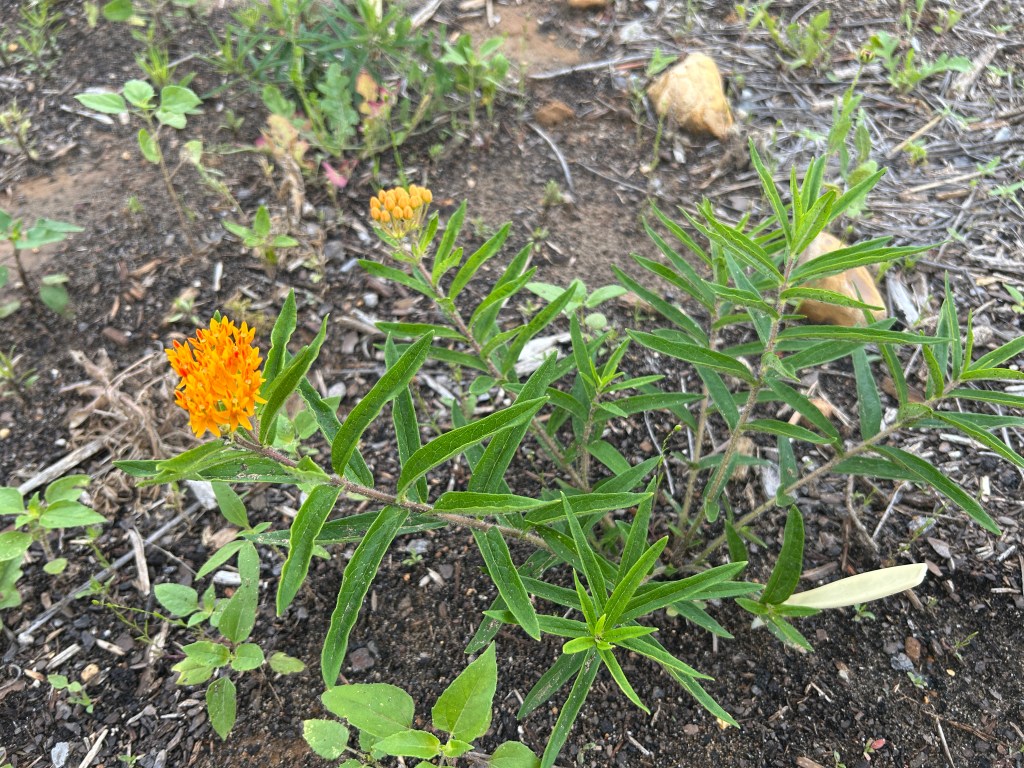
There is a non-native milkweed that is readily available, but several studies have shown it to be harmful to Monarchs in that it can hinder migration and spread disease. This plant has the botanic name Asclepias curassavica and is sold under the common names of Tropical Milkweed or Butterfly Weed, among others. I do not recommend this plant. There is a confusing situation in that two milkweeds may be given the same common name (Butterfly Weed), but they are different plants — Asclepias tuberosa is a good native plant; Asclepias curassavica is a potentially harmful non-native plant.
Native milkweeds are not as easy to find as the tropical variety and are slower to grow. However, they are worth the wait and I am making some progress with the following:
Zizotes Milkweed (Asclepias oenotheroides). This is the milkweed that seems most eager to grow here and I now have several plants introduced from pot or seed. Given the locations where I have found it, I suspect that it is self-seeding here and over time I may find more plants. Some plants have bloomed and others have buds.

Antelope Horns (Asclepias asperula). I planted four of these plants in 2024 spring, and there are at least three still growing. They died back during the winter, as native milkweeds do, but are growing back and are already bigger than they were last year. In my recent experience with fostering some late-stage Monarch caterpillars, anecdotally this might be the most popular of the milkweeds I have here. The Antelope Horns haven’t bloomed yet, but I hope they do because I’d like more of them.
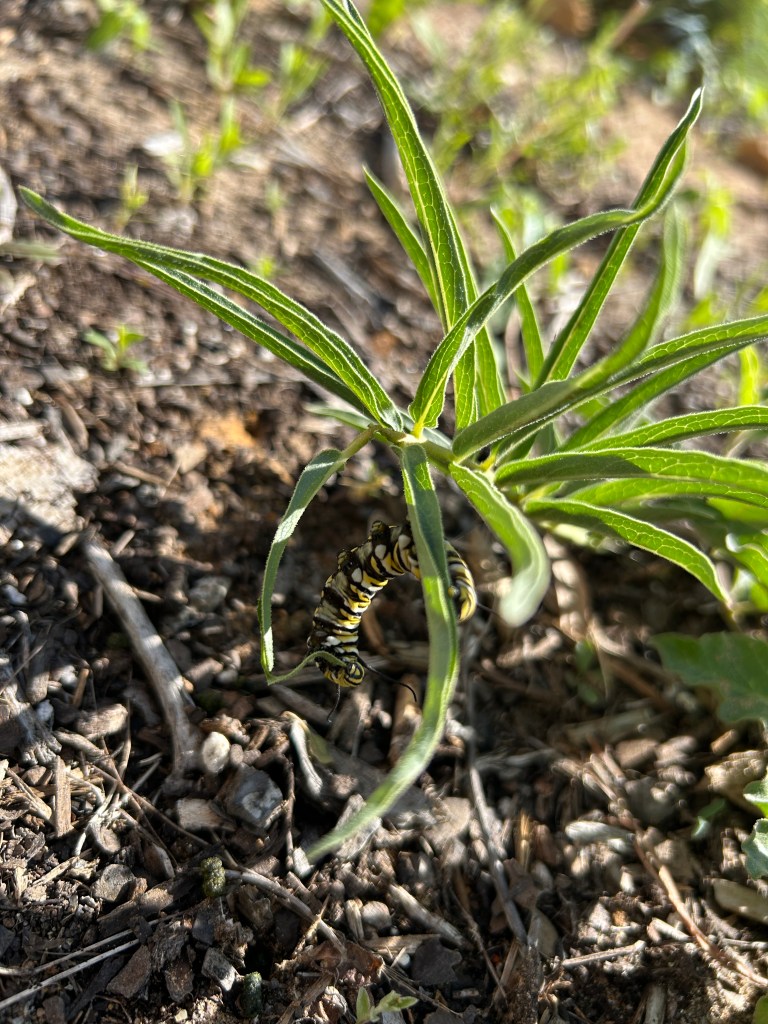
Green Milkweed (Asclepias viridis). In addition to Zizotes and Antelope Horns, this is the third milkweed that is most recommended for our particular location. I sowed seed for this in the milkweed area last year, but don’t know if anything has emerged. If there are seedlings present, I don’t recognize them yet.
Butterflyweed (Asclepias tuberosa). This is the plant that one has to be careful buying in case you end up with Asclepias curassavica instead. I scored three small plants in 2024 spring and they did flower that year. At least two of them are growing back after the winter die-back. When I put a Monarch caterpillar on this plant, it quickly crawled away to nearby Antelope Horns and Zizotes plants instead. Perhaps that means that this milkweed is less popular for food, but I don’t really have enough data to say that.
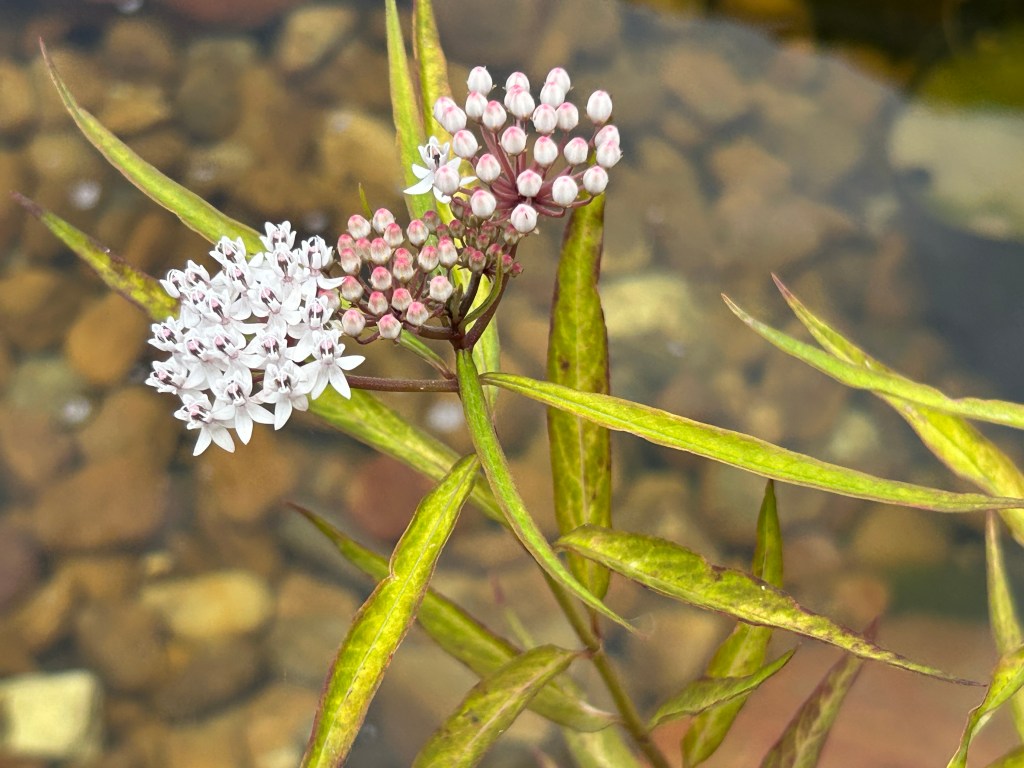
Aquatic Milkweed (Asclepias perennis). I had no prior knowledge of Aquatic Milkweed until I brought it here, so this will be interesting to watch. I do wonder what happens to caterpillars once they are ready to pupate, because normally they would climb off their host plant to form their chrysalis elsewhere. If the plant’s base is in water, what do they do?
I need to be careful when I weed the milkweed area because it’s possible there may be seedlings that I want to keep but haven’t recognized yet. So for now I’m only removing things that I am sure I know what they are. In some cases there are different kinds of milkweed that are growing too close together but I will leave them as they are for now. The Zizotes, of which there are several now, seem to like volunteering on top of Antelope Horns, so that’s a bit rude of them!


 Rewilding My Lot
Leave a comment