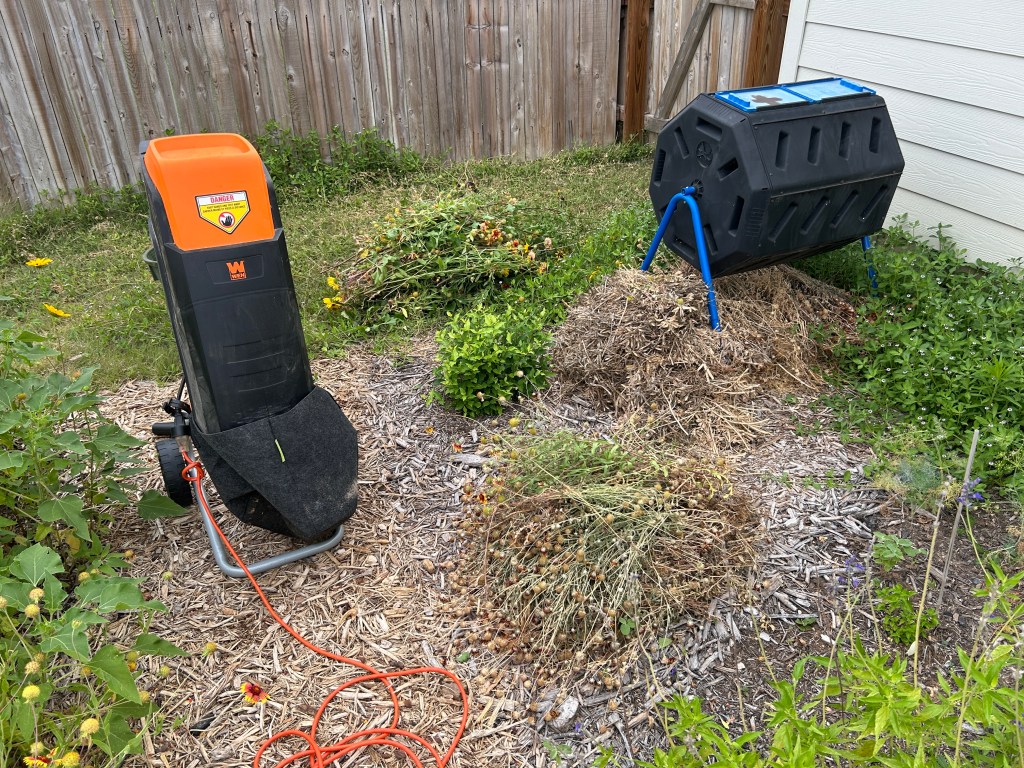
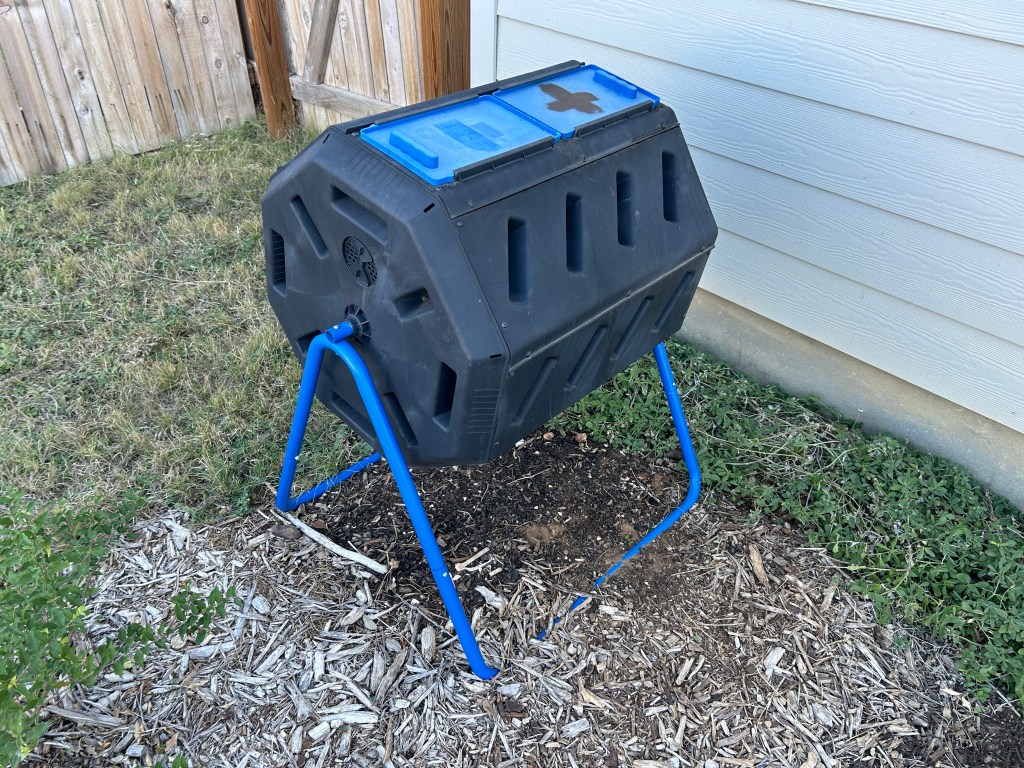
I am limited in what I can compost here because I only have space for a small tumbling composter. That takes care of all of our household kitchen scraps and some of the garden waste.
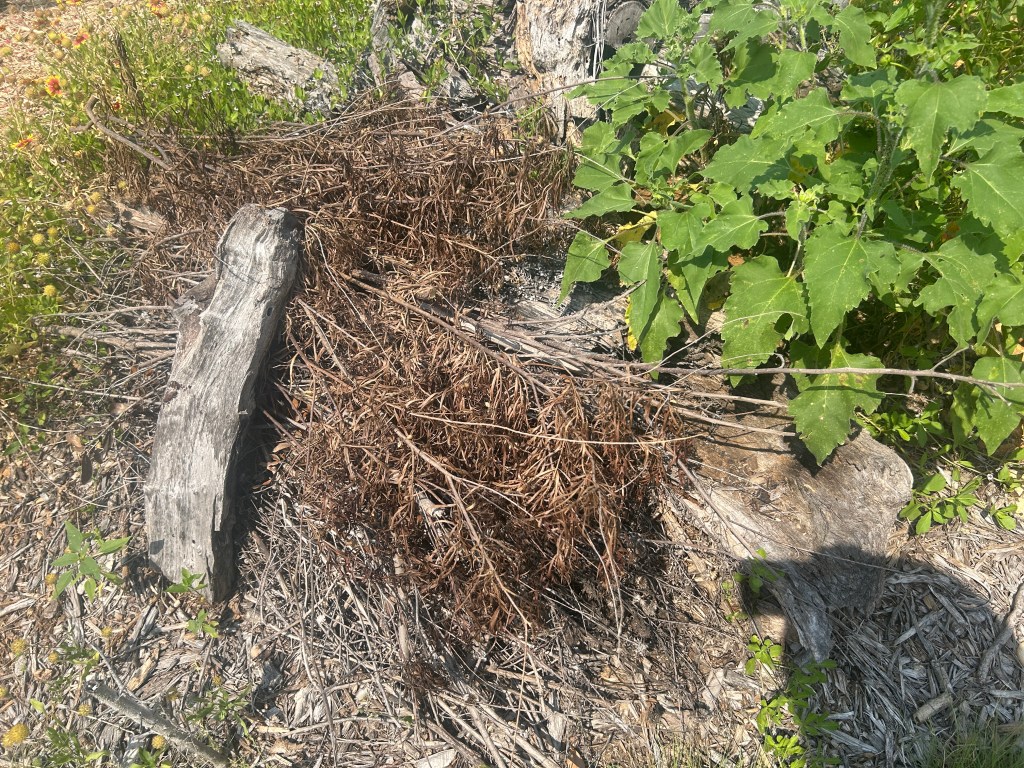
Tumbling composters don’t get hot enough to kill weed seeds, so there are some times when I will discard plant matter in the trash because I don’t want it to propagate here (e.g., Bermudagrass).
If I cut branches, then they get added to the wood pile.
However, that still leaves a lot of biomass in the form of annual plants that I don’t want to waste. My solution to that was to buy a small shredder last year. When I was shopping for a shredder, I found that they were generally useful for leaves or for stems and twigs, but not both. I have a much greater need for the latter, so that’s the kind I got.
I have learned that the shredder is easier to use when the stems are dry, so generally I accumulate them in a pile until I run out of space and then I have a shredding session. This particular pile of stems came from clearing away annual plants — mostly Firewheels that were overgrowing the pathways, or Bluebonnets that had finished seeding in the meadow.
From the stems I had collected I generated two tubs of shredded material (maybe 30 gallons total?). I had to abandon the idea of shredding some fresh stems I had just cut that morning — they were too pliable and were clogging the machine — so I’ll wait and deal with those when they are drier.

If I am shredding annual plants, then there is a high likelihood that the product will contain seeds. Ideally then, the shredded pieces should go where I don’t mind those seeds germinating. For instance, I thought last year if I put shredded Firewheels in the prairie grass area, then the weeding would be minimal. Instead, hundreds of flowers emerged and since I want to keep forbs out of the grass area, then I have spent a lot of time pulling them up before they go to seed. Lesson learned!
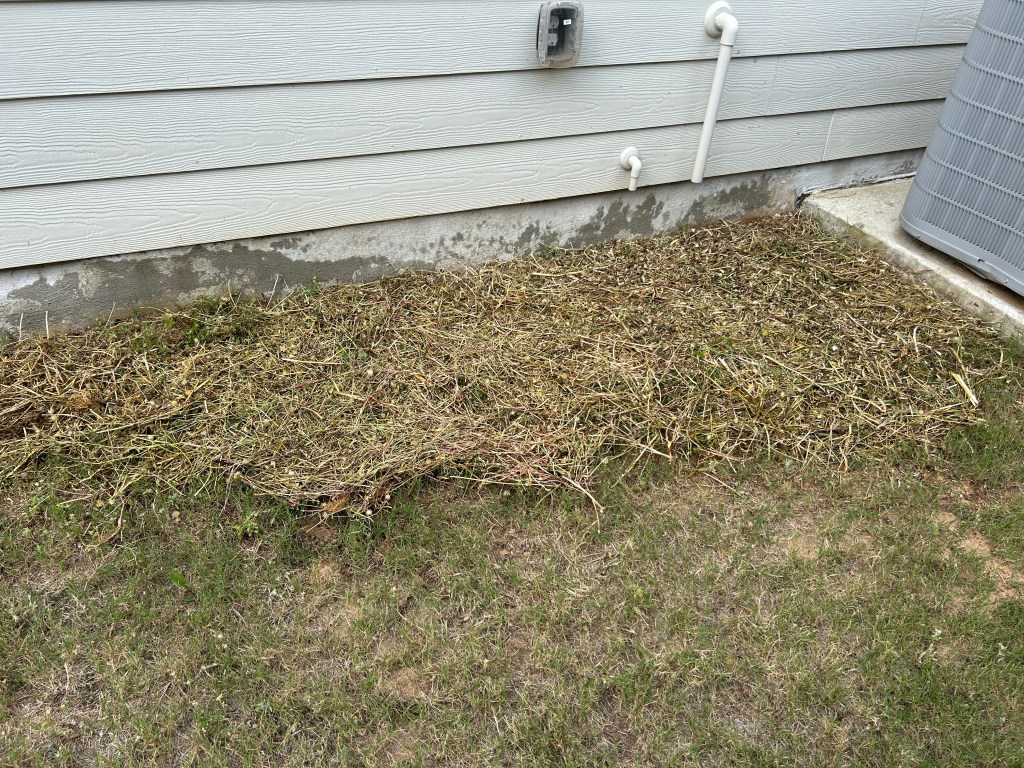
There is an area on the north side of the house, near the air conditioning unit, where grass does not grow well. It’s heavily shaded, and there has also been erosion caused by water running off the roof (we don’t have gutters). So until I decide what to do with that particular area, I thought that adding some “green mulch” might help to replenish and/or protect the soil a little. And if I should find some new wildflowers there next spring, I would not object! After I spread the mulch, I watered it to minimize the chance of dust blowing away.



 Rewilding My Lot
Leave a comment