At a recent meeting of the Native Plant Society of Texas (NPSOT) Guadalupe Chapter, there was a speaker from the Central Texas Mycological Society, a group dedicated to working with fungi, which are key for the health, stability, and abundance of soil, plants, and fresh water.
One of the things that this group does is to divert used compost blocks from mushroom farmers into the community so that people can grow their own culinary mushrooms or build fungal-rich soil in their own gardens. If you live in the central Texas area, there are pick-up points where you can get mushroom blocks at no charge.
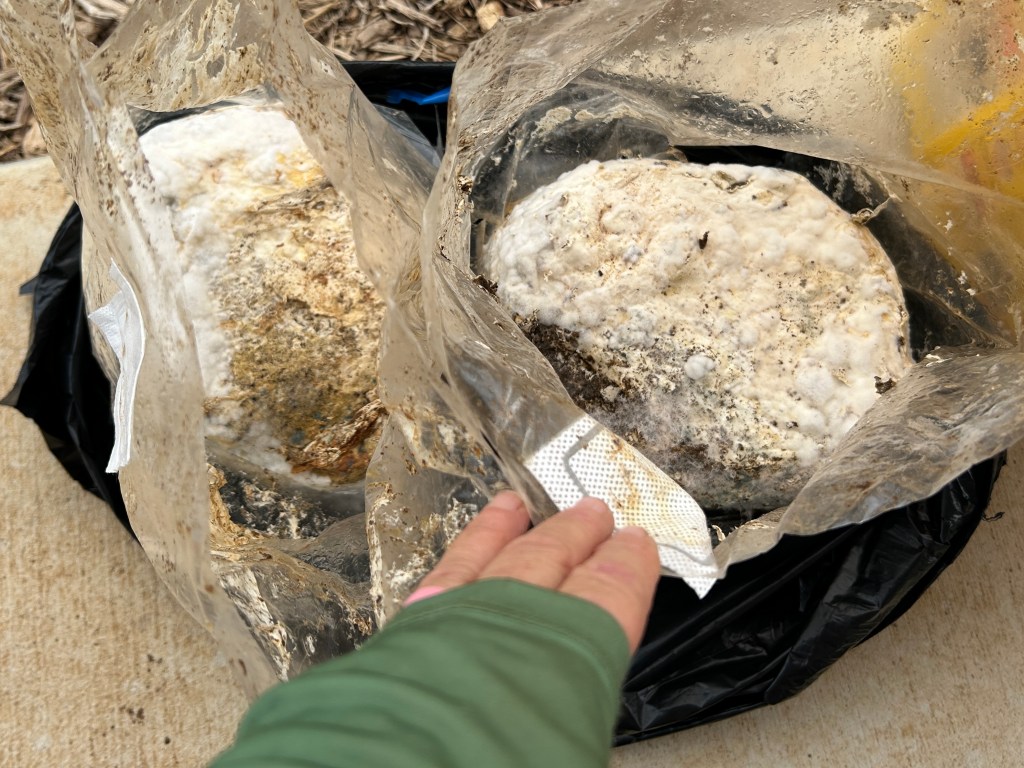
I came away from the NPSOT meeting with the bonus of two spent mushroom blocks — the speaker had very kindly filled her truck with blocks to bring to the meeting. They are made of sawdust, grains, and other organic matter, and of course they contain fungal tissue as well.
The last time I acquired a mushroom block, I simply added it to my compost. This time I have used a different approach in order to get this healthy substance out into the garden more quickly.
First, I crumbled each block into a bucket.
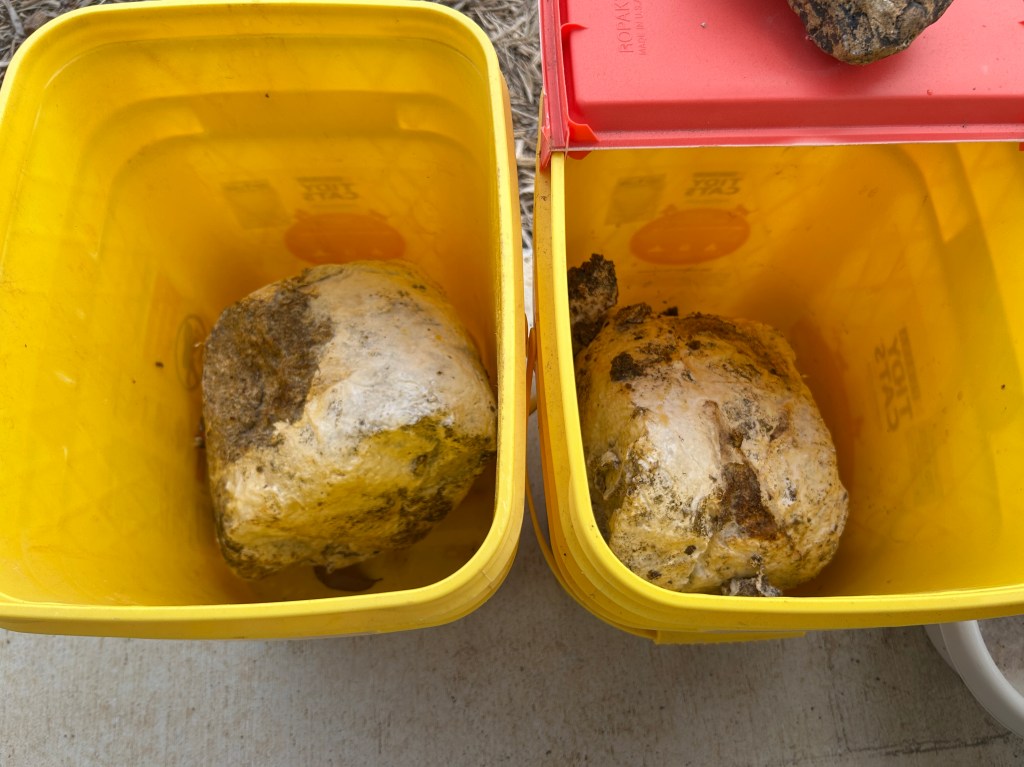
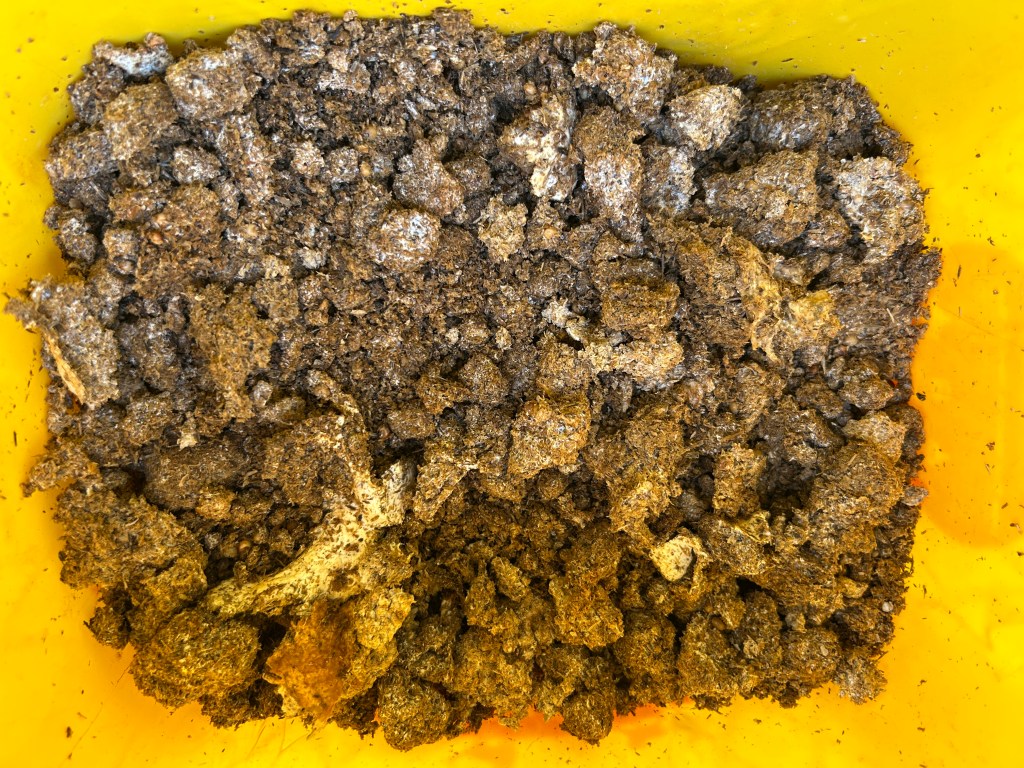
Then I mixed in an approximately equal volume of mulch.
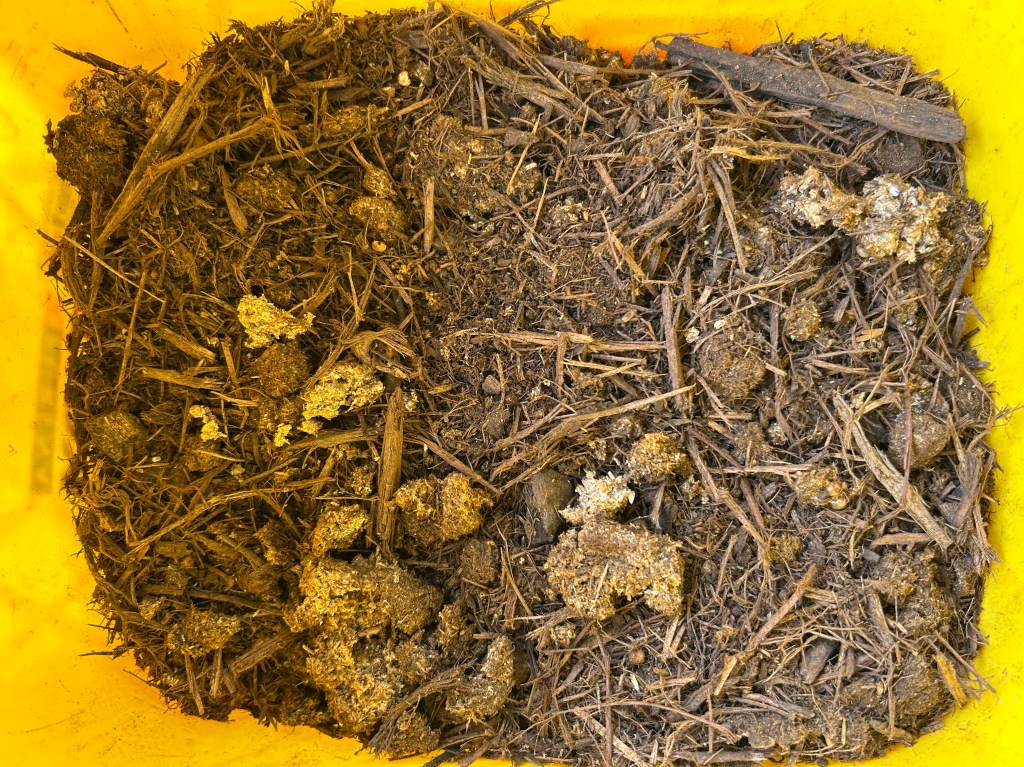
I moistened the mixture with water, which actually took quite a lot because the mushroom blocks are so absorbent. Whatever the volume of my watering can is, I split it between the two buckets.

And then I partially covered the damp mixture and let it sit for a week, stirring it after about three days.

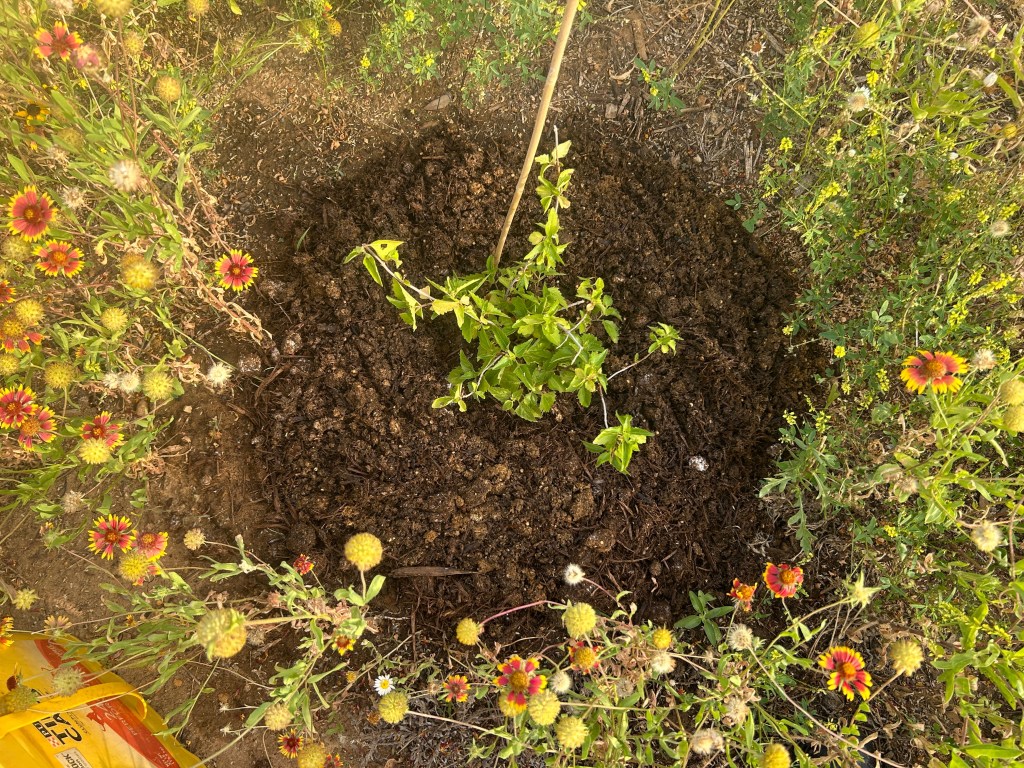
After another stir, I spread the enhanced mulch around a few plants that I thought could use some extra love.
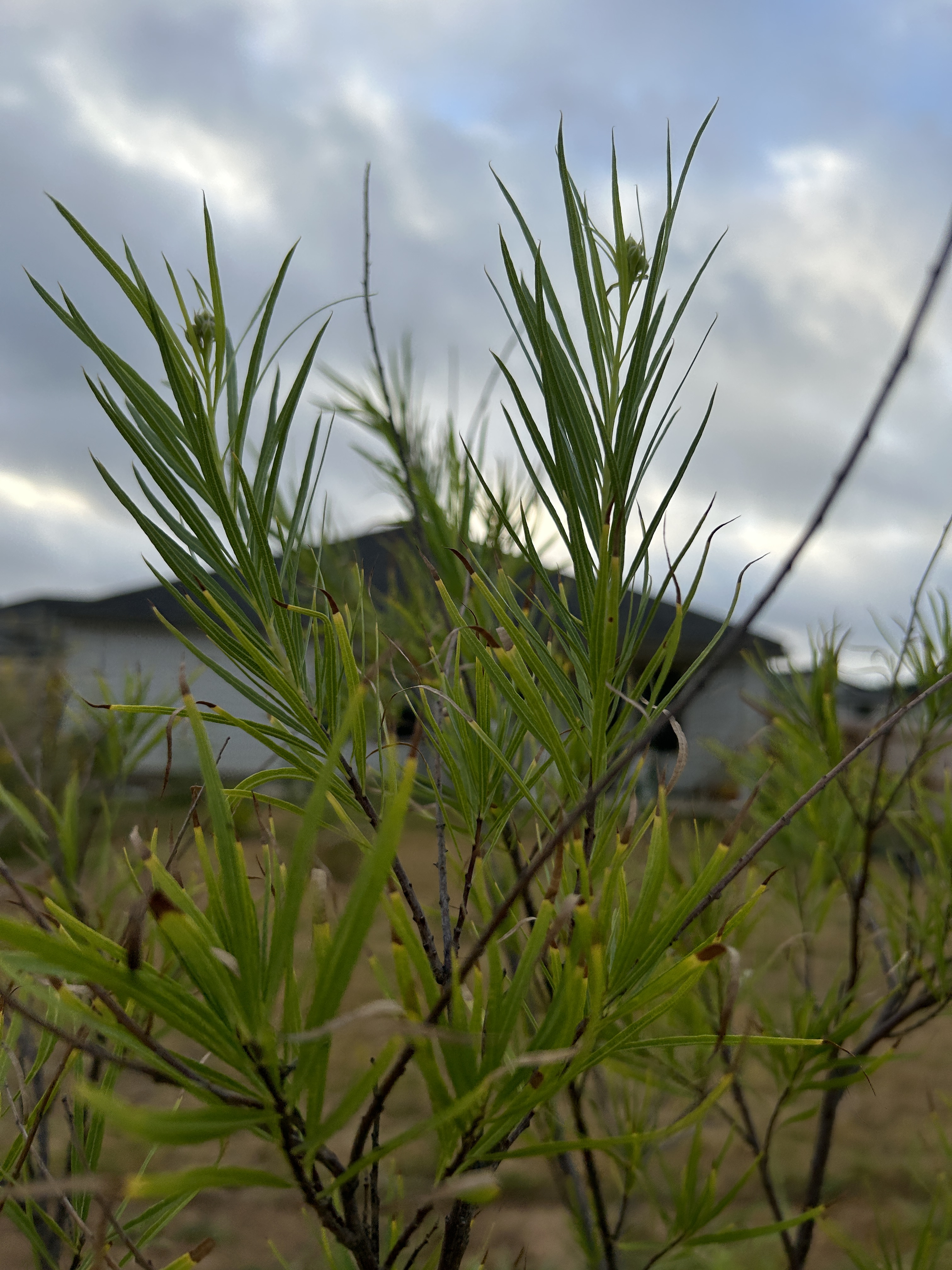
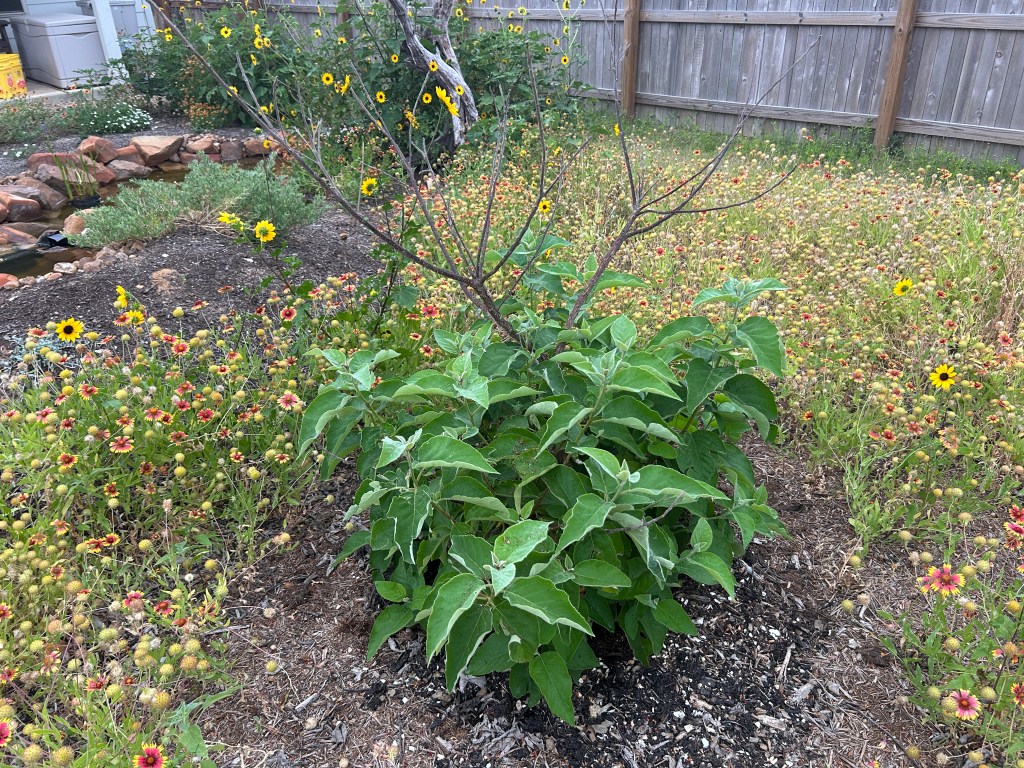
My White Mistflower aka Shrubby Boneset (Ageratina havanensis) was only planted in the spring this year, so I know it will need care to help it survive through the hot summer.
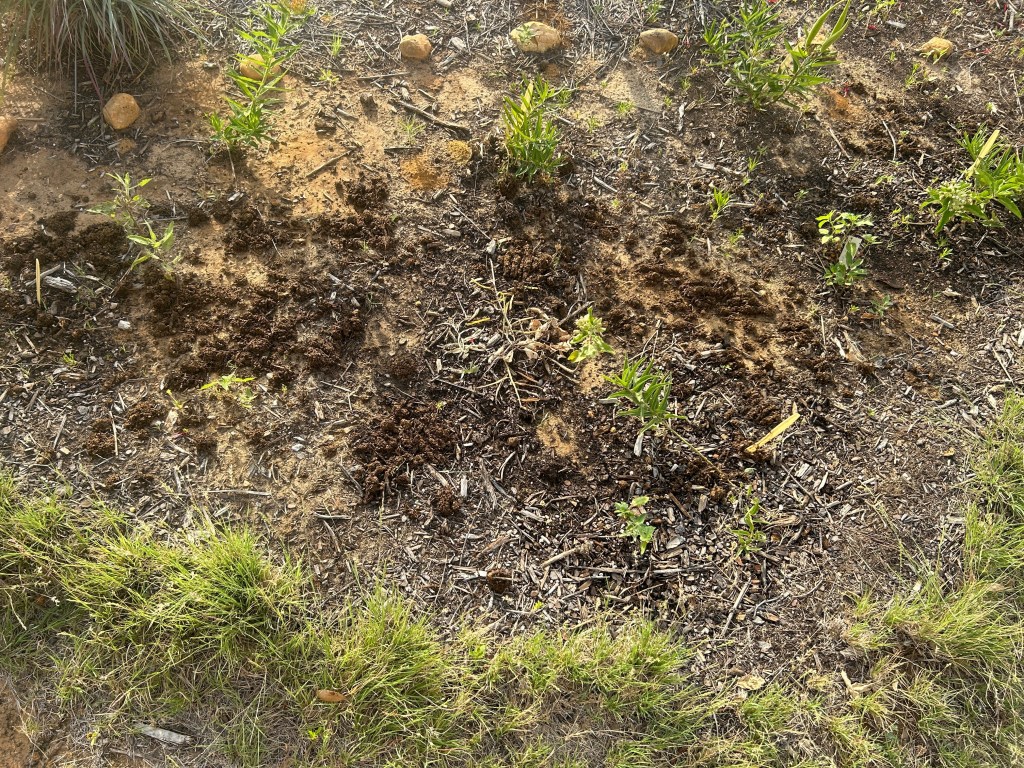
The soil in the milkweed patch has been prone to erosion when heavy rainwater flows off neighbor properties, so the soil quality there is especially poor.
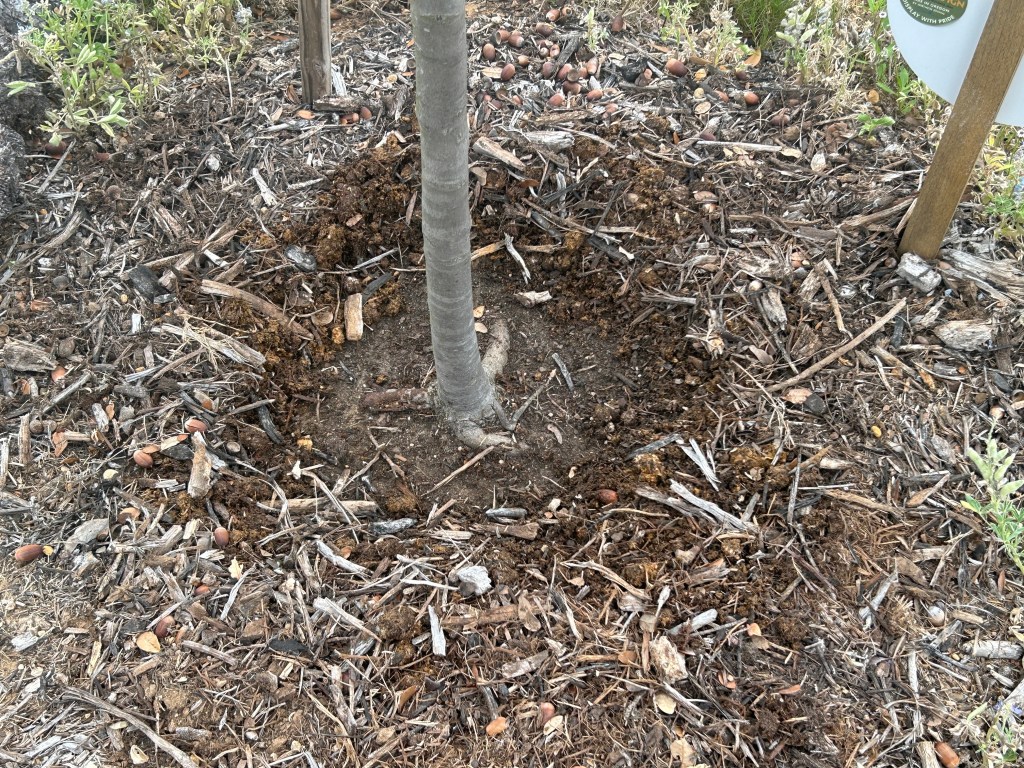
The two Live Oak trees in front of the house don’t get a lot of attention from me except for water in extreme drought conditions. So I refreshed their mulch by pulling back some of the old mulch to the outside of the rings and putting new mulch nearer the centers (but not against the trunks!).
And then the dirty buckets were rinsed out and the resulting “tea” was poured on the Mexican Olive tree, which is still growing back after its severe winter freeze. Only the lowest branch and a few inches of trunk survived. (I’ve left the upper branches in place for now, because birds like to perch on them.)

 Rewilding My Lot
Leave a comment