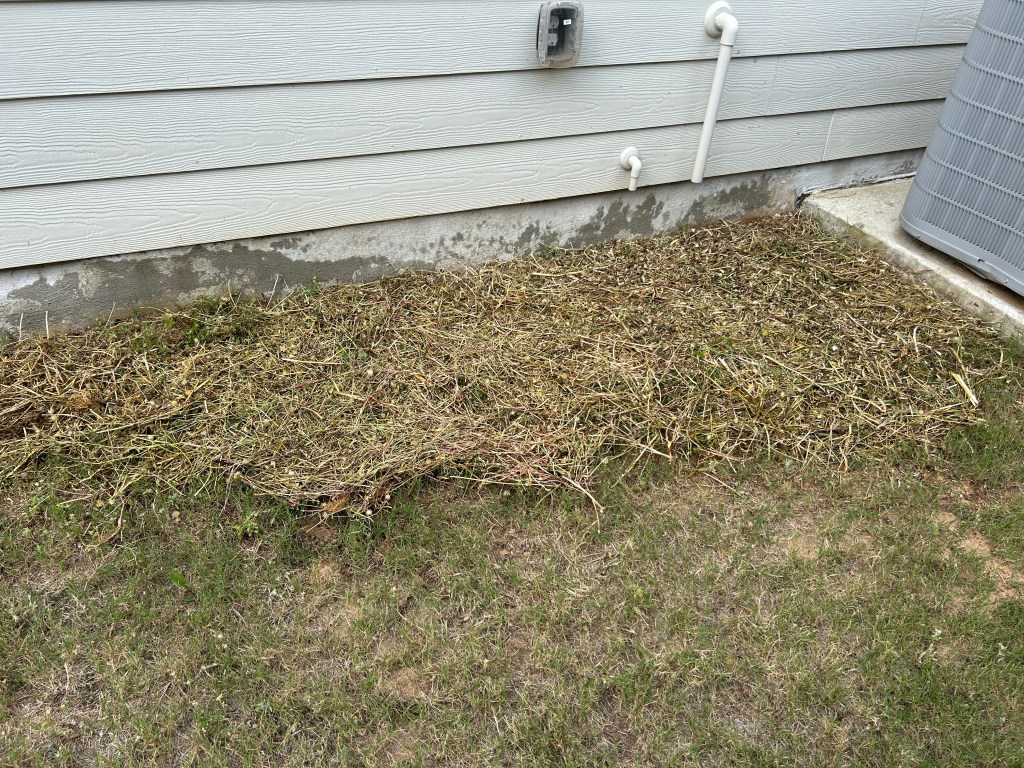
Not long ago, I put some shredded annual plants on ground that is in need of restoration — it’s north-facing, shaded, and eroded from roof runoff.
I knew that the material I spread was likely to contain wildflower seeds (especially Bluebonnet and Firewheel aka Indian Blanket) but I don’t mind if they grow for now. Even if their presence isn’t in the final plan, in the meantime their roots can help to anchor and nourish the soil.
Texas Bluebonnets (Lupinus texensis) mostly drop their seeds in the time period of April-May. Some time after that, leaf rosettes grow and stay small though the winter (not bothered by freezes), finally developing into bigger plants in early spring.
Sometimes the new rosettes emerge in the fall, but I’ve also seen them appear much earlier, especially in response to rain. Bluebonnets that just popped up this week in the newly mulched area show exactly this rain-response phenomenon. Here’s a timeline:
May 17, 2025: Old Bluebonnet plants shredded and placed on the ground.
May 22: 0.45 inches of rain
May 26 overnight: 3.94 inches of rain
May 27: New Bluebonnet rosettes appearing

May 28: And another picture the following day

For now, the only plans I have for this area are to keep adding more organic material, such as compost and mulch. Then in the fall I’ll add a little more soil and introduce some native plants that are suitable for these shady conditions.


 Rewilding My Lot
Leave a comment