I don’t think that I have seen as many caterpillars this spring compared to last year. This applies not only to my own garden, but also in places where I volunteer, and reported by others in the region. Whether this is a temporary situation this year, perhaps because of less rain and fewer wildflowers this spring, or a longer term issue, I don’t know.
I have definitely seen Black Swallowtail butterflies (Papilio polyxenes), though. When they move around the garden, they are constantly in motion which makes them hard to photograph well with my phone camera. (The same applies to hummingbirds.)
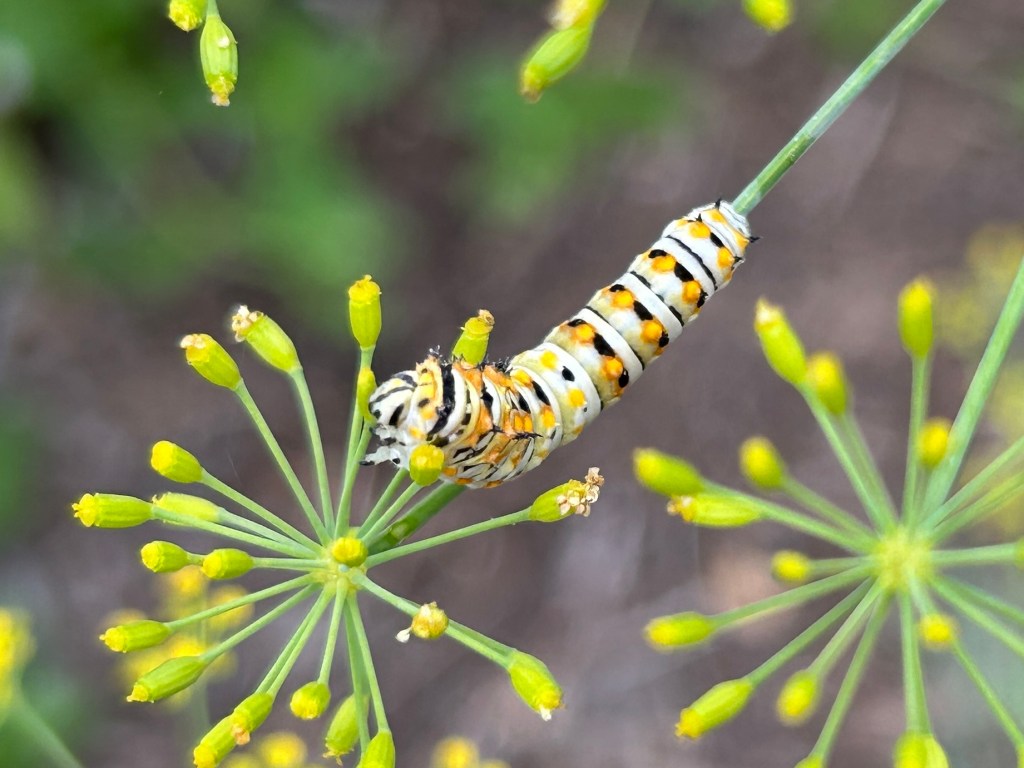
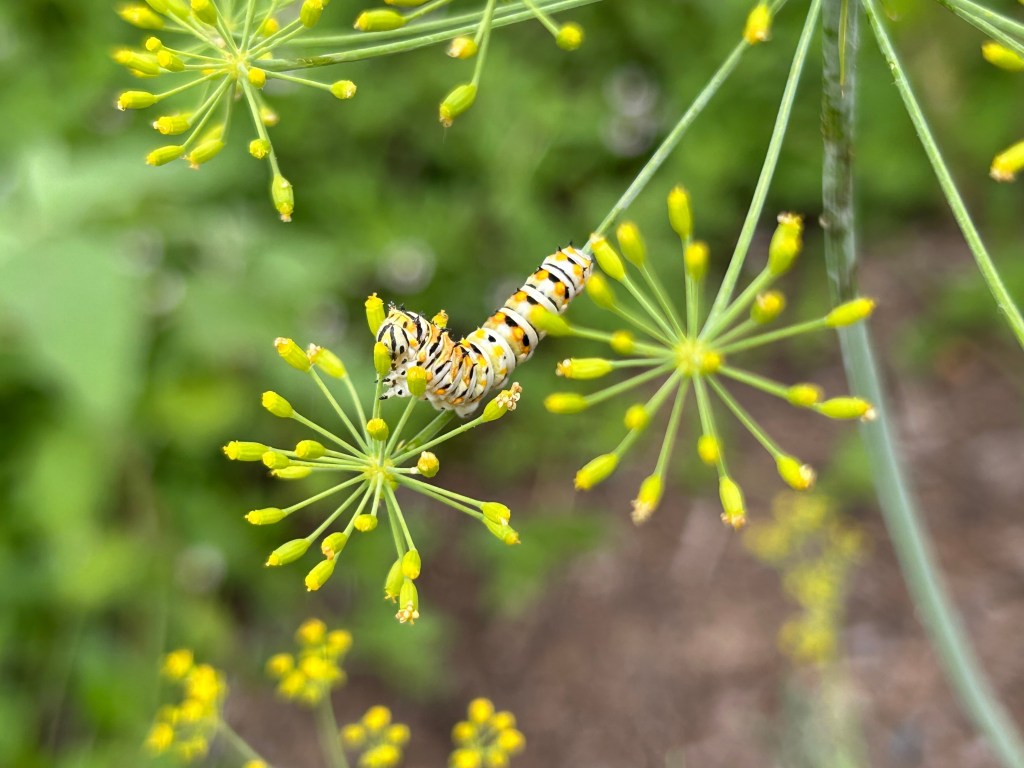
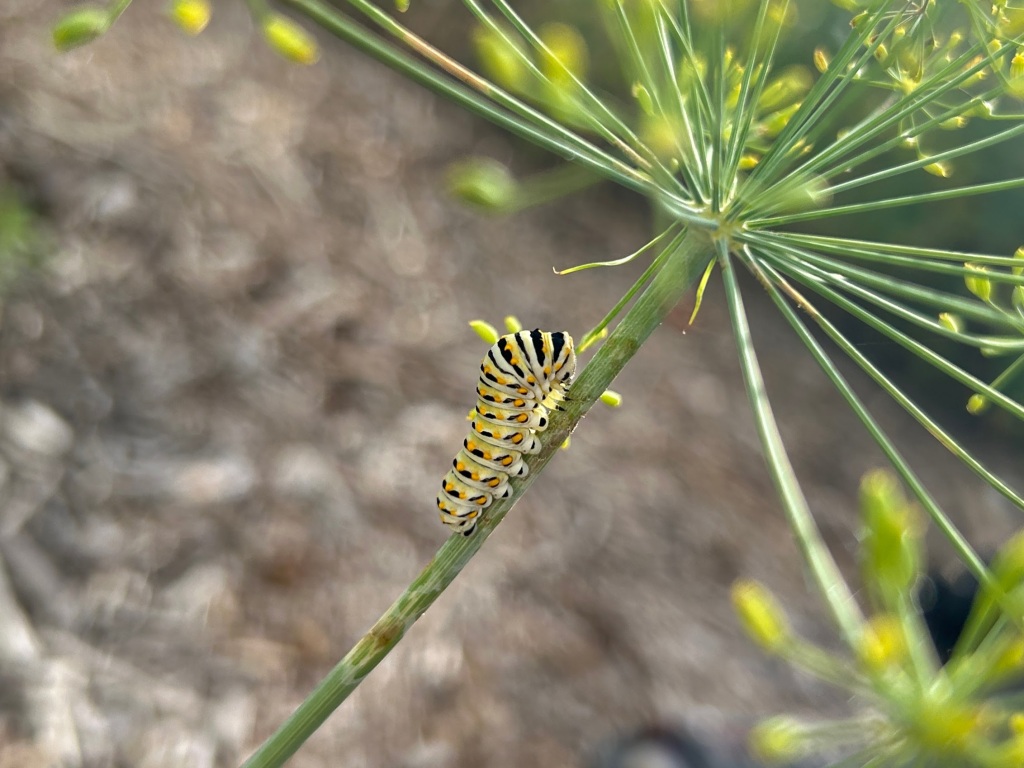
However, caterpillars are easier to capture because they don’t move nearly as fast as the adults! This fairly young one was chomping its way through a Dill (Anethum graveolens) plant.
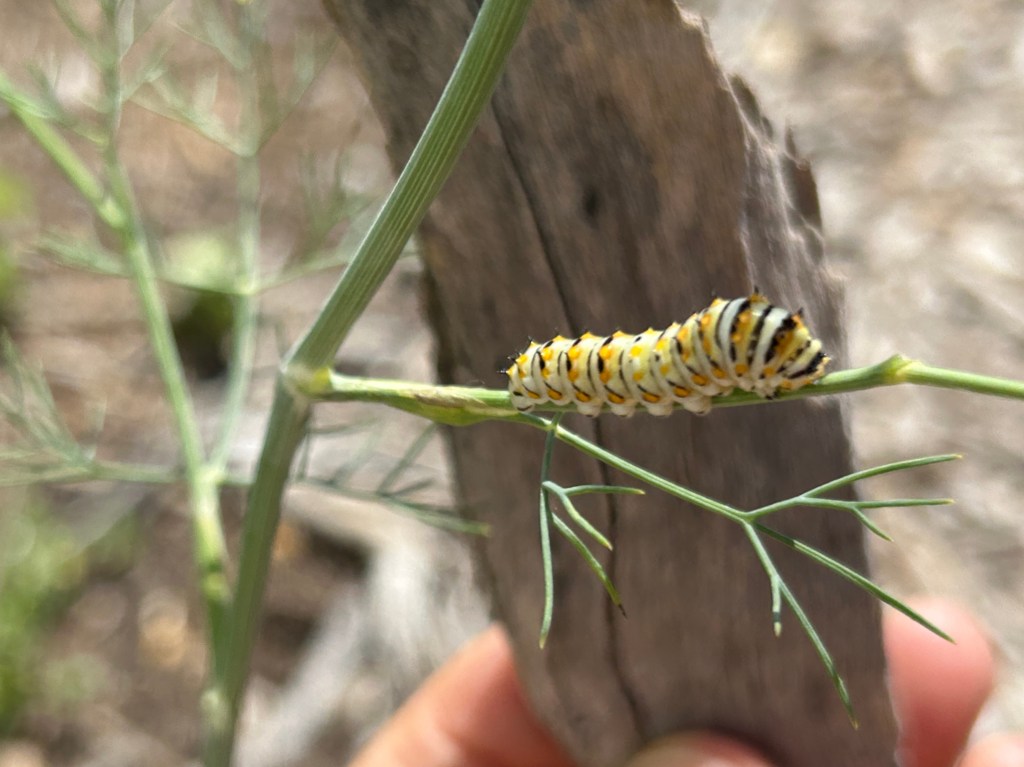
In my general browsing of this topic, I came across this nice image of different caterpillar instars for the Black Swallowtail (below). There is a significant difference in markings between the first and last. Note, these larvae pass through five instar stages before forming a chrysalis and transforming into an adult. However, there are six caterpillars in this image so two of them must be duplicate instars, although I am not confident as to which they would be. My caterpillar at the time of photographing seems to match one of the second or third up in this array (it doesn’t show any green yet and is still quite small).
Molting
Here’s an update from two days after I started writing this post. I had been frequently popping out to take a look at the caterpillar and noticed that it had stopped moving. It stayed in the same location near the top of a Dill plant for hours, even through an overnight rainstorm. The next morning I touched it to see if it was still alive, and got the “back off” signal that I have observed in other Swallowtail caterpillars, so that was encouraging. When I returned a few hours later, it had moved a little on the stem and clearly had just finished molting. So this photo below is of a fresh instar of this Black Swallowtail caterpillar. You can see the old cuticle below it.
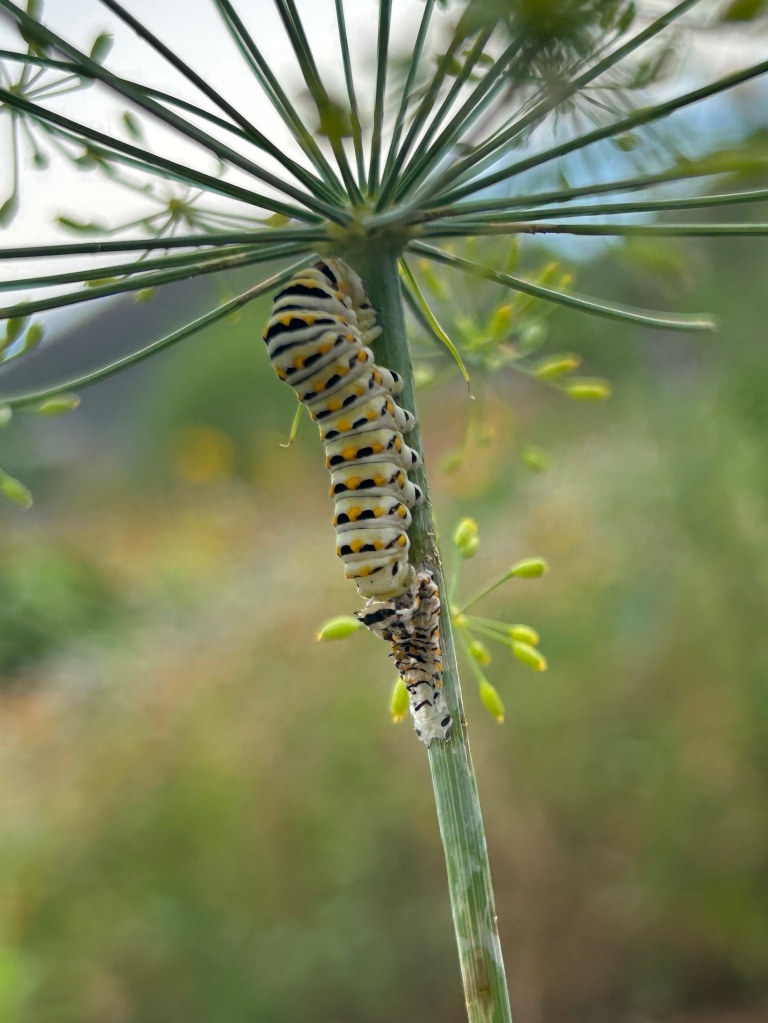
This is a rare sighting, since the first thing a newly molted caterpillar does is turn around and eat the old cuticle. I was hoping to observe that, but when I returned about an hour later it had already gone. The head end is still at the top, so it must have turned around to eat and then turned again to face upwards.

 Rewilding My Lot
Leave a comment