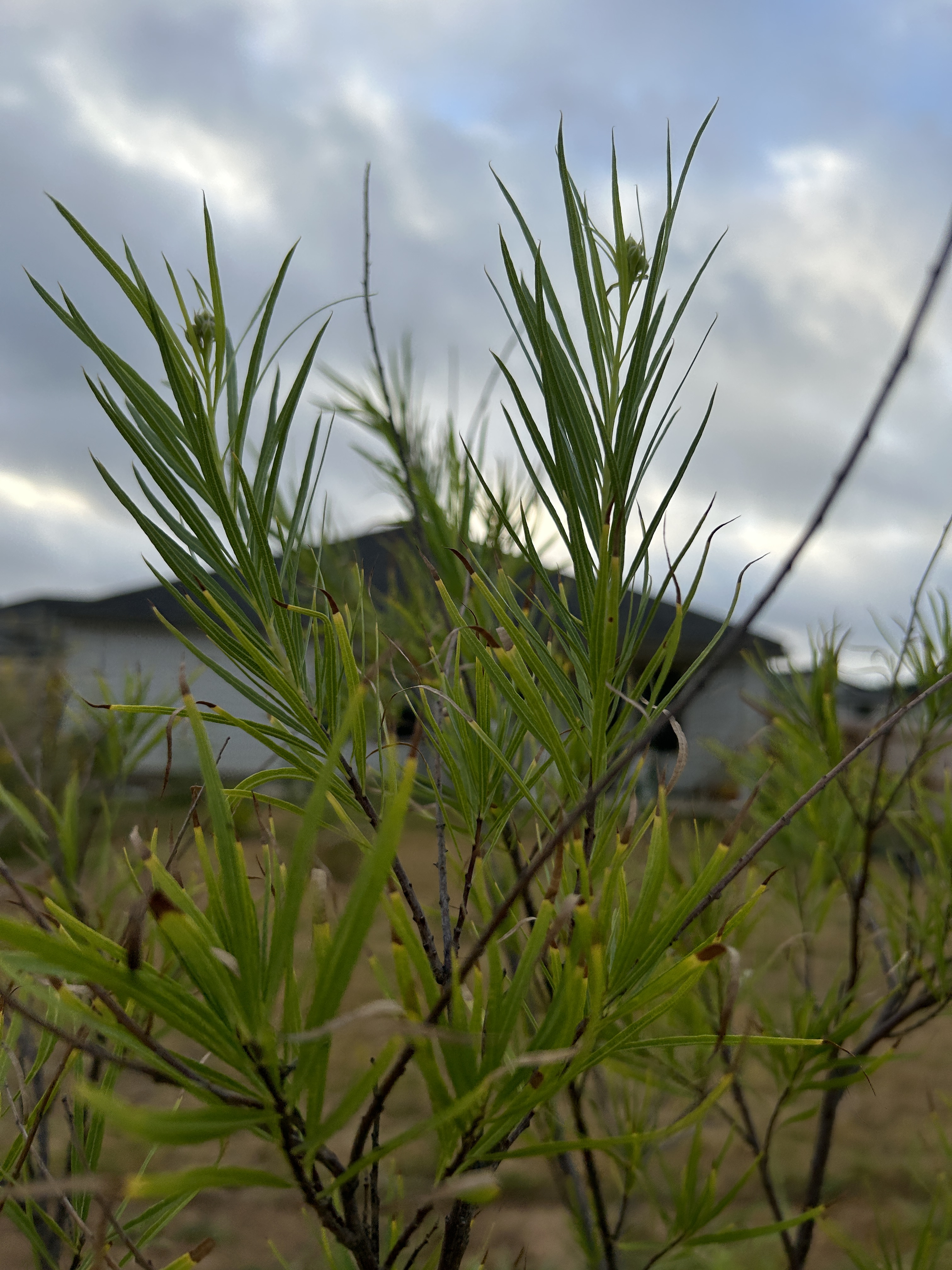
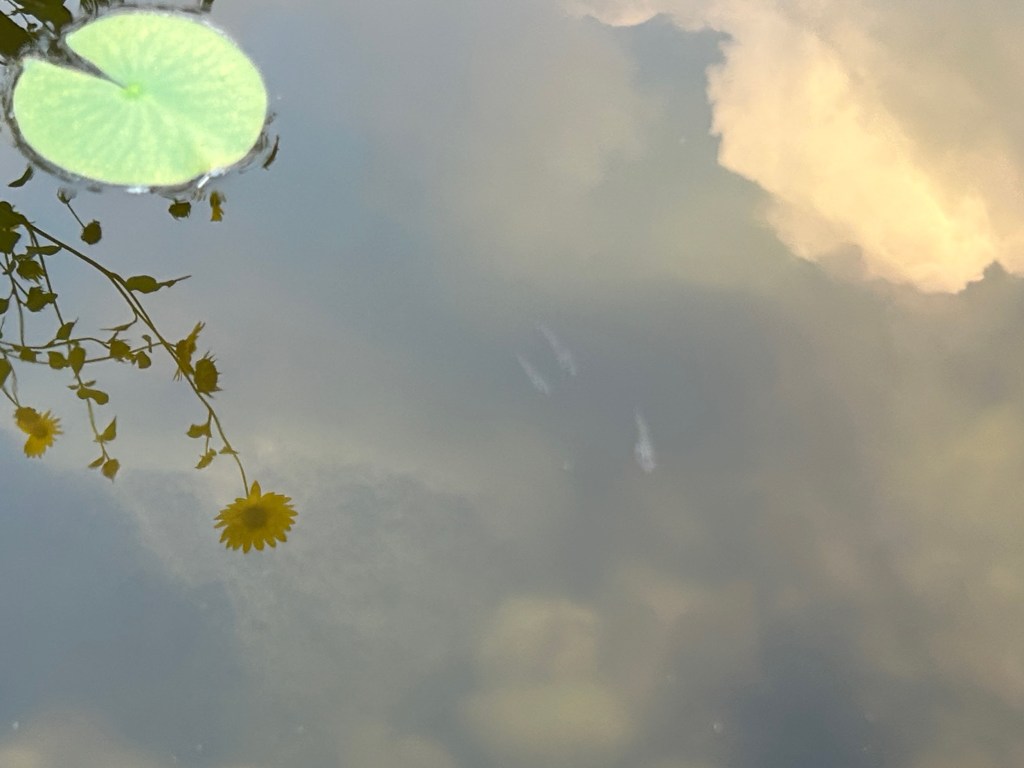
My ecosystem pond was installed in November 2024, so it’s still very new. Eventually, I hope that there will be a reasonable balance between plants, animals, and insects. However, I expect that adjustment to take a year or two, with some learning on my part as well.
One thing I already know is that there aren’t enough plants in the pond, but I will have to wait until the fall to source some more. I particularly want additional native water lilies, since they are an important source of shade for the water in addition to the role they play in using up nutrients. Without that shade and competition for nutrients, then more algae develop and the water is green (which is the current situation).
FISH
On May 14, 2025, I added 15-ish Western Mosquitofish to the pond. Since then it has been easy to spot them on every visit to the pond, and they seem to be feeding and growing. Before their arrival, the surface of the water contained flecks of particulate matter, but that disappeared within a couple of days and the surface has remained clear. I see some fish traveling around on their own, but more often I see them in small groups of three or so. I feel confident that this population of mosquitofish is doing well, and I think I’m seeing pregnant females. Their diet is supposedly zooplankton, small insects and insect larvae, and detritus material.
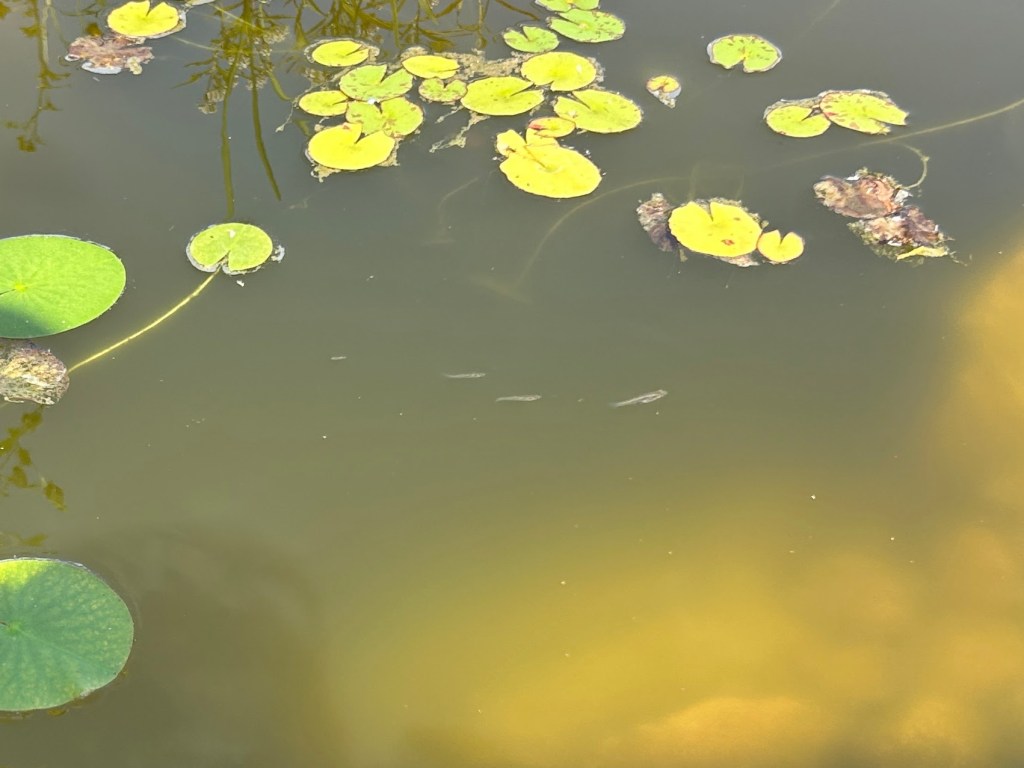
In the center of the photo below there is a group of three Western Mosquitofish. The larger one in front is probably a female.
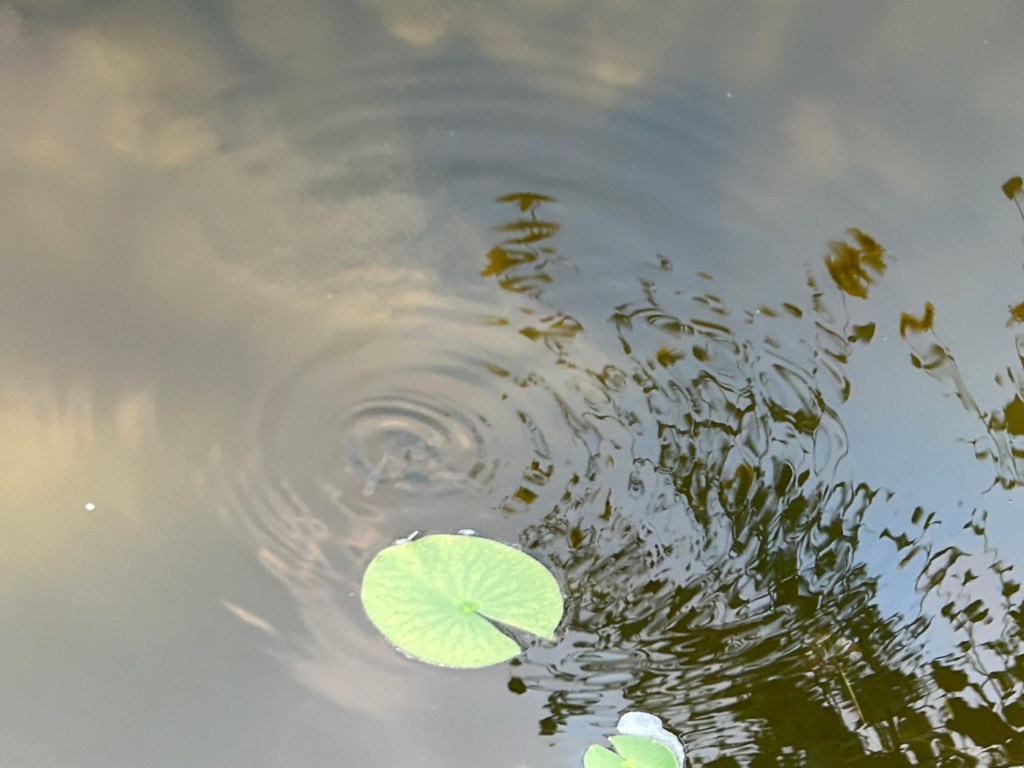
The fish are often easy to spot because when they touch the surface of the water, perhaps to feed, they make ripples, like here. The fish in the photo below are to the left of the water lily leaf.
TADPOLES
On May 23, 2025, I watched Gulf Coast Toad spawn being produced in the pond. Just three days later, on May 26, I saw some tiny tadpoles. I have seen tadpoles once before, in early spring 2025. In both instances, after a few days the tadpoles progressively (almost) disappeared. In the past month I have seen only one tadpole, and it was still small and relatively undeveloped (photo below taken on June 20, 2025). This tadpole is shorter than any of the fish that I see.
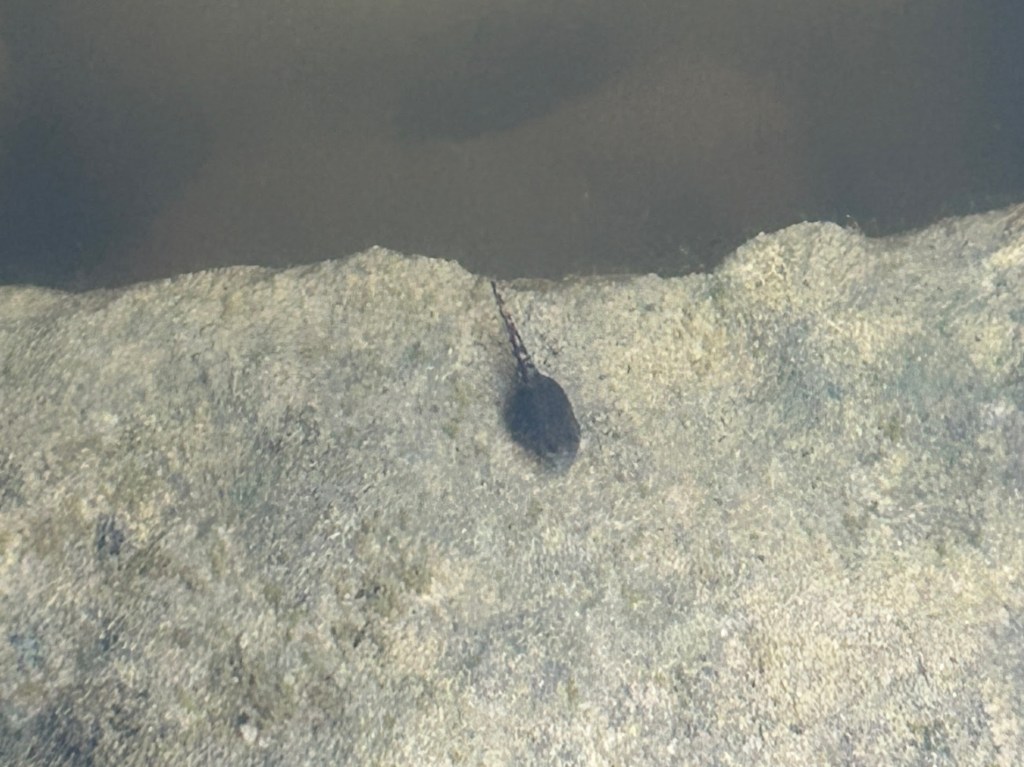
My conclusion is that somehow the pond environment is currently largely incompatible with tadpole growth and survival. Why might that be?
Initially tadpoles are herbivorous, and then later they become omnivorous. So at first they eat algae and decaying aquatic plants, which should be available in the pond.
According to this page, here are some reasons why tadpoles might not develop:
- Too cold. Highly unlikely, given that our nighttime lows are in the 70s F and daytime highs in the 90s F.
- Too little light. Highly unlikely since the pond is not shaded and there are only a few water lily leaves present.
- Predators, including fish, dragonfly larvae, water boatmen, newts, grass snakes and birds . This is possible. Tadpoles are not the primary diet of mosquitofish, but I did find a few articles online stating that mosquitofish could eat tadpoles (example). However, there were thousands of spawn and at least hundreds of tadpoles. Would a handful of small fish have devoured all those? I have not seen birds eating from the pond, nor have I seen any snakes or newts at all here. There may be insect predators present.
- Lack of oxygen due to the presence of algae. This is possible since there is a significant algae presence at this time.
To my knowledge there have been two incidences when there were toad tadpoles in my pond, one before the addition of mosquitofish and one after fish. Given that neither population survived, I am inclined to conclude that the chief culprit is that there are too many algae at the moment, which reduces the oxygen content of the water.


 Rewilding My Lot
Leave a comment