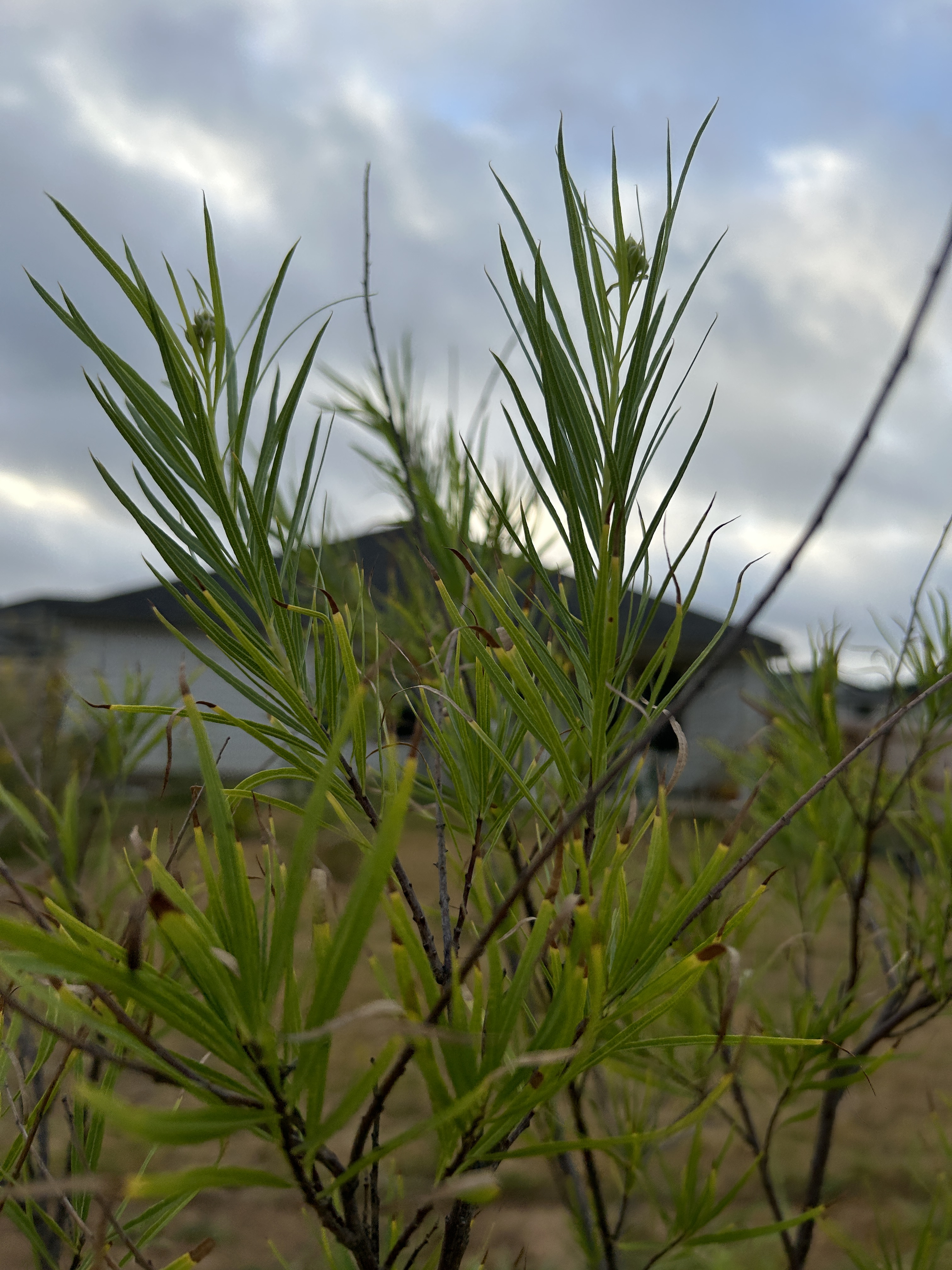
Many of the plants currently in the garden are annuals, so after a season of growing, they disperse their seeds and die. This is an intentional part of my strategy, so that I can have a seasonal wildflower meadow in the front yard, and plenty of wildlife-friendly plants in the back yard to fill in spaces while the overall plan evolves.
Another important factor is that on this newly developed lot that was scraped before building, there is effectively no topsoil. Adding organic content and improving soil health is a major priority, and annual plants are part of that strategy.
After annual plants have finished growing, their roots decay in the soil. Above ground, the dead plants are either left until spring before being cut down (for wildlife food and habitat), or cut down sooner if I need the space cleared for some other reason.
Therefore, a few times a year I find myself with a pile of annual plant stems, which are then shredded and returned to the ground as mulch (“green mulch“). It’s a hot, dirty, and tedious job, but I do find satisfaction in giving back to the ground what it has nurtured for me.
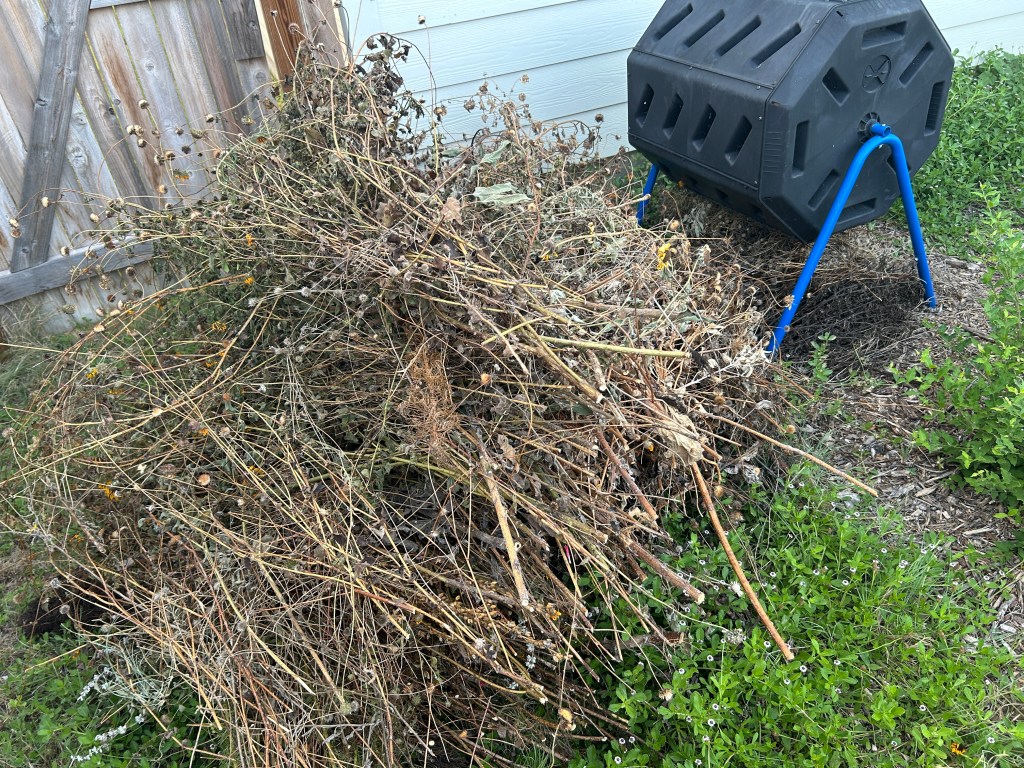
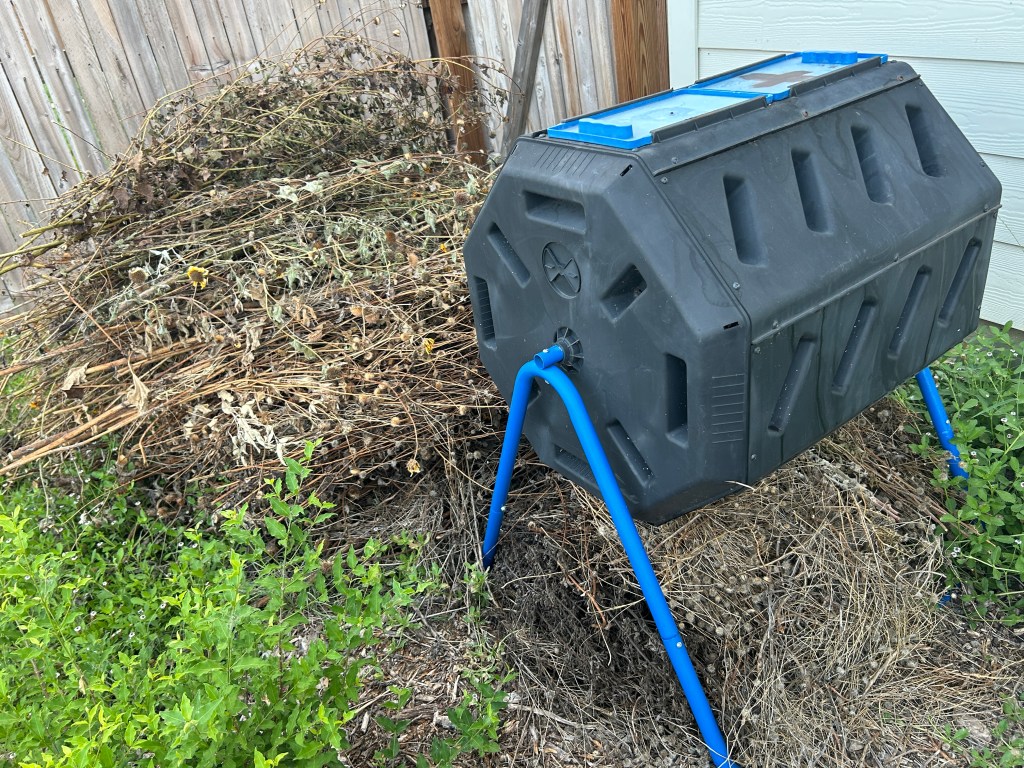
On this occasion, I had accumulated a big pile of cut stems (really, a bigger pile than was practical for one session, but I was too stubborn to not finish). These plants, cut down in the last few weeks, were primarily Firewheel aka Indian Blanket, Sunflowers (Common and Beach), and Standing Cypress.
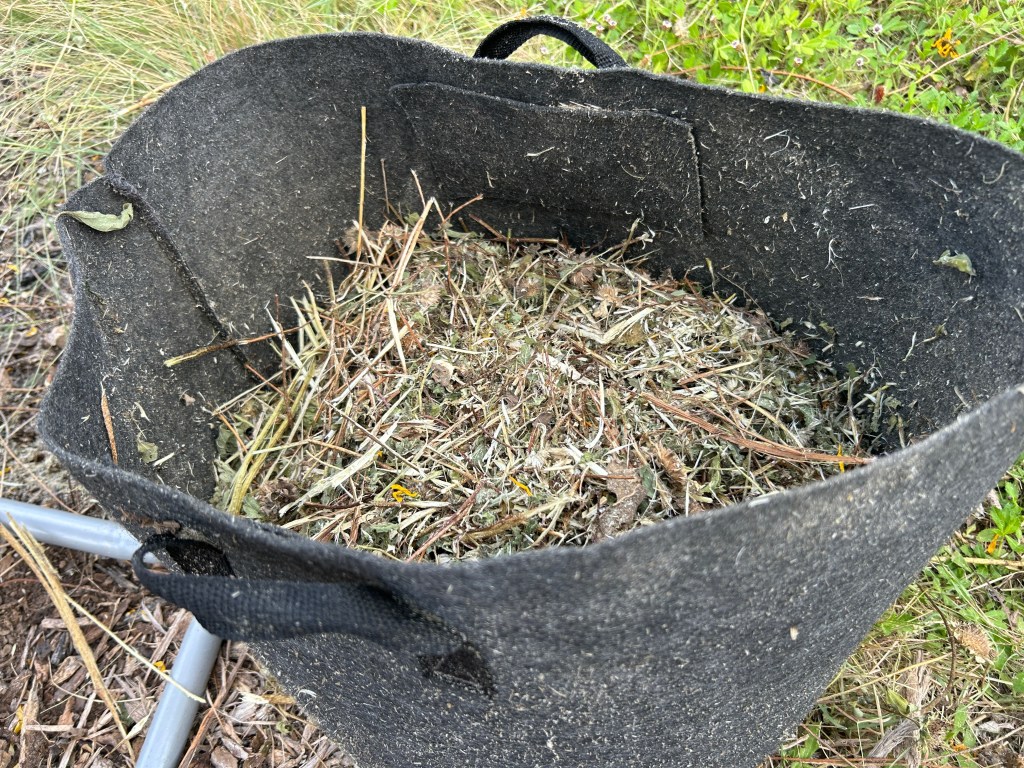
It then took three hours to convert this pile into about ten buckets of mulch that has a straw-like texture mixed with seeds and chaff.
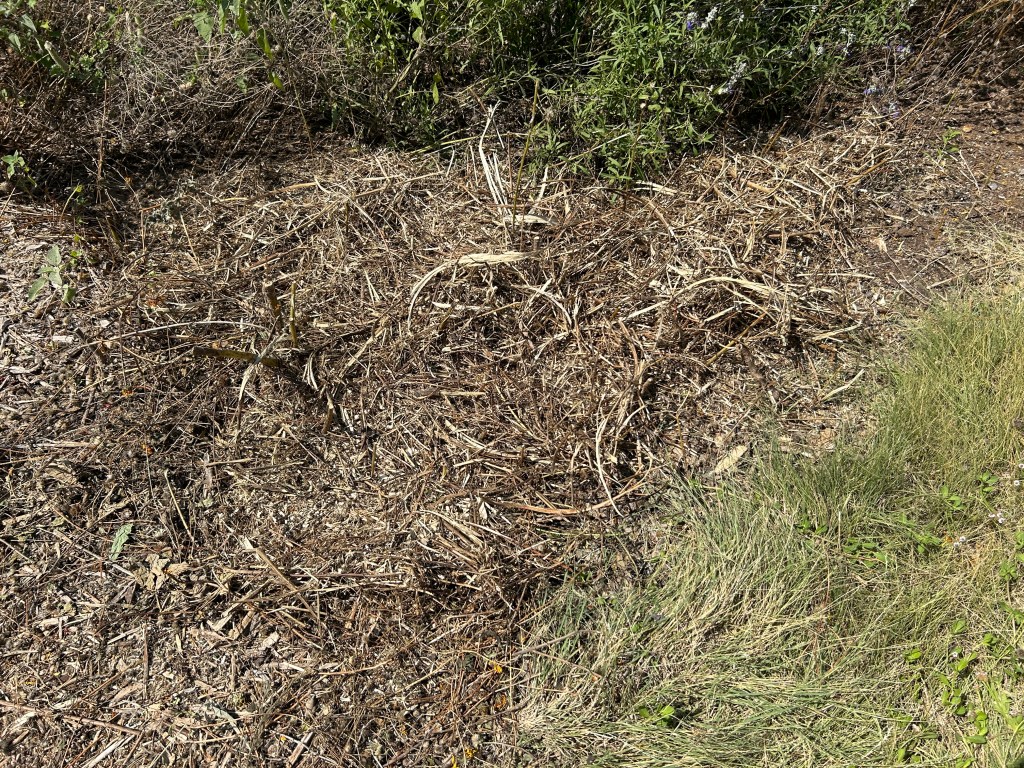
This mulch was then spread in four different places around the garden. Some went in bare patches of the front yard wildflower meadow to cover the soil and boost the seed bank. Some went in front of the pond where a flash flood event had eroded some of the soil. And the rest went in two places where I am preparing to plant perennial shrubs in the fall, such as in the photo below.


 Rewilding My Lot
Leave a comment