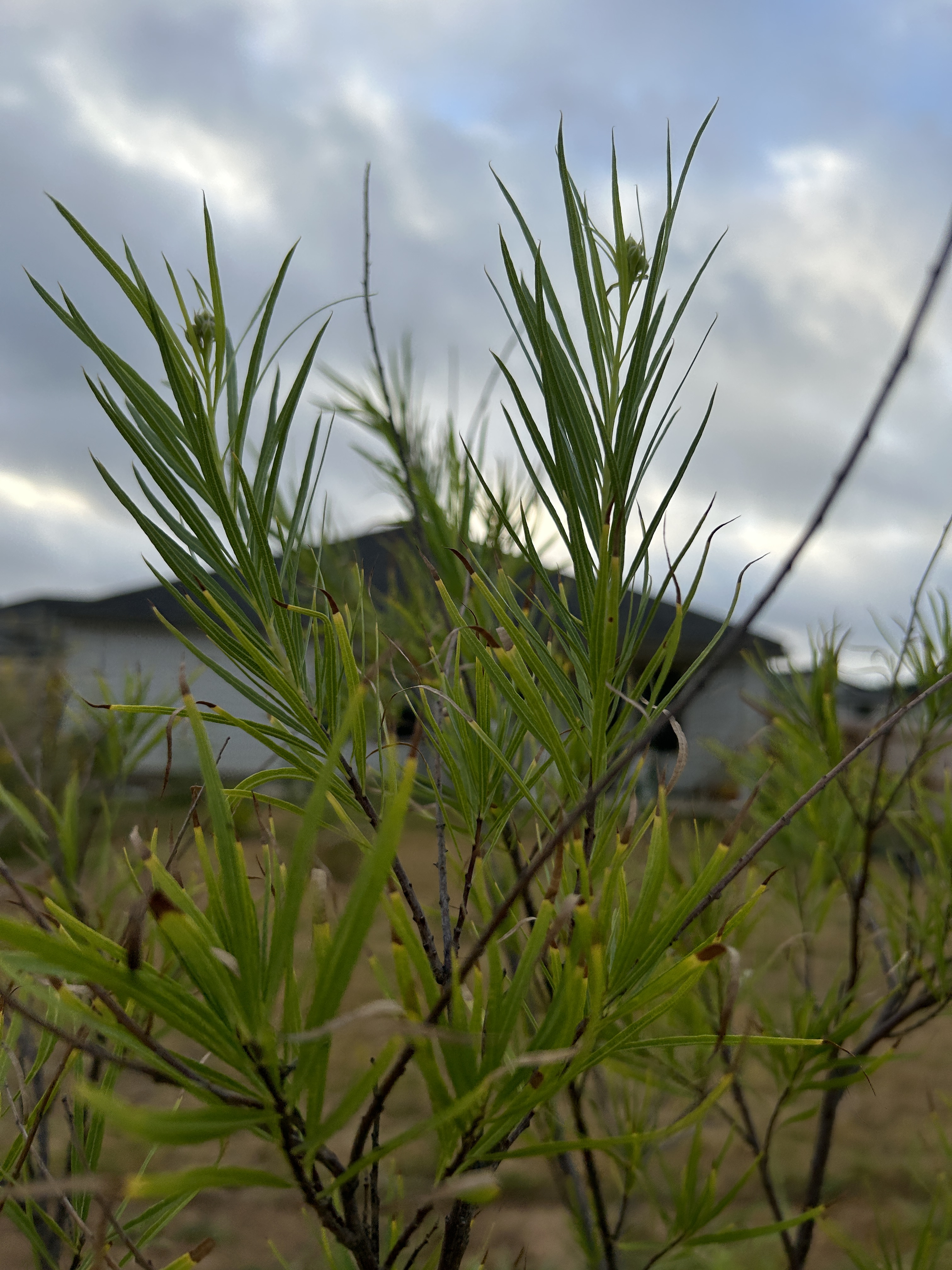
It is my goal here to install plants that are native to this region. In doing so, the garden will be well adapted to our local environment, will only need minimal supplemental water, and will support local wildlife.
As the climate changes, the range of some plants is adjusting over time as areas of central Texas become generally hotter and drier. I am therefore seeing more plants here whose range has drifted northwards from Mexico. (There is a whole subject called Phenology, which is the study of the timing of biological events and how they are influenced by climate and environmental factors.)
If I were to be very particular in my choice of plants, I might only plant things that have been documented as “native” here in the past. However, it is more important to me to support local wildlife (such as insects, birds, reptiles) than it is to be a native plant purist.
There are therefore some plants in the garden that are technically not native, but they are welcome because of the role they play. One example is the Dill (Anethum graveolens) plants that are host food for Black Swallowtail caterpillars.
There are also plants that originally were found further south, but now grow quite happily in central Texas. Since I am intentionally choosing plants that can tolerate drought, it is perhaps not surprising that I have some things here that originated in drier parts of Mexico.
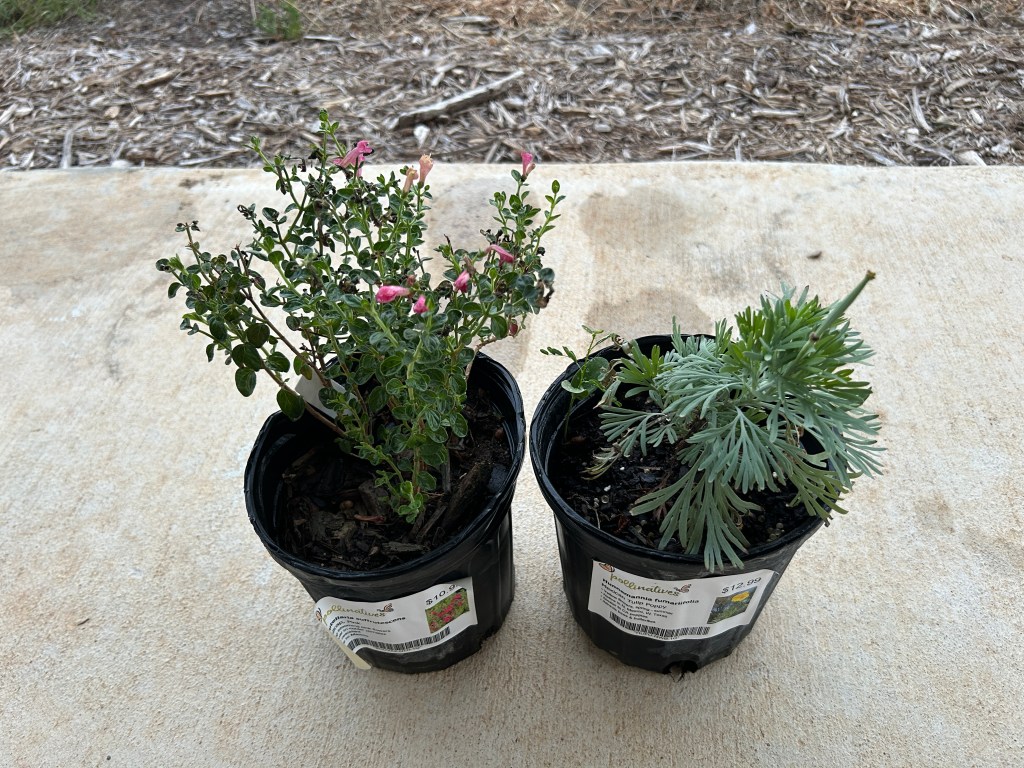
I have just planted two things that are still considered natives of Mexico, although I suspect that their status might change over time. Neither of these plants is currently included in the Native Plant Society of Texas native plant database, which is an important data resource for me.
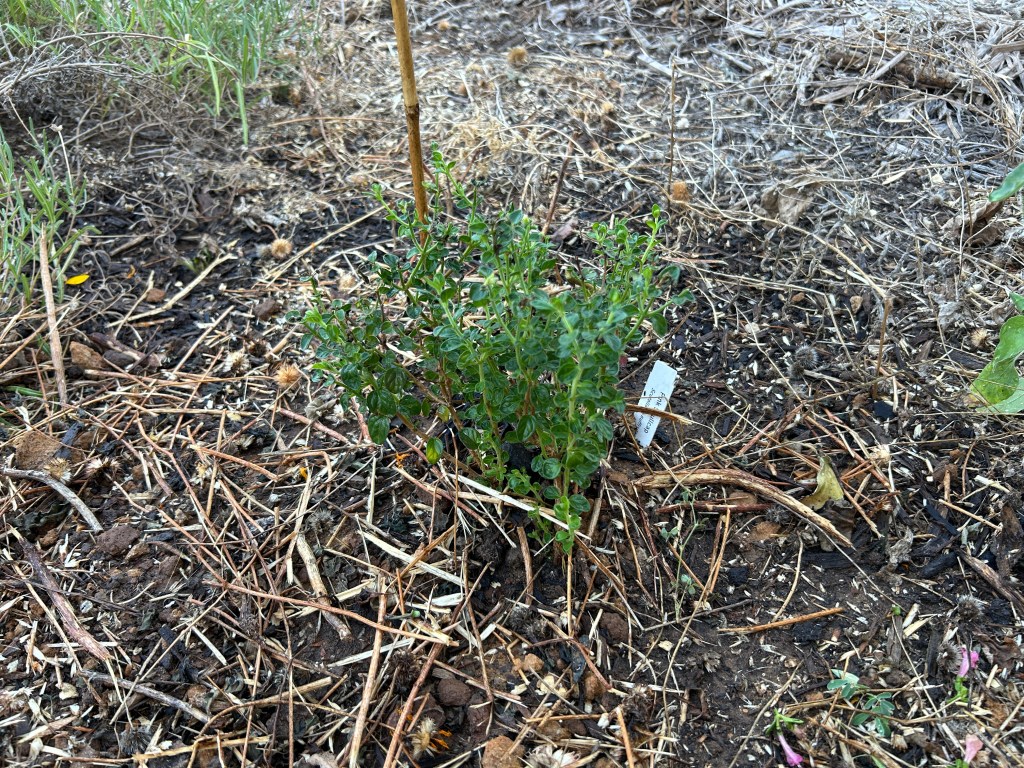
Pink Skullcap (Scutellaria suffrutescens). I’ve seen this plant quite often in Seguin. It’s a hardy low-growing evergreen ground cover with pretty pink flowers that was originally collected near Monterrey, Mexico. This plant is popular with butterflies and hummingbirds, and I’ve put it in front of the pond because I want shorter things growing there so as to not block the view.

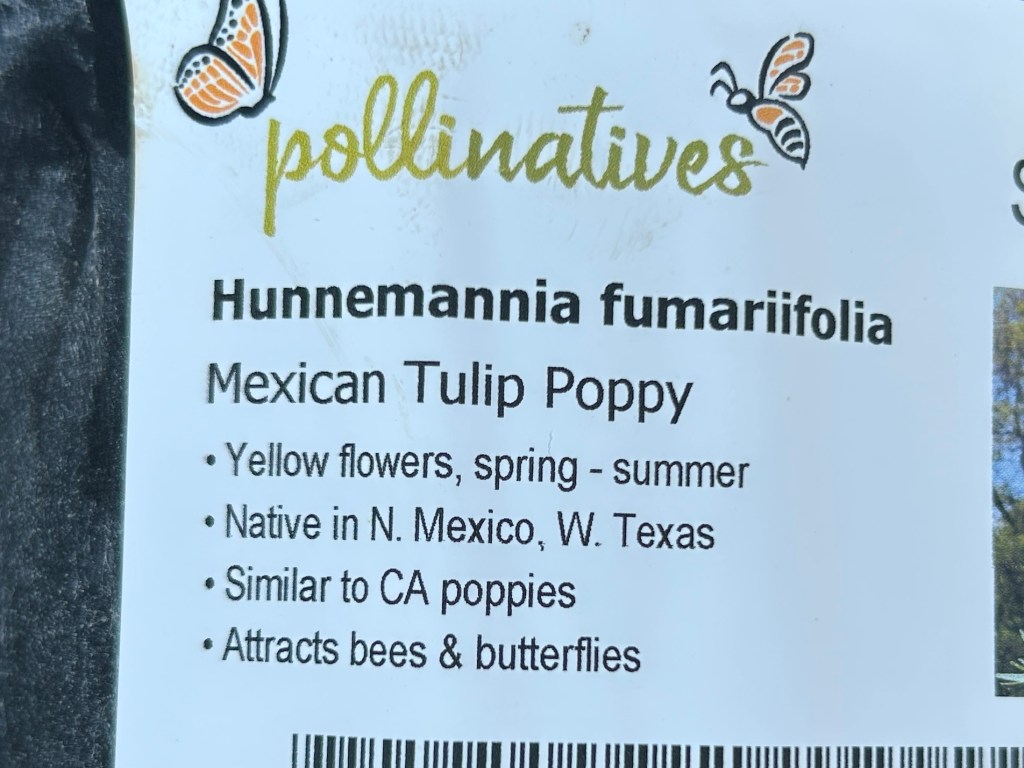
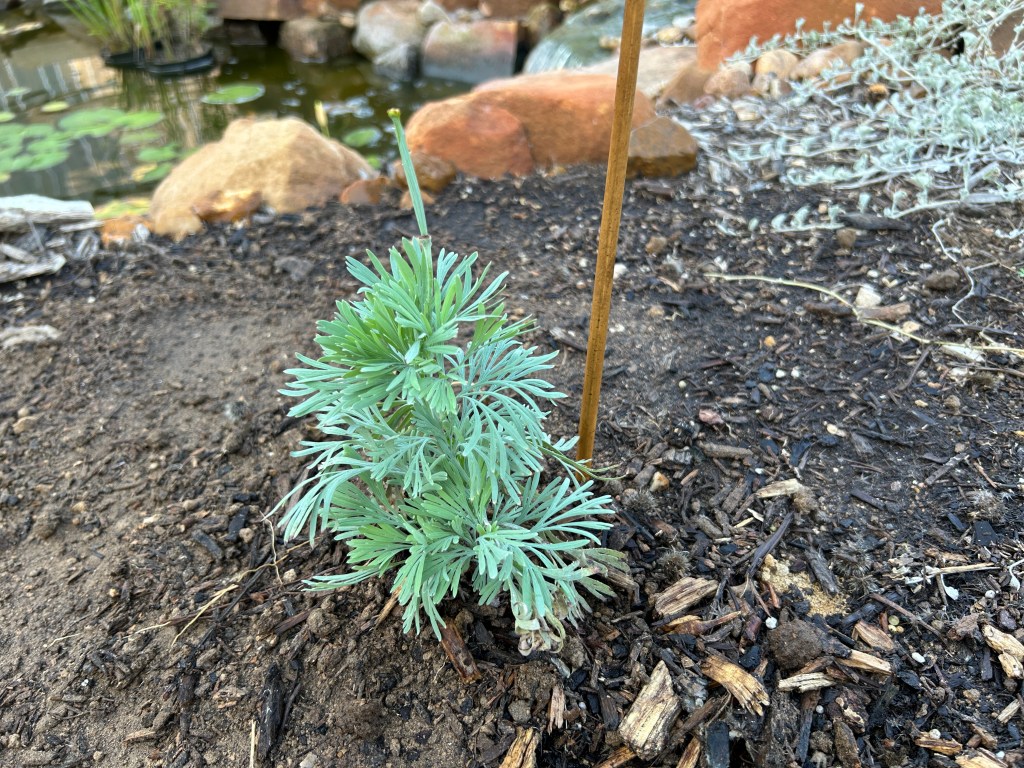
Mexican Tulip Poppy (Hunnemannia fumariifolia). This is a yellow member of the poppy family that until recently was only found in desert regions of Mexico. However, a population was recently discovered growing in a remote part of Big Bend National Park, and since it seems to like dry conditions I hope it will do well here. I’ve put it beside the pond in the center of the garden so that it won’t get lost in the sea of yellow sunflowers that are located more around the outside of the garden.

 Rewilding My Lot
Leave a comment