Around the perimeter of the back garden is a 6-foot border of short native grasses: Curly Mesquite, Blue Grama, and Buffalograss. This gives me a walkway around the edge, and maintenance access to the fence without disrupting the other plants.
At the back of the garden there is a small area that I have designated for mid-height native prairie grasses. These provide wildlife shelter and food, and as the area fills in I hope that the above-ground plants and deep roots underground will help to retain soil and water. This area is the high point of the garden and some of the properties behind us drain onto our land during flash floods.
It’s been a while since I’ve written about this area, so here’s an update. The three primary grasses that I have introduced are Little Bluestem, Indiangrass, and Sideoats Grama. (Other common Texas prairie grasses include Big Bluestem and Switchgrass, but they are too big for my space.)
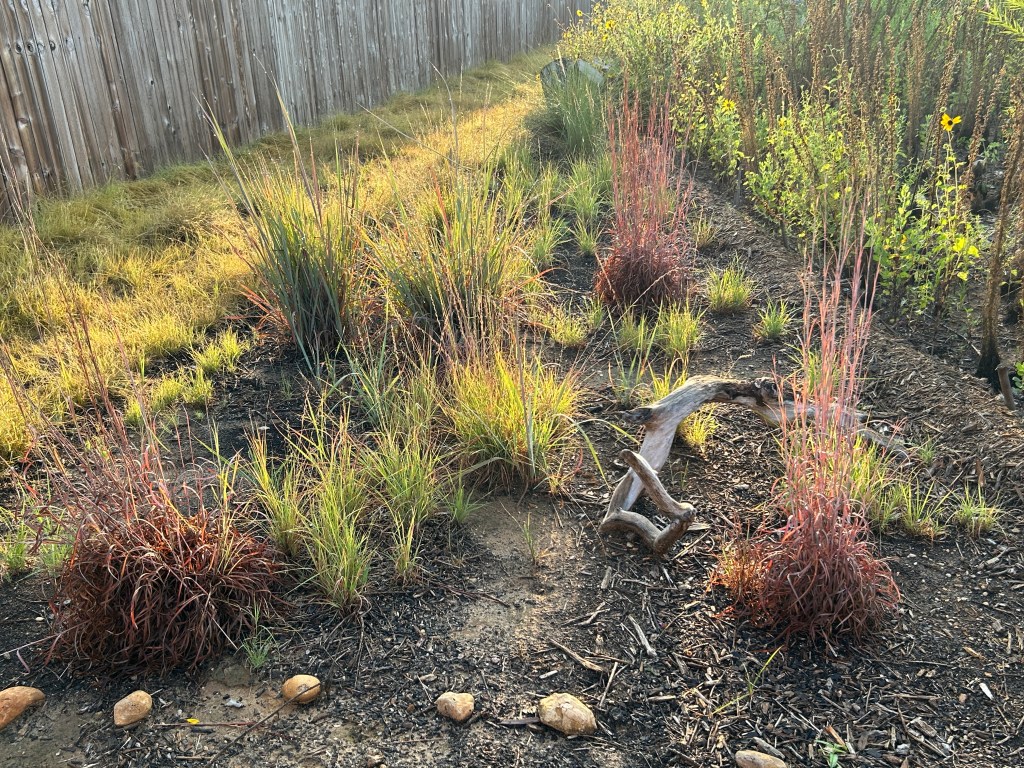
Little Bluestem (Schizachyrium scoparium). This grass grows about three feet tall. It’s named for the blue tint to the stems when they first grow, but then in the fall the whole clump turns a coppery red color with feathery seed heads. The first photo below was taken in June 2025 and the second one in August 2025.
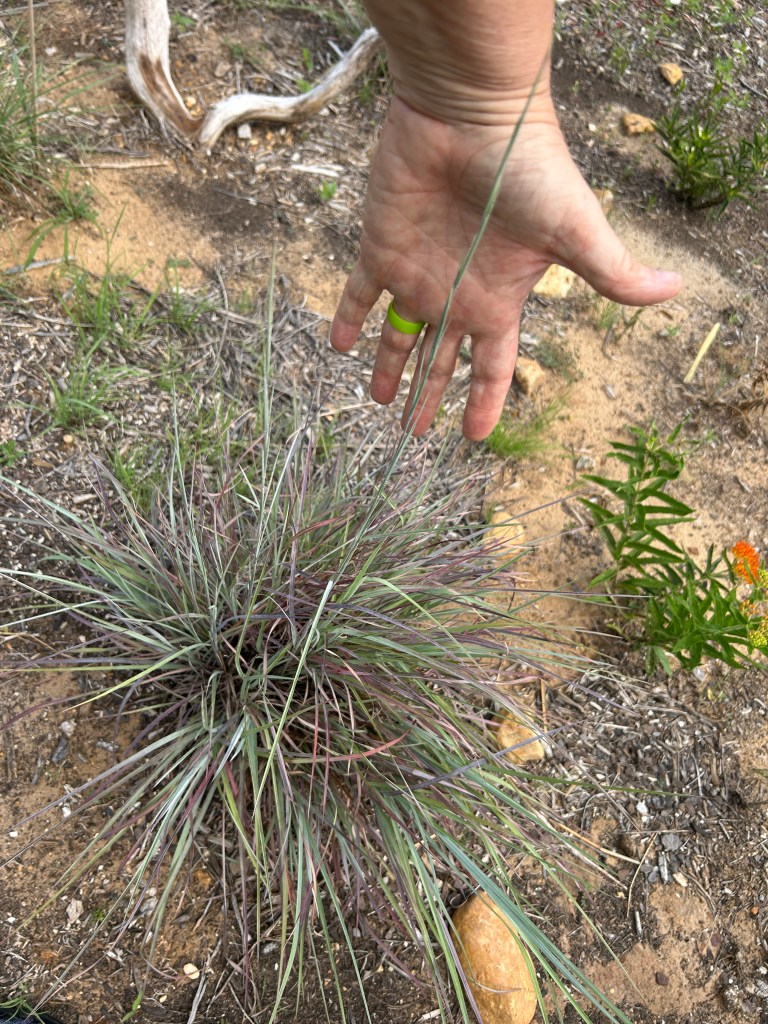
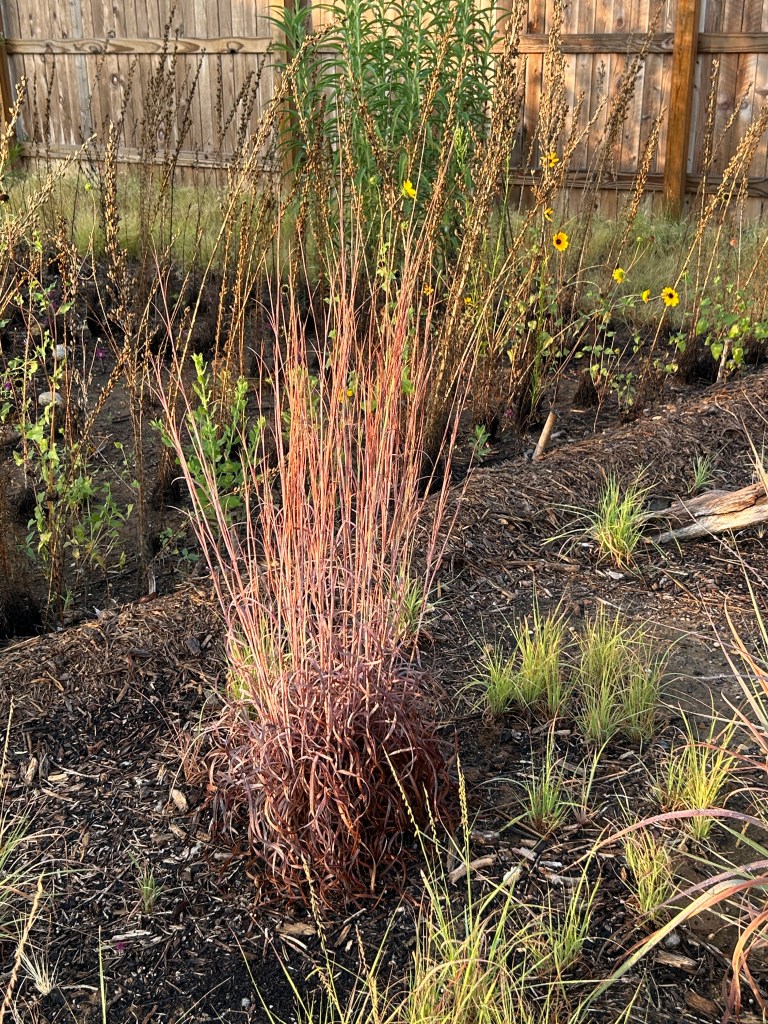
Indiangrass (Sorghastrum nutans). This is the tallest of the grasses here, growing to about five feet. It also has blue-green coloring in its leaves and stems, but retains that color through the fall in contrast to the Little Bluestem. The first photo below is how the clumps appear in August 2025 (the seed heads are not fully developed yet). The following image was taken in September last year to show the golden colored seed heads that are yet to come this year.
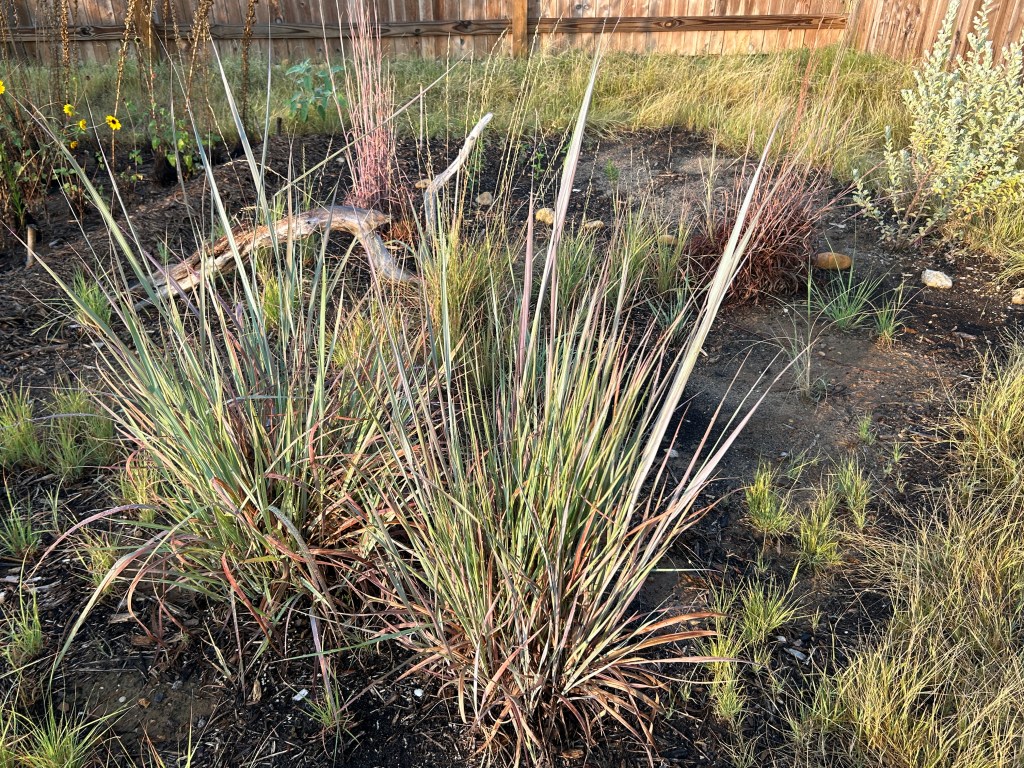
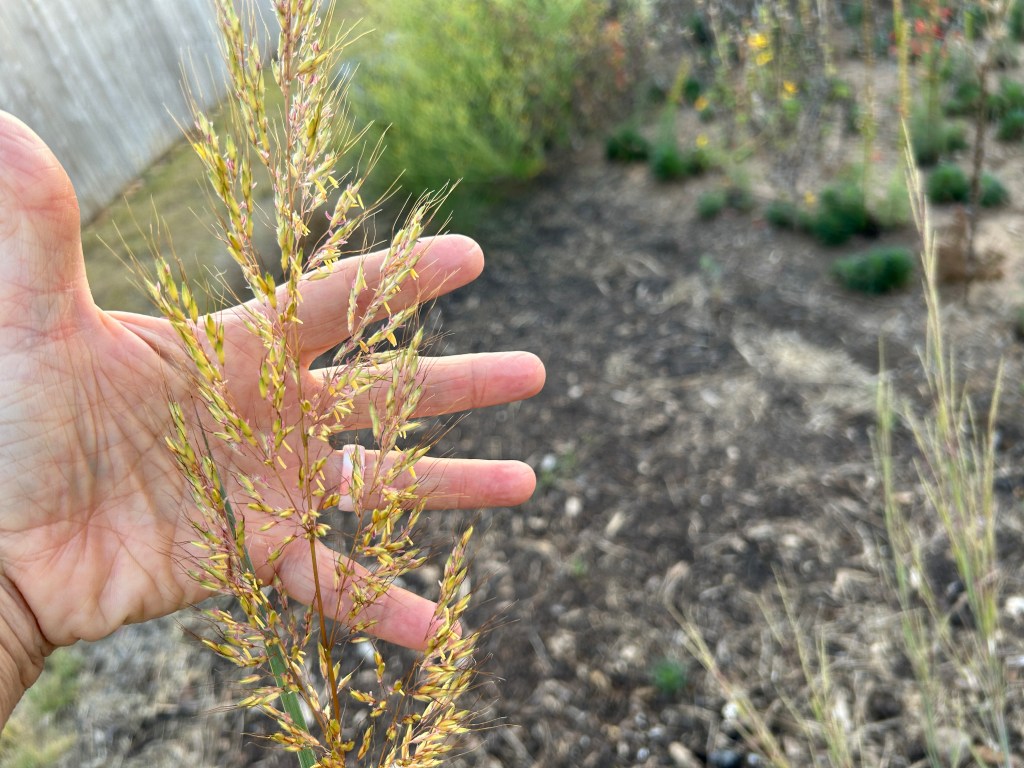
Sideoats Grama (Bouteloua curtipendula). This is the official state grass of Texas and has been the easiest of my collection to grow from seed. It grows about two feet tall with soft green leaves and seeds that grow along one side of the stem.
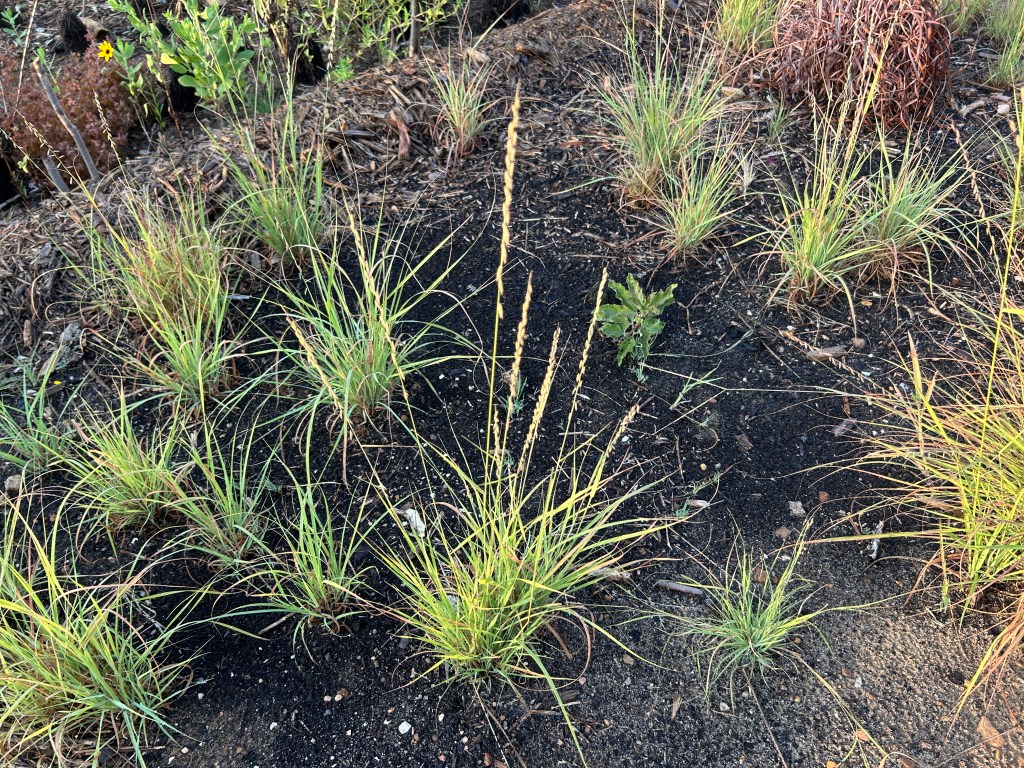

In addition to those three grasses, there are two clumps of Gulf Muhly (Muhlenbergia capillaris) at one end of the area (in the foreground of the photo below). They are growing happily enough, but I rarely see them produce seed heads. As with other plants that have “gulf” in their name, I suspect they would prefer more water than they get here in Seguin — I do not provide supplemental water for the native grasses. This plant in the moister environment of Houston, or irrigated in Seguin, has attractive feathery pink seed heads.
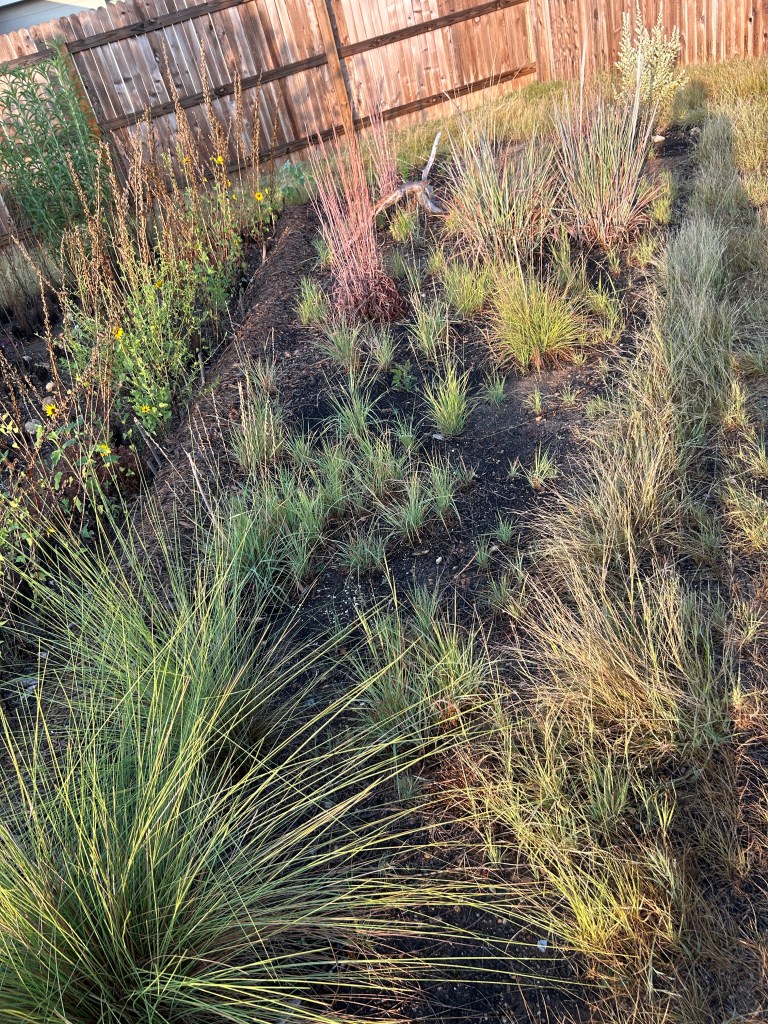
There are also places where Curly Mesquite (Hilaria belangeri) has wandered in from the nearby short native grass area (the short clumps in the center of the photo below). For now I am letting many of the clumps stay, since they will help to prevent soil erosion, but I remove the ones with seed heads. Over time, I hope that there will be more of the taller grasses in their place.
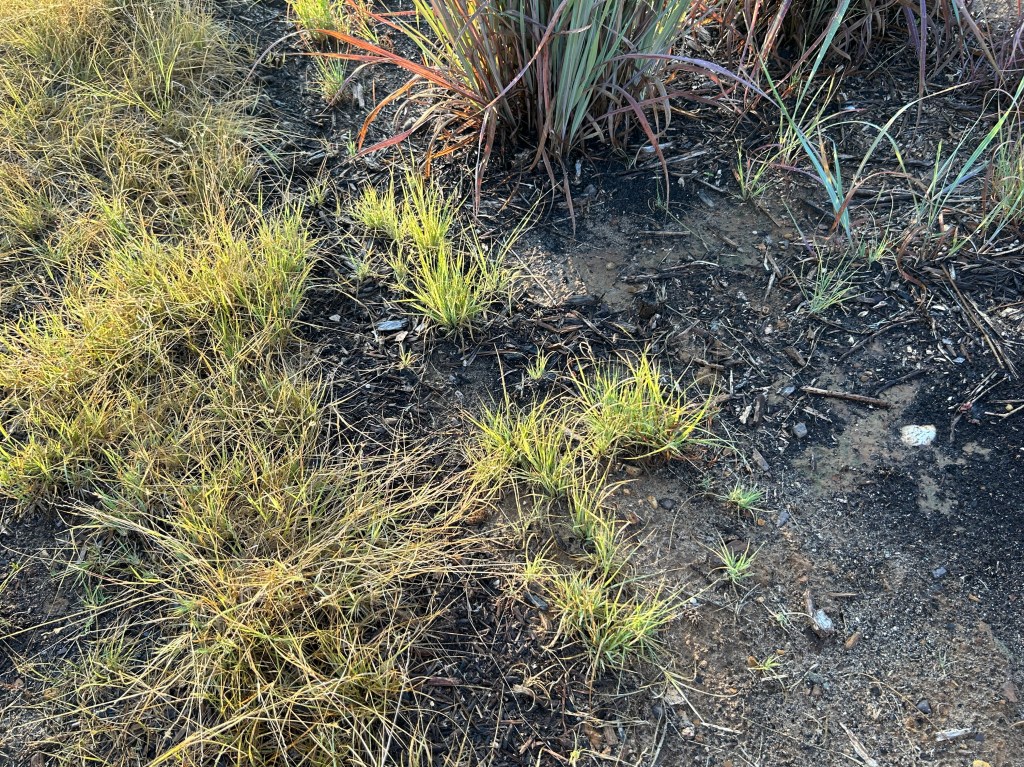
Clumping grasses help in run-off rain events because the mounds can hinder the movement of soil or mulch, and deep roots can capture water. Their dense foliage provides shelter especially for insects, sometimes temporarily during bad weather, or even throughout the whole winter. And the seed heads provide food for birds into the fall and winter.
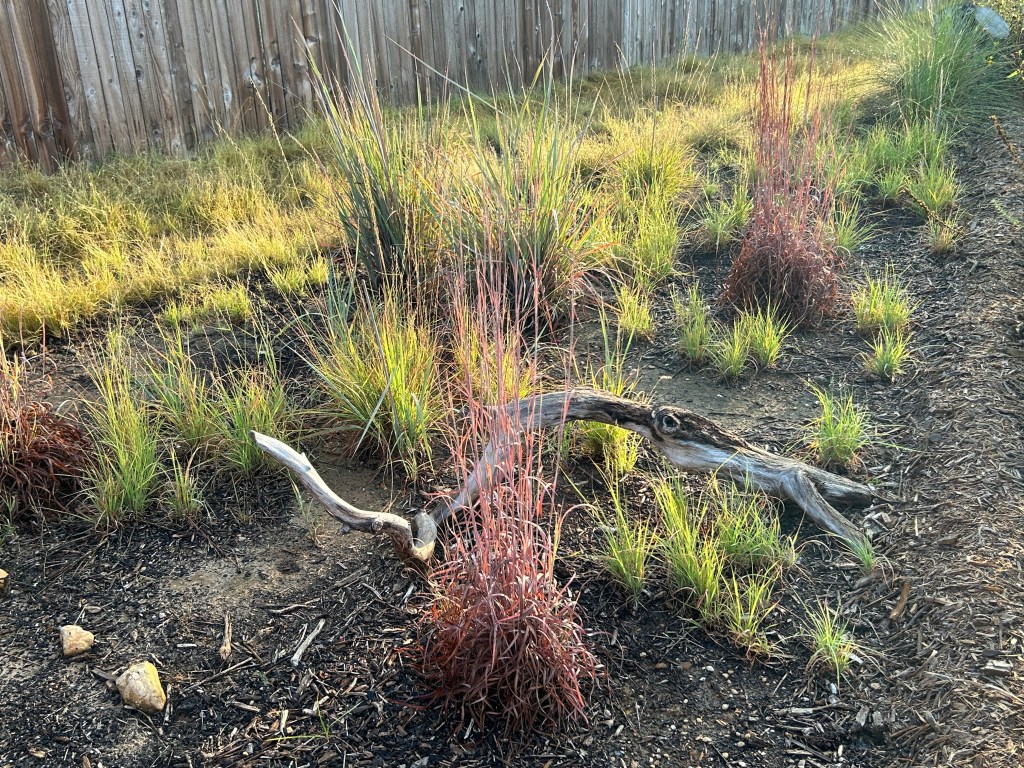
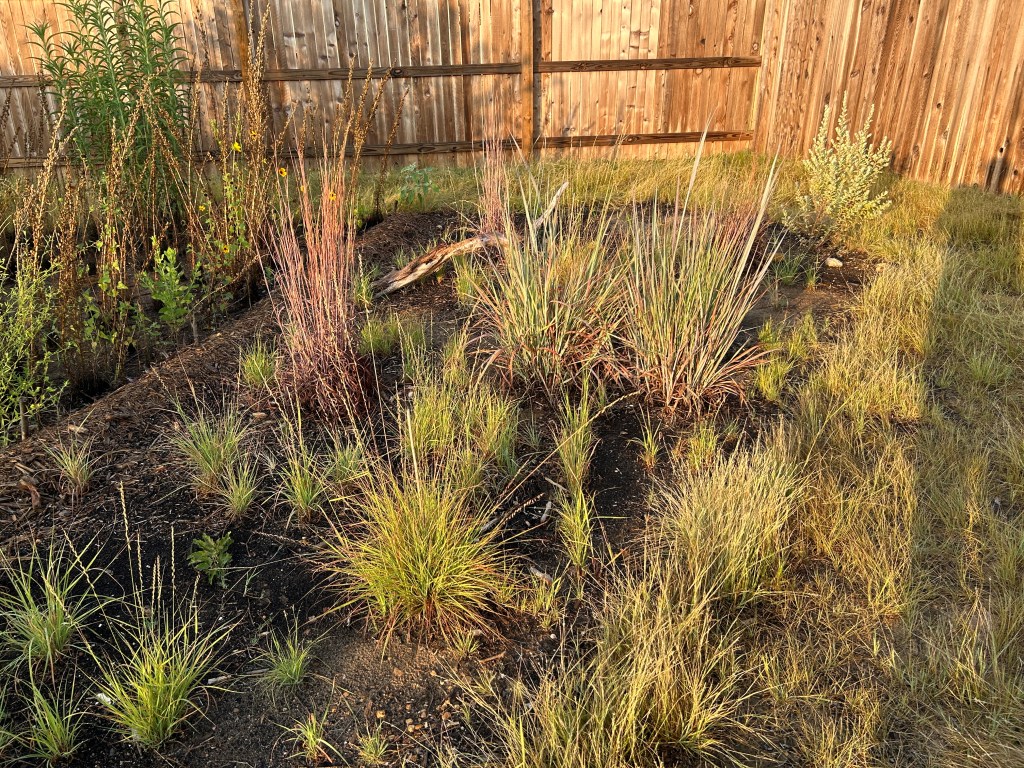
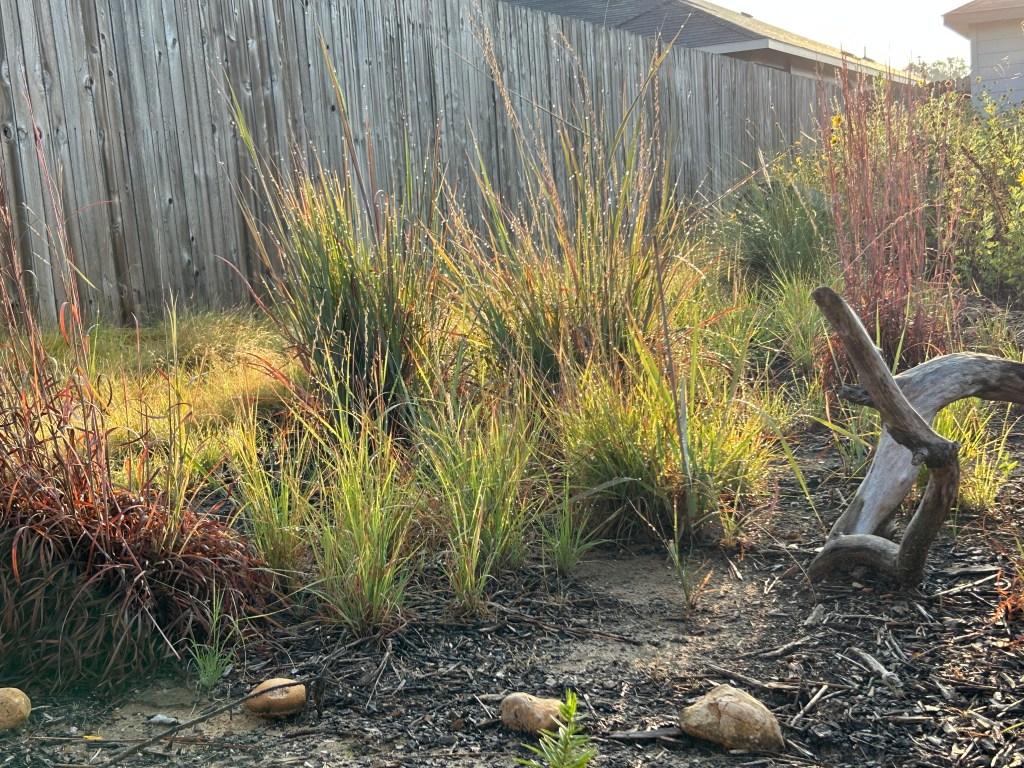
Here are some more photographs of this particular project, all taken in August 2025. The red clumps are Little Bluestem, the tallest clumps are Indiangrass, and the smaller green clumps are Sideoats Grama or Curly Mesquite.

 Rewilding My Lot
Leave a comment