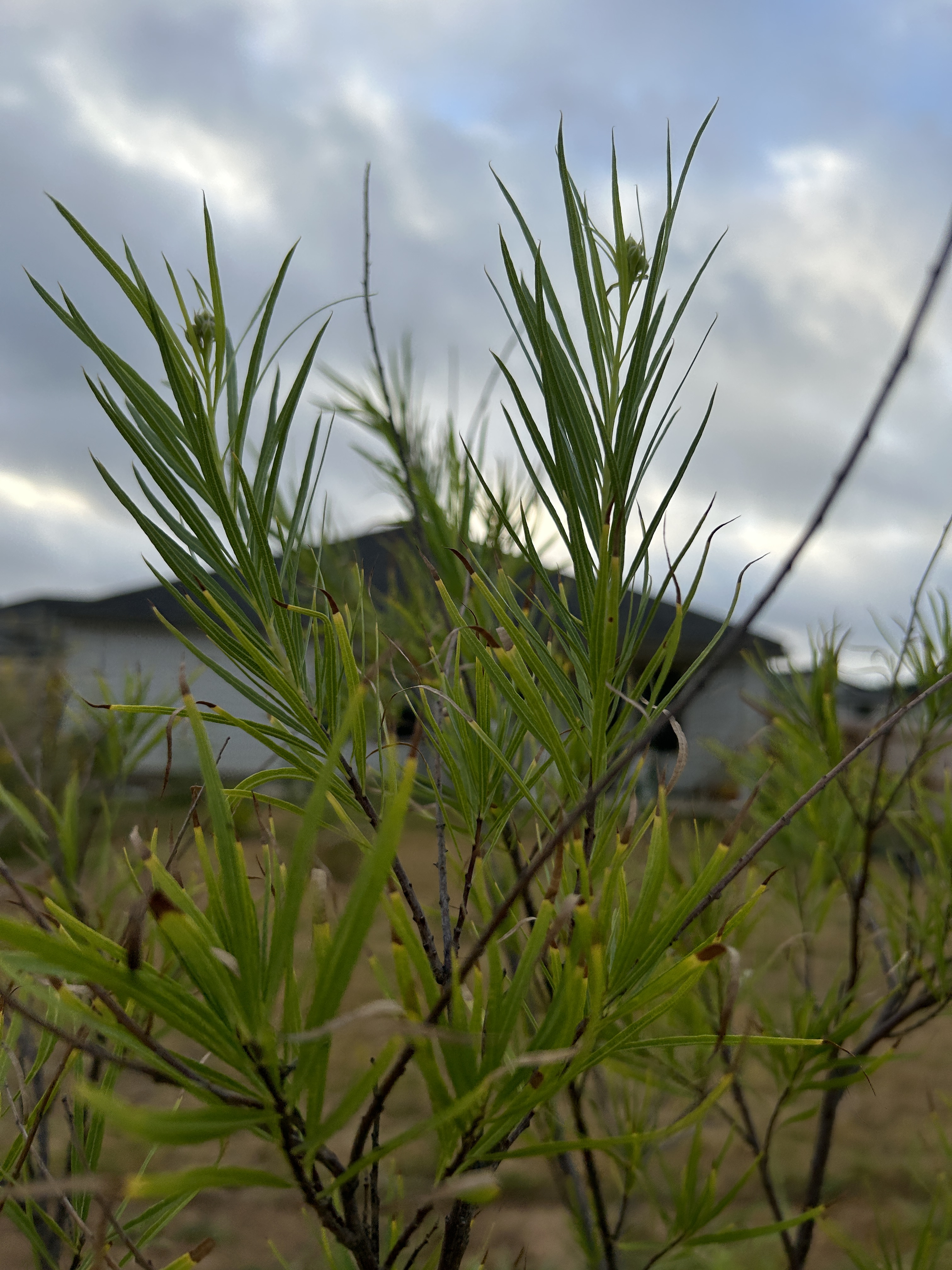
I don’t write much about dragonflies even though they are a common feature here, because I find them almost impossible to photograph well. They move quickly, don’t like being approached, and their wings are almost transparent. It’s hard to get a proper focus.
Dragonflies and damselflies are very similar and the main way I know to tell them apart is that dragonflies hold their wings out when resting, whereas damselflies fold them up behind them. Occasionally I have seen damselflies here, but almost all of the time at the pond I see dragonflies.
I use bamboo sticks as markers near plants that are new, to remind me to water them while they are getting established. Even though I have plenty of plants here with stiff stems, apparently dragonflies prefer to perch on the bamboo sticks.
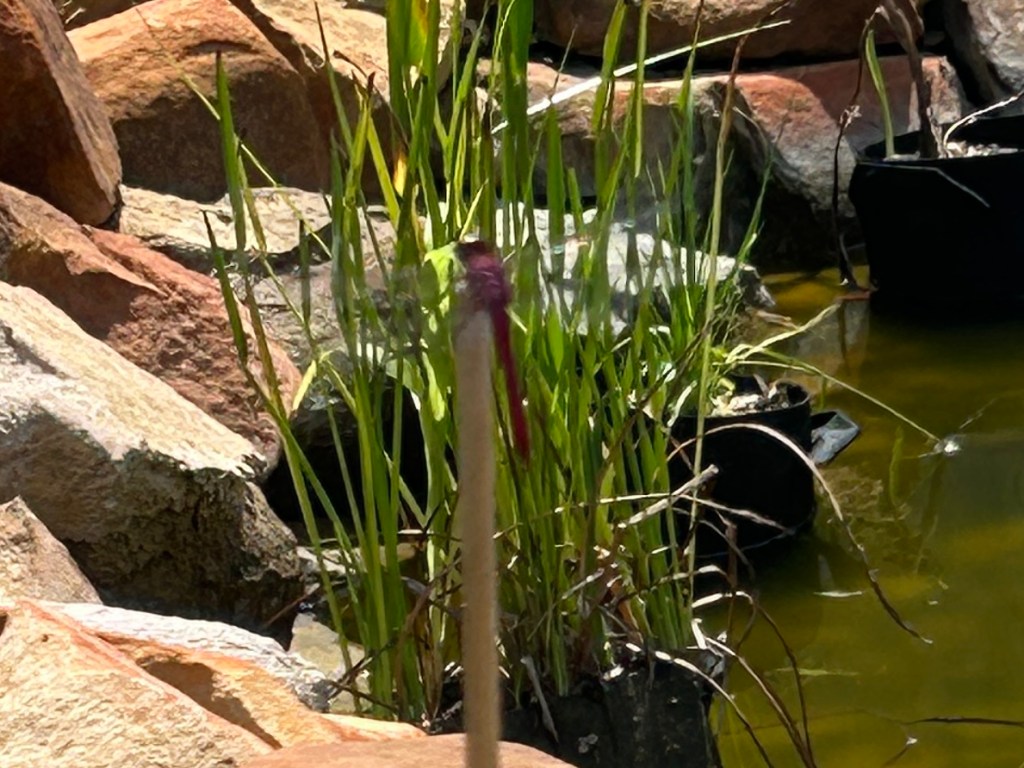
Within hours of planting a Mexican Tulip Poppy near the pond, there was a large pink dragonfly resting on the nearby stick. With the help of iNaturalist I was able to identify this as a male Roseate Skimmer (Orthemis ferruginea). This photograph does not at all indicate how brightly colored he was.

The next day, on the same stick, I saw the same (?) dragonfly. This is an even worse photo, but it shows the color a little better. In reality, the pink is even more vivid than this. (The photograph at the beginning of this post was taken a few days later on the same stick.)
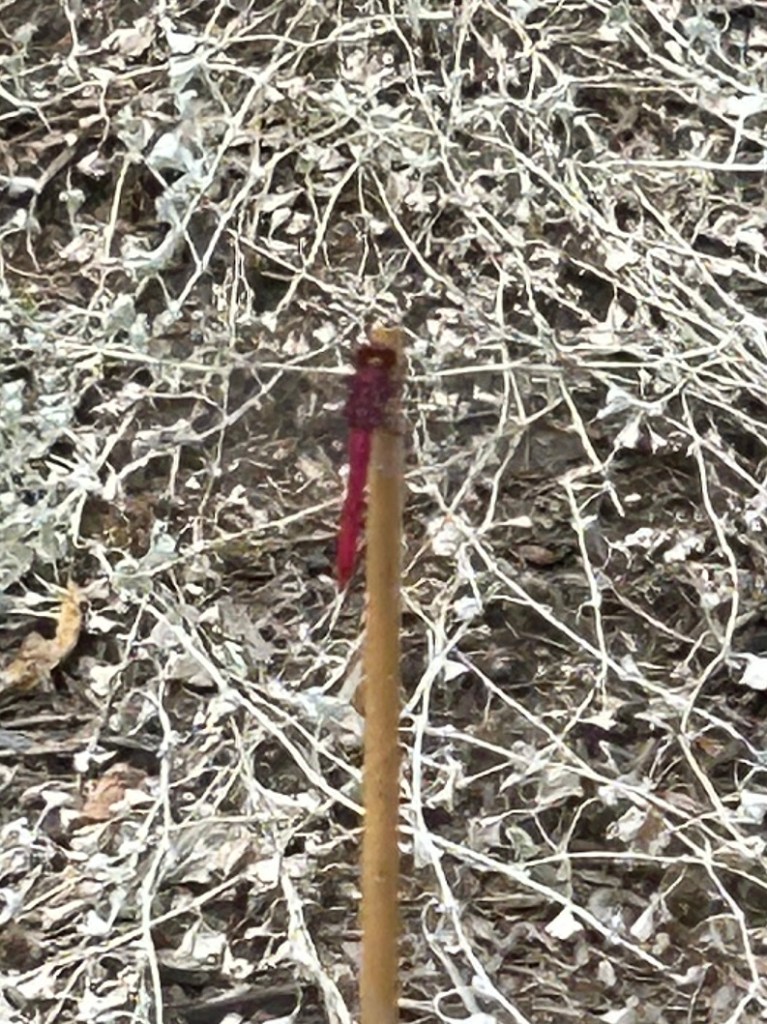
The day after that sighting I saw that the stick was being shared by both a male and female Roseate Skimmer (the female is more brown in color). The male seemed to divide his time between interacting with the female (touching her body) and chasing off another male. Watching that activity led me to wonder what is the process of dragonfly mating, which then led me to this informative and entertaining video (below). What I was witnessing might have been “courtship” behavior and although I never saw mating behavior, this video is too good not to share!

 Rewilding My Lot
Leave a comment