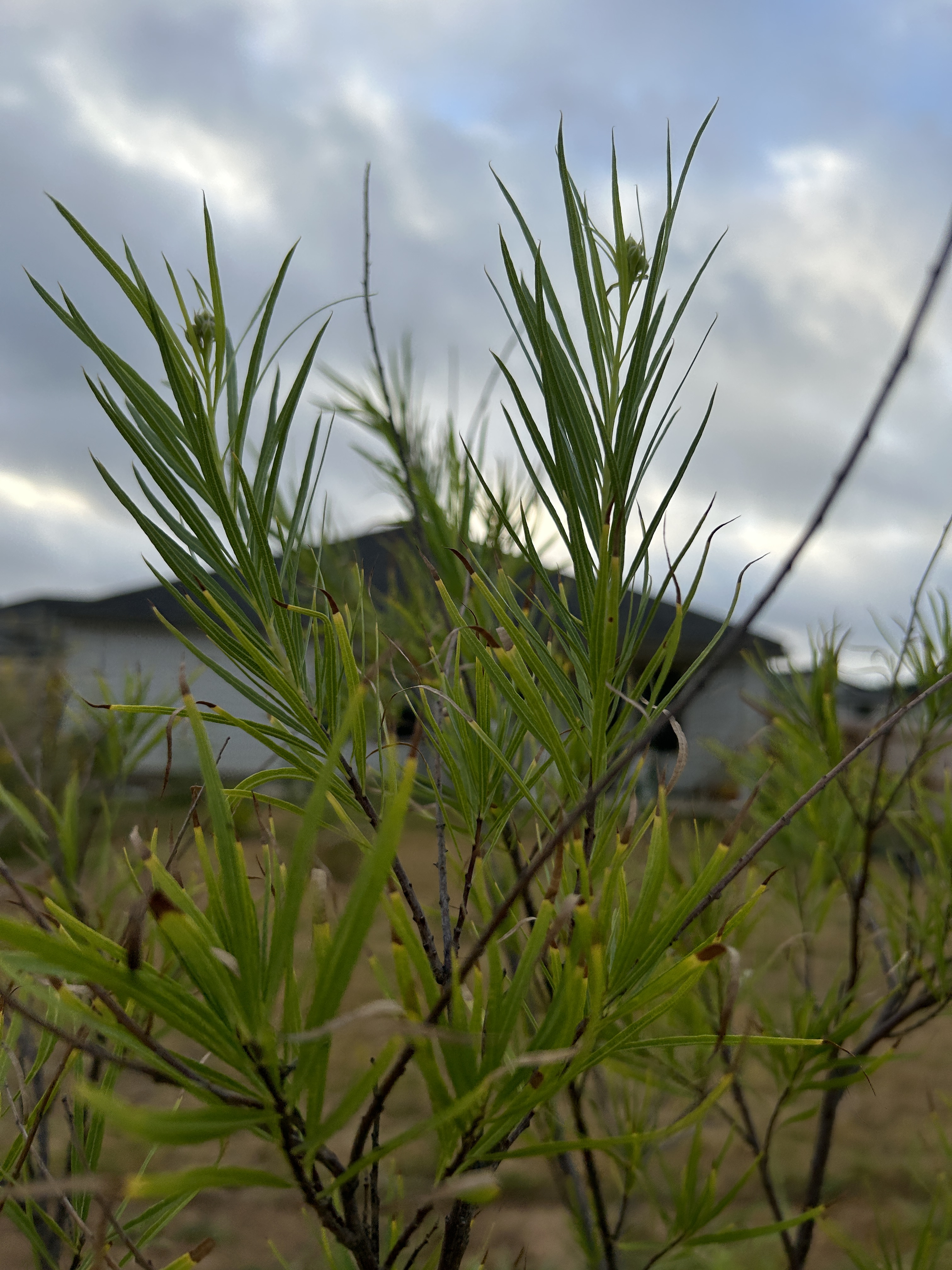
Frostweed (Verbesina virginica) is an interesting plant that caught my attention when I first moved to Seguin. It grows to a few feet tall and blooms in the fall, which is a key time for migrating pollinators (such as Monarch butterflies) who need food to fuel their journey.
A distinctive feature of this plant is that early in the morning of the first hard freeze of the winter, the stems split open and the exuding water forms fascinating graceful shapes. I have witnessed this phenomenon in person one time so far.
I have delayed introducing Frostweed here because it prefers shade or part-shade conditions and the garden here is very sunny. However, I was ready to give it a chance this fall and a friend had a couple of small volunteers from his own garden to give me.
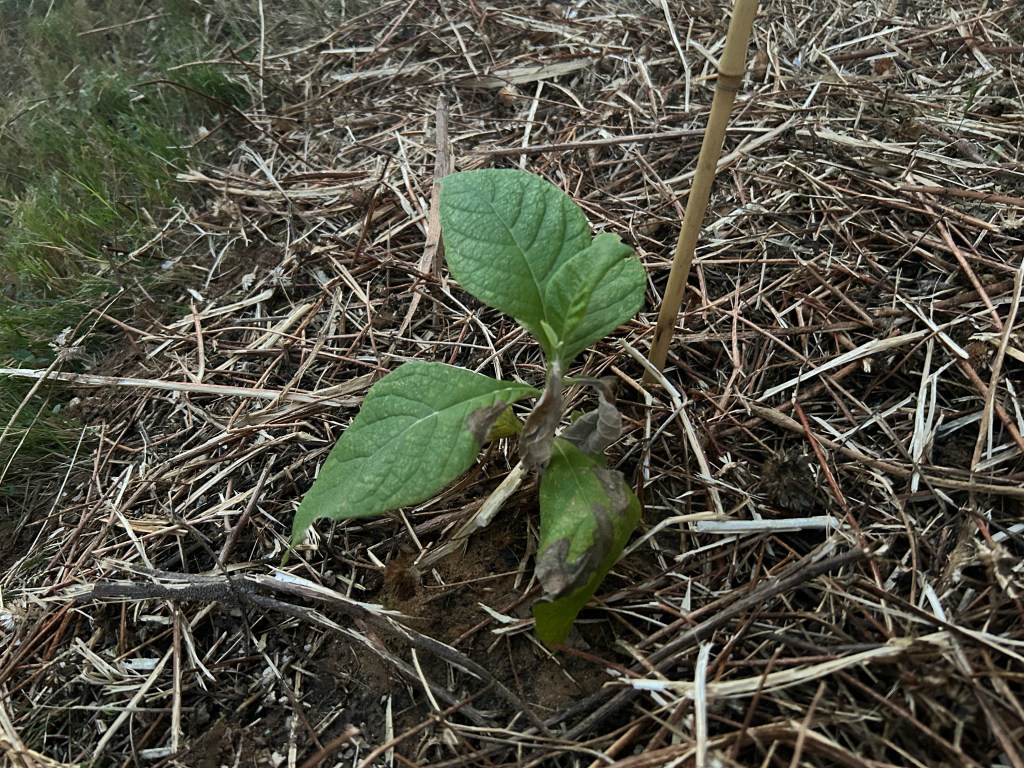
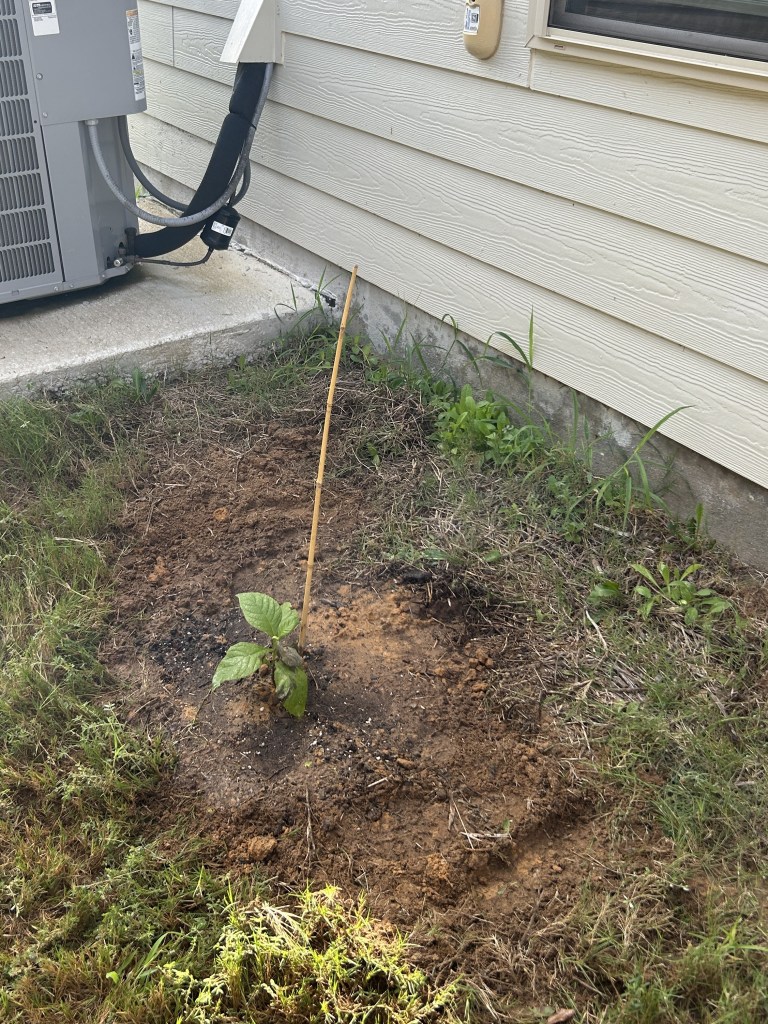
On the north side of the house, which is only ten feet away from the neighboring house, the builder-installed Bermudagrass is struggling to grow in those shady conditions. I have no intention of trying to encourage this invasive non-native turf grass, and instead will be adding some native shade-loving plants to that strip. I hadn’t started that process yet, but planting one of the gifted Frostweeds there was an obvious first step. This one has gone behind the outside air conditioning unit, which is a particularly shady spot.
The second Frostweed was planted beside the pond near the house, where there is significant shading for much of the day. However, the light that does reach there is our brutally hot afternoon sun. In a year or two there will be more shading from other plants, and the Frostweed will be more established. However, I will need to take care of it with extra water until that time. I think this will be a similar situation to my American Beautyberry, which struggled in its first year but is now doing very well. In my first year here, I didn’t appreciate the intense heat of the afternoon sun, and did less to get things established well. I lost a few plants that I installed that first year. Lesson learned!

On the same day that I planted the Frostweeds I had a shredding session and so had some straw-like mulch to place around the new plants to shade the soil and retain moisture.

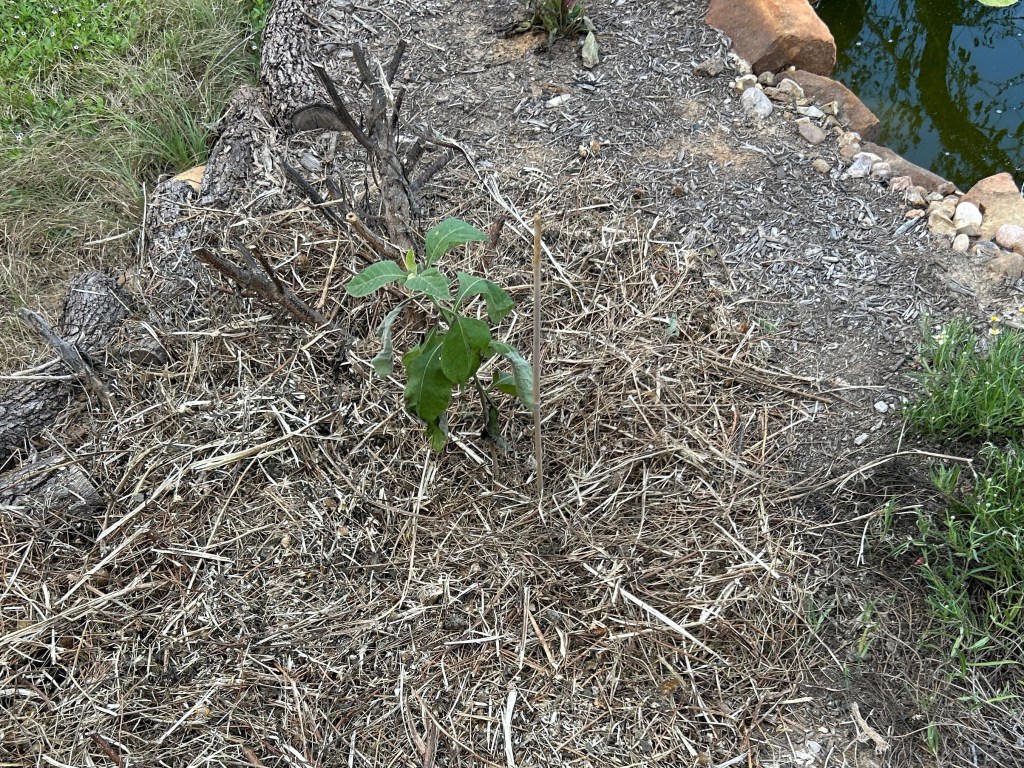
Despite having been transplanted twice in three days, these two new Frostweed plants look viable so far. They are likely to lose a few leaves but they are both growing new ones. At the moment they are being watered daily.
The first photo in this post is of the Frostweed on the north side of the house four days after planting.


 Rewilding My Lot
Leave a comment