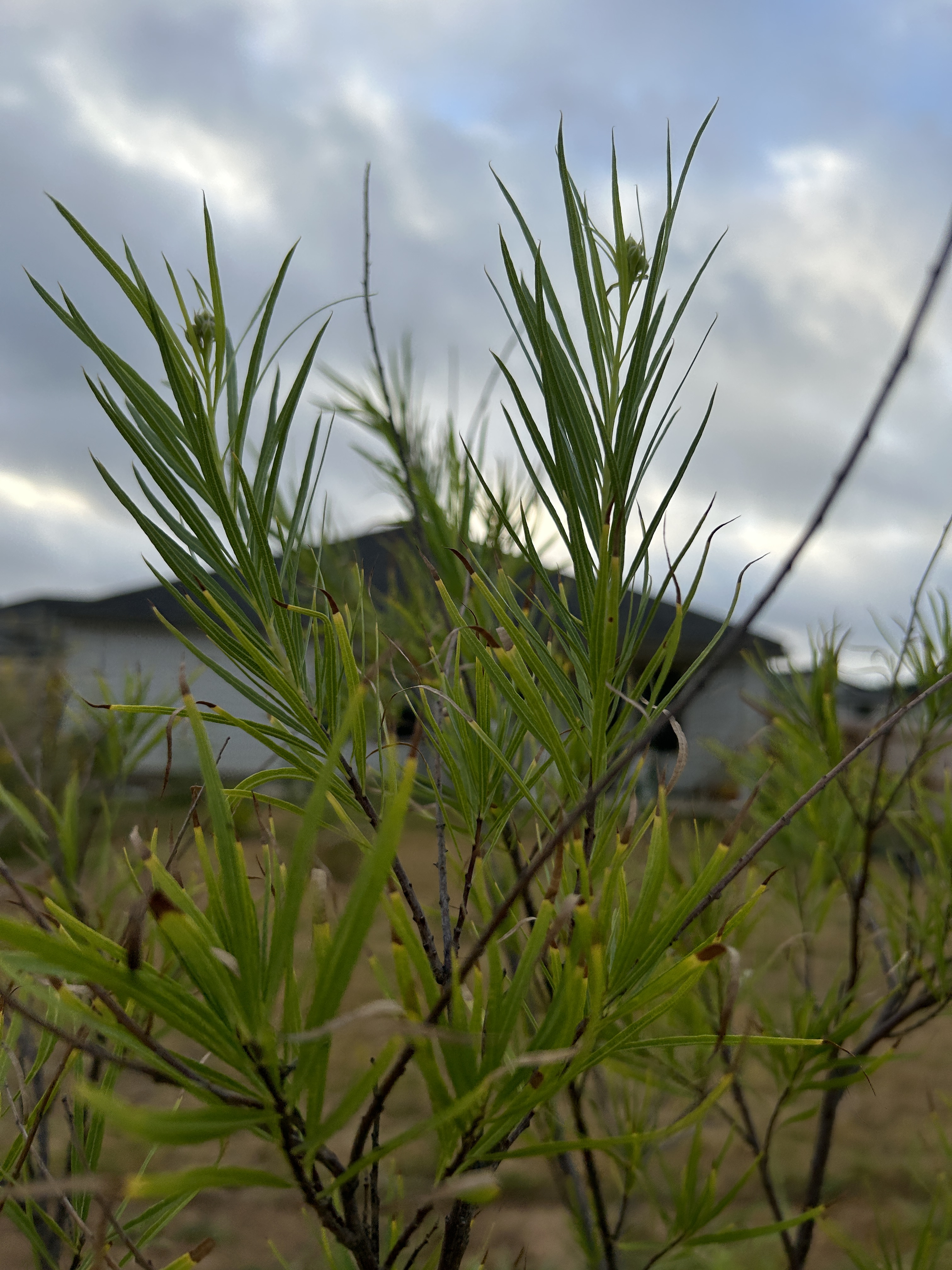
My Mexican Olive (Cordia boissieri) tree has frozen back severely in its two winters here. This year I thought I had lost it completely, but it has made a remarkable recovery and produced over six feet of growth from the ground in only five months (I finally saw new shoots in April 2025).
This tree attracts a variety of insect visitors. Some come to feed from the blooms, but I suspect its greater role is for shelter. The leaves are large and stiff and during early morning patrols of the garden I see a variety of creatures that may well have spent the night there. During the day the leaves provide shade. Here’s what I saw one morning in September.
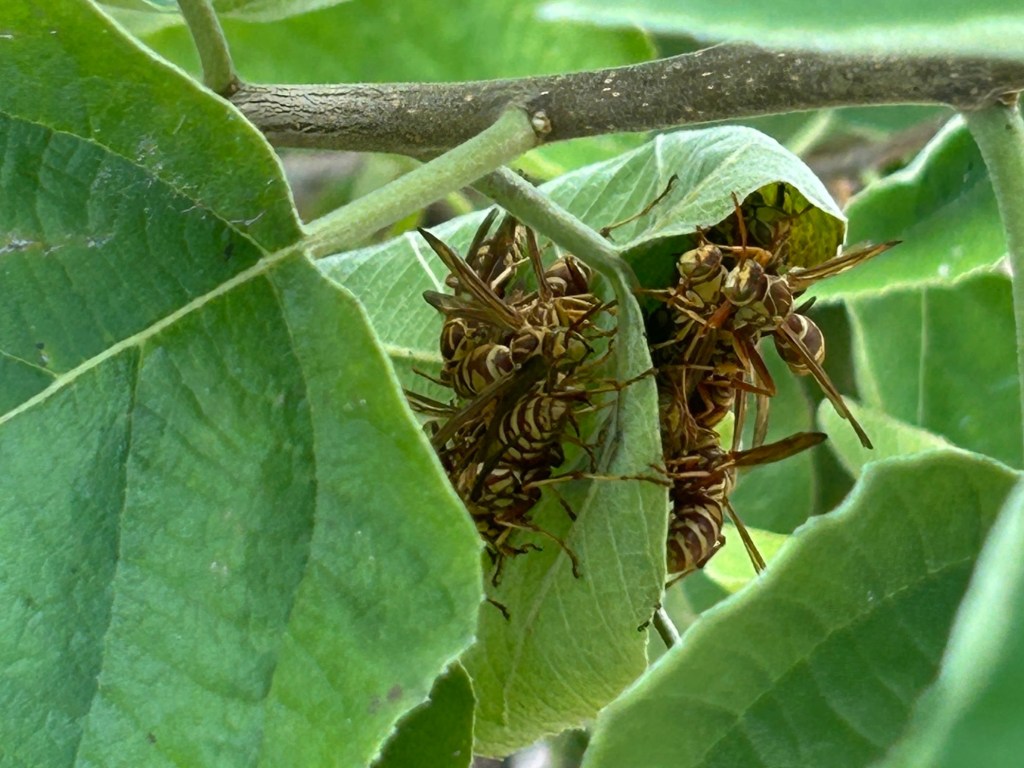
The majority of wasps that I see here are Apache Paper Wasps (Polistes apachus) and I’ve written about them before. There are several nests in the garden and if they’re not in my way I take note of them and leave them alone. There is a cluster of these wasps that are now living on a leaf of the Mexican Olive tree, but with no nest. Since we are in late summer (September), I deduce that these are adult males and females with no childcare responsibilities. Future queens (fertilized females) will find a place to hibernate over the winter but the other adults will stay out in the open and eventually die of cold or starvation.
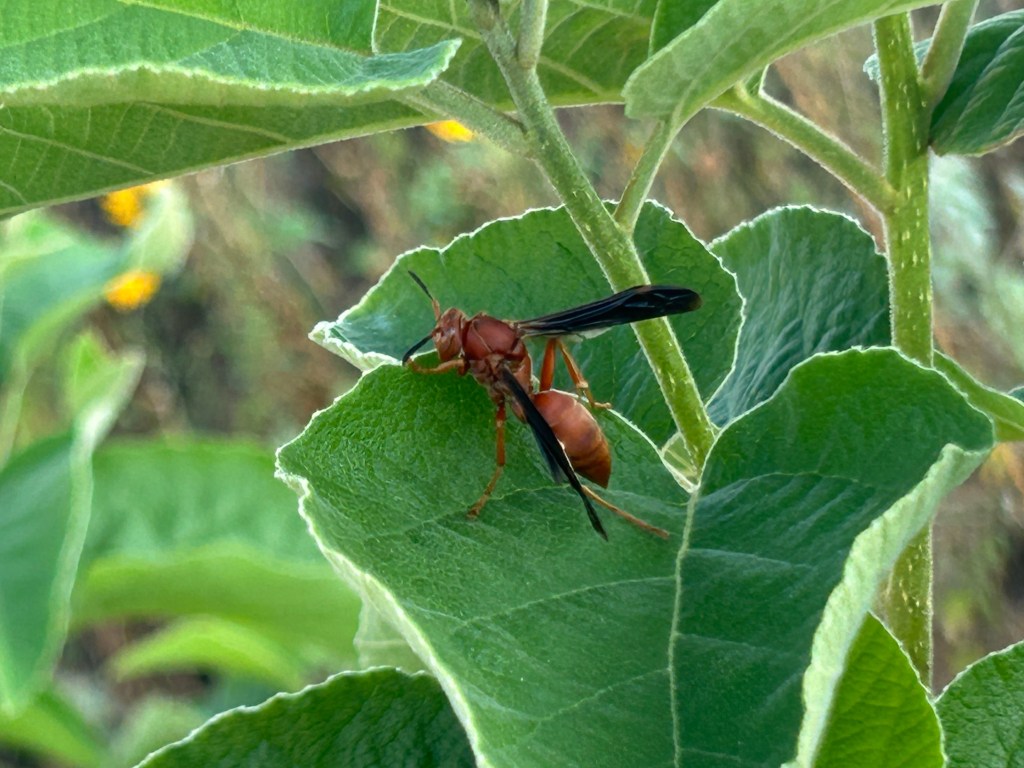
There is a second kind of Paper Wasp here. They build similar nests to the Apache Paper Wasps (made from saliva and plant pulp) but are redder in color. I presume that they’re in the genus Polistes, but can’t take the identification any further. On the Mexican Olive I saw a single one of these.
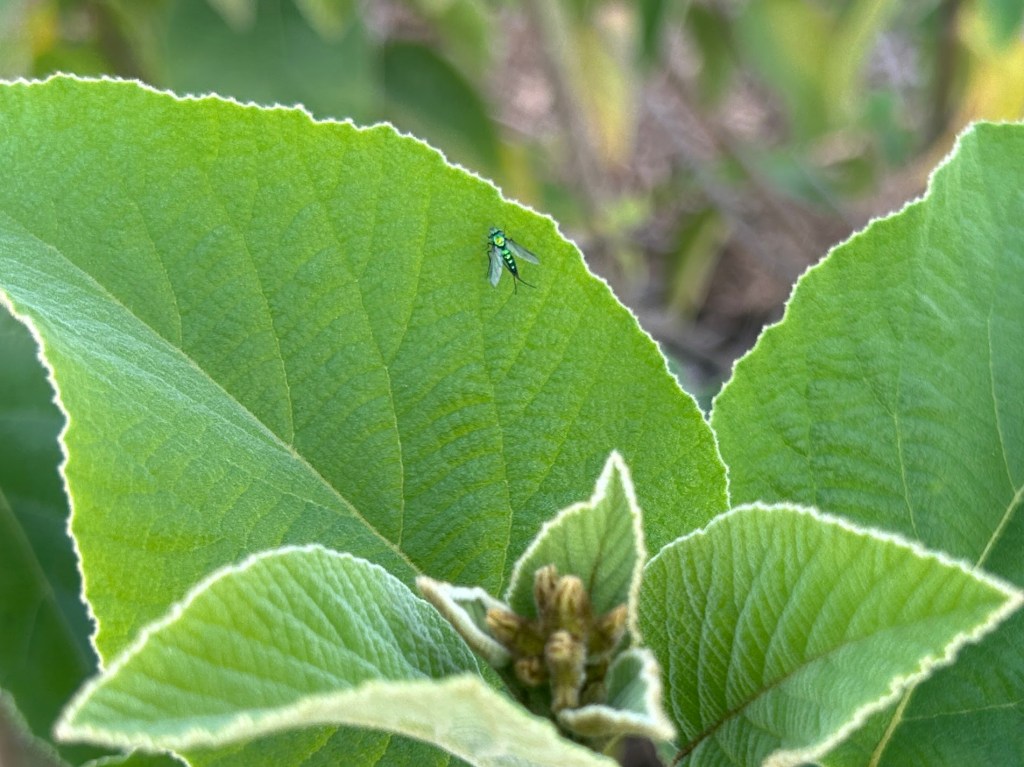
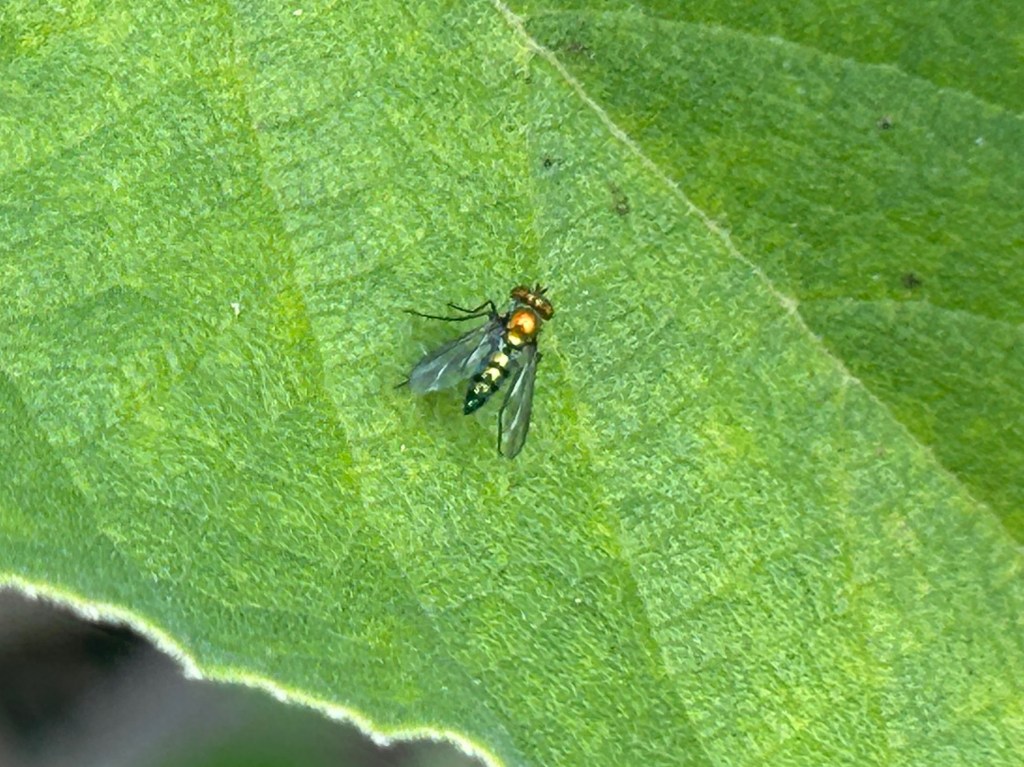
There are a lot of tiny flies scattered throughout the tree. They are Condylostylus longicornis, which are long-legged, green flies with an iridescent exoskeleton. The first image in this post is another example.
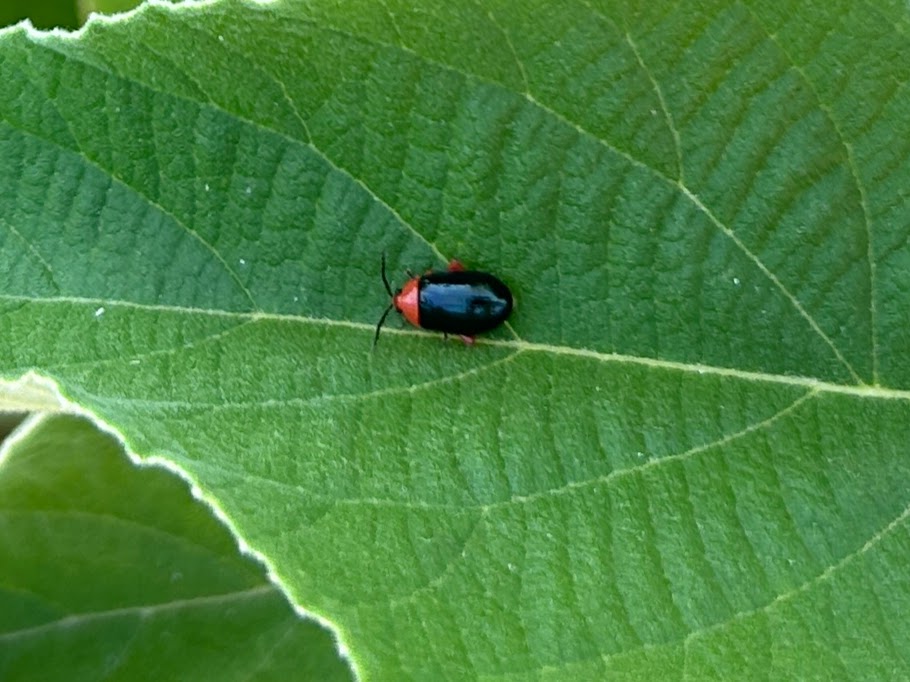
This cute little insect is a Shiny Flea Beetle (Asphaera lustrans).
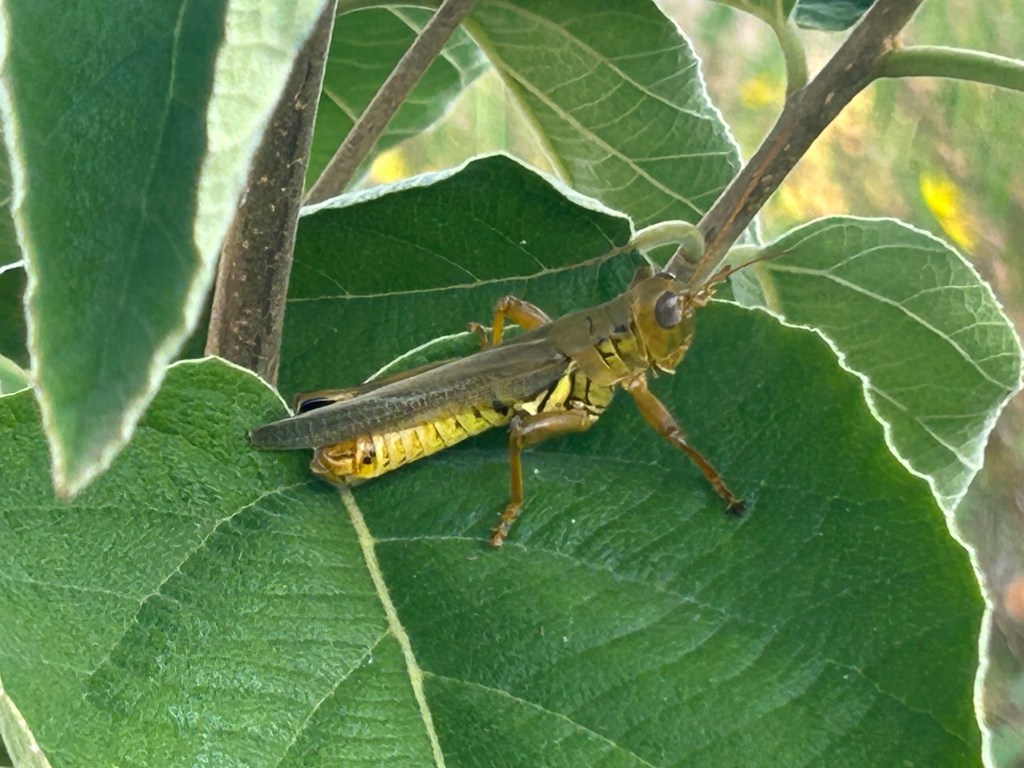
I believe that this is a Differential Grasshopper (Melanoplus differentialis). I do quite often see grasshoppers jumping around, but I can rarely get close enough for a photograph.
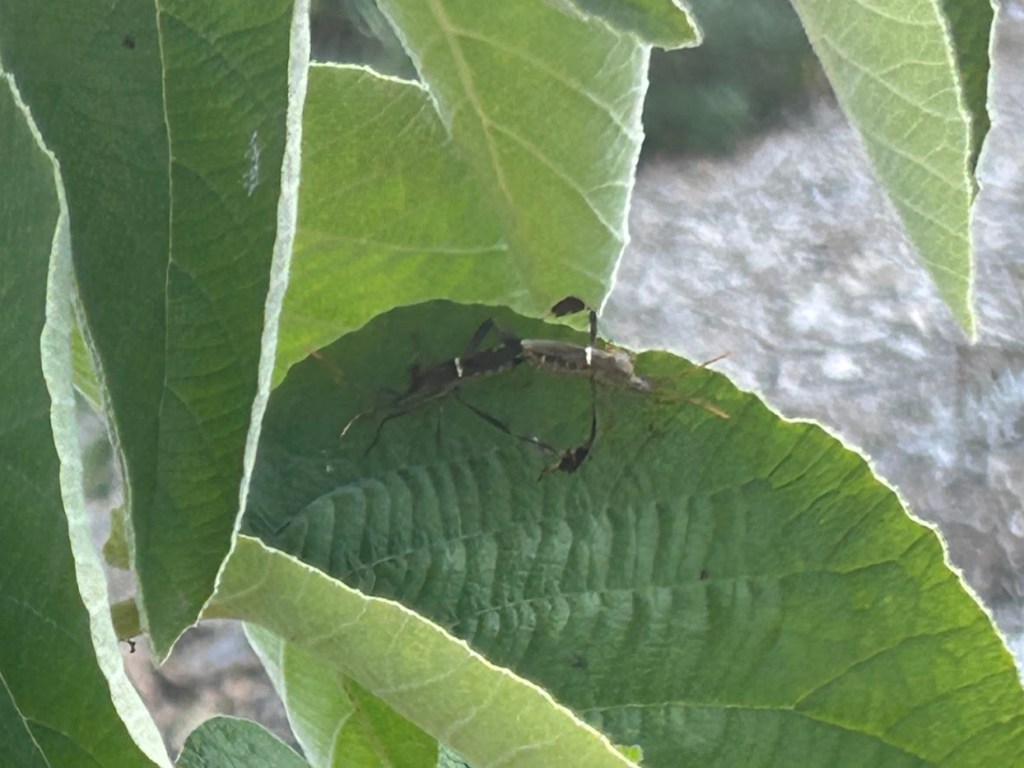
I often see leaf-footed bugs here, I believe in the genus Leptoglossus. I don’t have enough information for a precise identification, though. This is a connected pair.
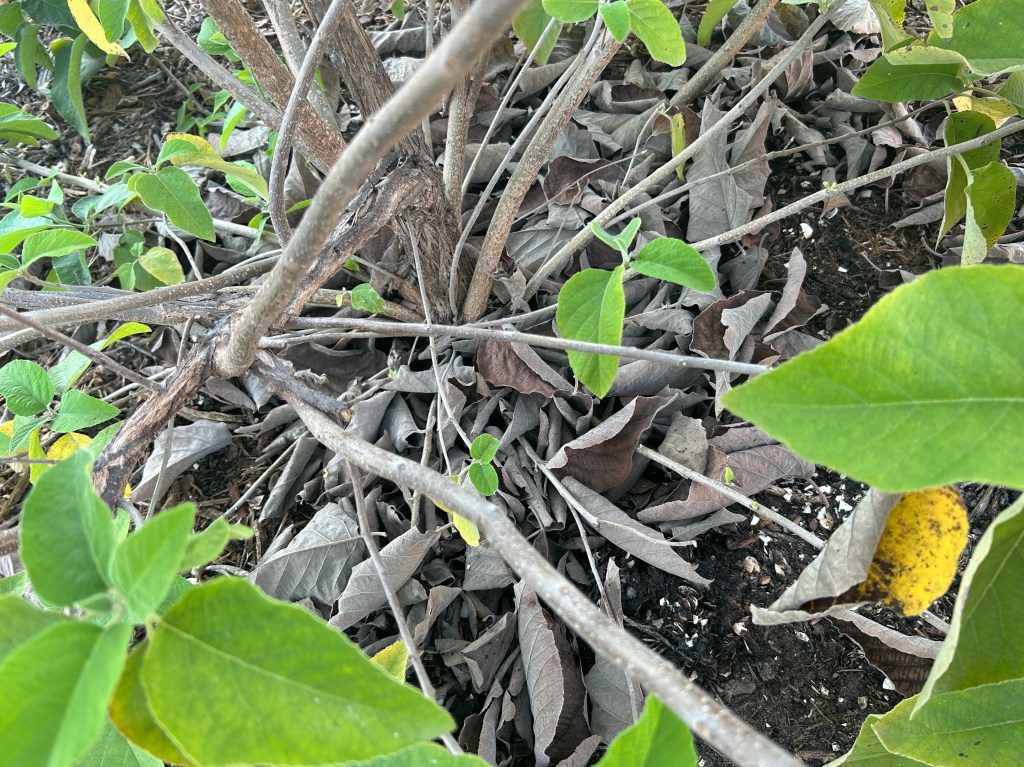
Mexican Olive is a deciduous tree and under the tree a small pile of dead leaves is beginning to collect. This provides a number of nooks and crannies where creatures might shelter (sometimes for the whole winter). I hope that some things are taking advantage of that habitat, but I’m not going to disturb it to look.
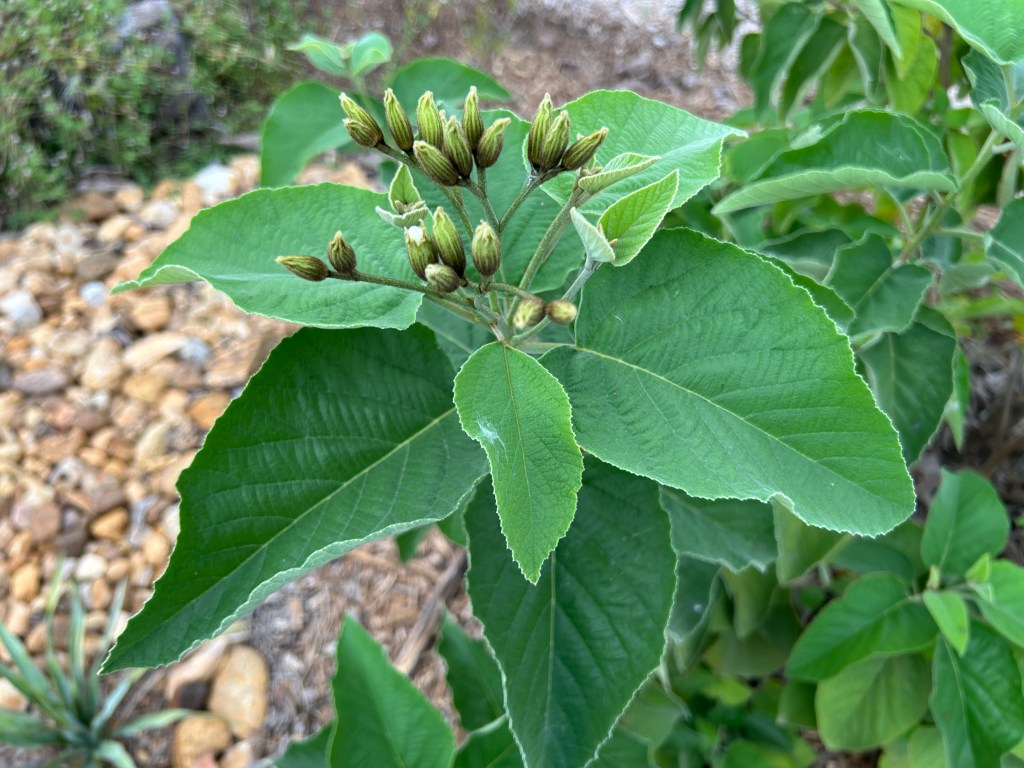
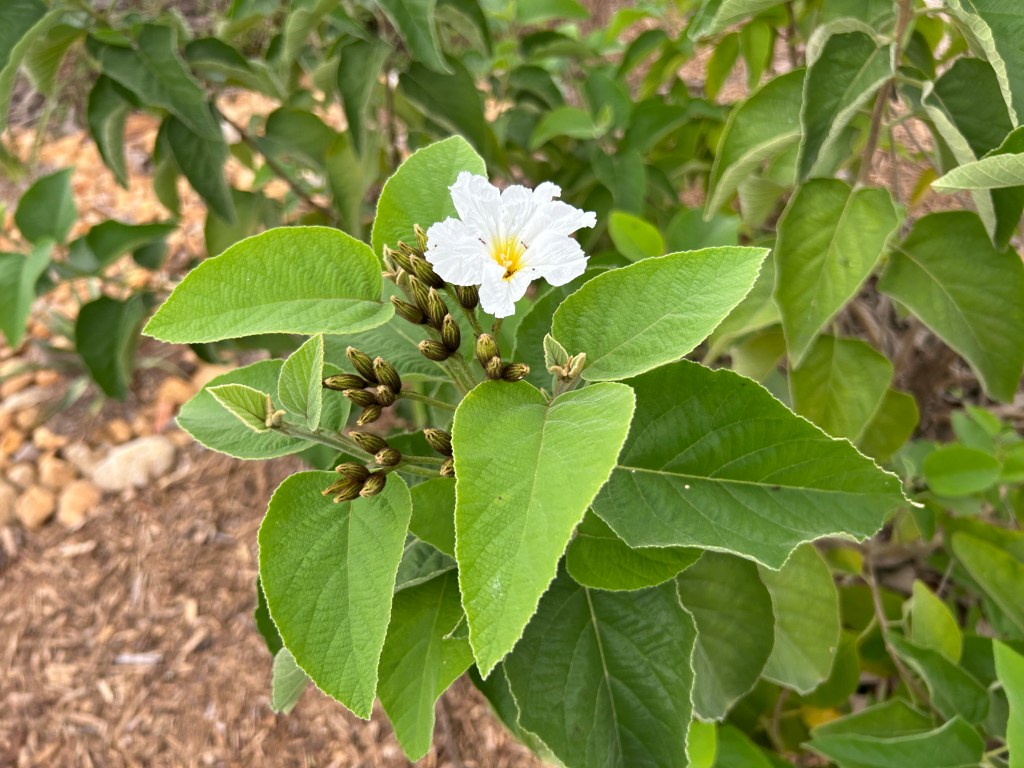
The Mexican Olive tree blooms on and off throughout the year — there have been several flower appearances already. At the moment (early September), there are berries from previous blooms (first picture below), and new buds and flowers forming. Given that I thought this tree was dead six months ago, this is all very pleasing!


 Rewilding My Lot
Leave a comment