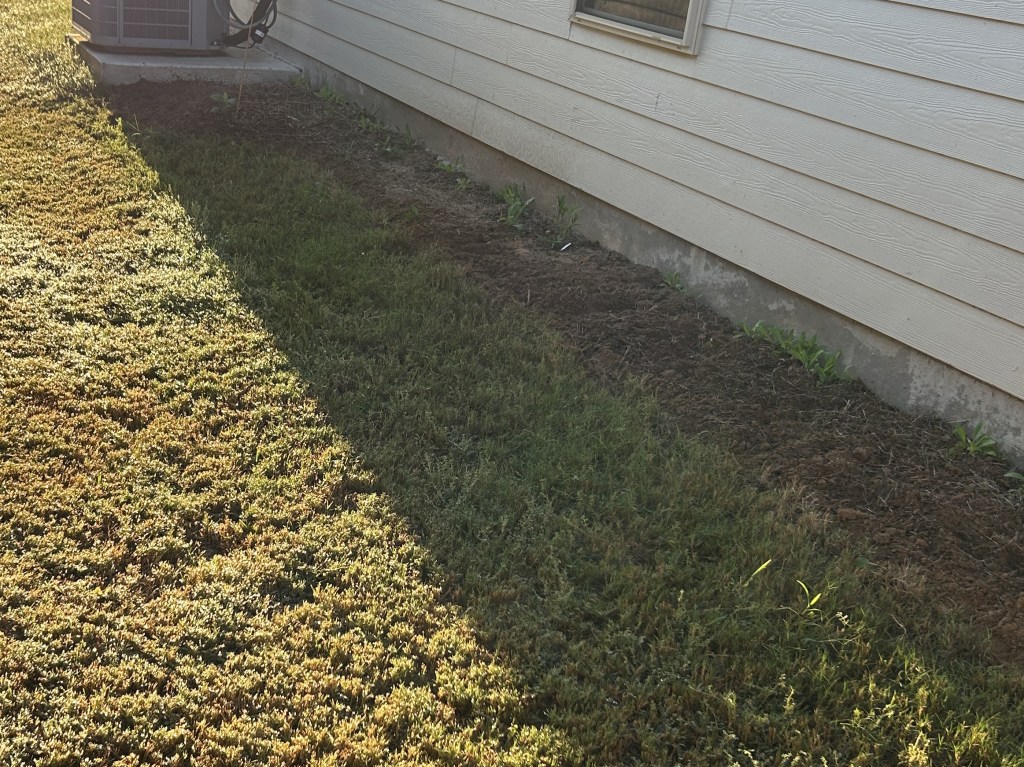
There is very little shade here. In this new development there are no mature trees and the gardens on my property face east (front) and west (back).
However, there is one region next to the house on the north side that gets very little sun. In addition to the major shade provided by our house, on the east side of that strip there is an air conditioning unit, so even in the morning that area is shaded.
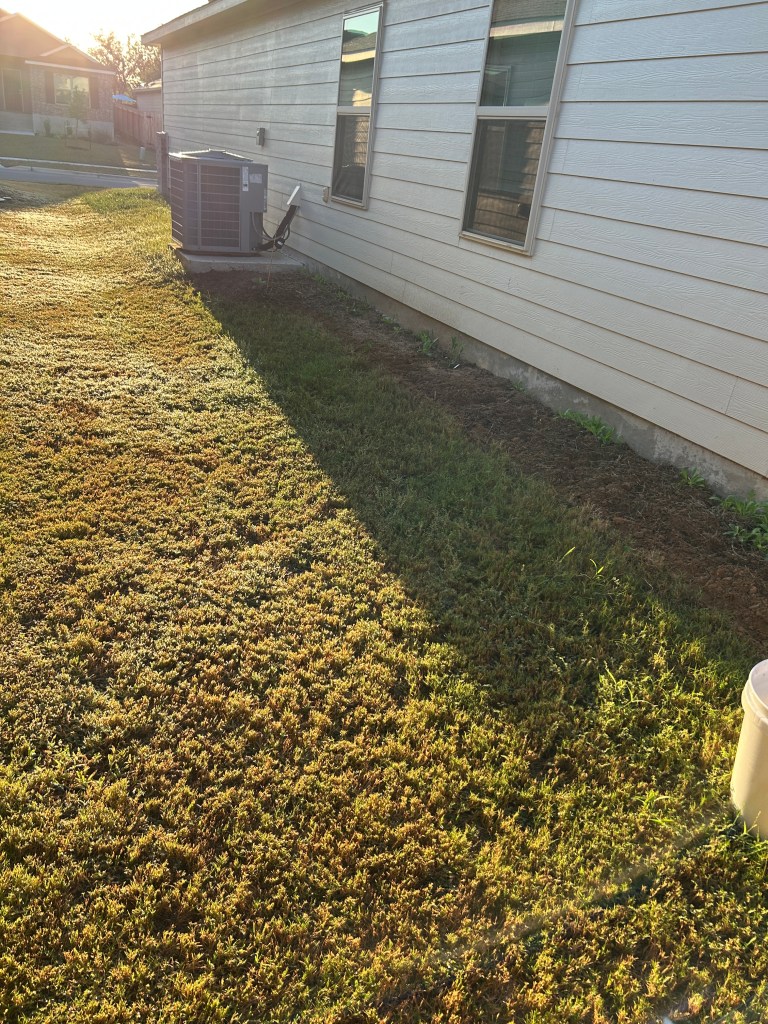
The house builder planted Bermudagrass on the land surrounding the house, but it is not at all surprising to find that in this shady spot the turf grass is not happy.
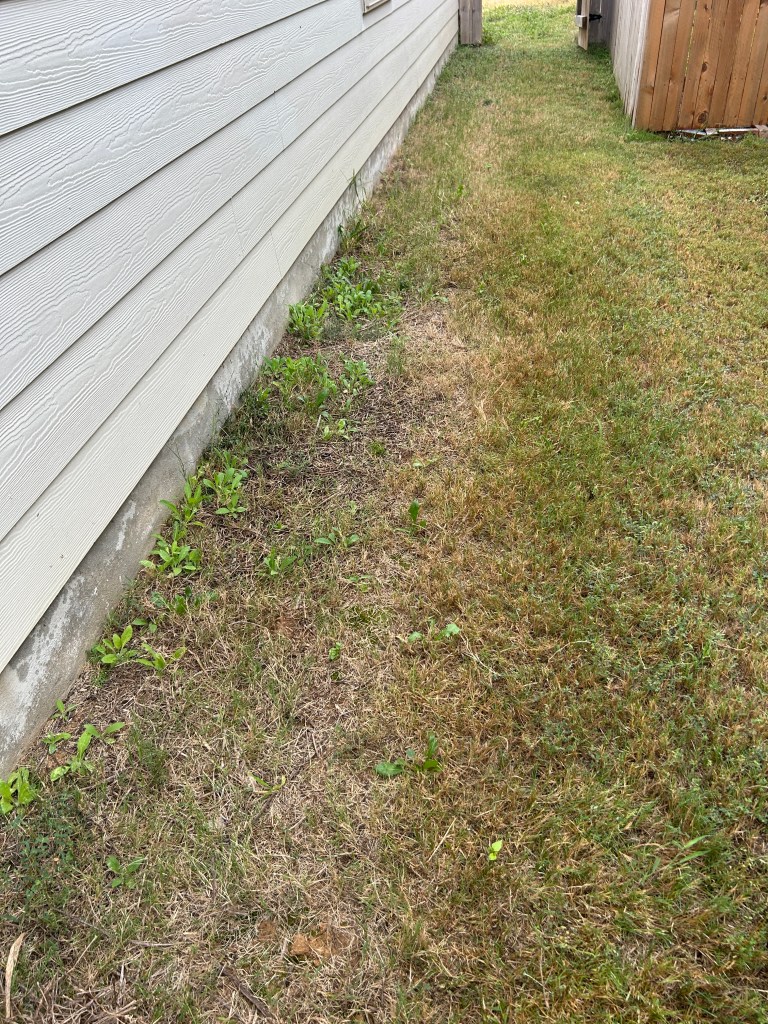
The foreign and invasive Bermudagrass is of no benefit to the environment here and I have no interest in working to make it happy. I would much rather grow useful native plants that want to be in that situation.
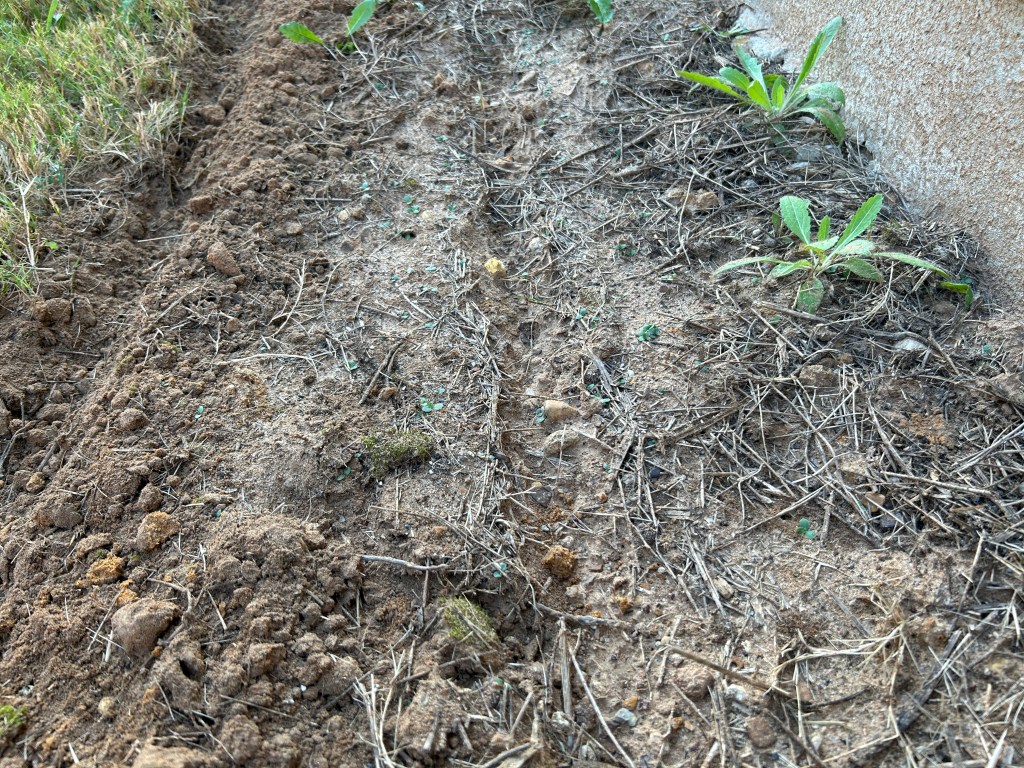
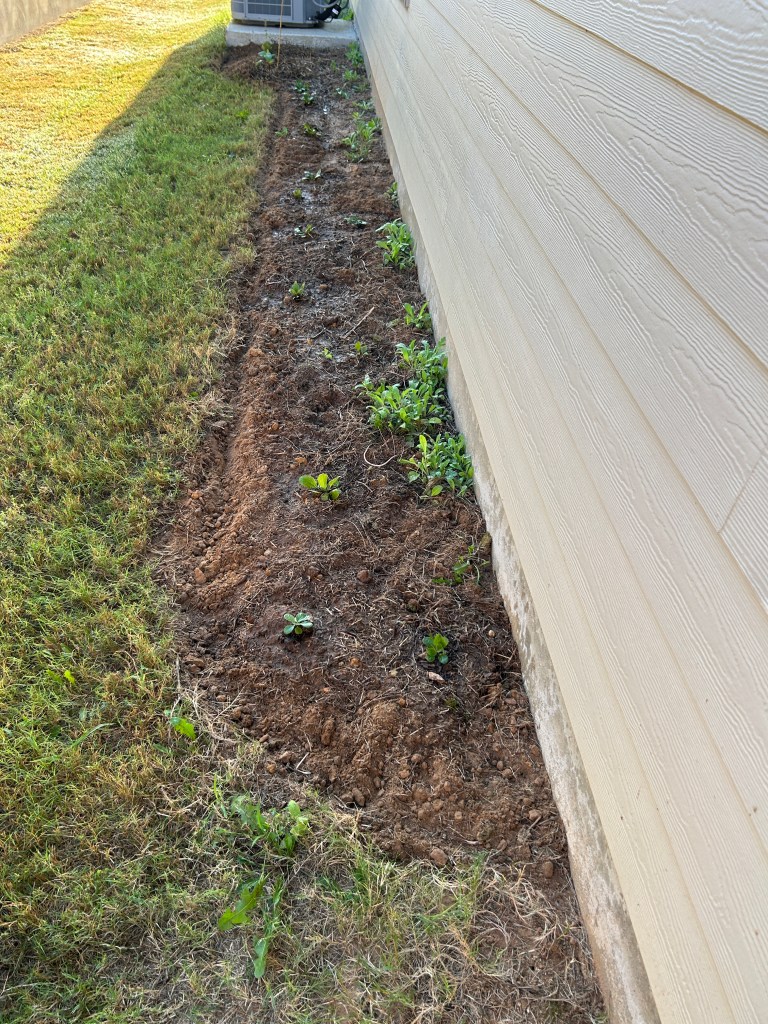
So on the shadier end of the north side of the house, I have removed (by digging it up) the little Bermudagrass that was still growing in the two feet or so next to the house. That strip has three regions — the foot or so adjacent to the house is under the eaves, then there is a narrow channel where rain from the roof cuts into the soil (we have no gutters), and beyond that is another foot or so before the Bermudagrass eventually has enough light to grow. Some little plants that are growing immediately next to the house may well be wildflower seedlings from spent plants in the garden that were shredded and laid down as mulch. I have left them in place for now until I know what they are.
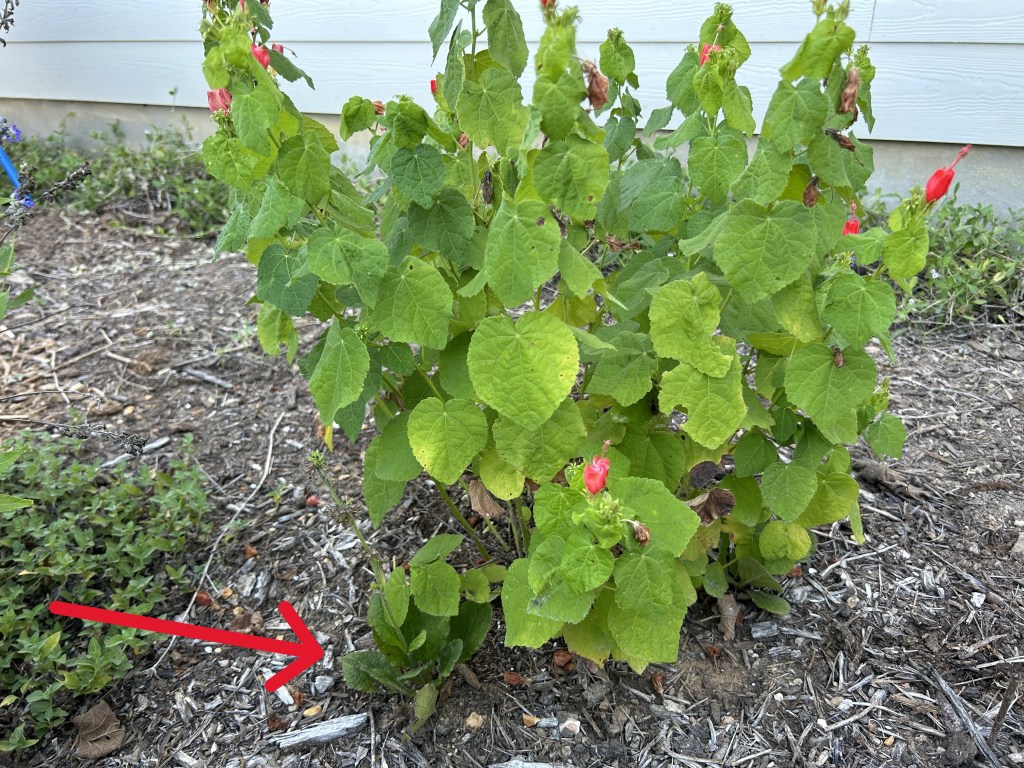
I have already planted one Frostweed (Verbesina virginica) plant in this area. The next thing I did was transplant some shade-loving Lyreleaf Sage (Salvia lyrata) volunteers from elsewhere in the garden. Here’s one example where a volunteer seedling was very close to the Turk’s Cap (Malvaviscus arboreus var. drummondii).
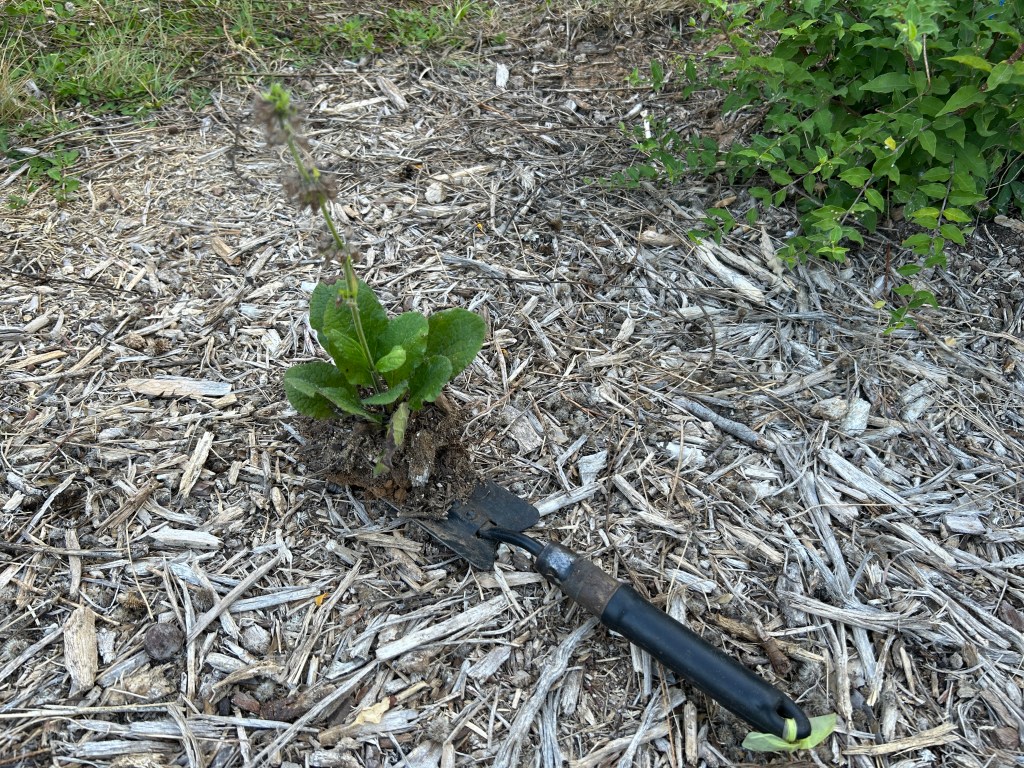
Here it is in transit and in its new location.
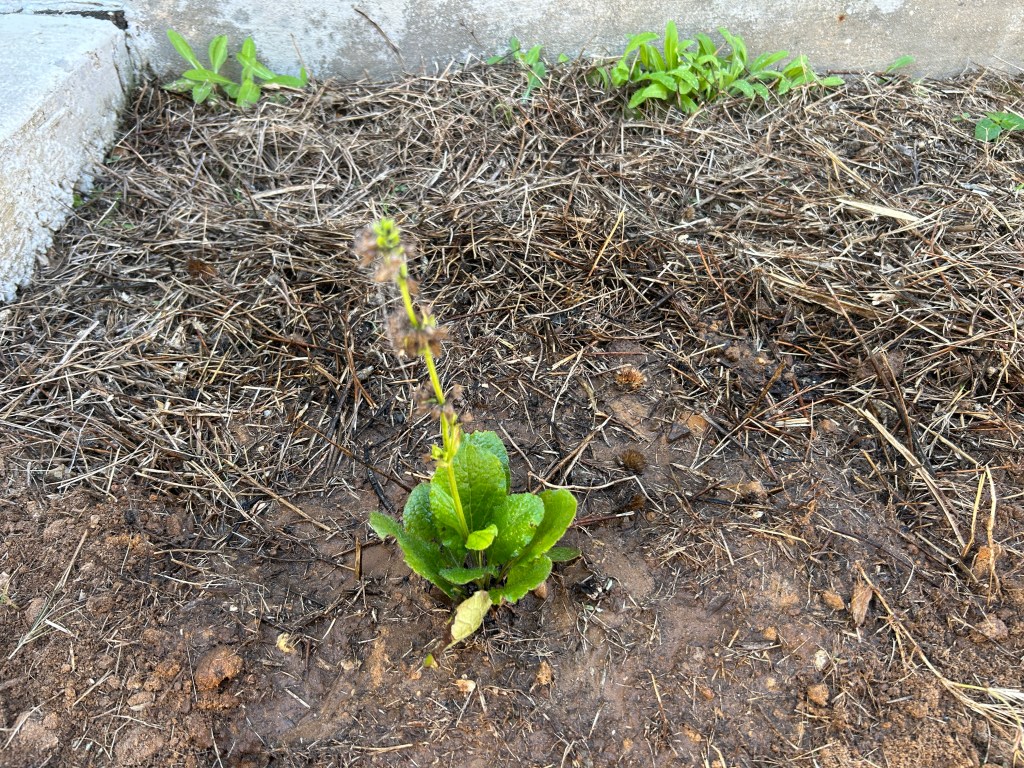
I planted about a dozen Lyreleaf sage plants. I’ll keep them watered until they’re established, and once we’ve had enough rain to properly moisten the soil, I have some Inland Sea Oats aka Inland Wood Oats (Chasmanthium latifolium) seeds that I can spread in this area as well. Then the plan is to see how everybody sorts themselves out. I don’t know whether plants will prefer to be close to the house under the eaves or a little further out where condensation running off the roof may supply some water. Anything that grows in the channel that gets the brunt of heavy rainfall off the roof will need to be strong enough to withstand that.


 Rewilding My Lot
Leave a comment