One of the areas in the garden that I am newly developing this year is the narrow strip of land that is on the north side of the house. Because of shade, the builder-installed Bermudagrass is not doing well. However, Bermudagrass is not helpful for the environment and I have no intention of encouraging it to grow. There is also some soil erosion where roof runoff has pummeled the soil (we do not have gutters).
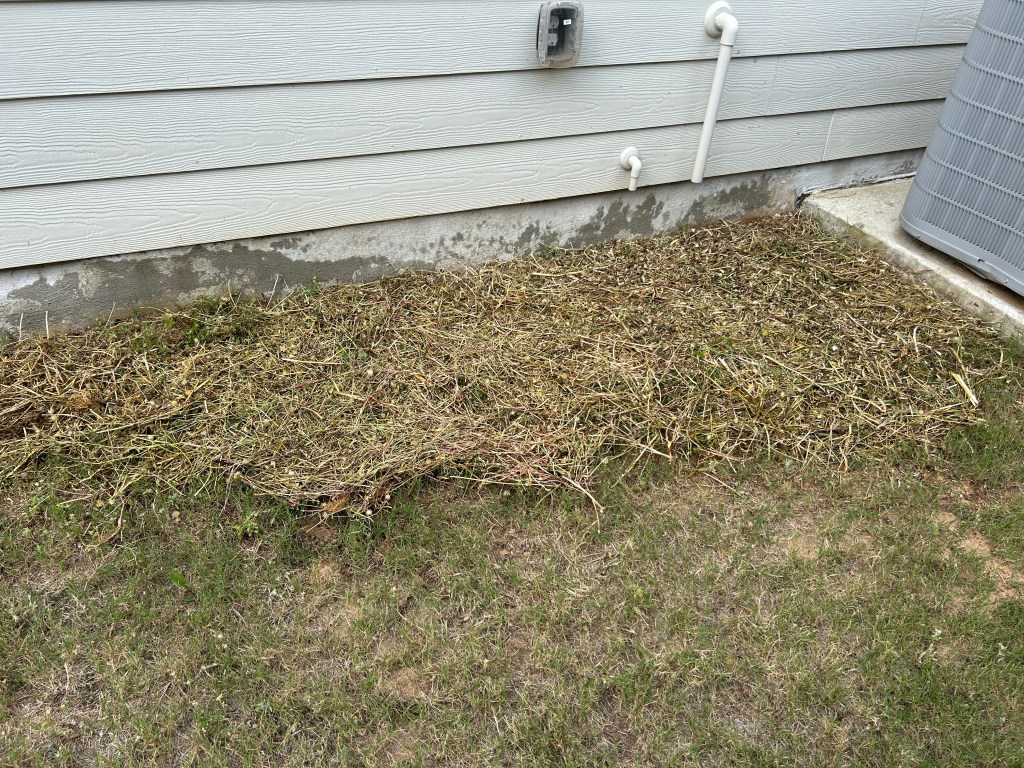
Every few weeks I shred annual plants that have finished their growth and seeding cycle. On some of those occasions I have put the resulting straw on the eroded ground on the north side of the house. The primary purpose was to cover any bare earth, and to provide organic material that would decay and feed the soil. This image is from May 2025.
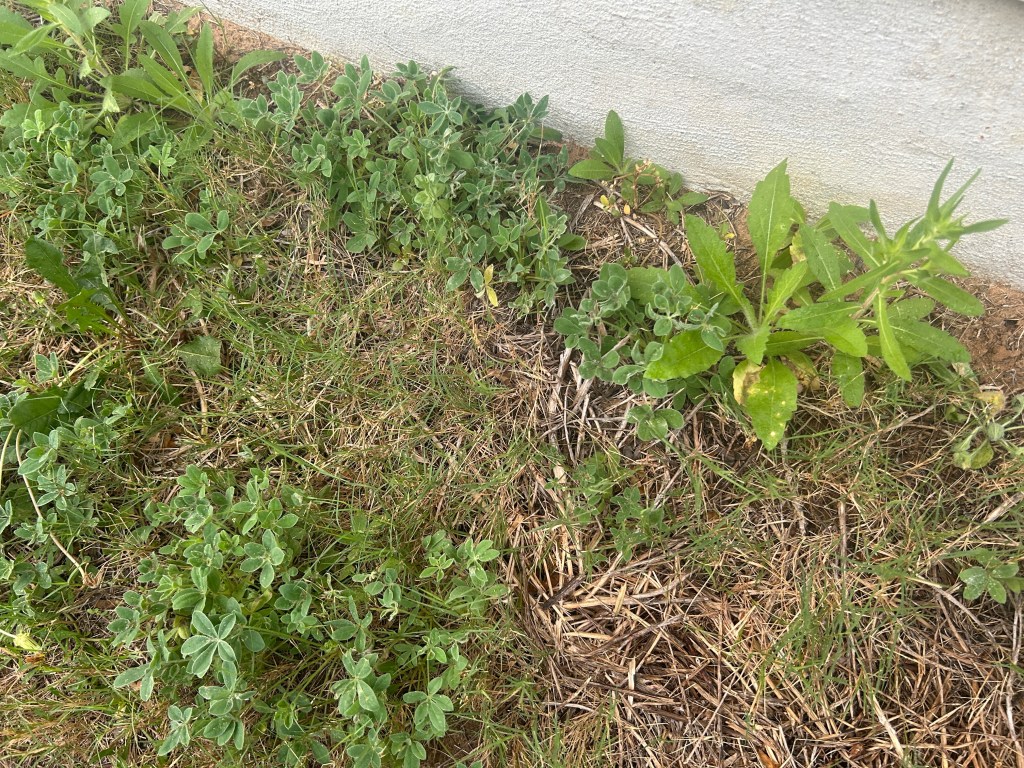
One consequence of putting shredded plants on the ground is that some of the seeds in that mulch have grown. So all along the north edge of the house there are bonus wildflower seedlings, mostly Bluebonnet and Firewheel aka Indian Blanket. I doubt that they’ll have enough sun to be as spectacular as they are in the wildflower meadow in front of the house, but any growth is welcome. Roots in the ground can help mitigate soil erosion, and Bluebonnet roots in particular can capture atmospheric nitrogen to fertilize the soil.
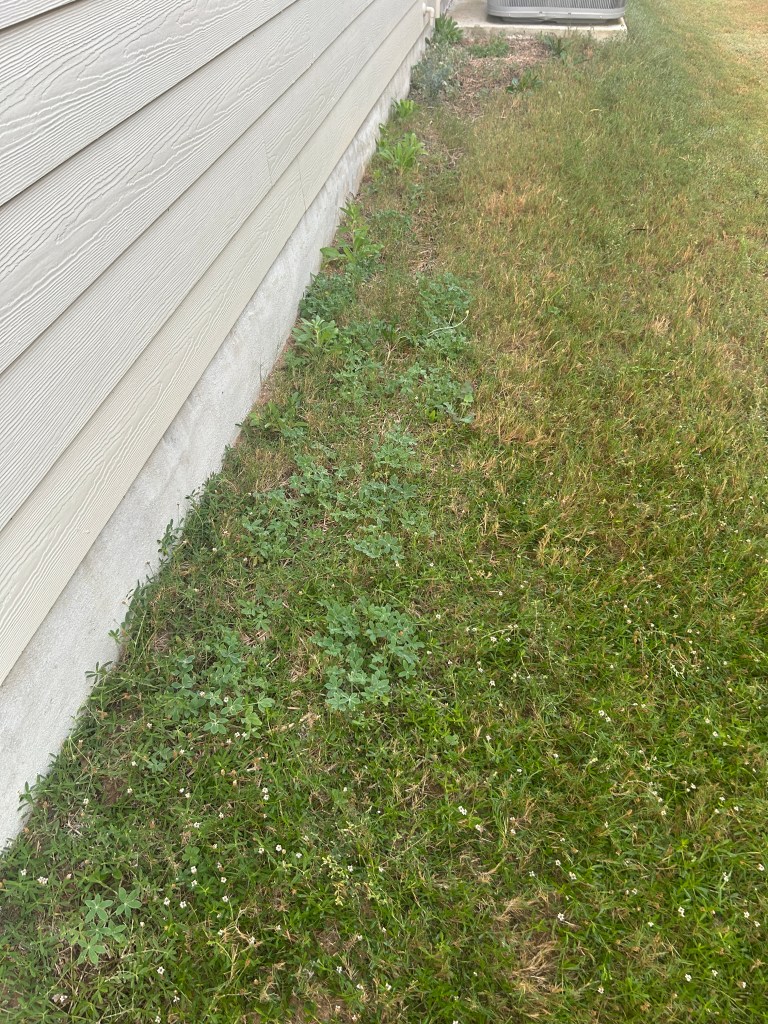
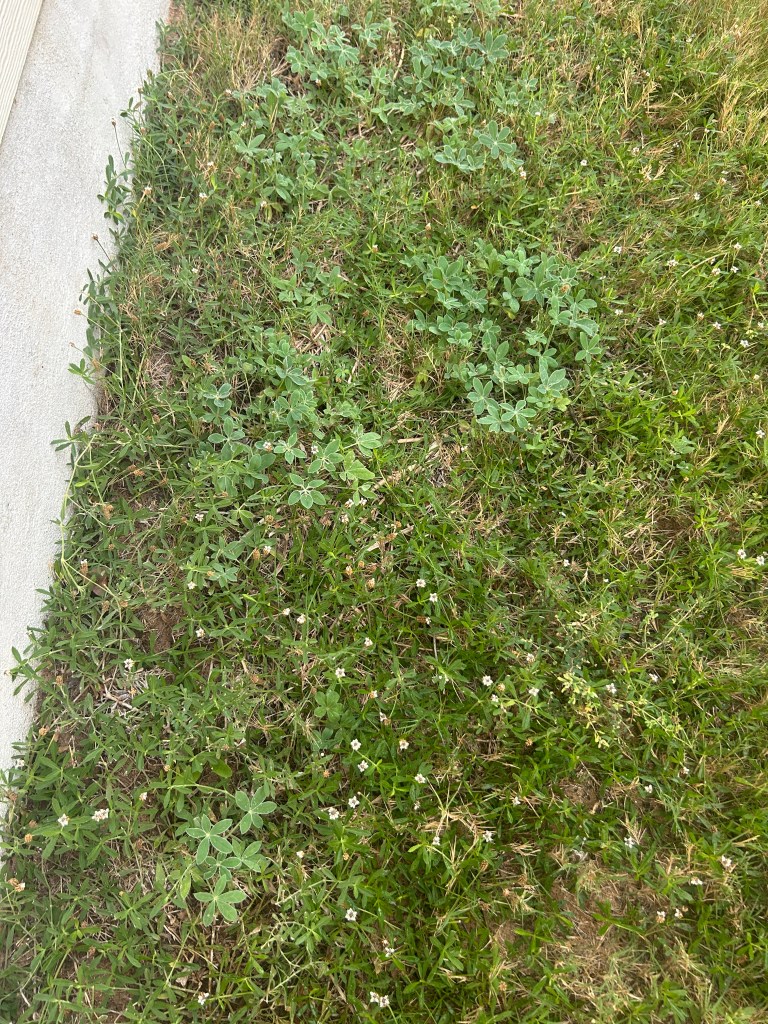
In the photo below, the white dots in the foreground are Frogfruit flowers, from the groundcover that is nicely developing in front of the house, and now beginning to creep beside the house. There is about a 2-foot strip next to the house where the Bermudagrass is most sparse, and you can see new plants beginning to grow in that area.
So for now there are unplanned wildflower plants alongside the north side of the house. These are leaf rosettes that will remain small through the winter before developing further (if they do) in the spring.
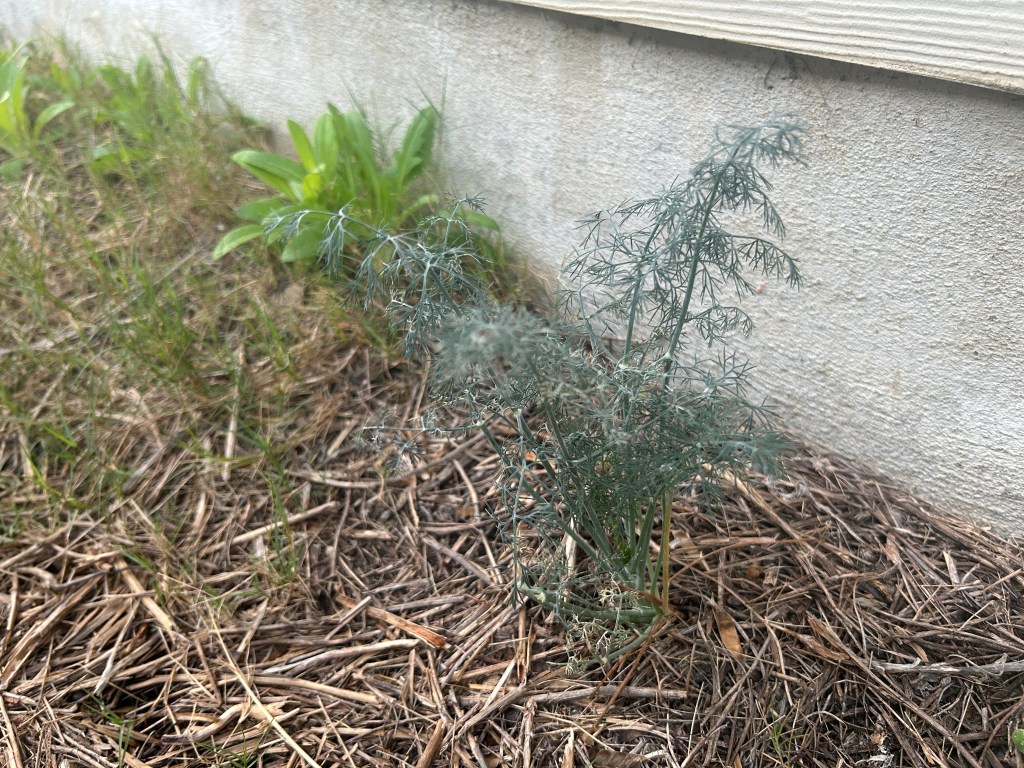
There is even a Dill plant, which I didn’t notice until I smelled it while walking by! This is a host plant for Swallowtail caterpillars.


 Rewilding My Lot
Leave a comment