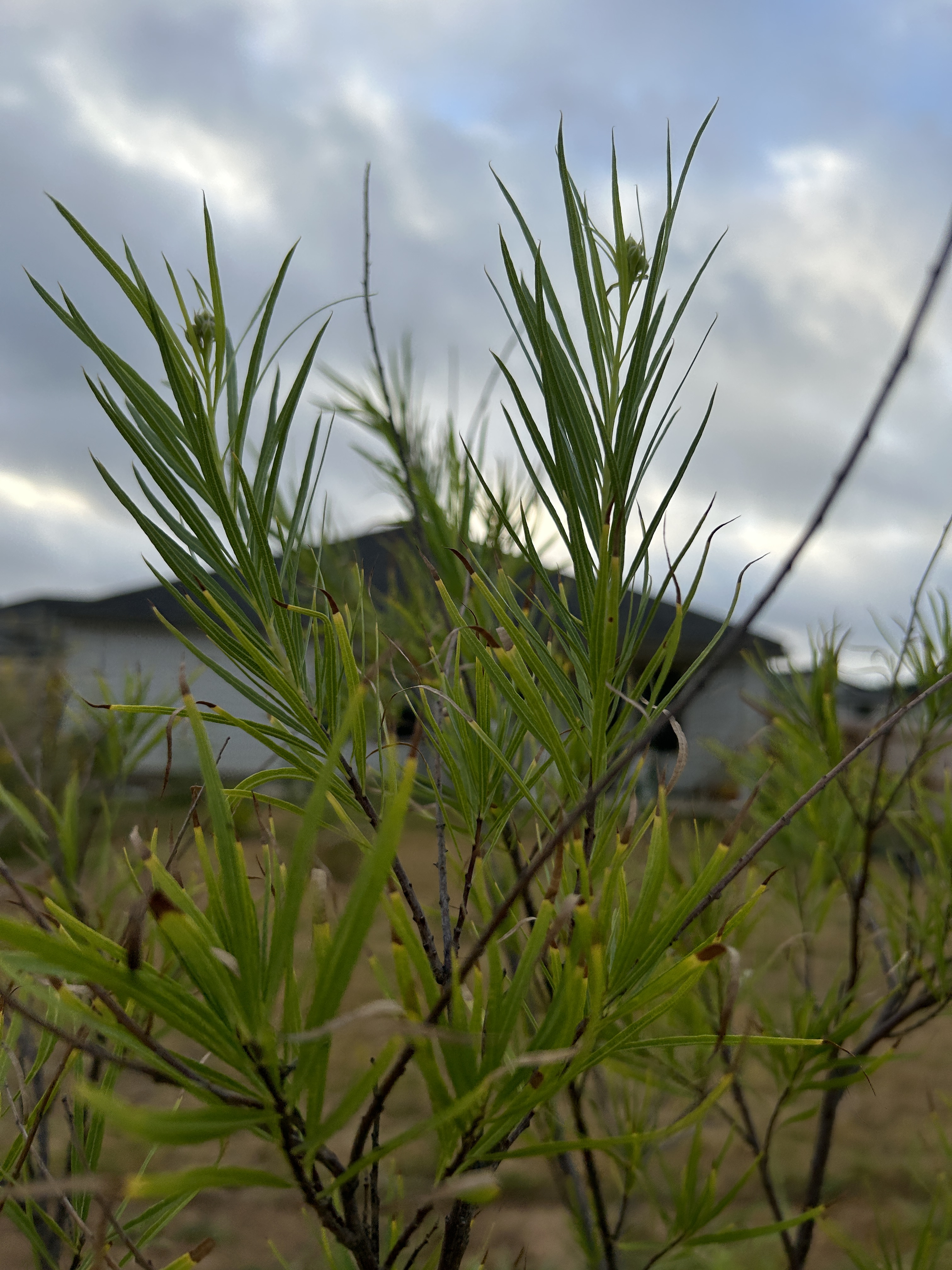

There are a lot of Mealy Blue Sage (Salvia farinacea) plants in the back garden. In the summer of 2024 they grew from seed that I had dispersed the previous fall. These are perennial plants that bloom from spring to fall and are particularly popular with large bees.
Here’s a brief video of some bee activity on Mealy Blue Sage. I can’t be certain that these are Eastern Carpenter Bees (Xylocopa virginica), but I have seen plenty of them on these plants before so it’s a good possibility. If you look at the legs of the bee in the center of the view at the end of this clip, you might be able to see bright yellow structures. Female Carpenter Bees have dense clusters of hairs called pollen brushes (scopae) on their hind legs that they use to collect and carry pollen back to their nests. Other bees have pollen baskets (corbiculae) on their legs which are structurally different but which serve the same purpose.
I’d like to bring some of the Mealy Blue Sage vitality to the wildflower meadow in front of the house. Their blue color will provide a nice contrast to the predominantly yellow palette that is there now (October), and the late-blooming flowers will provide food for bees and other pollinators. Although these are perennial plants, as salvias I think they will be able to endure being cut down for the winter.
I am using three strategies to add Mealy Blue Sage to the front wildflower meadow: (1) transplant six small volunteer seedlings that have grown in the back garden, (2) introduce two small plants that were purchased at a plant sale, and (3) scatter seed produced by plants in the back garden.
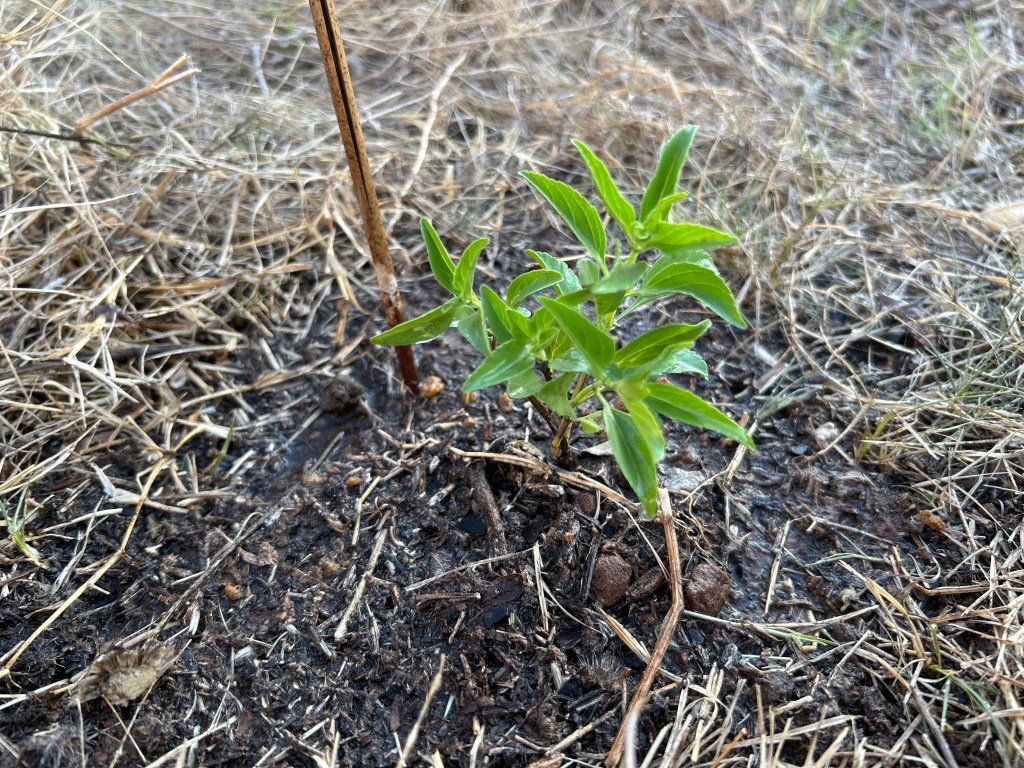
(1) Transplanting volunteer seedlings from elsewhere. There are many Mealy Blue Sage seedlings in the back garden, but I picked just six to transplant because they were in an area I was clearing for another project (see photo at the beginning of this post). The process was simply to dig them up from one place, put them into small holes dug into the meadow, and water them well. I’ve marked them with short sticks for now so that I can give them some extra water while they settle in.
Here’s one of the little seedlings after transplant:
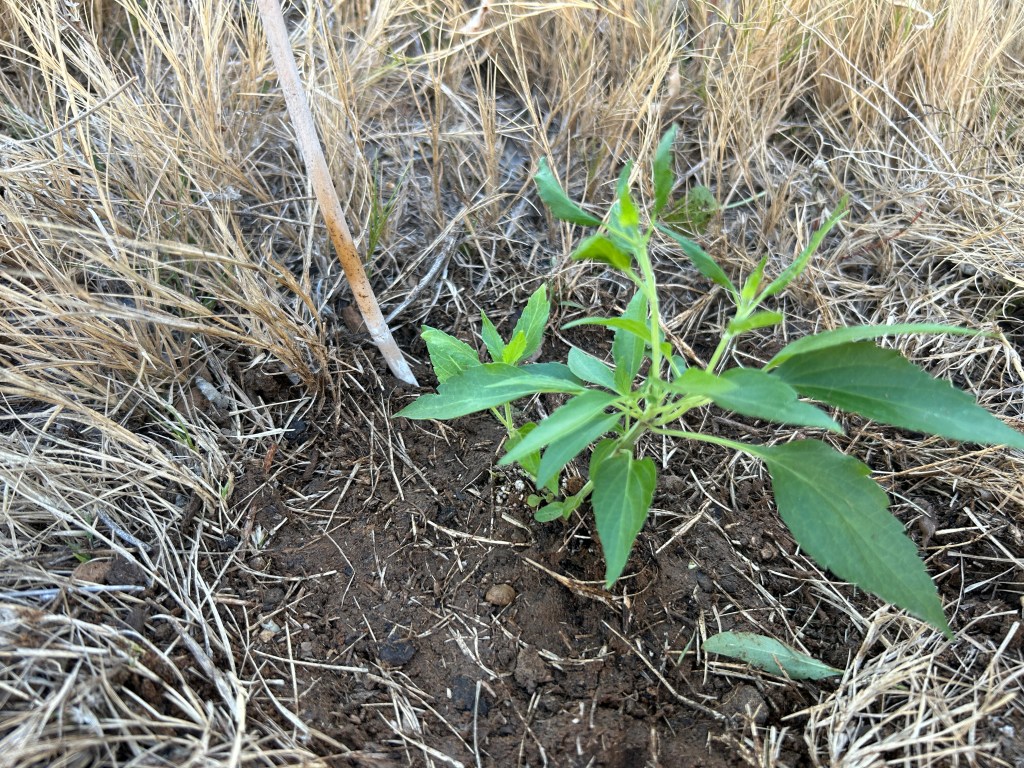
(2) Planting purchased plants. This wasn’t in the original plan, since I hoped that the seedlings and seed generated by my own plants would be enough to get a population going in the meadow. However, there were two healthy little plants in my local Native Plant Society of Texas plant sale recently, so I bought them!
These new plants are only slightly bigger than the ones I moved. Here’s one. The leaves of the plants from the two different sources aren’t quite the same, so maybe there is a little genetic diversity, which would be no bad thing.
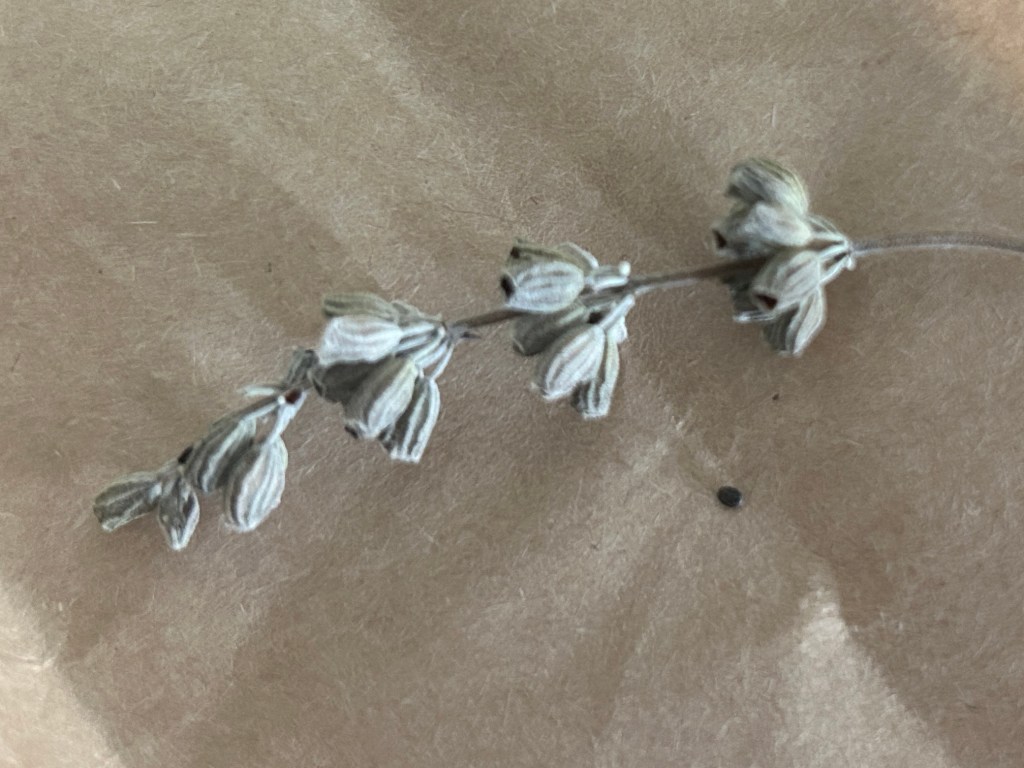
(3) Collecting and spreading seed from my own plants. As bloom spikes on my larger Mealy Blue Sage plants behind the house start to mature, I’ve been collecting some of the seed heads and storing them in a paper bag. Mealy Blue Sage seeds are small and most likely when it comes time to do the seeding I’ll give the bag a good shake before spreading the entire contents on the ground. Another thing I can do is to trim plants from the back garden later in the year, shred the branches, and spread the resulting mulch on the meadow. There are likely to be seeds in the shredded material as well.
Here’s an example of one seed head that I’ve collected. The tiny black dot is a seed!


 Rewilding My Lot
Leave a comment