
Fall is a good time to mow the Thunder Turf area, which is the perimeter of short native grasses around the back garden. Thunder Turf is a blend of Buffalo Grass (Bouteloua dactyloides), Blue Grama (Bouteloua gracilis), and Curly Mesquite (Hilaria belangeri), and in my particular situation, Curly Mesquite is the one that has taken up the greatest area. Here is one clump of Curly Mesquite.
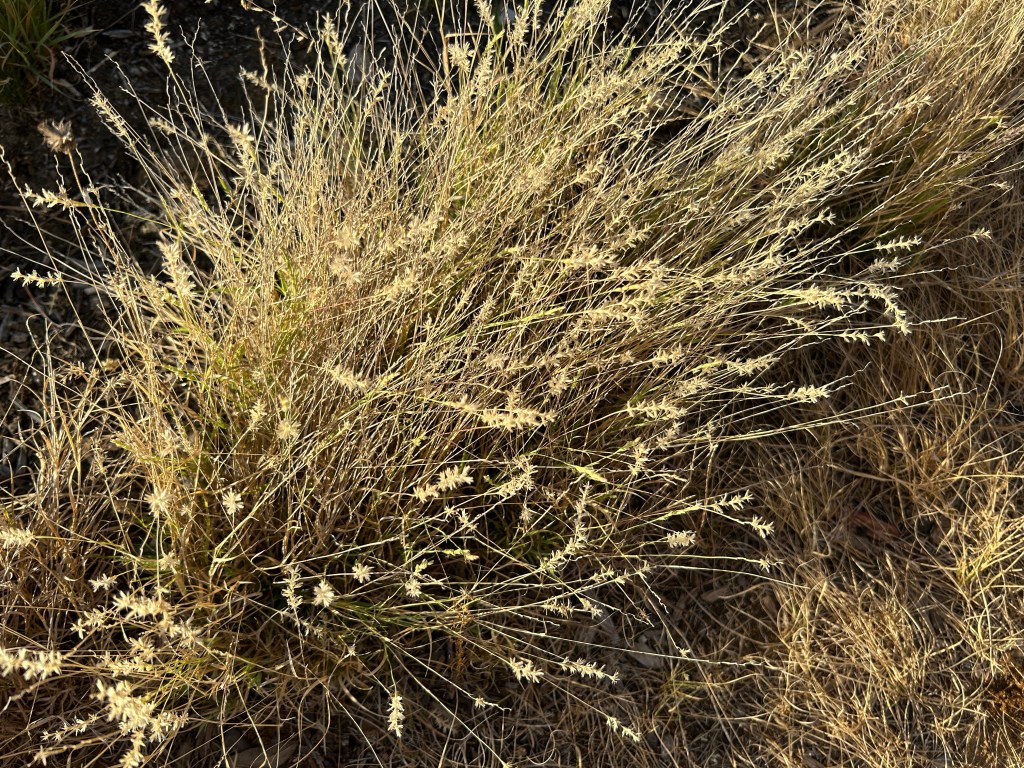
All three Thunder Turf grasses have had seed heads for weeks, and mowing this area now (October) will move some of those seeds to bare patches.
You will see from these photos that the grass area is very dry. Our last rainfall was 0.62 inches on September 8, more than six weeks ago. Everything in the garden is rather crispy, but when rain finally comes, I am hopeful that plants will perk up and seeds will germinate.
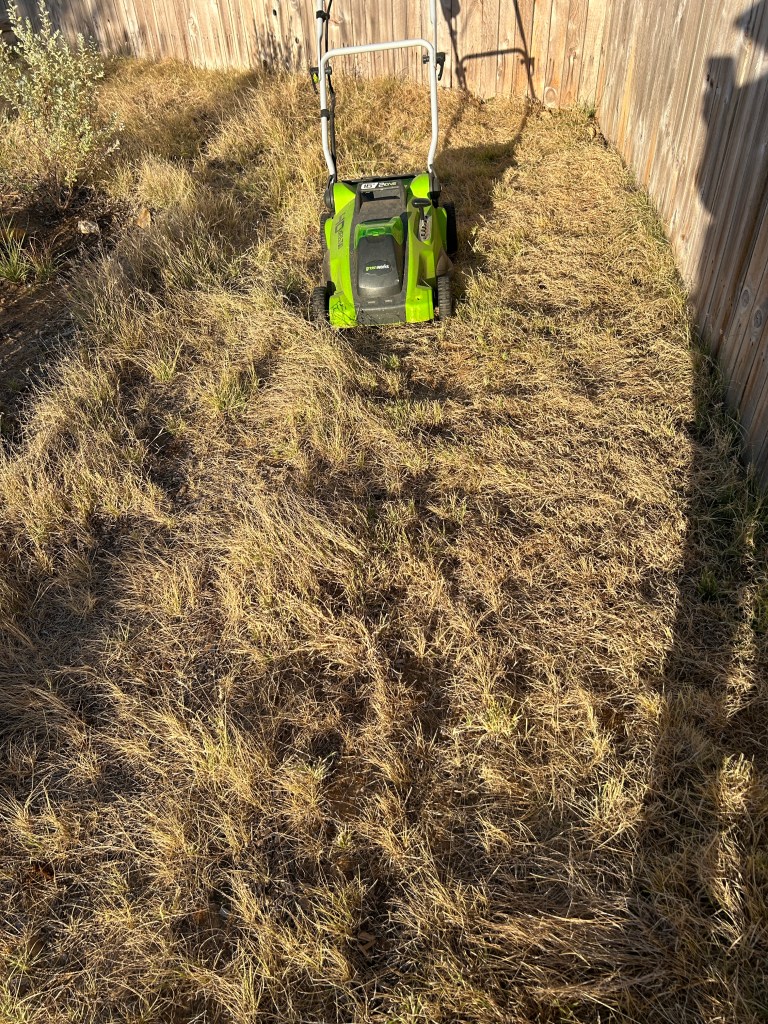
The photo below shows mowing in progress. To the right of the mower is cut, and to the left is yet to be done. I think the last time I mowed this area was about six months ago, so you can see that Thunder Turf doesn’t ever get very tall.
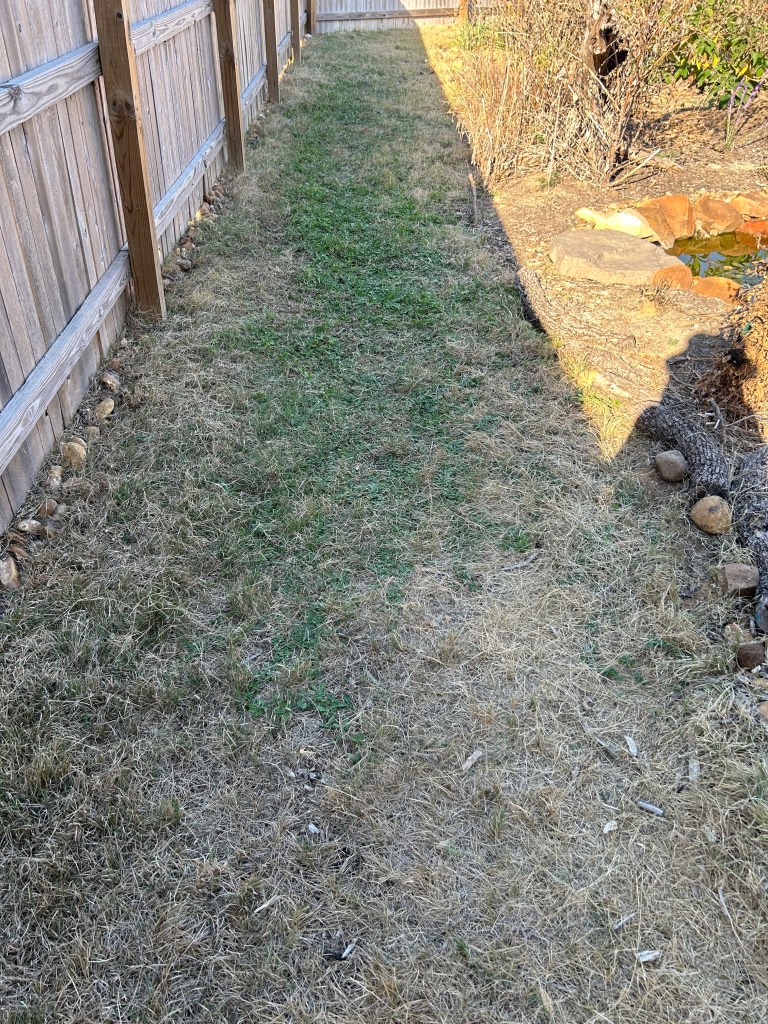
The photos below are a visual tour of the different parts of the Thunder Turf area (after mowing). Because these grasses are around the perimeter of the garden, each section gets a different experience of light, and encroachment from neighbors of water or unwanted plants. Because of the odd shape of our lot, we have six neighbors who share portions of fence with us.
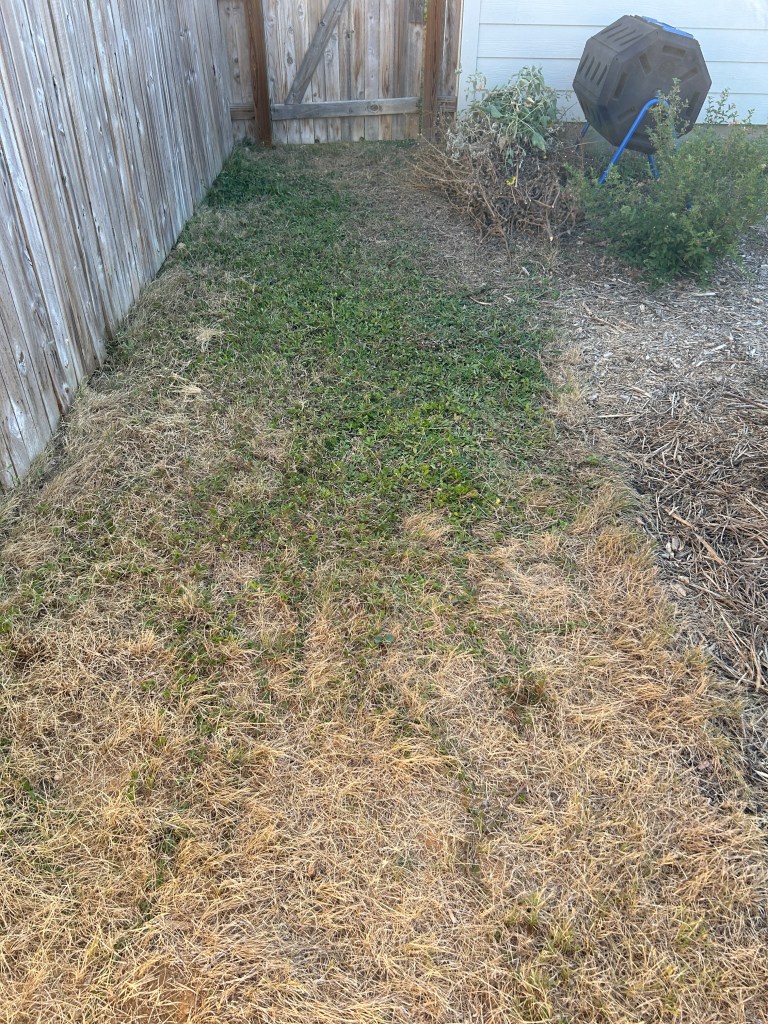
The side on the south gets significant shade from the fence, and it is also the garden low point so this is where rain water collects if there is run-off. I have allowed Frogfruit (Phyla nodiflora) — the greener area in the photo –to mingle with the grasses and help with soil coverage, but I do have to watch that the Frogfruit doesn’t take too much territory.
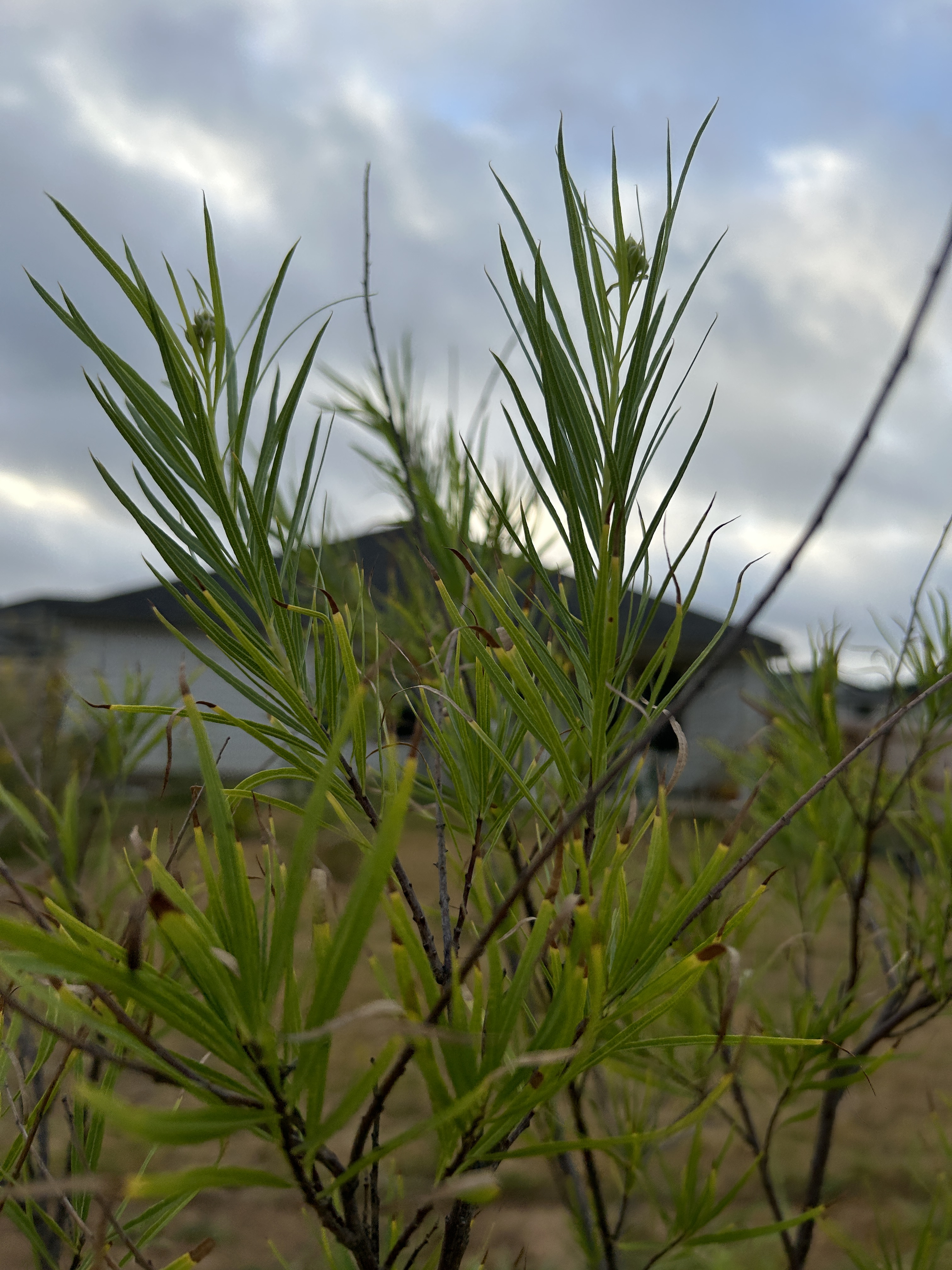
The Thunderturf at the back of the garden was the first to establish well. Here it is being partially shaded by the Desert Willow tree.
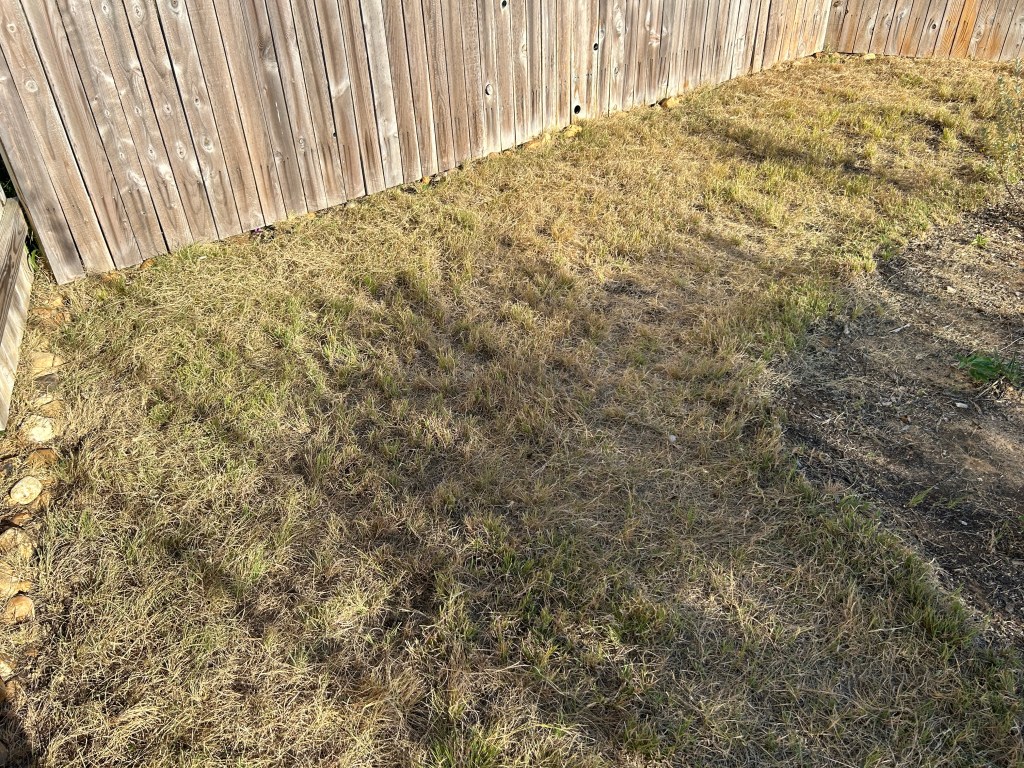
The longest strip of Thunder Turf is on the north side.
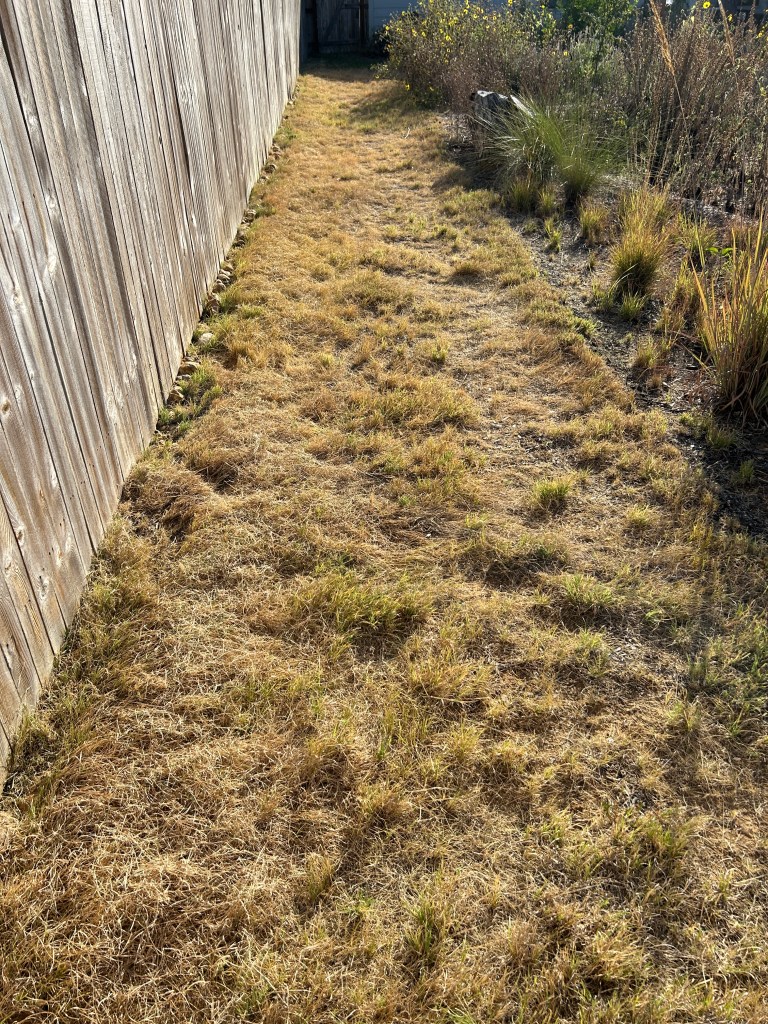
Near the exit gate on the north side is another location where I have allowed Frogfruit to help out. I didn’t plant it here; it migrated from an intentional strip that is next to the house. This area gets a lot of traffic, so I don’t mind having the resilient Frogfruit there.
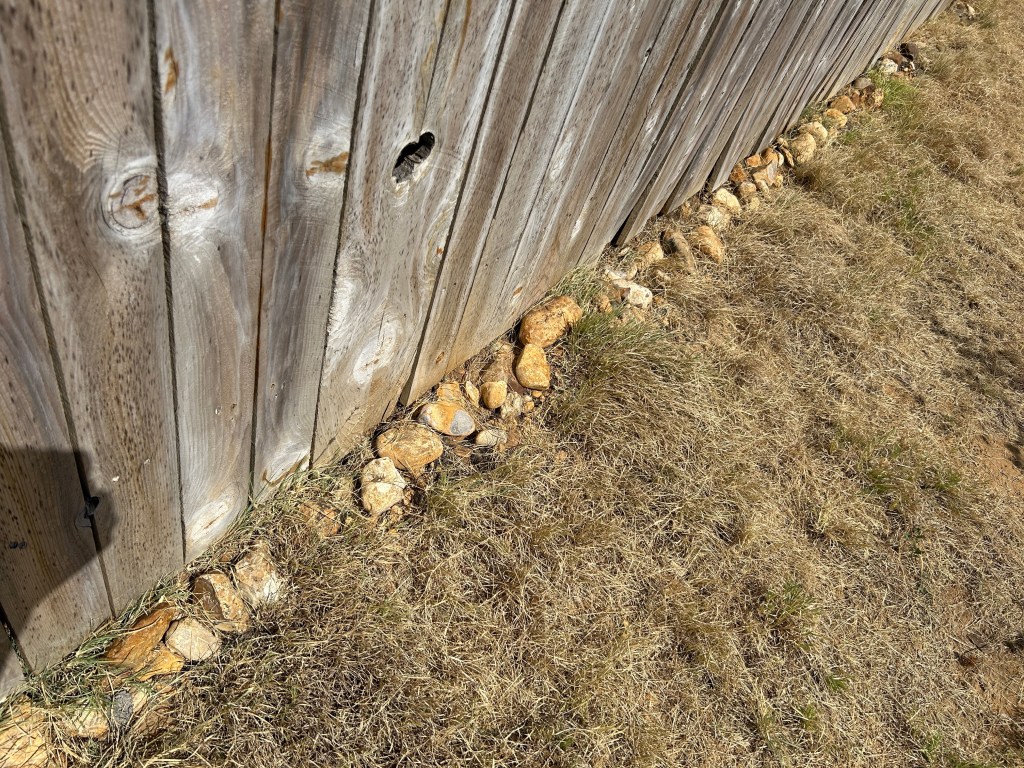
When we first moved here in 2023, the neighboring lots had not been developed yet. As a makeshift boundary at the edge of our property, I placed stones (all dug out of the ground here!). The primary goal of the stones was to prevent erosion of soil out of our garden. Now that we’ve been here almost three years, the “temporary” stones are still in place, and eventually I will need to decide whether or not they are serving any useful function. If not, I may as well remove them.

 Rewilding My Lot
Leave a comment