
On a whim this year I bought a small pack of Rain Lily aka Prairie Lily (Zephyranthes drummondii) seeds. These are flowers that appear briefly after rain, so they’re a nice pop-up surprise appearing en masse on roadsides.
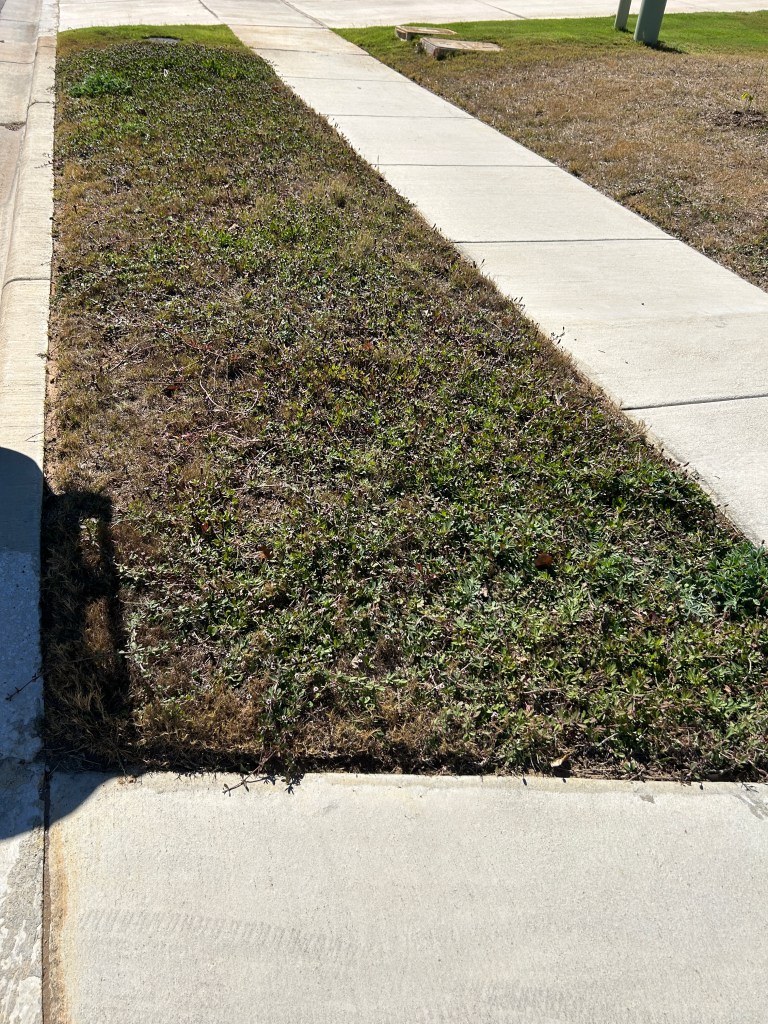
A couple of years ago I tried planting a few seeds that I took from a roadside rain lily, but they never grew. This time I bought a pack of seeds from Native American Seed. There were only about 35 seeds, so I pushed each one individually into the soil of my “hell strip” — the piece of ground between the sidewalk and the street, where the primary plant is Frogfruit (Phyla nodiflora).

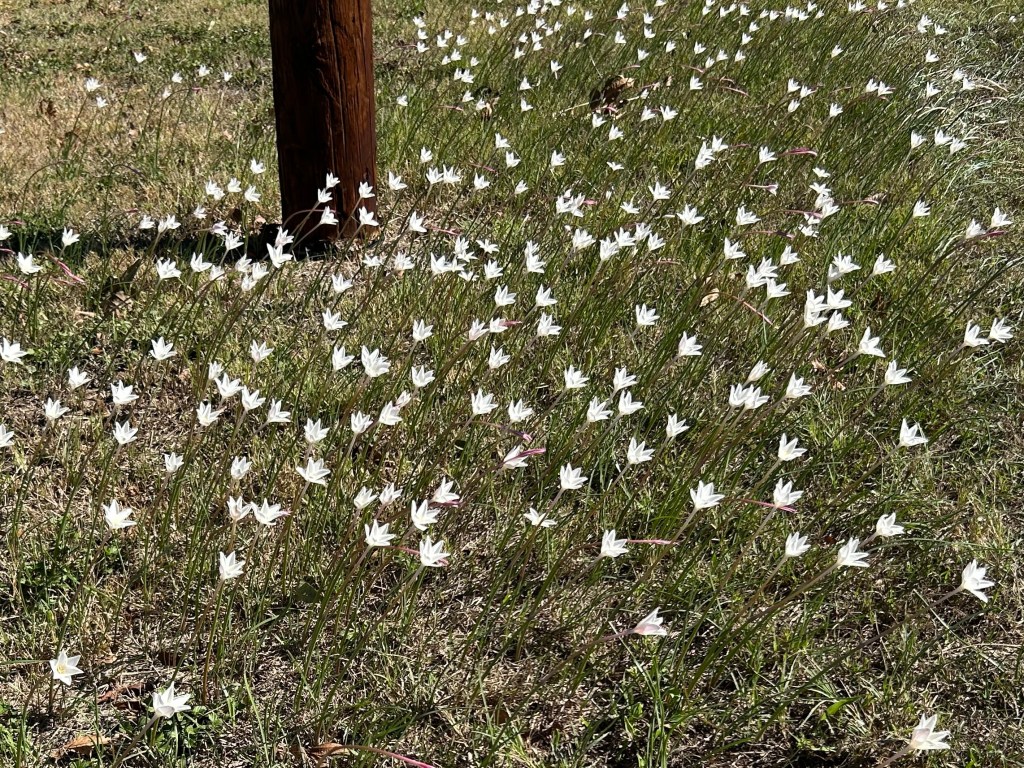
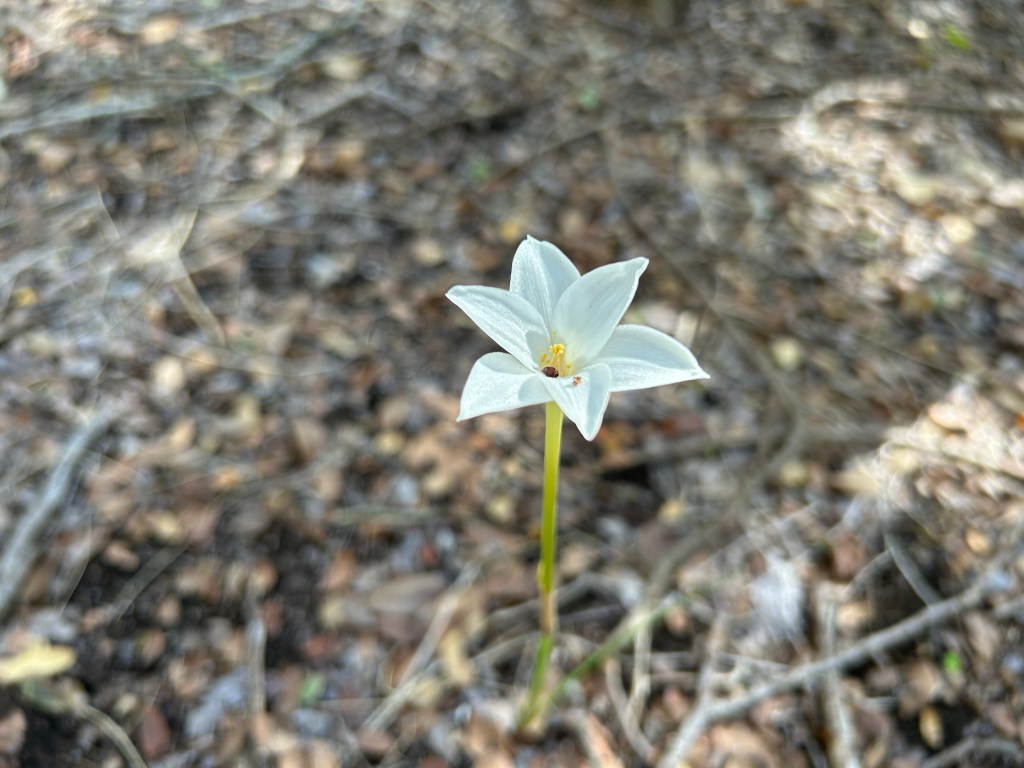
As it happens, at the time of this writing (October 30, 2025), rain lilies are abundantly appearing around Seguin, after our 1.5 inches of rain five days ago. The first picture is of a few near our development, and the second is of a solitary one that I found deep in the forest at Park West.
Taxonomy rabbit hole warning… While researching for this post, I found it confusing that local rain lilies seemed to have different scientific names. That in itself wasn’t too surprising — I’ve encountered shared common names for different plants before, and it wouldn’t surprise me to find multiple plants that look similar and behave the same way after rain. However, this was more peculiar. The seed supplier uses Cooperia pedunculata, but that name isn’t found in the Native Plant Society of Texas database. The Lady Bird Johnson Wildflower Center database does list this plant, but also notes that it is synonymous with Zephyranthes drummondii and Wikipedia has a brief entry about that discrepancy. Armed with that information, I went back to the NPSOT database and it is indeed there with a footnote regarding the previous scientific name.

 Rewilding My Lot
Leave a comment