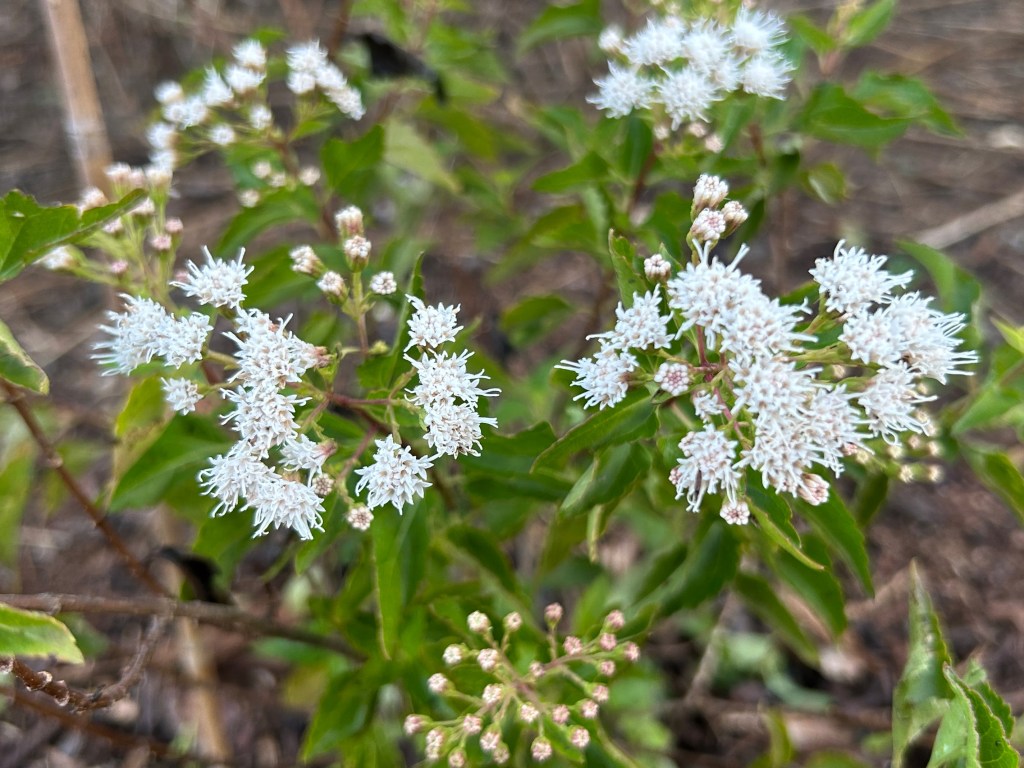
Very early after I arrived in Seguin, I planted Gregg’s Mistflower (Conoclinium greggii) because I knew that it was a butterfly magnet. It is particularly beloved by Queen and Monarch butterflies, but many other pollinators visit it as well. This is a photo from a year ago, on a day when I happened to see several Queens at once on the Gregg’s Mistflower. I’ve seen similar activity this year, but don’t have a good photo.
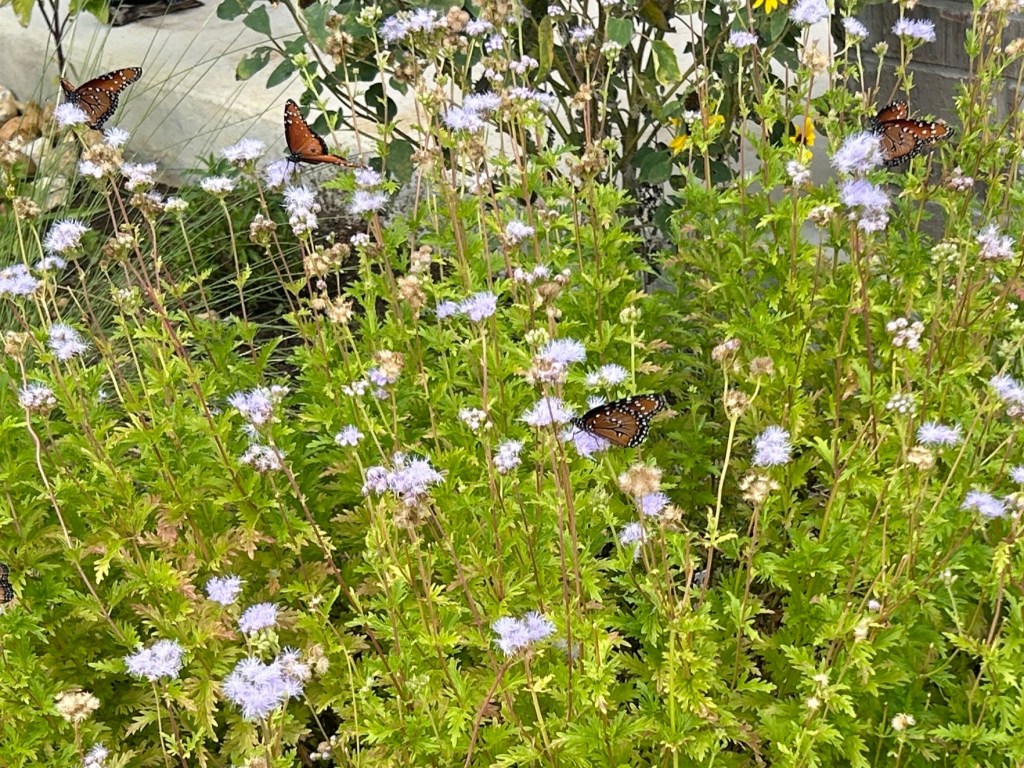
Gregg’s Mistflower grows in clumps that spread. After two years here in my pollinator garden in front of the house, it had taken up a little more territory than I liked and I gave it quite a severe cut back last winter. However, it grew back nicely and is an important source of food, especially for migrating butterflies in the fall.
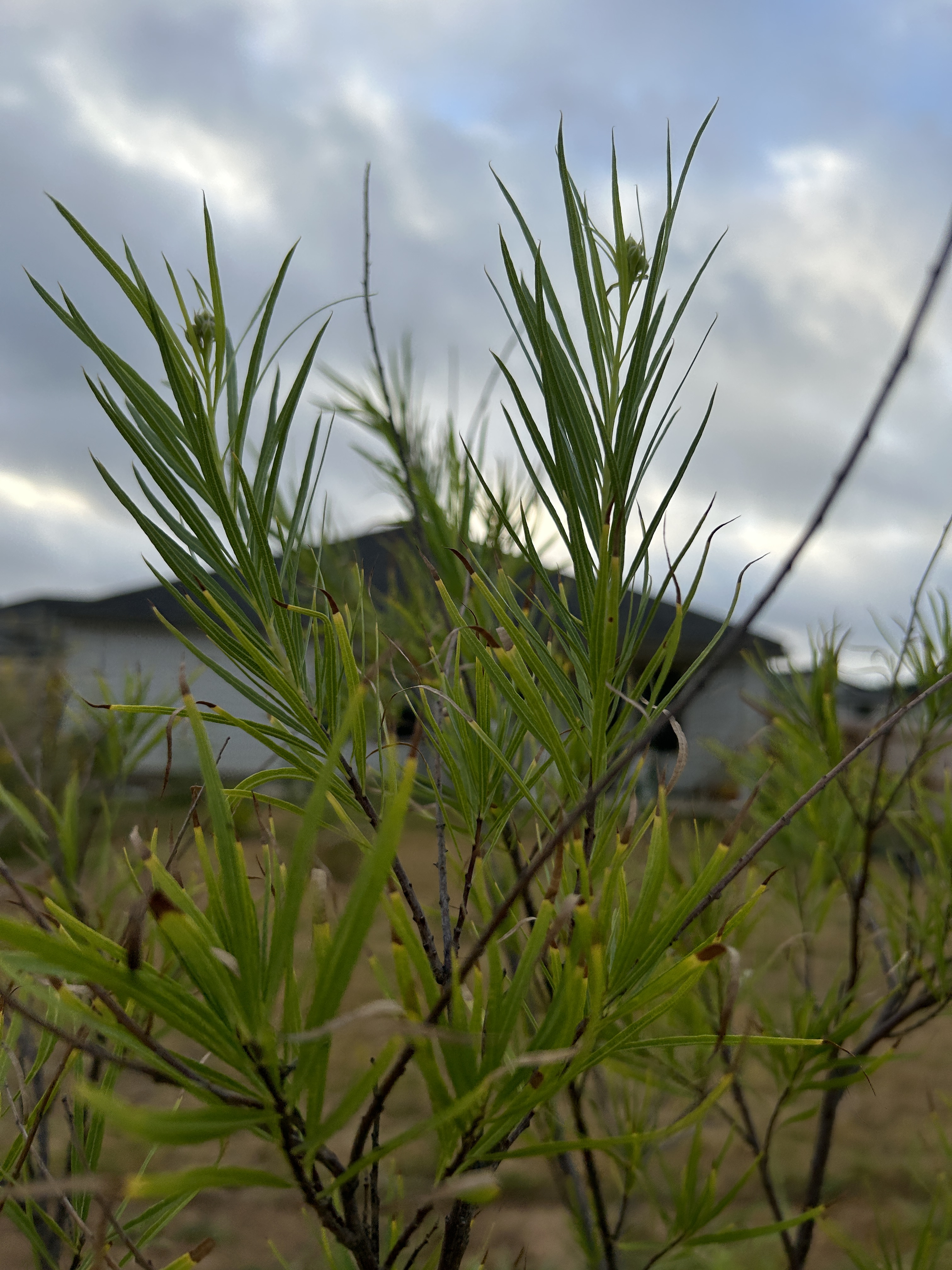
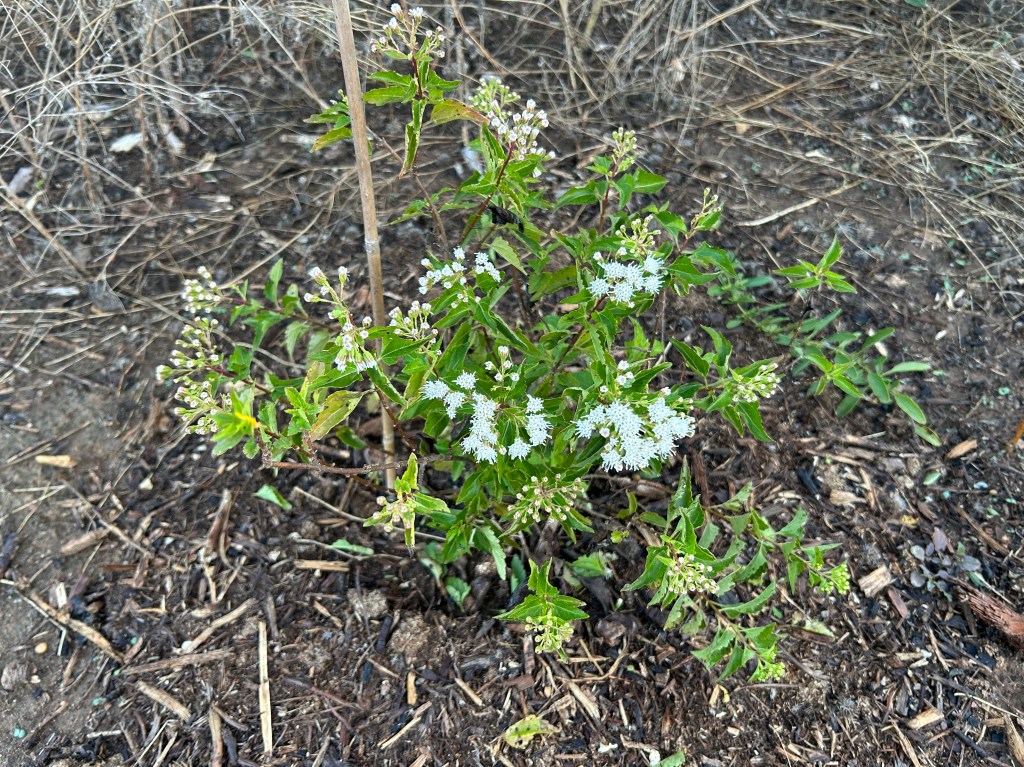
I was already familiar with Gregg’s Mistflower from my time in Houston, but another mistflower that I did not know about when I came to Seguin was White Mistflower aka Shrubby Boneset (Ageratina havanensis). I planted a White Mistflower in spring 2025.
You may see from the photos below that the mistflower blooms are a similar shape (Gregg’s are purple; White are white).
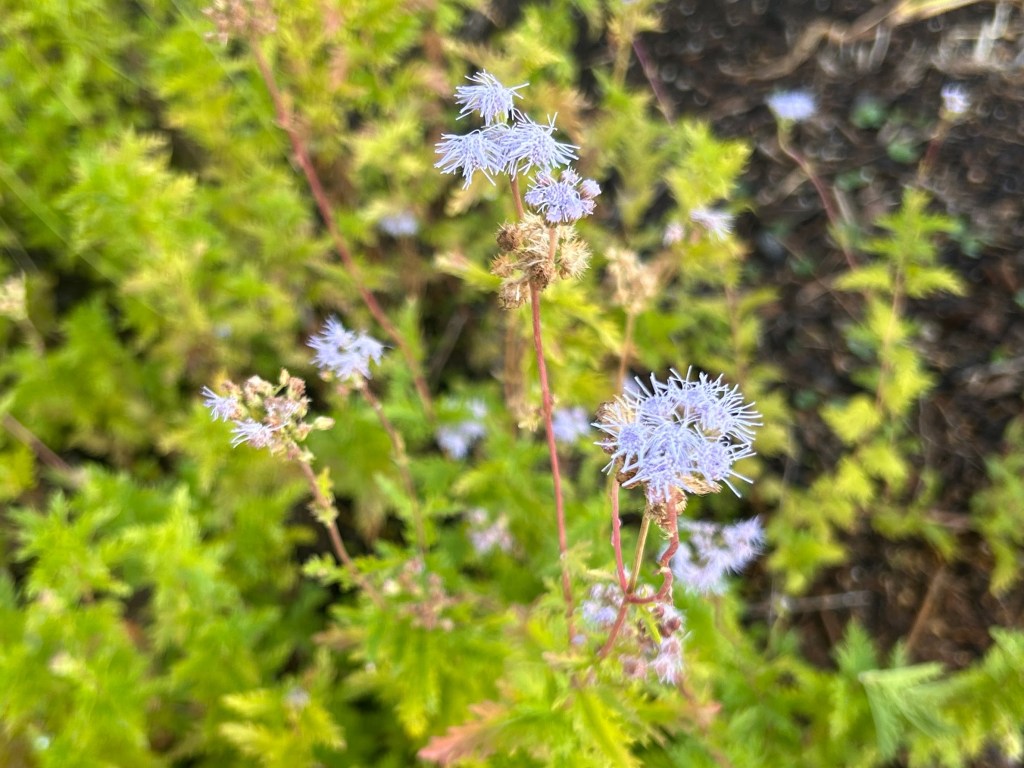
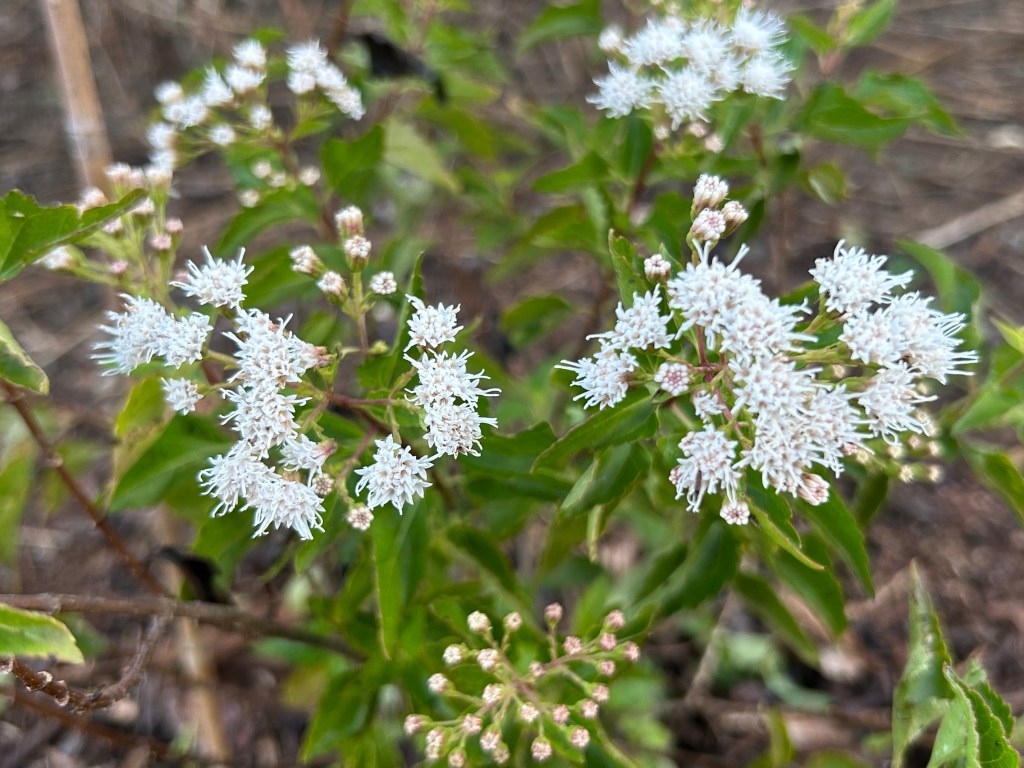
Each of them is drought tolerant, highly attractive to butterflies, and a larval host for the Rawson’s Metalmark butterfly. However, their growth forms are different and I wanted both in the garden.
Gregg’s Mistflower is a deciduous perennial plant with soft stems that die back in the winter. It grows in clumping colonies and blooms from spring to fall.
White Mistflower is a semi-evergreen perennial shrub that can grow up to 6 feet tall. In areas with lower rainfall (like ours), it is likely to bloom only in the summer and fall. Since it is a fall bloomer, that is why I planted this one in the spring and took particular care of it during our hot summer in the hopes that it would bloom this fall. It did!
As it happens I saw some fine examples of the resilience of White Mistflower just a few days ago when I was taken on a guided tour of Canyon Lake Gorge. This is a remarkable geological feature created when a flood of the Guadalupe River in 2002 passed through a planned spillway in order to protect the nearby dam. The resulting torrent of water cut a gorge that exposed ancient rock and stripped the surface of soil and vegetation.
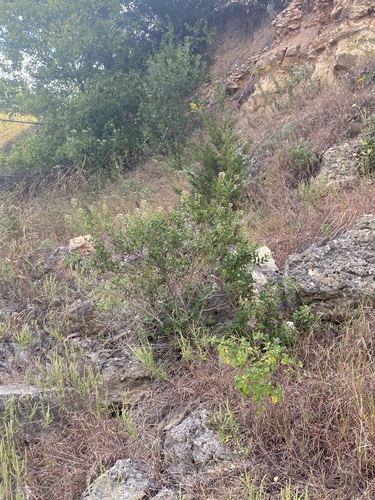
The “succession” process of vegetation returning to this area has been fascinating for biologists to watch. First, all that could survive were bacteria and algae. Eventually, enough organic material collected in crevices for short grasses and other hardy plants to grow. Now, 23 years later, there are some larger plants, and White Mistflower is one of them. Its alternate name of Shrubby Boneset is apt when you see its woody stems growing out of the rocky terrain. The root system must be strong to hold it in place with such little soil to anchor it.
Sadly, I didn’t think to take a photo of Shrubby Boneset while I was at Canyon Lake Gorge, but here’s one uploaded onto iNaturalist by username monyhoney.

 Rewilding My Lot
Leave a comment