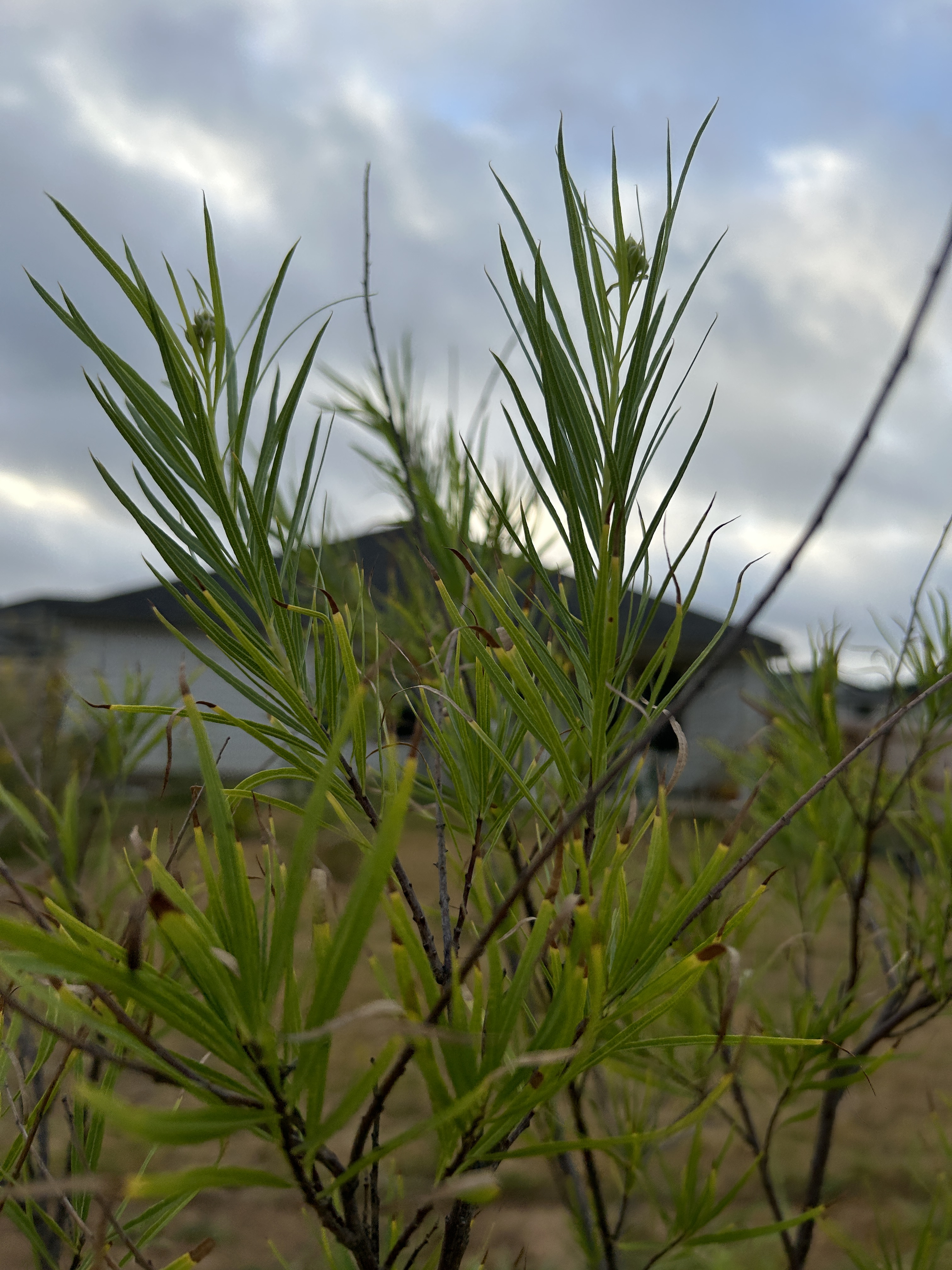

It is already mid November, but even for central Texas we still have unusually high temperatures (daytime 80s F). Despite the warmth, the garden is clearly making seasonal changes so I thought it might be interesting to take a look around.
I keep the area in front of the house fairly neat. For instance, I cut down and shredded plants in the wildflower meadow that had finished blooming and seeding. However, behind the house, there is much more being left in place over the winter to provide food and shelter for wildlife.
BLOOMING
Fall is an important time to provide food for pollinators, especially those that need to fuel up for a migration journey. Here are a few examples of my fall bloomers. Note that these are thriving, even in drought conditions.
Blackfoot Daisy (Melampodium leucanthum)

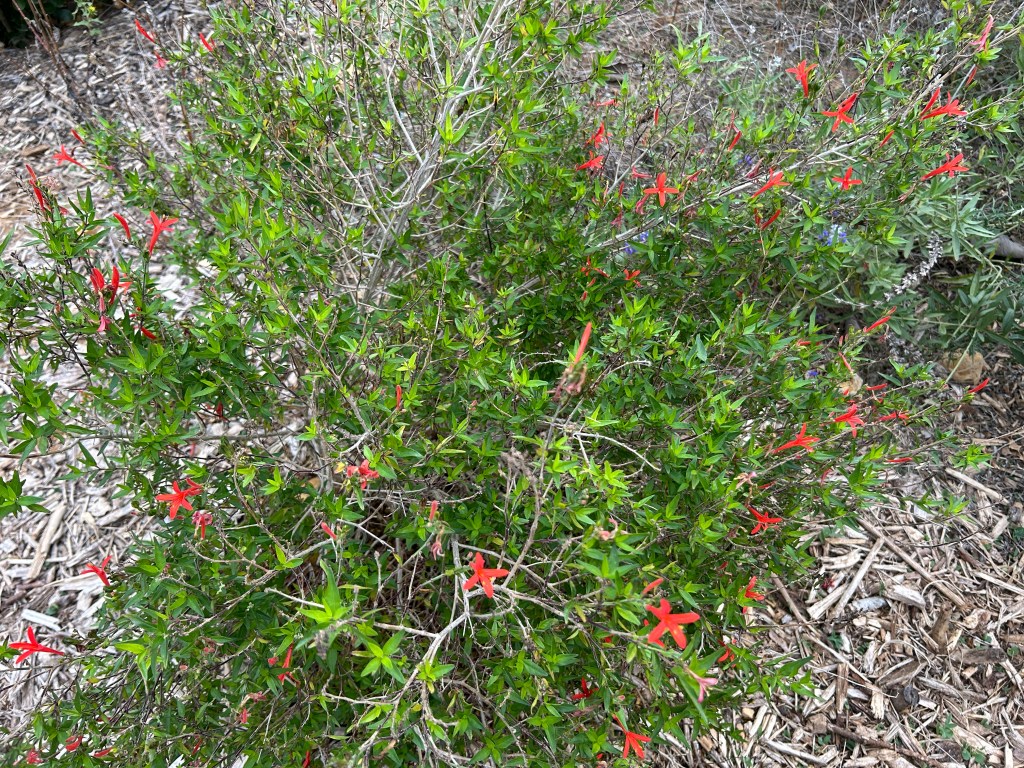
Flame Acanthus (Anisacanthus quadrifidus var. wrightii)
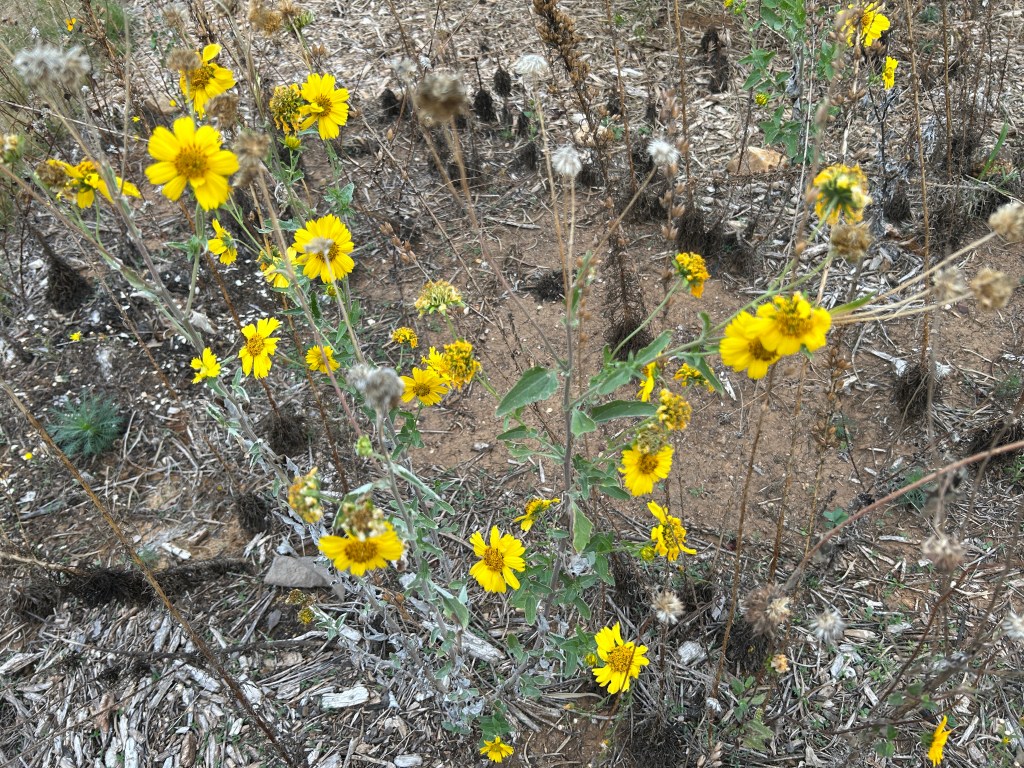
Cowpen Daisy (Verbesina encelioides)
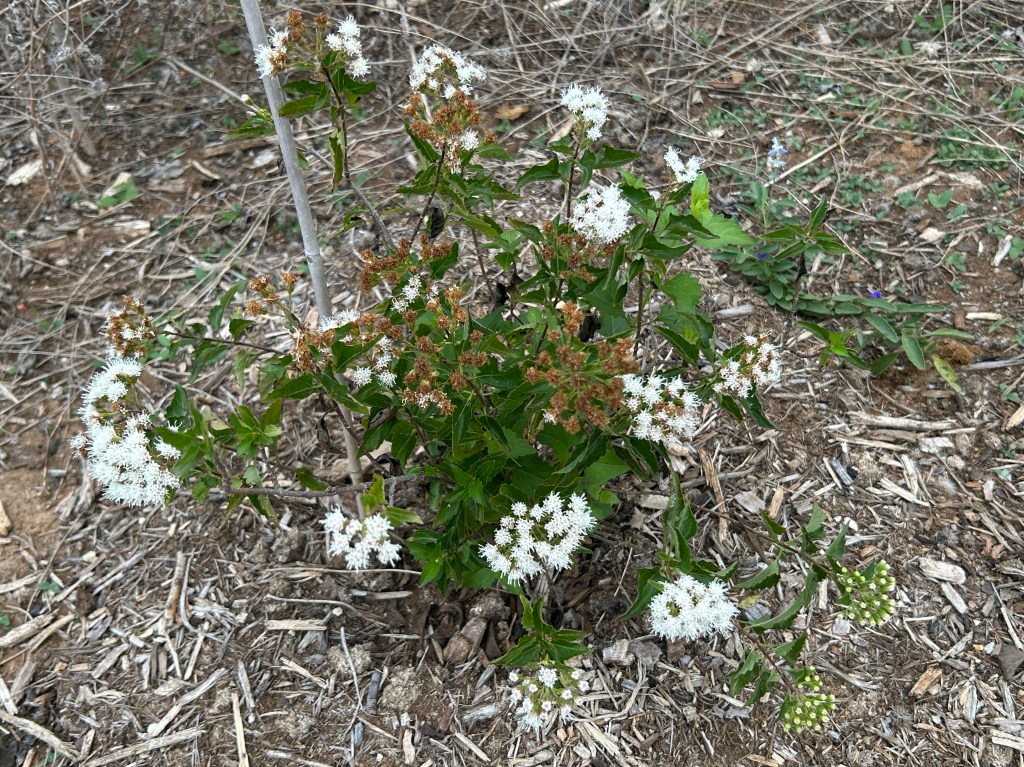
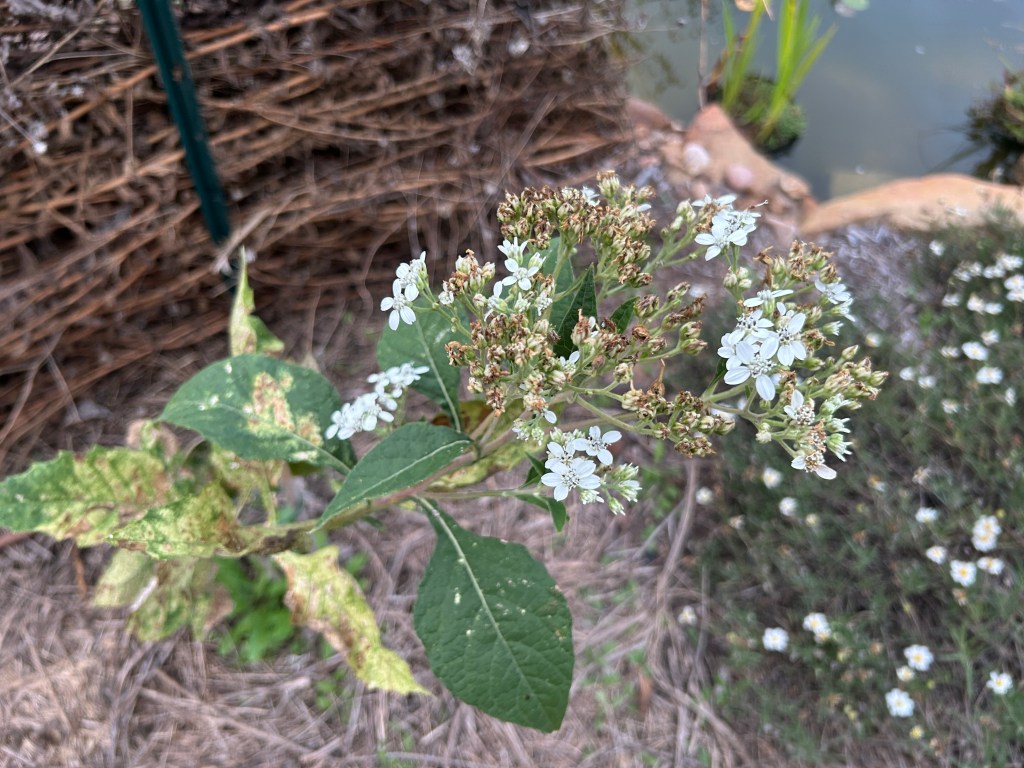
White Mistflower aka Shrubby Boneset (Ageratina havanensis)
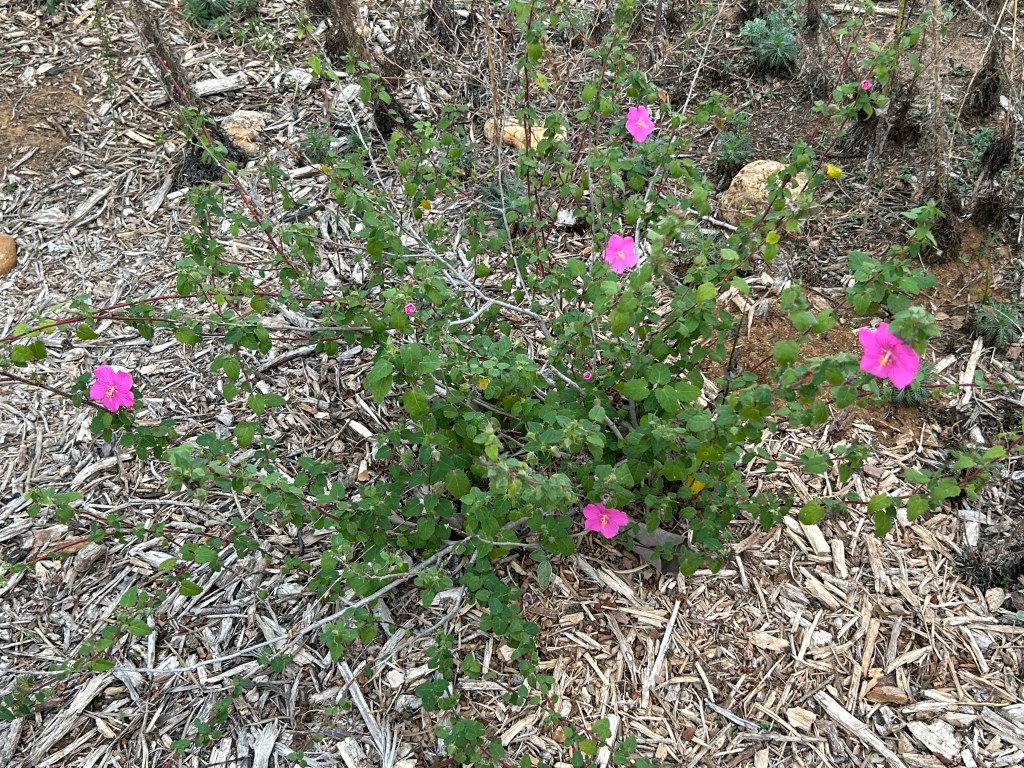
Rock Rose (Pavonia lasiopetala)
Mexican Mint Marigold (Tagetes lucida)

Frostweed (Verbesina virginica)
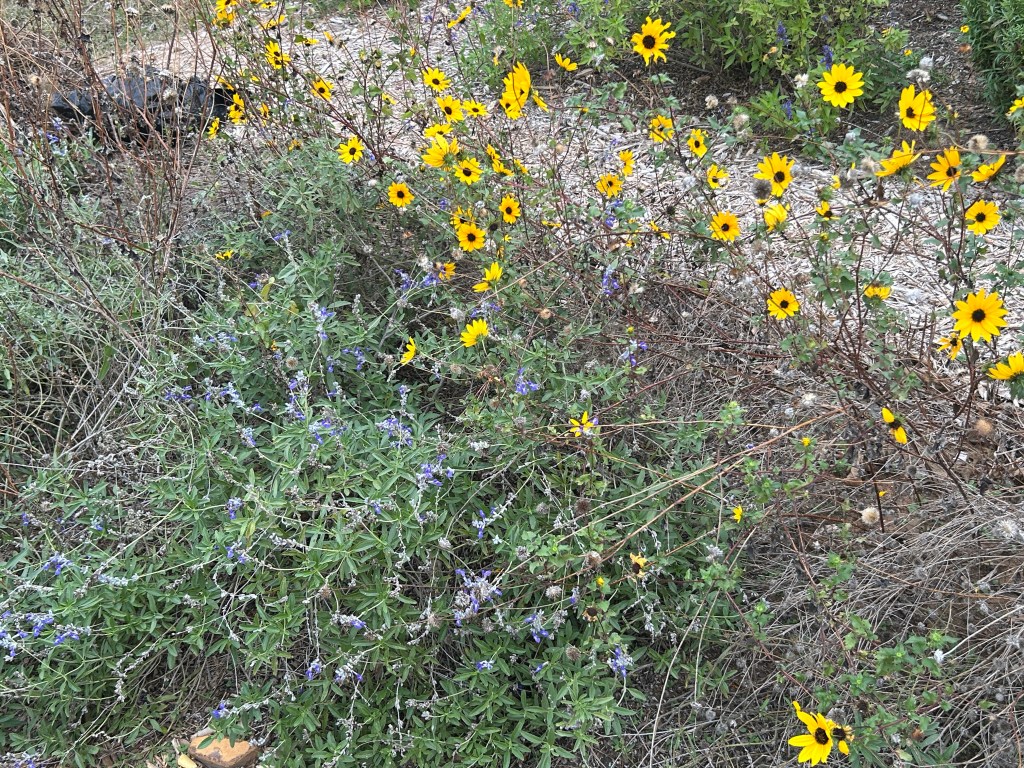
Mealy Blue Sage (Salvia farinacea) and Beach Sunflower (Helianthus debilis)
PREPARING FOR WINTER
Some plants are beginning to settle into their winter status.
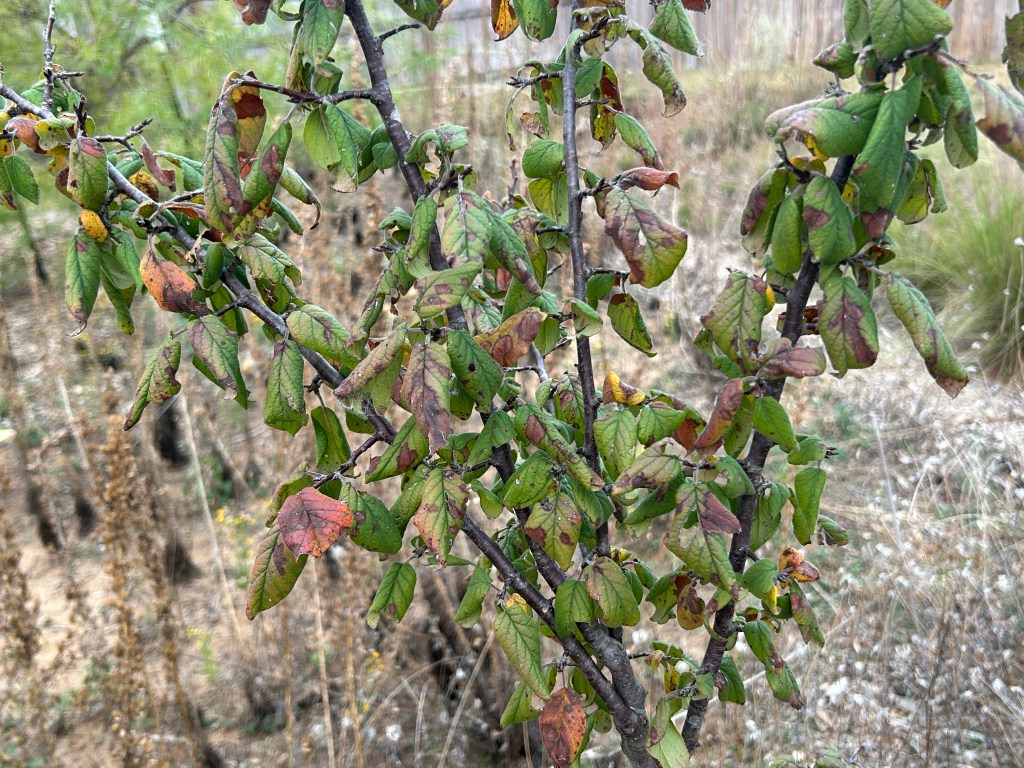
Mexican Plum (Prunus mexicana) looks like it will be losing its leaves soon.
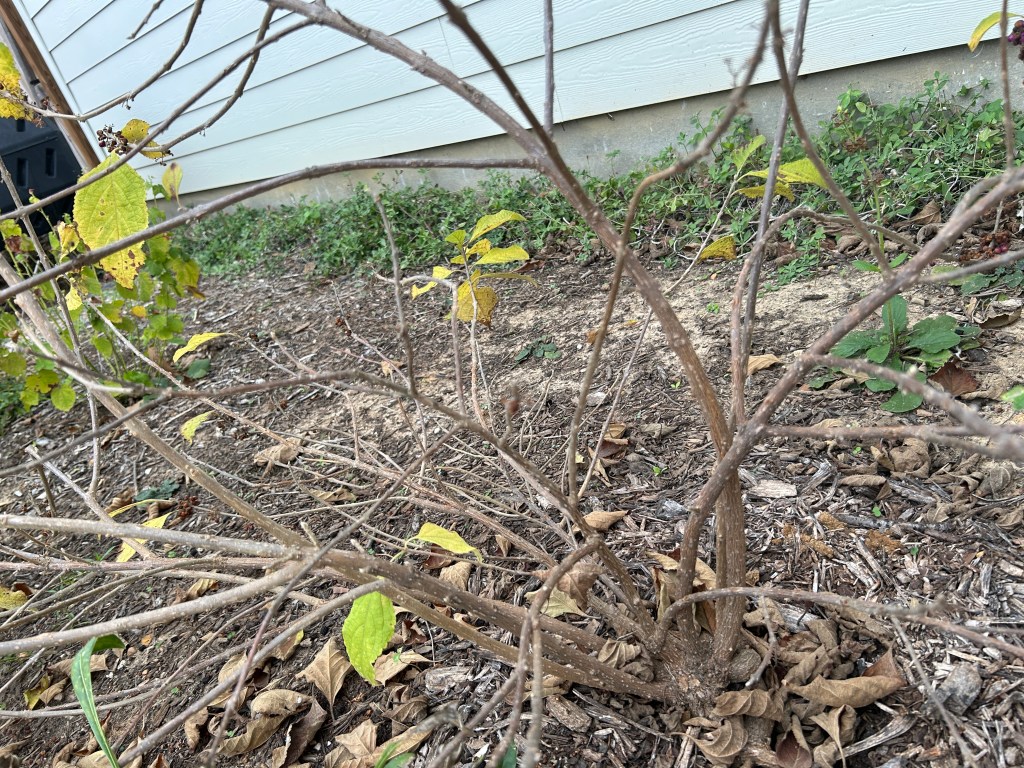
American Beautyberry (Callicarpa americana) has already lost most of its leaves.
PREPARING FOR SPRING
Spring is a time when a lot of things wake up in the garden. However, some things are already putting out new growth to get ready for next year.
There are wildflower rosettes all over the garden. Here are some in the wildflower meadow in front of the house. Most of them are Bluebonnets (Lupinus texensis), but not all are.

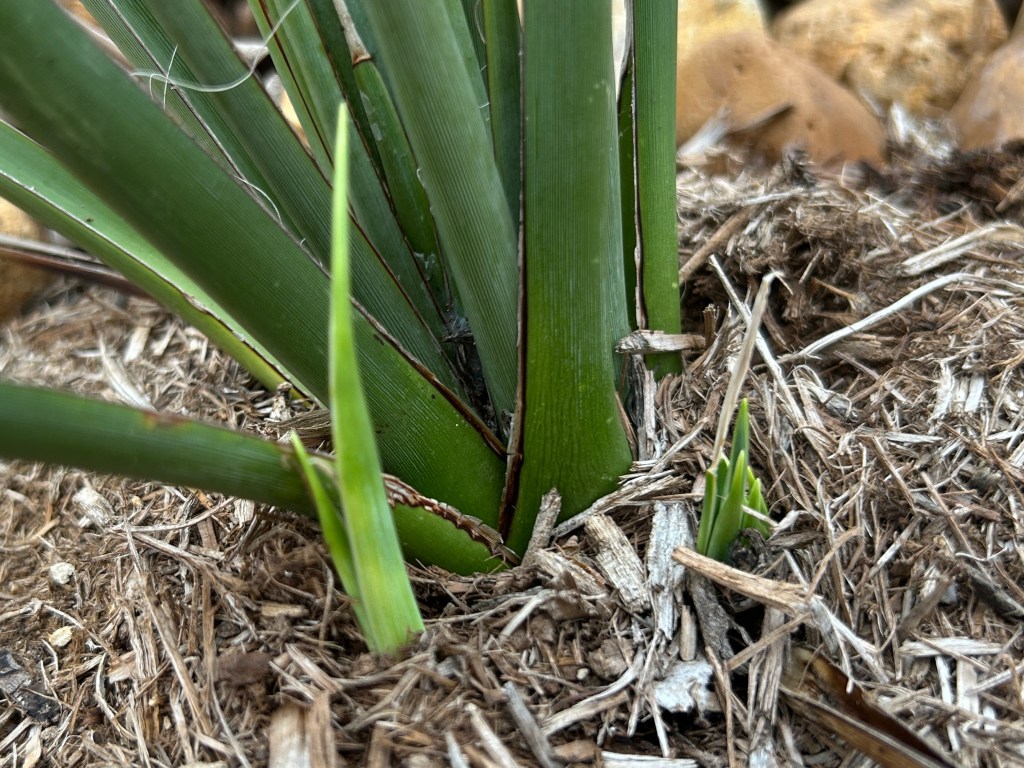
The Yellow Yuccas (Hesperaloe parviflora) that were planted just a year ago have new leaf sprouts, showing that the clumps are growing.
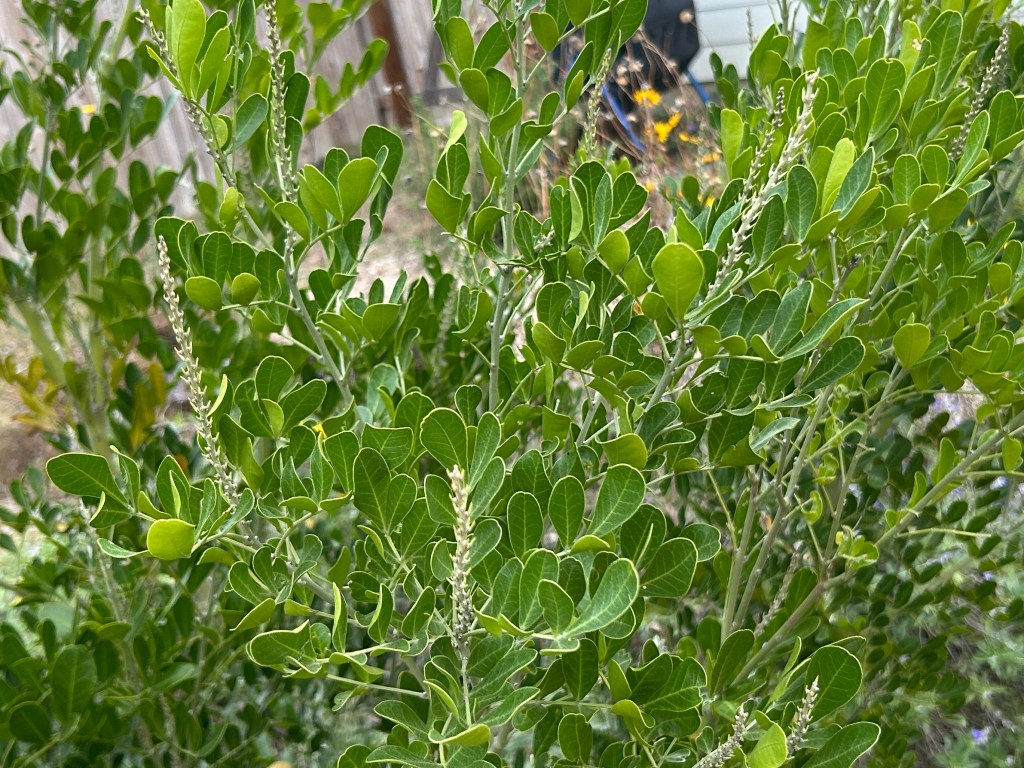
The Texas Mountain Laurel (Dermatophyllum secundiflorum) is covered with flower bud structures, which suggests that there will be plenty of blooms next spring. This year there were just a couple, but it looks like next year will be the first time for this young tree to properly bloom.
FOOD
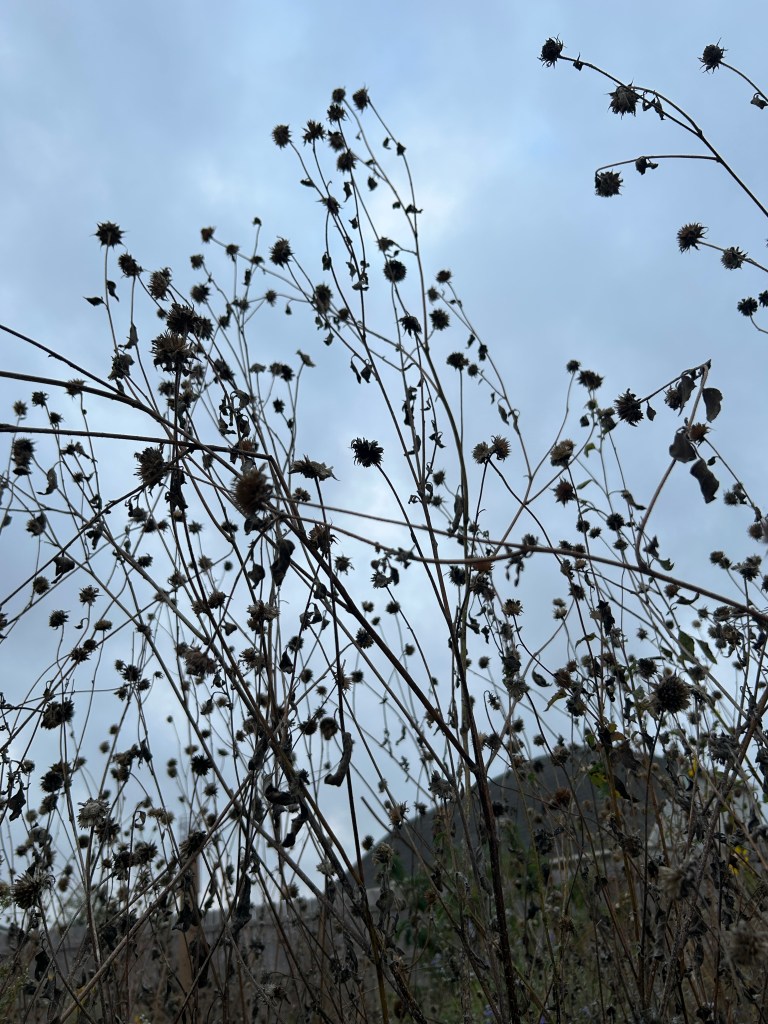
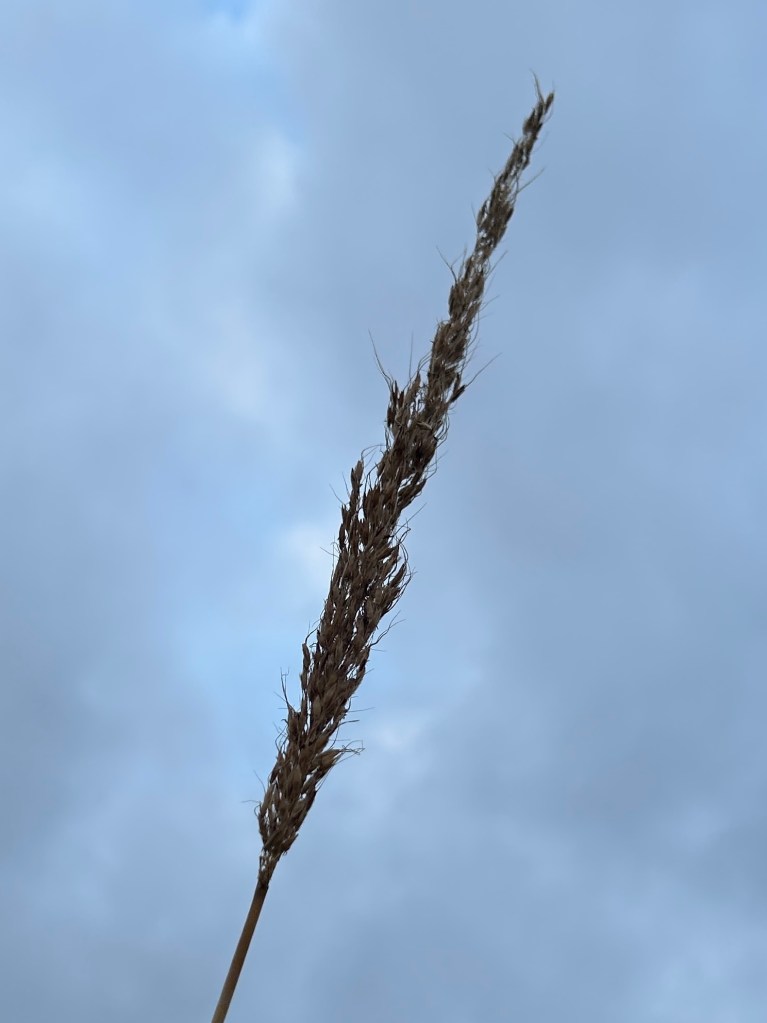
It is still on my wish list to get a tree here that will produce winter berries for birds (the challenge in that is making sure that I get a female tree, which I have not yet managed to do). In the meantime, the primary sources of winter food here are seeds.
These are Common Sunflower (Helianthus annuus) seed heads.
This is an Indiangrass (Sorghastrum nutans) seed head.
SHELTER
There are intentionally several places in this garden where creatures can shelter for a short time, or over the winter, or make a permanent home. Here are some examples.
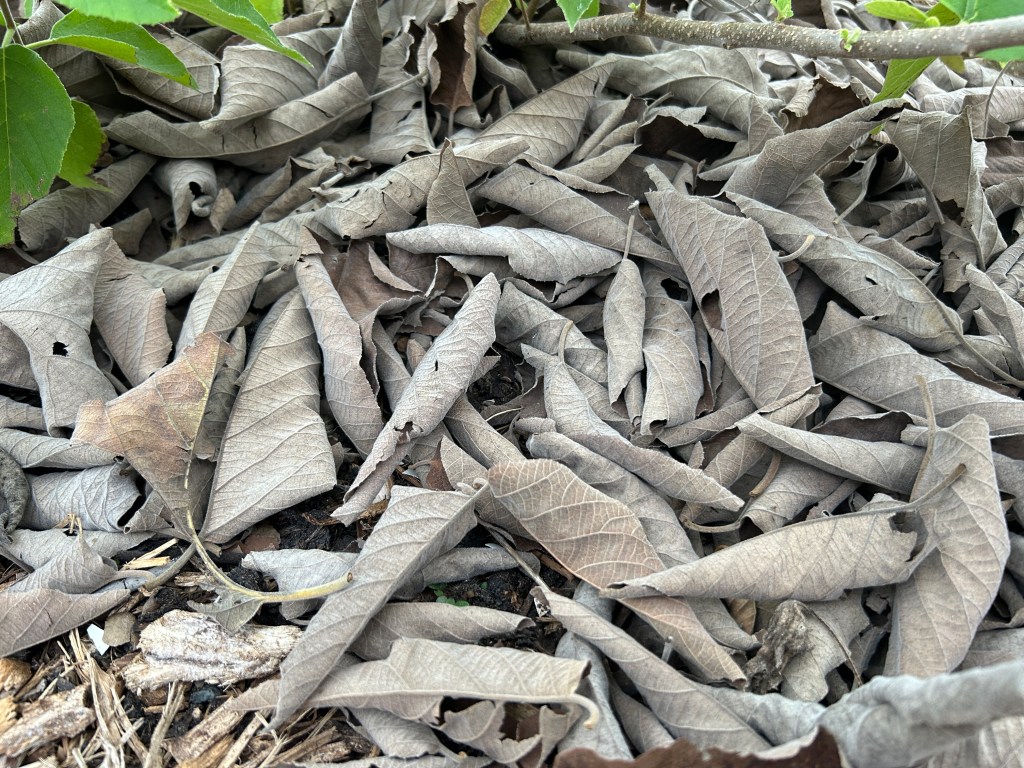
With trees being so young here, there is not much leaf litter. However, the Mexican Olive (Cordia boissieri) produces large sturdy leaves that are great places to shelter.
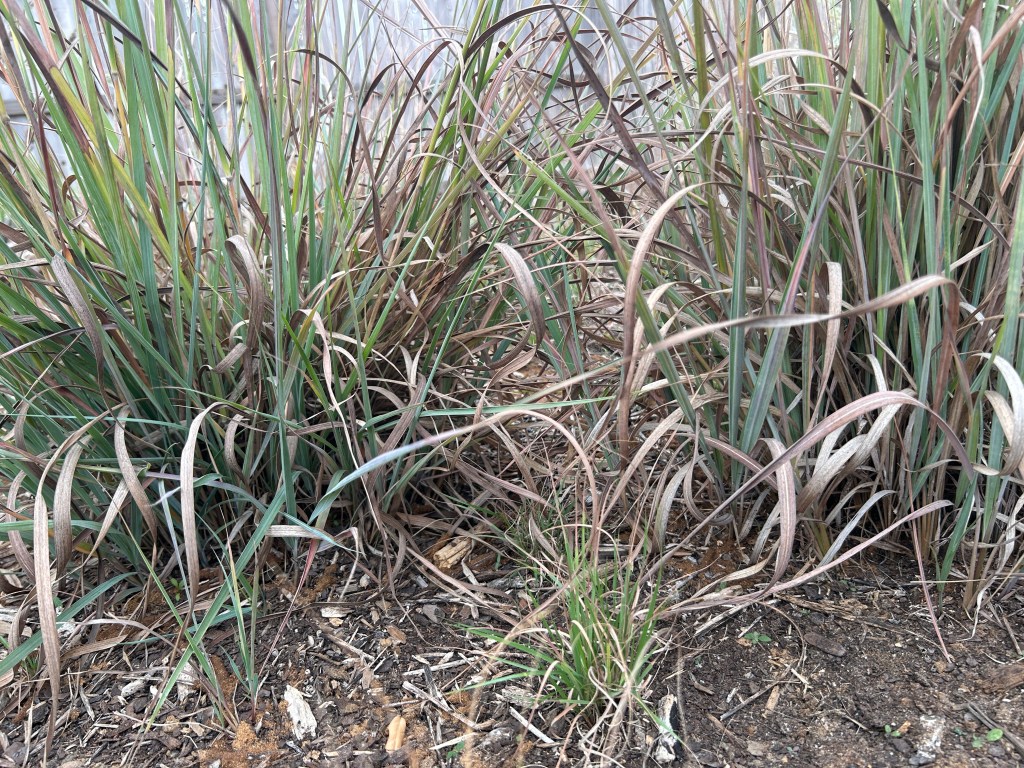
Bunch grasses, such as the native prairie grasses that I have, are places where a variety of creatures can shelter. The bigger ones in this photo are Indiangrass (Sorghastrum nutans).
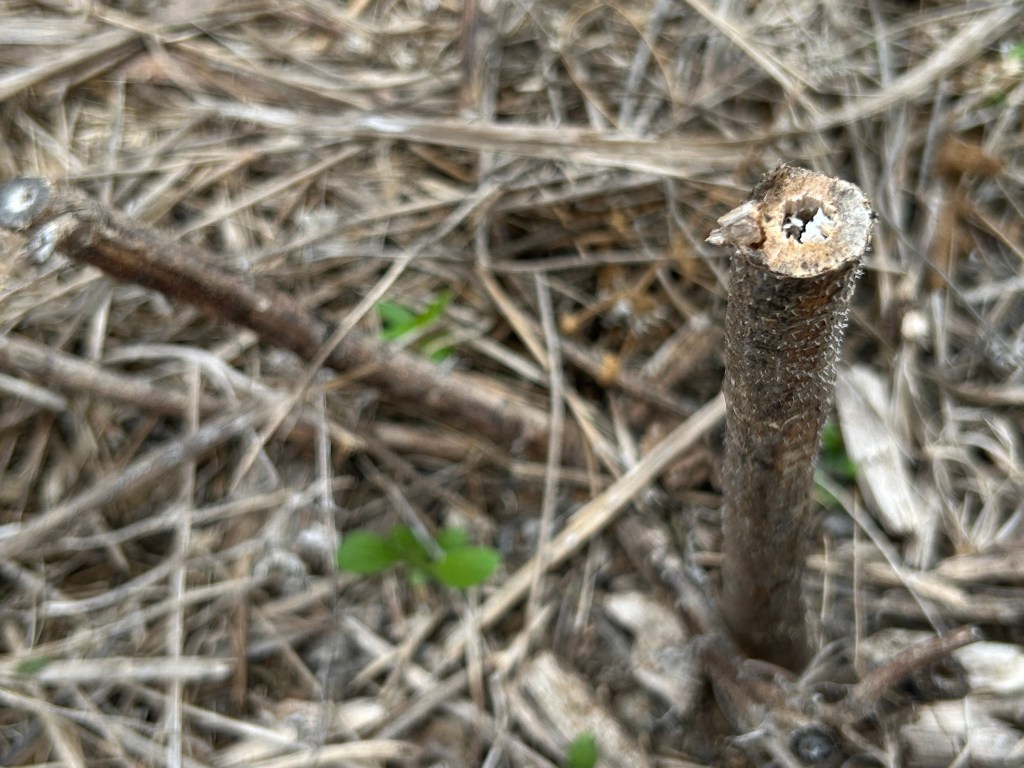
When I cut down annual plants, I leave the roots in the ground to decay. If the stems are thick and hollow, like this sunflower, then I cut them several inches above the ground in case anyone would like to make a home in them.
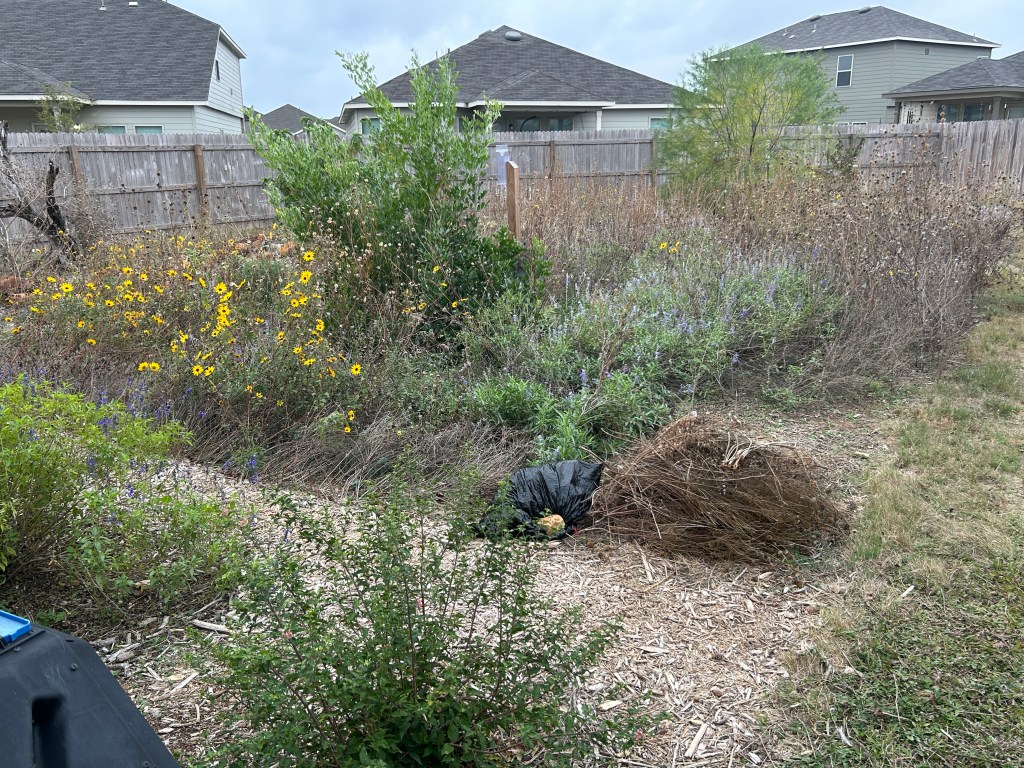
At a glance, it might seem that the fall garden doesn’t have a lot of life, but there is a lot going on!

 Rewilding My Lot
Leave a comment