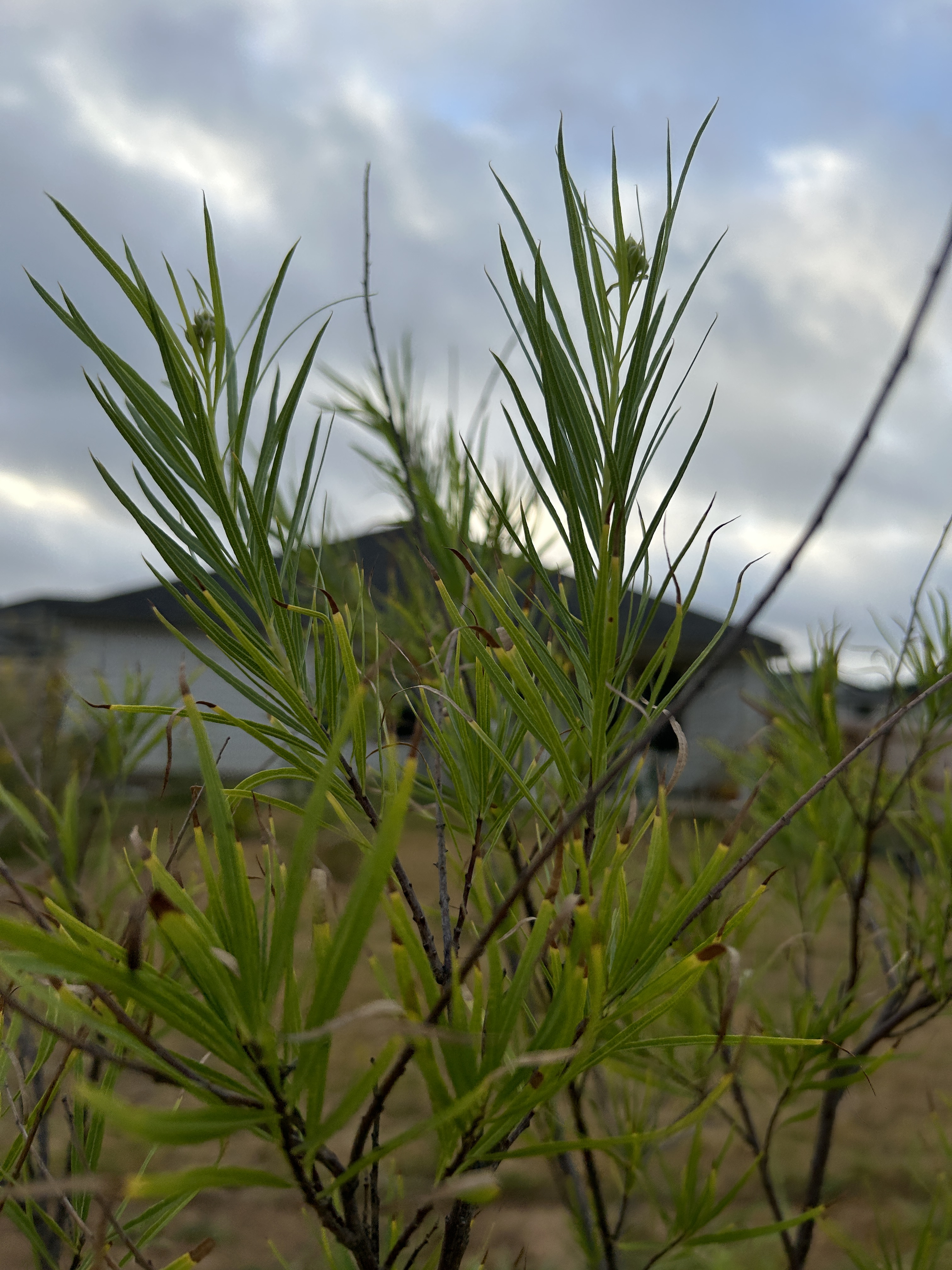
In spring 2025 I planted a Gayfeather aka Texas Blazing Star (Liatris punctata) behind the pond. It cheerfully bloomed a few months later and because the stems are tall and rigid, it’s a favorite resting spot for dragonflies.
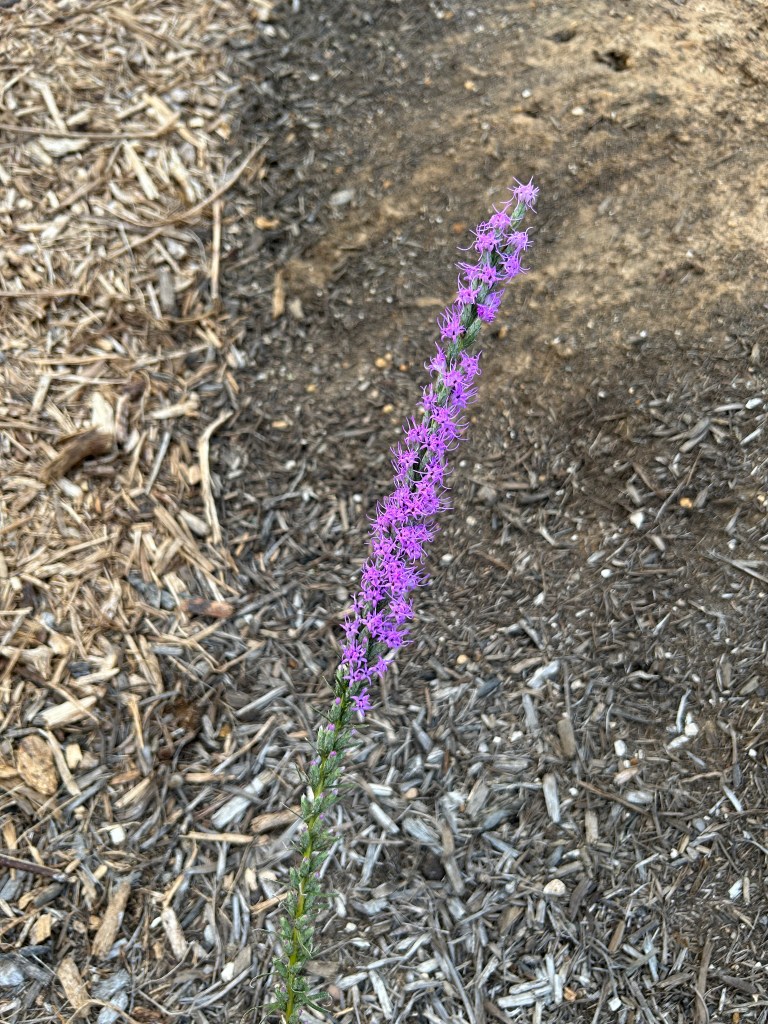
There are several different Liatris plants (five listed in the Native Plant Society of Texas database), with the Liatris punctata probably being the best suited for my ecosystem — in particular, it is the most drought-tolerant of the gayfeathers. I decided that I’d like more of them around the pond to provide additional dragonfly perches.
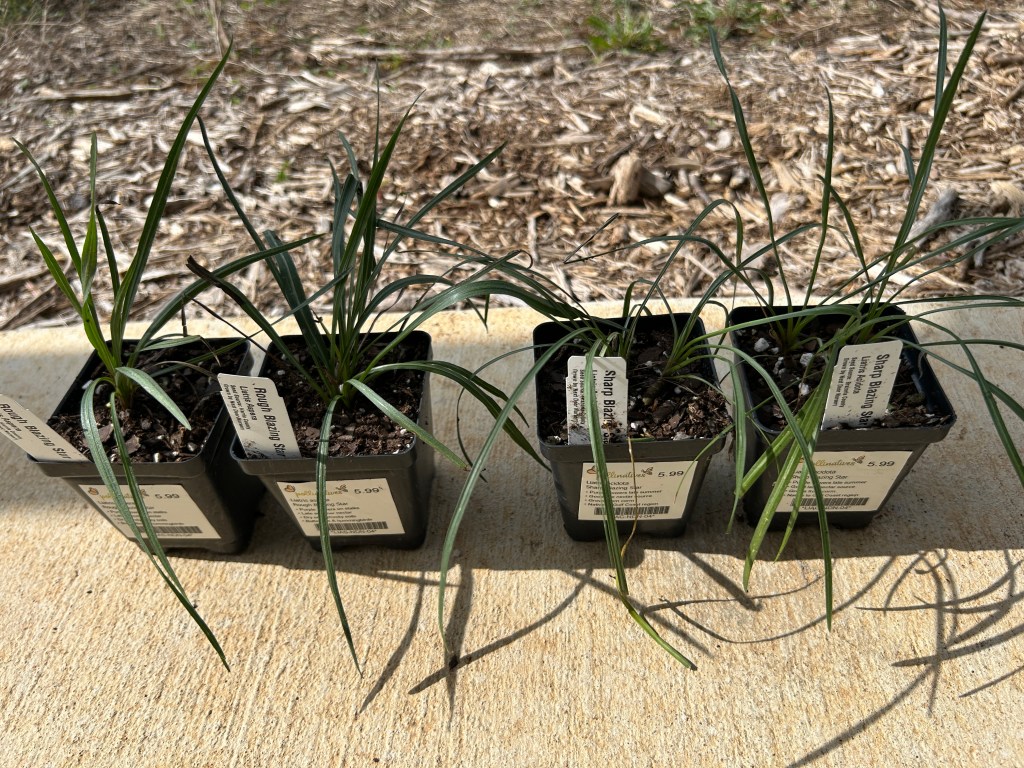
When I learned that the Pollinatives nursery had Liatris for sale, I didn’t think to check which ones. When I got to the store, they actually had two kinds that were different from mine, but I decided to get a couple of each to try anyway. Their appearance is similar to Liatris punctata but they both are most commonly found in Texas ecosystems east of here. That means that they are probably accustomed to a higher rainfall than here, although each of them is supposedly drought-tolerant.
After planting, I now have a collection of:
- One Gayfeather aka Texas Blazing Star (Liatris punctata)
- Two Tall Blazing Star aka Rough Blazing Star (Liatris aspera)
- Two Sharp Blazing Star (Liatris acidota)
Three are behind the pond, and two are near the pond skimmer. I took the photos below while the new plants were still in their pots to make them easier to spot. In the first picture, the tall plant with multiple stems to the right of the pots is the original Liatris punctata — the blooms have finished but the stems remain.
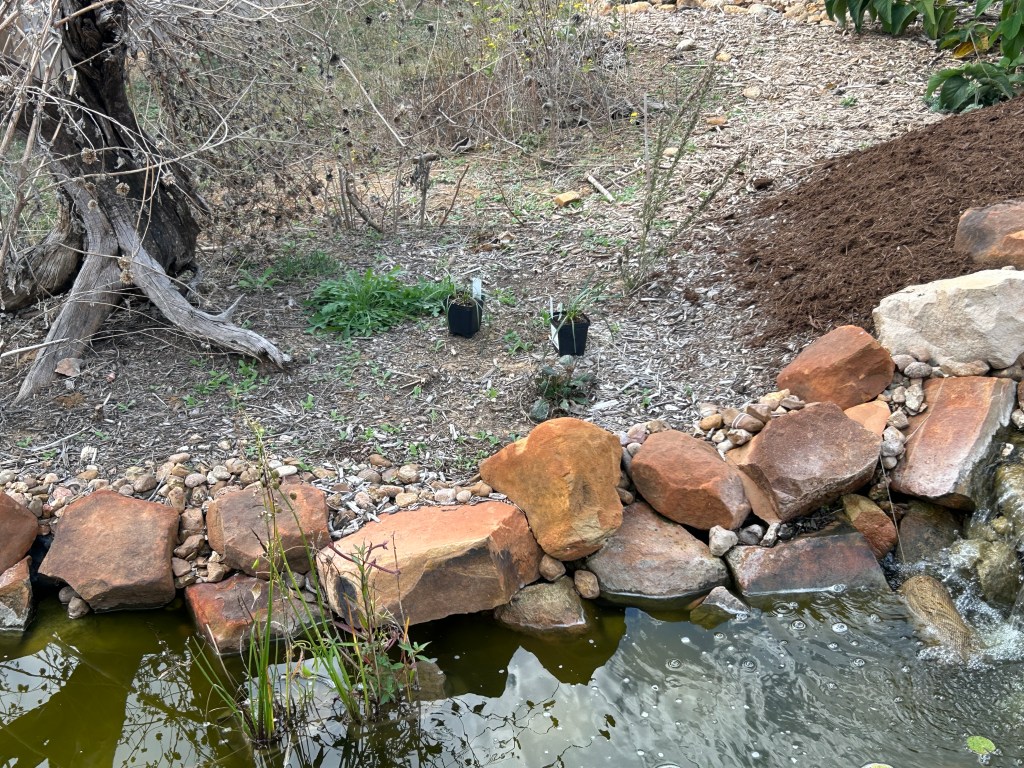
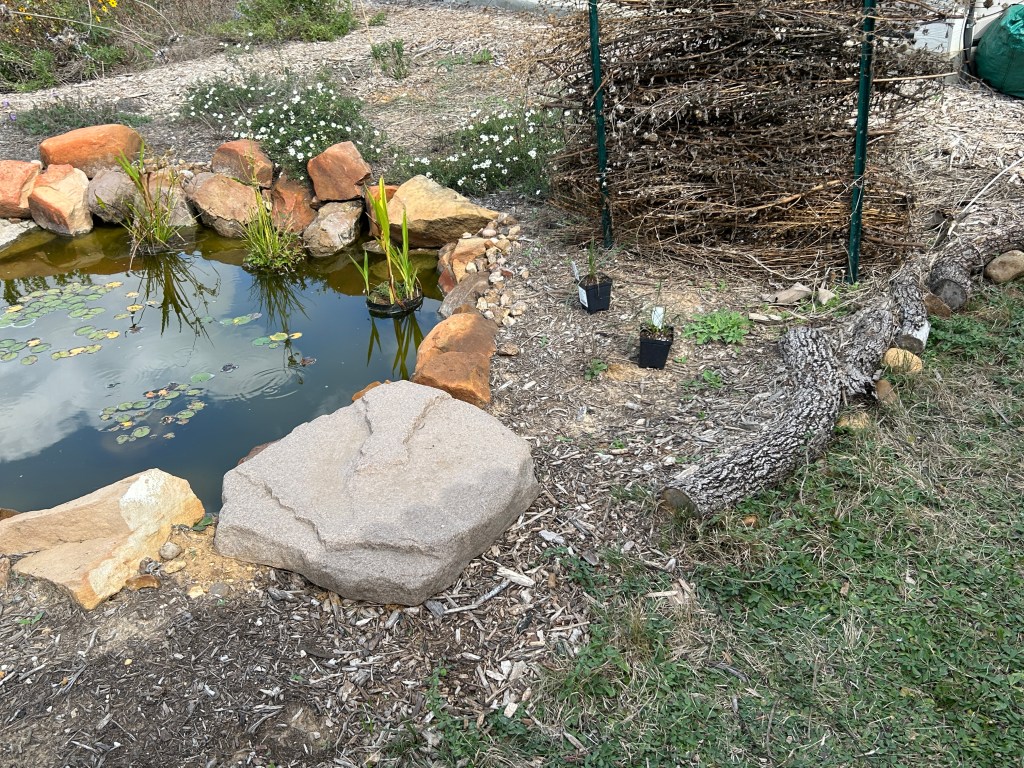
So now I have an unplanned experiment to compare three different Liatris, aka Blazing Star aka Gayfeather plants.

 Rewilding My Lot
Leave a comment